

Electricity peak and off-peak times depend on your tariff—there is no universal UK schedule. For example, Economy 7 typically offers seven cheaper hours overnight, usually within the period between midnight and 8am. Exact hours vary by supplier, location and time of year.
On a single-rate tariff, electricity costs the same throughout the day and night, as the Energy Saving Trust explains. Moving your usage to midnight therefore will not automatically save money. Check your tariff first, then consider whether it suits how and when your home uses energy.
When Is Electricity Cheapest by Tariff and Supplier?
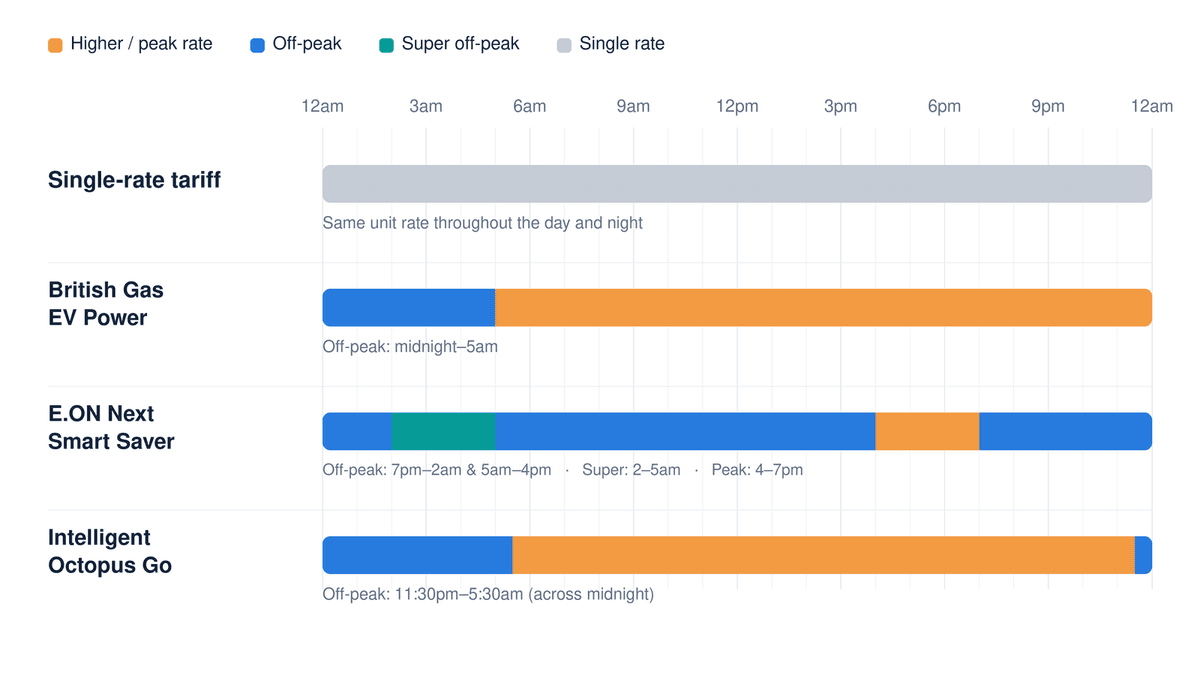
Electricity is cheapest during your tariff’s discounted hours, often overnight. These examples were checked on 28 October 2026; eligibility and tariff versions matter.
Tariff | Cheaper electricity hours |
Economy 7 — British Gas / OVO | Seven hours, usually overnight. Exact times depend on your meter and location. |
Ten hours, potentially split across overnight, afternoon and evening periods. | |
Midnight–5am daily. | |
Midnight–6am, plus qualifying managed-charging periods. | |
Off-peak: 5am–4pm and 7pm–2am. Super off-peak: 2am–5am daily. | |
11:30pm–5:30am daily for the whole home, alongside eligible managed EV charging. |
Weekends are not automatically cheaper. Dynamic tariffs can also change prices every half hour; our energy tariffs guide explains the differences.
Is Electricity Cheaper at Night on Every Tariff?
No. Single-rate tariffs charge the same unit price day and night. Moving consumption to midnight only reduces its cost if your tariff or a separate reward scheme offers a discount. Fixed or variable pricing alone does not establish whether night rates apply.
When Is Electricity Most Expensive?
Early evening is often expensive on time-of-use tariffs. Next Smart Saver’s peak is 4pm–7pm daily. Two-rate EV tariffs can charge their higher rate throughout the remaining daytime and evening hours. Single-rate customers pay the same unit price regardless.
How Do You Find Your Exact Off-Peak Times?
Check your supplier account and tariff documents, then confirm unclear details directly with your supplier:
Find your tariff name, version and exact time bands.
Read your tariff information label for rates, standing charges and fees.
Confirm whether discounts cover whole-home use or qualifying charging only.
Your in-home display may show inaccurate time-of-use costs; E.ON Next recommends checking its account app for pricing.
Do Off-Peak Times Change When the Clocks Change?
Sometimes. GMT/UTC-based periods appear one hour later during British Summer Time. For example, Octopus’s smart-meter Economy 7 hours change from 12:30am–7:30am in winter to 1:30am–8:30am during BST. Other products adjust automatically, so confirm your schedule and check appliance timers.
Is Off-Peak Electricity Worth It for Your Home?
Yes, if cheaper-hour savings outweigh higher charges elsewhere. EV charging, storage heating and batteries can help; households unable to shift consumption may pay more.
Before switching:
Compare annual costs using your consumption in each rate band.
Include standing charges and relevant fees.
Check our Economy 7 comparison guide for day/night calculations.
Our electricity-saving tips can also help reduce unnecessary consumption, alongside shifting when you use it.
Understand Your Electricity Use With EnergieBee
EnergieBee helps you see when your home uses electricity and how those patterns affect your costs. Before choosing a cheaper overnight tariff, use the app to understand how it fits your household’s routine.
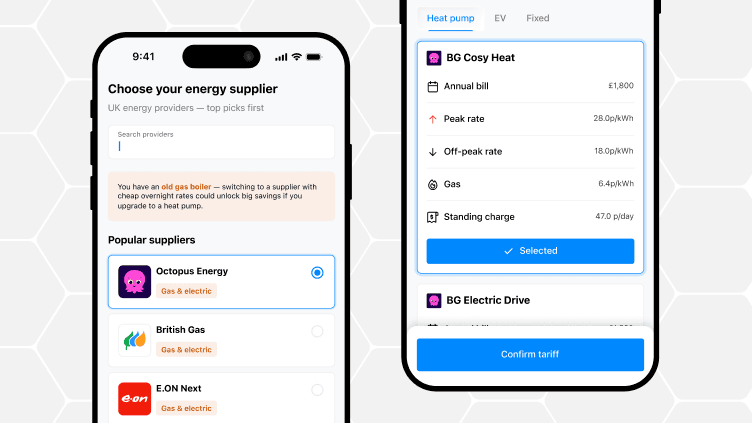
With your energy data connected, you can:
Track when you use the most electricity.
Identify habits that influence your bills.
Get personalised recommendations to help reduce costs.
Download EnergieBee for free, create your account and connect your home. Start exploring your usage patterns today, so your next tariff decision starts with your own energy data.
Frequently Asked Questions
Is It Cheaper to Run a Washing Machine at Night?
Only if your tariff includes cheaper night-time electricity. On a single-rate tariff, the same wash costs the same regardless of when it runs.
Follow London Fire Brigade’s advice: do not leave washing machines running overnight and unattended.
Do You Need a Smart Meter for Off-Peak Electricity?
Usually, for modern smart tariffs: they require a working smart meter sending half-hourly readings. However, Economy 7 can also work with a traditional two-rate meter. Check your supplier’s requirements before switching.
Can You Get Off-Peak Gas?
No. Domestic gas is charged at the same unit rate throughout the day and night, as E.ON Next explains. A dual-fuel tariff does not extend cheaper electricity hours to gas.
What Is the British Gas 11am Rule?
It refers to PeakSave Sundays’ half-price electricity between 11am and 4pm for participating customers. British Gas credits half the eligible electricity cost back afterwards.
The separate PeakSave Super Sunday tariff offers half-price electricity 9am–5pm on Sundays. Both leave the normal daily standing charge payable.
How Do OVO’s Free Electricity Offers and Power Move Work?
OVO offers rewards alongside eligible tariffs, rather than automatically making all off-peak electricity cheaper.
Free electricity: The summer two-free-hours promotion ended on 2 August 2026. Current Beyond Points can be redeemed for selected free-electricity slots, subject to a 1.5 kWh cap per slot and exclusions for EV chargers, batteries and heat pumps.
Power Move: From 1 October 2026, eligible customers earn points by using at least 85% of monthly electricity outside 4pm–7pm on weekdays; weekends count as off-peak. Current terms require a single-rate tariff, Direct Debit and a working smart meter with half-hourly readings.
Which Supplier Has the Cheapest Off-Peak Electricity?
There is no universal cheapest supplier. On 28 October 2026, E.ON Next Drive Smart advertised 6.5p/kWh from midnight–6am for eligible EV households, but its cheap overnight rate does not establish the lowest overall bill.
Compare personalised annual costs, including daytime use, standing charges and fixed-tariff terms and exit fees.

 Syed Reza



 David Price