
A dual fuel tariff means getting your gas and electricity from the same supplier, rather than dealing with two different companies. This makes managing your energy easier, as you can handle both supplies through one provider.
But is dual fuel actually cheaper? Sometimes. Some suppliers offer discounts for taking both fuels, but separate gas and electricity deals could still save you more.
In this guide, you'll understand how dual fuel tariffs actually work, when they can save you money and what to check before choosing a deal for your home.
How Do Dual Fuel Tariffs Actually Work?
With a dual fuel tariff, one energy supplier manages both your gas and electricity. You can usually manage both through one account, although some suppliers may still send separate bills.
Here's how the charges and tariff options work.
Unit Rates and Standing Charges
Even with dual fuel, gas and electricity have their own charges:
Unit rate: The price you pay for each unit (kWh) of gas or electricity you use.
Standing charge: A daily fee you pay for each fuel, even when you're not using any energy.
For example, if you don't use any gas during summer, you'll normally still pay the daily gas standing charge.
You can learn more about how energy bills are calculated on Ofgem's website.
Fixed vs Variable Dual Fuel Tariffs
Dual fuel tariffs can be fixed or variable. The difference is how your energy rates behave over time.
Fixed dual fuel tariff: Your agreed rates stay the same for a set period, usually 12 or 24 months.
Variable dual fuel tariff: Your rates can rise or fall. Standard variable tariffs are covered by Ofgem's energy price cap.
Neither is automatically cheaper. It depends on the rates you're offered and how much energy your household uses.
How Do I Know If I'm on a Dual Fuel Tariff?
The easiest way to check is to look at your latest energy bill or online supplier account. If the same company supplies both your gas and electricity, you may already be on a dual fuel deal.
Here are three simple ways to check:
Check your energy bills. Look for gas and electricity charges under the same supplier.
Log in to your supplier account. Check your tariff details to see whether both fuels are included.
Ask your supplier. If you're unsure, contact them and ask whether you're on a dual fuel tariff.
You can also use Citizens Advice's guidance on checking your energy supplier if you need help finding your current details.
One thing to remember: Having both fuels with the same supplier doesn't always mean you're receiving a dual fuel discount. Check your tariff terms to see what benefits you're actually getting.
Is a Dual Fuel Tariff Cheaper Than Separate Gas and Electricity Deals?
A dual fuel tariff can be cheaper, but not always. Some suppliers offer discounts for taking both fuels, while others may have better individual gas or electricity deals.
The best way to find out is to compare the total yearly cost for your home.
How Does the Ofgem Energy Price Cap Affect Dual Fuel Tariffs?
Ofgem's energy price cap limits the unit rates and standing charges suppliers can charge on standard variable tariffs.
For October to December 2026, the cap is £1,723 a year for a typical dual-fuel household paying by Direct Debit in England, Scotland and Wales.
But remember:
The cap applies to standard variable tariffs, not fixed deals.
It isn't a limit on your total bill. Your actual costs depend on how much energy you use.
How to Compare Your Annual Gas and Electricity Costs
Don't assume a dual fuel discount automatically means cheaper energy bills.
Here's a simple example using illustrative annual costs:
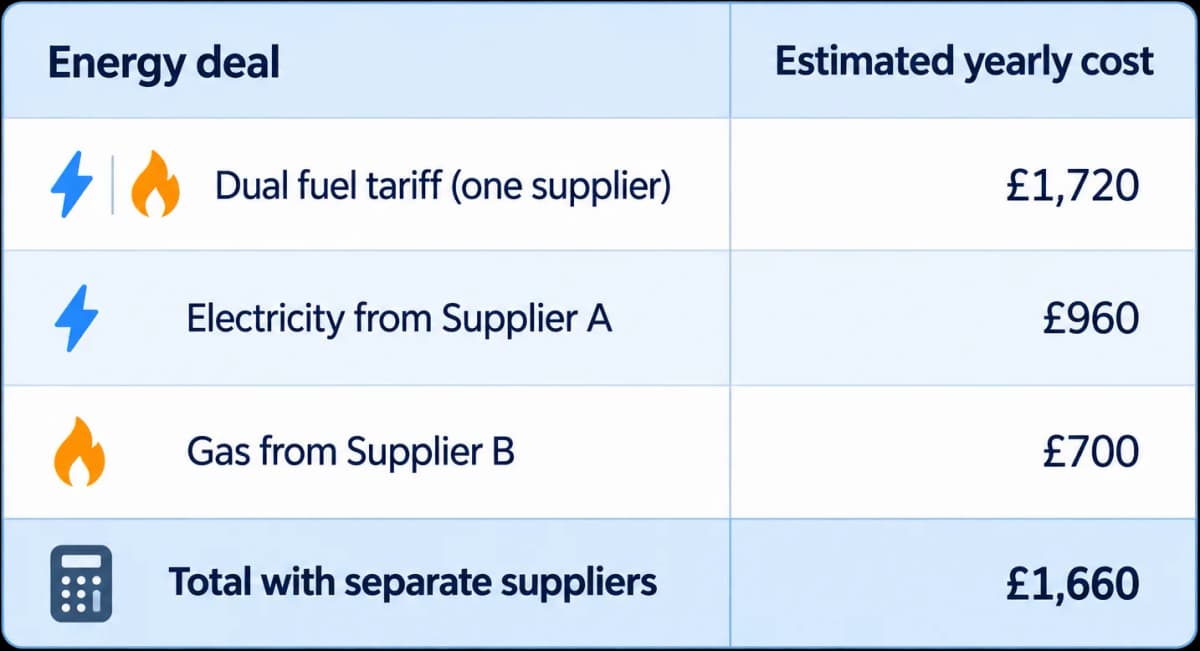
In this example, choosing separate suppliers saves £60 a year, even without a dual fuel discount.
When Separate Energy Suppliers Can Be Cheaper
Separate suppliers may offer better value when your household has specific energy needs.
For example:
EV owners: A specialist electricity tariff with cheaper overnight rates could reduce charging costs.
Solar panel owners: Comparing electricity import and export rates separately may help you find better value.
All-electric homes: If you don't use mains gas, there's no need for a dual fuel tariff.
The important thing is to compare deals based on how your home actually uses energy, rather than choosing one supplier simply for convenience.
What Are the Pros and Cons of Dual Fuel Tariffs?
Dual fuel tariffs can make managing your home's energy simpler, but they don't always offer the biggest savings. It really comes down to whether you value convenience, lower costs or a bit of both.
Here's a quick look at the advantages and disadvantages of dual fuel tariffs:
Pros | Cons |
Easier management: Deal with one supplier for both fuels. | Fewer options: You might miss cheaper deals from separate suppliers. |
Simpler billing: Manage both supplies through one account, often with combined bills. | Not always cheaper: A dual fuel discount doesn't guarantee the lowest price. |
Possible discounts: Some suppliers offer rewards or savings for taking both fuels. | Less flexibility: Switching just one fuel may affect your deal or discount. |
Before deciding, compare the total costs and check the terms. As Confused.com explains, the convenience of dual fuel doesn't always mean better value.
How to Compare Dual Fuel Tariff Deals and Save on Energy Bills
The best dual fuel tariff is one that suits your home's energy use, not just the one offering the biggest discount. A few simple checks can help you find better value.
Here's what to do:
Check your energy usage. Find your annual gas and electricity consumption in kWh from your latest bills.
Compare yearly costs. Look at the total cost of dual fuel deals and separate supplier offers.
Check unit rates and standing charges. A lower unit rate doesn't always mean a lower overall bill.
Look at the contract terms. Check for exit fees, payment requirements and any dual fuel discounts.
You can also explore our guide to the cheapest fixed energy tariffs in the UK before choosing your next deal.
Always confirm the final rates and availability with your supplier before switching.
Tired of Checking Different Energy Supplier Websites?
Finding a suitable energy tariff shouldn't mean opening several websites and comparing confusing numbers.
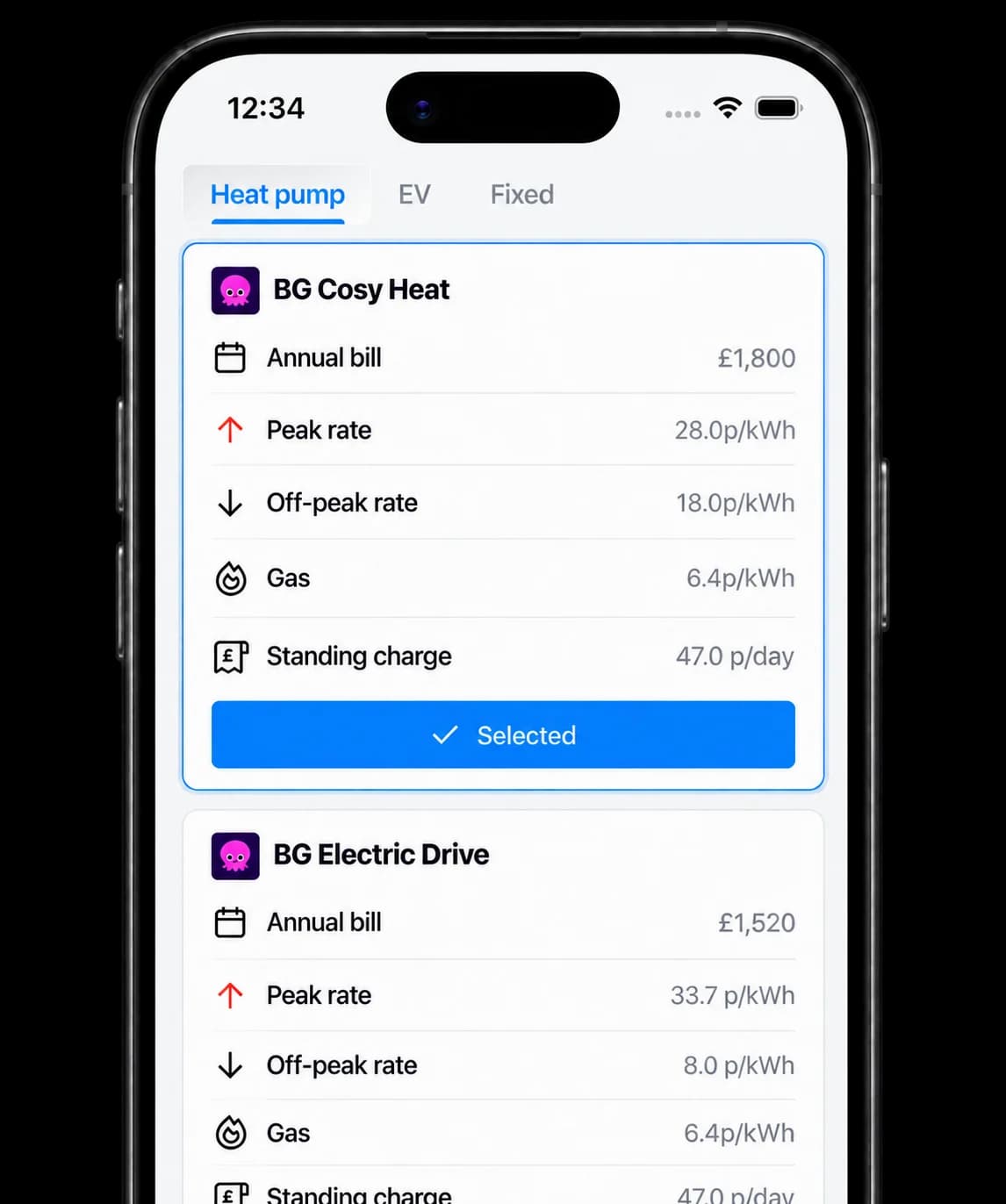
EnergieBee makes it easier by bringing available energy tariff plans into one app. You can explore different suppliers and understand the costs before deciding.
Here's how it works:
Choose an energy supplier to explore its available plans.
Browse tariff options, including fixed and other available categories.
Compare estimated annual bills, unit rates and daily standing charges.
Find a better fit based on your household's energy needs.
Whether you're exploring dual fuel tariff deals or other energy plans, EnergieBee helps make the costs easier to understand.
Find an energy tariff that fits your home
Compare available energy tariffs, estimated yearly bills and energy rates in one place with EnergieBee.
Common questions answered for you
Can I Have Gas and Electricity With Different Suppliers?
Yes. You can choose one supplier for gas and another for electricity. This gives you more flexibility to find cheaper individual deals. Just remember you'll need to manage two supplier accounts.
Does the Ofgem Price Cap Apply to Dual Fuel Tariffs?
Yes, but only if you're on a standard variable dual fuel tariff. Ofgem's energy price cap limits unit rates and standing charges, not your total bill. Fixed dual fuel deals aren't covered.
Which Suppliers Offer Dual Fuel Tariffs?
Several UK energy suppliers offer dual fuel deals, including British Gas, EDF Energy, Octopus Energy and E.ON Next.
Available plans, prices and discounts vary, so check each supplier's current offers before choosing.