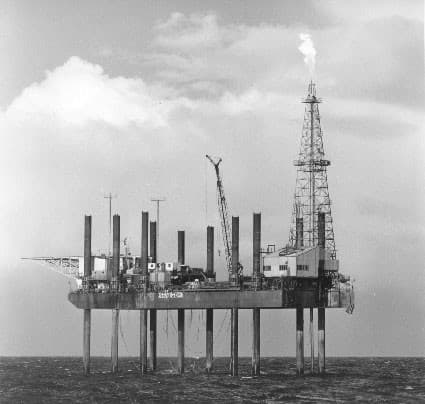
In September 1965, BP's Sea Gem rig found gas in the West Sole field, about 70 kilometres off the East Yorkshire coast. It was the first commercial gas discovery in the British North Sea. The first gas came ashore at Easington in 1967, and from then until 1977 the gas industry converted around 13 million customers from town gas to natural gas. The conversion was free to the customer. The resource belonged to the country, so the country should benefit.
Sixty years later, the same stretch of sea is being used for something else. Hornsea and, in stages, Dogger Bank are producing electricity from wind. In the latest government auction, new offshore wind was priced at about £91 per megawatt hour, against a government estimate of £147 for building and running a new gas plant.
You would expect that to show up on people's bills. We are not there yet.
Turbines switched off on windy nights
Britain builds offshore wind well. The difficulty starts once the electricity exists.
Wind output follows the weather, and demand follows people's routines. When it blows hard at a time of low demand, such as overnight, there is often nowhere for the power to go. Much of it is generated in the north while demand sits in the south, and the cables between the two can carry only so much. When the system has more power than it can move, the grid operator pays wind farms to turn down and pays other generators, mostly gas, to make up the shortfall elsewhere. NESO, the operator, reported thermal constraint costs of about £1.7 billion in 2024/25, now the largest part of the cost of balancing the grid. That bill is paid by electricity customers.
The result: clean power going unused at the moments it is cheapest, and bill-payers covering the cost.
The hot water cylinders we removed
For decades, a typical British house had a hot water cylinder in the airing cupboard. It was bulky and slightly annoying, and it was also a store of heat. You could warm it when energy was cheap and use the water hours later.
When combi boilers took over, many of those cylinders were ripped out to free up space. Combis are efficient and convenient, and they heat water on demand, so they have no way to soak up a surplus. A home with a combi has nothing useful to do with a windy night.
Across millions of homes, that adds up to an enormous amount of lost flexibility, removed without anyone ever deciding to remove it.
Who can use cheap overnight power
The households best placed to use cheap overnight electricity are the ones that can afford the equipment: a heat pump, a home battery, smart controls, perhaps an electric car that charges while they sleep. Each is a good investment, and together they cost thousands of pounds.
Those households can set everything to run at 2 a.m. and pay a fraction of the daytime price. Their lower bills are the return on having the money to invest.
How Can I Save Money on Heating? The CEO Answers Your Questions
A tenant in a cold private rental can't change the heating system or drill into the wall. Someone on a prepayment meter tops up as they go and has little room to shift their usage. A household with no broadband may have dropped it because it is one monthly bill too many. They have little chance of taking part, and they are often the people spending the largest share of their income on keeping warm.
All of them also pay the daily standing charge, a fixed amount added to the bill before a single unit of energy is used. Under Ofgem's price cap for October to December 2026, the average electricity standing charge is 54.83p a day, roughly £200 a year before any electricity is used. It weighs most heavily on the people who use the least.
How EnergieBee works
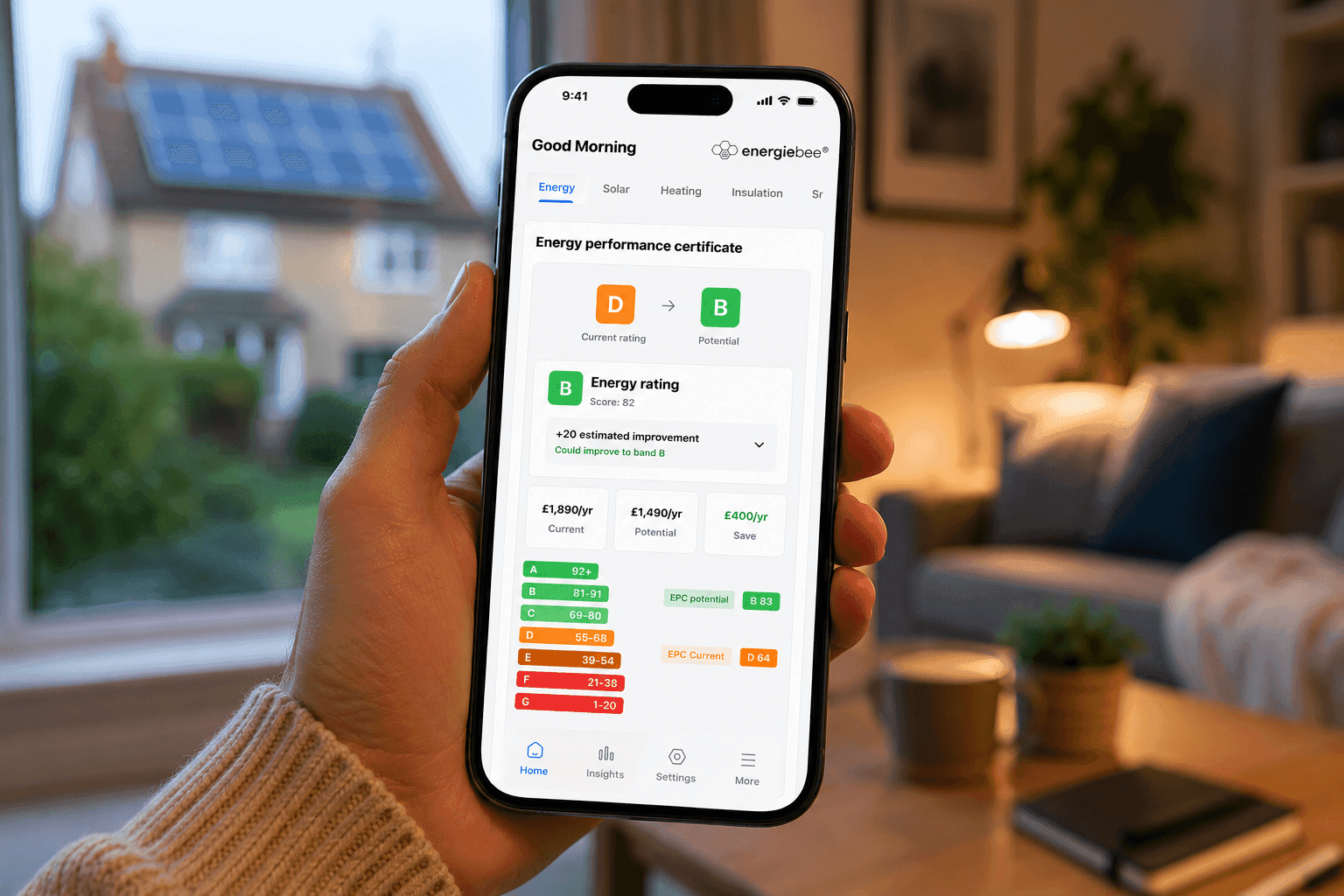
EnergieBee exists to close that gap for tenants who are left out.
We started from one observation: most smart heating products assume the home has Wi-Fi. That assumption leaves out a large share of social housing tenants, who are among the people with the most to gain. A product that works only for households with a good broadband connection leaves the biggest group of beneficiaries without it.
So we built controls that connect without the tenant's own broadband. Social landlords can install them across many homes and manage heating and hot water centrally. Water is heated, and thermal storage topped up, when renewable power is cheapest. The tenant gets a warm home at a better time of day, and the saving reaches the household.
The gas network reached every street
North Sea gas project worked largely because the infrastructure reached everyone. If you lived on a street, the pipe came to your street, and the conversion of your appliances was done for you at no charge.
Wind power has a gap at the end of the chain. The turbines and cables are national infrastructure, and the last stretch, inside the home, is left to each household to sort out. That is where the benefit is won or lost.
Four changes we would like to see
Four changes would make a real difference, beyond what we do ourselves.
Treat the home as part of the grid. Heating and hot water storage should be planned alongside wires and wind farms.
Start with social housing. A landlord can act for hundreds or thousands of homes at once, which makes the economics work in a way they rarely do for a single household.
Design for the households with the least. A scheme that requires broadband, a smartphone and a spare few thousand pounds will reach the people who were already coping. One that requires none of those reaches everyone else.
Review how fixed costs are shared. While standing charges absorb a large part of the cost of the system, cheaper electricity will take longer to reach the people who need relief most.
Cheap electricity, warm homes
Offshore wind is a real achievement. Cheap electricity turns into cheap warmth once a home can use it, and today many of the homes that need warmth most cannot. That can be fixed, at reasonable cost and with simple technology, if it is built first for the people at the end of the line.
fuel poverty, offshore wind, social housing, smart heating, thermal storage, hot water cylinders, curtailment, standing charges, prepayment meters, energy bills, North Sea, renewable energy, digital exclusion, heating controls