
I've been fascinated by bees since I was a kid. I still love the way a honeybee colony handles the year. It spends the summer collecting more than it needs. By autumn the hive is full of honey, and through the cold months the bees cluster around it and live off what they stored while the weather was kind. Nobody in the hive plans this. It works because each bee responds to what is in front of it.
I can't help but think in terms of nature when I think about tech, and the other way around.
Most homes do the reverse of a bee colony: they buy energy when they happen to need it, at whatever price applies at that moment. That matters more than it used to. Time-of-use tariffs charge different prices at different hours, and a growing number of households are adding solar panels, a heat pump or an electric car, each of which is one more thing to keep track of. I doubt many people want to spend an evening comparing tariff tables to decide when to run the dishwasher.
The cheapest electricity usually turns up when demand is low: overnight, or on a windy afternoon when offshore wind is producing more than the grid can use. If your home has a hot water cylinder or another thermal store, you can take advantage of those hours. Heat the water while power is cheap, keep it in a well-insulated tank, and draw on it later when prices are higher. Water holds a lot of heat and a tank costs very little to run. Homes with a combi boiler have no cylinder, so I can't promise this works for them without a change to the heating system.
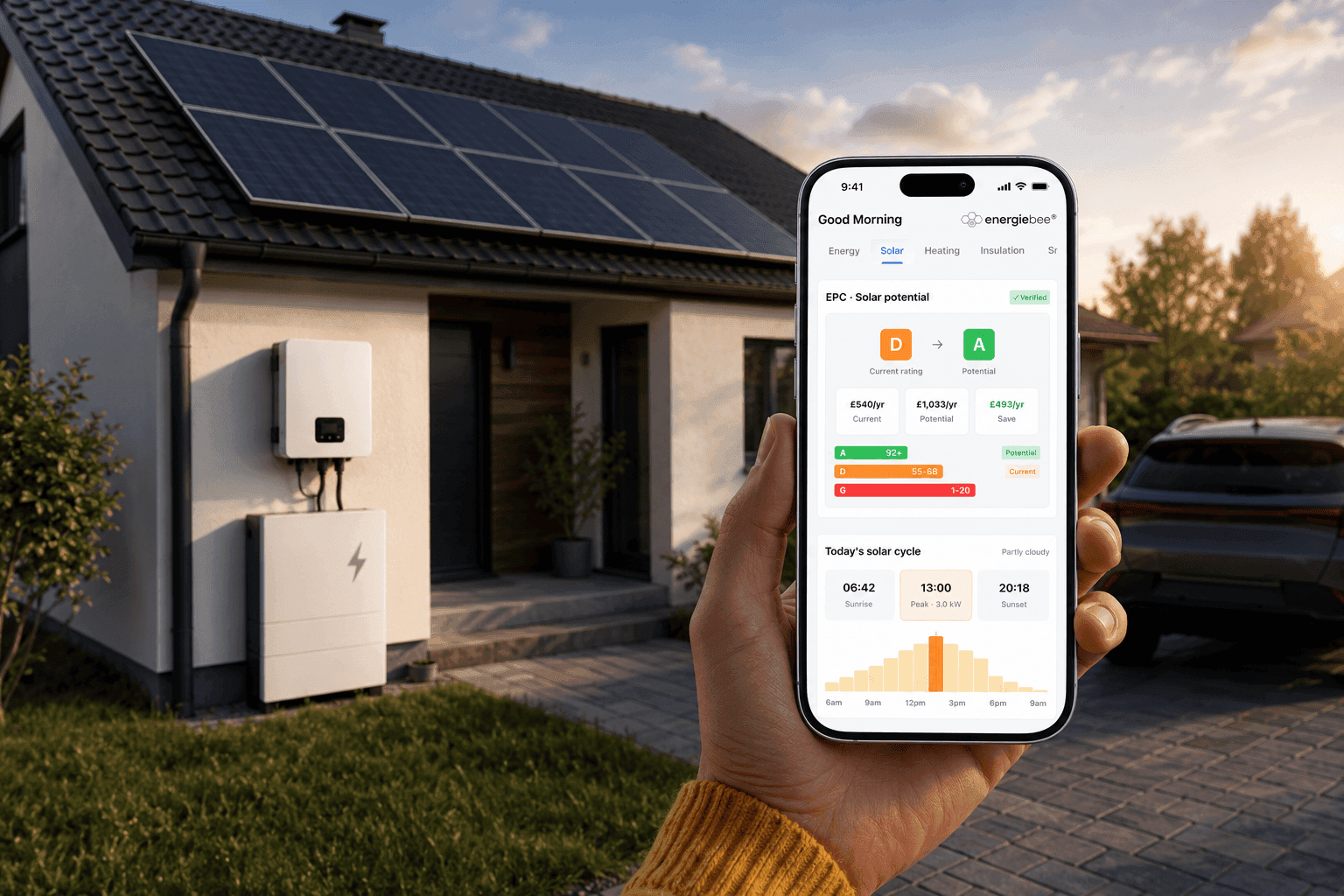
Our app, EnergieBee, brings your energy data, usage and costs into one place and turns them into a short list of things worth doing.
It can show your property's Energy Performance Certificate in plain English, including where the building loses heat and which fixes are likely to pay back fastest.
If you are wondering whether solar panels or a battery would pay off, EnergieBee forecasts how much a system could generate, using weather data and the details of your property, so you can see the likely yield before you buy anything.
How Can I Save Money on Heating? The CEO Answers Your Questions
It also compares your daily routine with the cheaper windows on your tariff and moves flexible loads, such as heating hot water or charging an electric car, into those windows. I should say that how much you save depends on your tariff, your equipment and your habits. The app shows you the projected bill, so there are no surprises at the end of the month.
With the app connected to your heating and hot water, the timing happens in the background.
In practice, you stop thinking about it. The hot water is ready when you want it and the bill comes in a bit lower than it would have. There's a benefit for the planet too: less energy gets wasted, and more of the cheap wind and solar power that would otherwise be switched off gets used.

 Danie Latorre