

Fixing your energy prices now could be worth it, especially with another price rise forecast for January 2027. Some fixed deals cost around the same as today's price cap, making them worth considering if you want protection against higher rates.
But should you fix your energy tariff now or wait? This guide explains what could happen to energy prices next and how to decide what's right for your home.
Is Now a Good Time to Fix Energy Prices?
October 2026 is a sensible time to consider fixing, particularly if you can find a deal at or below your regional price cap. However, the best next step depends on your current tariff.
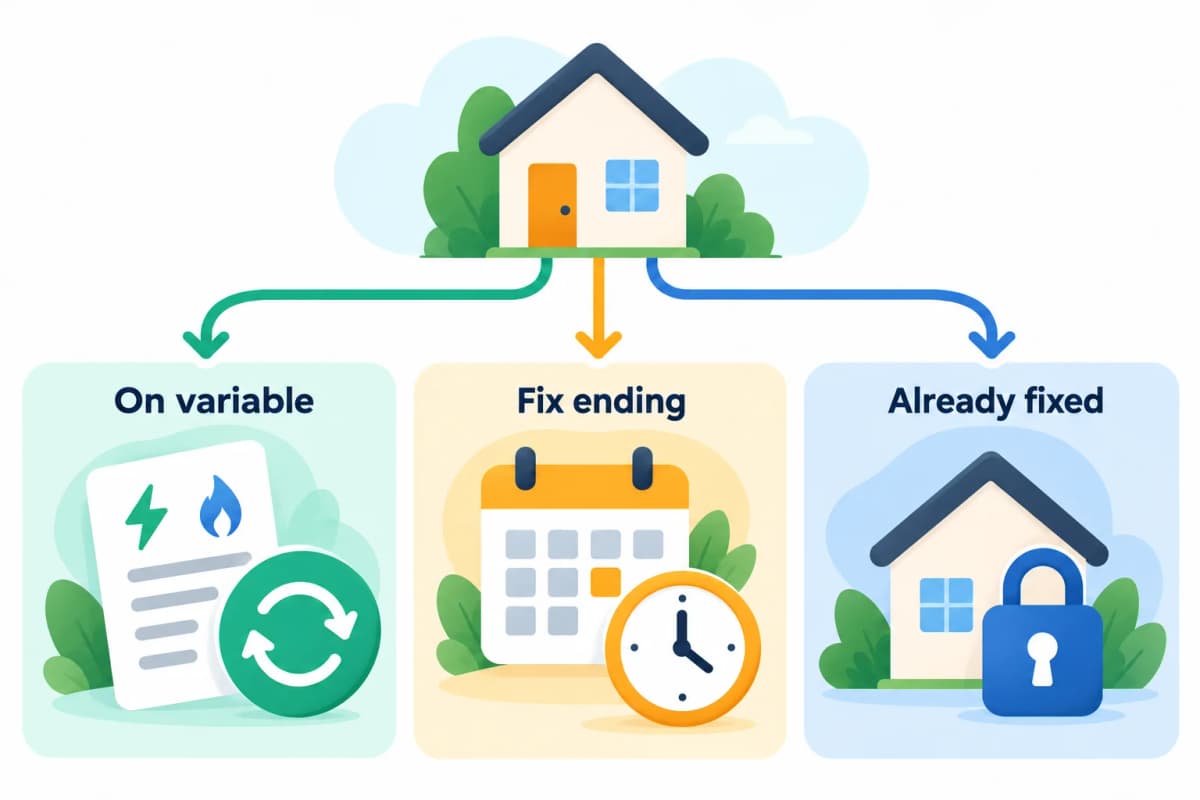
If You're on a Standard Variable Tariff
You're exposed to future price cap changes. Check whether a fixed deal offers lower or similar rates to what you're paying now.
A competitive fix could protect you from the expected January increase.
If Your Fixed Energy Tariff Is Ending Soon
Don't automatically accept your supplier's renewal offer. Check what other providers are offering before your contract expires.
Pay particular attention to your new unit rates, as they may differ significantly from your existing deal.
If You're Already on a Fixed Deal
You may already have a better rate than what's available today.
Check your contract end date and compare any potential savings against early exit fees before switching.
Are Energy Prices Going Up or Down in the UK?
UK energy prices are forecast to rise in early 2027, although they could fall later in the year. Higher wholesale gas costs, partly linked to conflict in the Middle East, have contributed to recent increases.
What Is the Current Ofgem Energy Price Cap?
The Ofgem energy price cap is £1,723 a year from 1 October to 31 December 2026.
This figure represents a typical dual-fuel household paying by Direct Debit in England, Scotland and Wales. Your actual bill depends on how much energy you use.
What Are Energy Price Forecasts for 2027?
Here are the MoneySavingExpert price cap forecasts, updated on 15 October 2026.
Period | Annualised price cap | Status |
Oct–Dec 2026 | £1,723 | Confirmed |
Jan–Mar 2027 | £2,154 | Weak prediction |
Apr–Jun 2027 | £2,202 | Crystal-ball gazing |
Jul–Sep 2027 | £1,985 | Crystal-ball gazing |
These figures use typical dual-fuel consumption. MSE's July forecast average includes EDF and E.ON Next estimates, but not British Gas.
Even if prices fall in July, the forecast of £1,985 remains £262 above today's annualised cap.
Remember, these are predictions, not confirmed prices.
When Is the Next Energy Price Cap Change?
The next price cap takes effect on 1 January 2027. Ofgem will announce the confirmed rates by 25 November 2026.
If you're thinking about fixing, check available offers this October and review your options again when the new cap is announced.
Suppliers can withdraw or reprice new fixed deals at any time. Once you've signed a fixed contract, your agreed rates normally remain protected.
How Do Fixed Deals Compare With the Price Cap Right Now?
Some fixed tariffs cost less than the current price cap, while others are more expensive. Here's how two available offers compare.
Tariff | Estimated annual cost | Contract | Exit fees |
Ofgem price cap | £1,723 | Variable | None |
E.ON Next – Next Fixed 12m Exclusive v12 | About £1,702 | 12 months | £50 per fuel |
Sainsbury's – Fix and Save 12m V33 | About £1,823 | 12 months | £50 per fuel |
Source: MoneySavingExpert tariff comparison, 20 October 2026. Fixed-deal estimates are calculated from MSE's percentage comparisons and include £20 one-off dual-fuel cashback where available. The E.ON Next deal is an MSE exclusive. Actual quotes vary by location and usage.
The E.ON Next offer is slightly cheaper today, while Sainsbury's costs more. But whether either saves you money over the contract depends on future variable rates.
For more options, see our guide to the cheapest fixed energy tariffs in the UK.
Is It Worth Fixing Energy Prices Now? How to Check
The best way to decide is to compare your fixed quote with the estimated cost of staying on a variable tariff over the same period.
Compare Total Costs Over the Same Period
Let's use the E.ON Next deal and the forecasts above.
12-month fixed deal: About £1,702 at typical usage, including MSE cashback.
Average forecast price cap: £2,016 across the four quarters.
Illustrative difference: Roughly £300.
This shows why fixing could be attractive if forecasts hold.
However, it isn't a guaranteed saving. The calculation weights all four quarters equally, while households typically use more energy in winter. The forecast periods also won't perfectly match every new contract's start date.
Your actual result will depend on your usage and the rates you're offered.
Check Unit Rates, Standing Charges and Exit Fees
Before choosing a tariff, check:
Unit rates: The price per kWh of gas and electricity.
Standing charges: Daily fees that apply even when you're not using energy.
Exit fees: What you may pay if you leave early.
Comparing these costs using your actual consumption gives you a clearer picture than relying on national averages.
Should I Fix My Energy Prices for 1 or 2 Years?
A 1-year fix gives you more flexibility, while a 2-year fix offers longer protection against rising rates.
Here's what to consider:
Choose 12 months if you want the opportunity to review your tariff sooner, particularly if prices fall next year.
Consider 24 months if the offered rates are competitive and you value longer price certainty.
Think about future changes. Moving home, installing a heat pump or buying an EV could affect which tariff suits you.
The current forecasts only extend to September 2027, so they can't tell us whether a 2-year fix will save money over its full term.
Our advice: Don't pay significantly more for a longer fix unless the additional certainty is worth it to you.
Fixed, Tracker or Fix & Fall: Which Energy Tariff Is Better?
A fixed tariff provides predictable rates, while tracker and Fix & Fall tariffs offer different ways to benefit if energy prices decrease.
Here's how they compare:
Tariff | How it works | Best suited for |
Fixed | Keeps your agreed rates steady throughout the contract. | Households wanting price certainty. |
Tracker | Rates move with a specified index, such as wholesale prices or Ofgem's cap. | People comfortable with changing rates. |
Fix & Fall | Fixed rates with a possible reduction at a scheduled review. | Households wanting protection against rises and some potential benefit from falls. |
British Gas's original Fix & Fall tariff was a 24-month deal that could reduce rates after 12 months if the Ofgem price cap fell.
The original offer allowed a reduction of up to £50 annually for typical dual-fuel use. Newer versions may have different conditions, so check the specific offer.
Compare Fixed Deals for Your Home
Comparing energy tariffs doesn't have to mean opening several supplier websites.
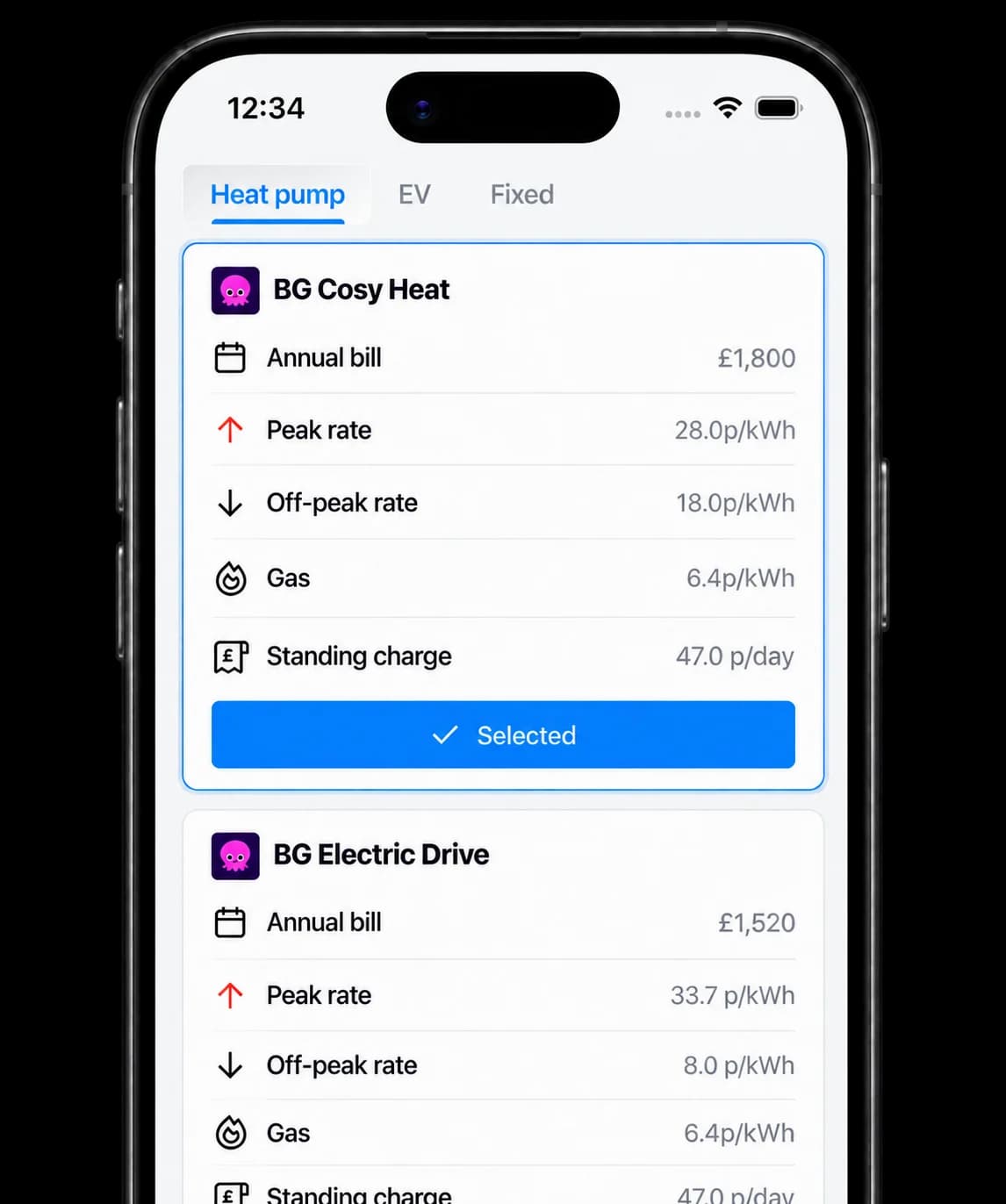
EnergieBee brings available tariff plans into one app, helping you understand your options before choosing.
You can:
Explore suppliers and available plans.
See each plan's estimated annual bill.
Check gas and electricity unit rates.
View daily standing charges.
Find the right energy tariff for your home
Explore available fixed tariffs, estimated annual bills and energy rates in one place with EnergieBee.
Frequently Asked Questions
Are Fixed Energy Tariffs a Good Idea?
They can be if you want predictable rates and find a competitive deal. However, if you have an EV, solar panels or a heat pump, it's also worth checking whether specialist tariffs could offer better value.
Will My Fixed Energy Tariff Increase if Prices Rise?
Normally, no. Your agreed rates stay fixed during your contract, although government tax changes can affect what you pay.
The temporary electricity VAT cut, running from October 2026 to March 2027 in Great Britain, also applies to fixed tariffs.
Does the Ofgem Price Cap Apply to Fixed Tariffs?
No. The cap applies to default tariffs, including standard variable tariffs. It doesn't automatically change your agreed fixed rates.
Can I Leave a Fixed Energy Tariff Early?
Yes, but an exit fee may apply. You can switch without paying an exit fee during the final 49 days of your contract.