
The best ways to save electricity at home are to find your biggest sources of use, switch off unnecessary standby power, wash full loads at 30°C, air dry clothes, use dishwasher eco mode, cook efficiently, replace old bulbs with LEDs, optimise fridge-freezer settings, manage electric hot water and heating, and shift flexible use to cheaper or solar-rich periods.
In many UK homes, appliances that heat, cool or run for long periods have the biggest impact. Smart meter data can help you spot repeated spikes and check whether each change is actually working.
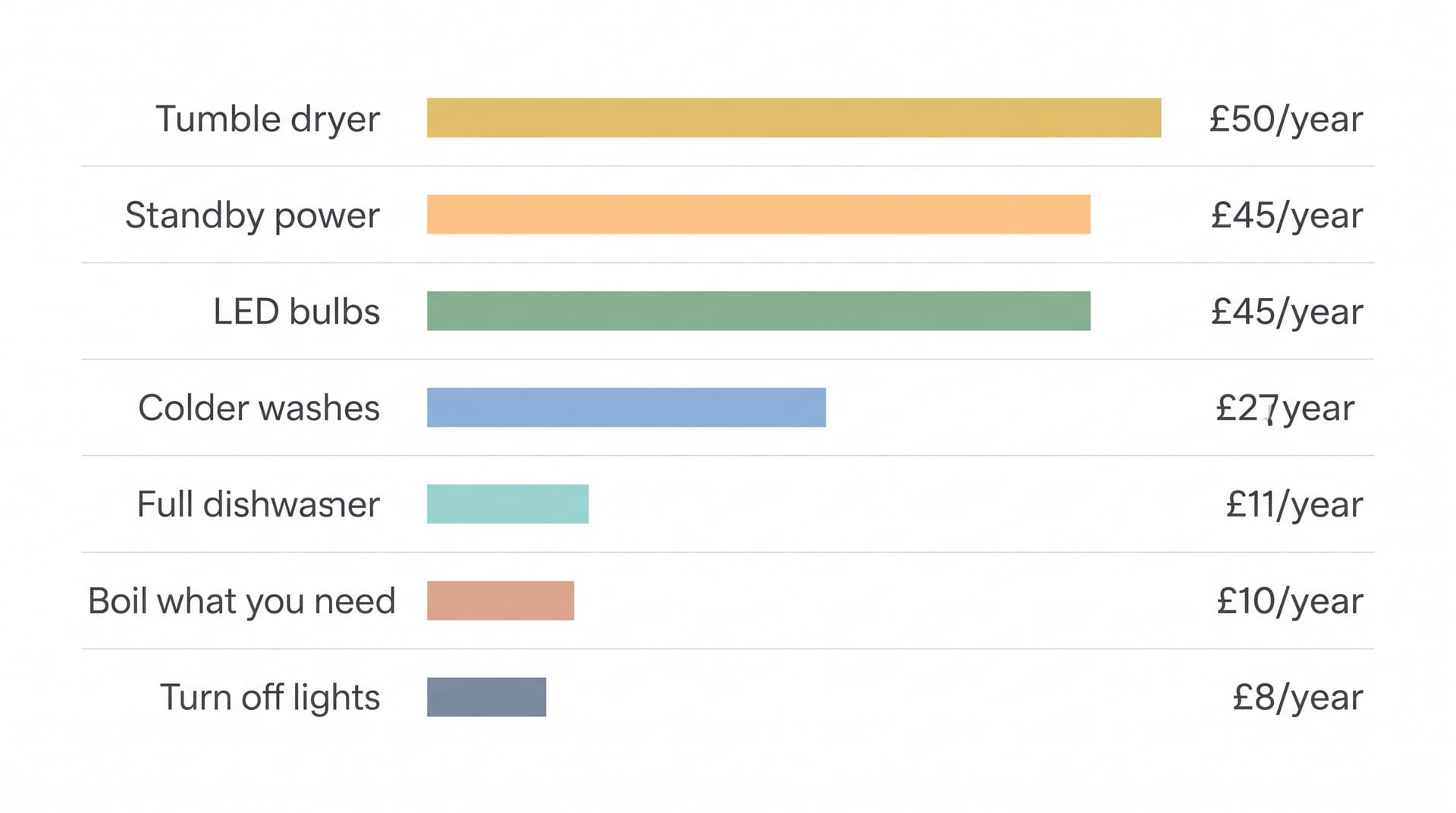
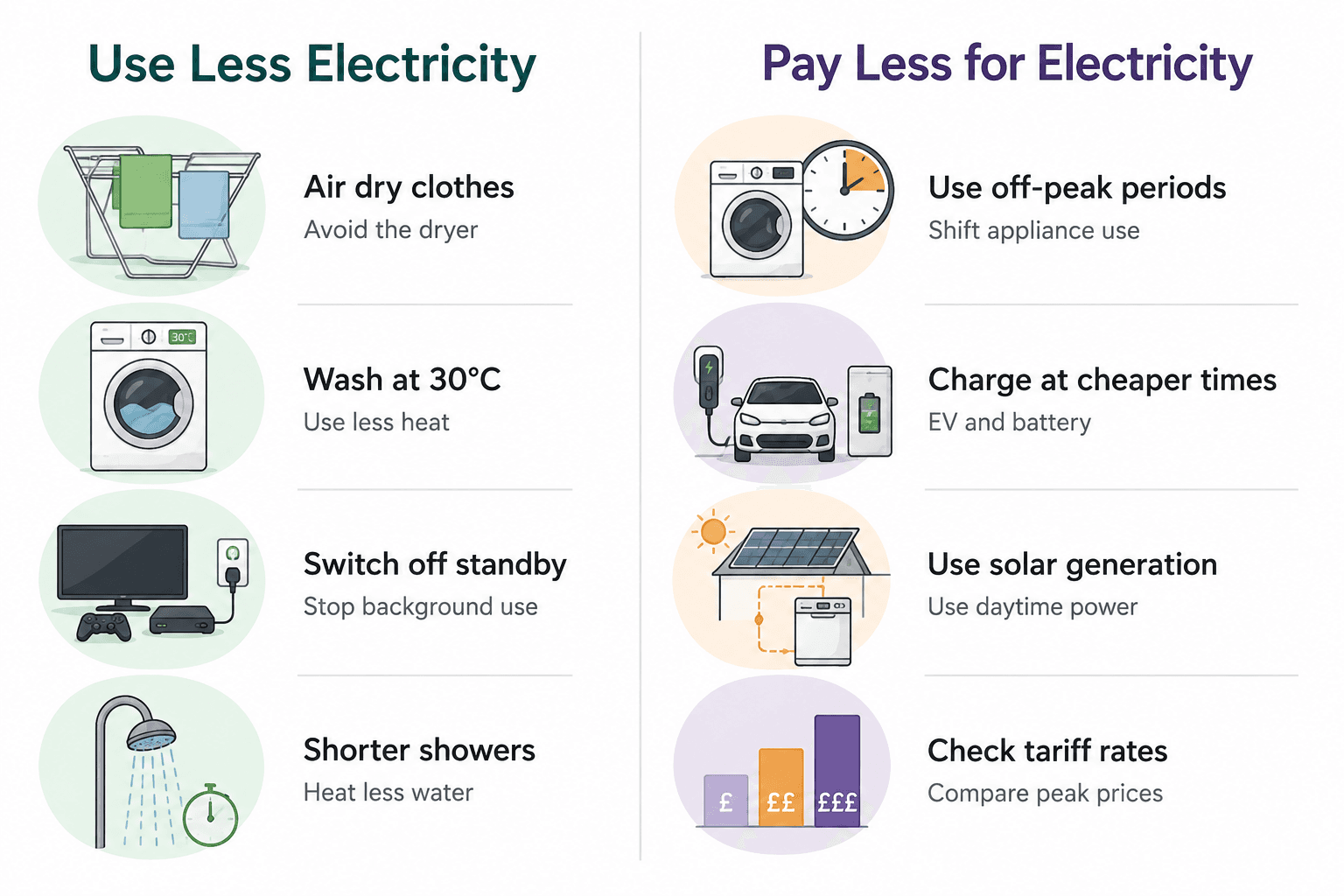
Ways to Save Electricity at a Glance
1. Find What Is Using the Most Electricity
Start by checking your smart meter data to see when electricity use rises. Repeated spikes may be linked to tumble drying, electric showers, cooking, immersion heating or EV charging.
To narrow it down:
Check your normal electricity use
Switch on one appliance at a time
Compare the reading before and after
Use a plug-in monitor for a closer look
EnergieBee can help you compare daily patterns and see whether changing a routine, timer or appliance setting has reduced consumption.
2. Switch Unnecessary Appliances Off Fully
Devices left on standby can still use electricity. These small background loads are sometimes called vampire power, and they can add up across several appliances.
Focus on equipment that is easy to switch off when not in use, such as:
Televisions and set-top boxes
Games consoles
Computers, monitors and speakers
Chargers and grouped office equipment
Leave essential or always-on equipment powered, including fridge-freezers, medical devices, security systems and anything the manufacturer says should remain connected.
3. Wash Full Loads at 30°C and Air Dry Clothes
Wash suitable everyday clothes at 30°C, wait for a full load and use the eco programme where appropriate. These changes reduce the electricity needed to heat water and avoid unnecessary cycles.
Air dry clothes when possible. When using a tumble dryer, choose a high spin speed first and stop the cycle once the clothes are dry.
Which Saves More: Washing Colder or Avoiding the Tumble Dryer?
Avoiding the tumble dryer usually saves more electricity because drying clothes requires much more heat than washing them at a lower temperature.
4. Fill the Dishwasher and Use Eco Mode
Wait until the dishwasher is full, but leave enough space for water to circulate. Scrape off food instead of rinsing plates under hot water, and keep the filter and spray arms clean so the machine does not work harder than necessary.
Why Does Dishwasher Eco Mode Take Longer?
Eco mode uses lower temperatures and heats water more gradually. The cycle takes longer, but it usually uses less electricity and water.
5. Boil Only What You Need and Cook Efficiently
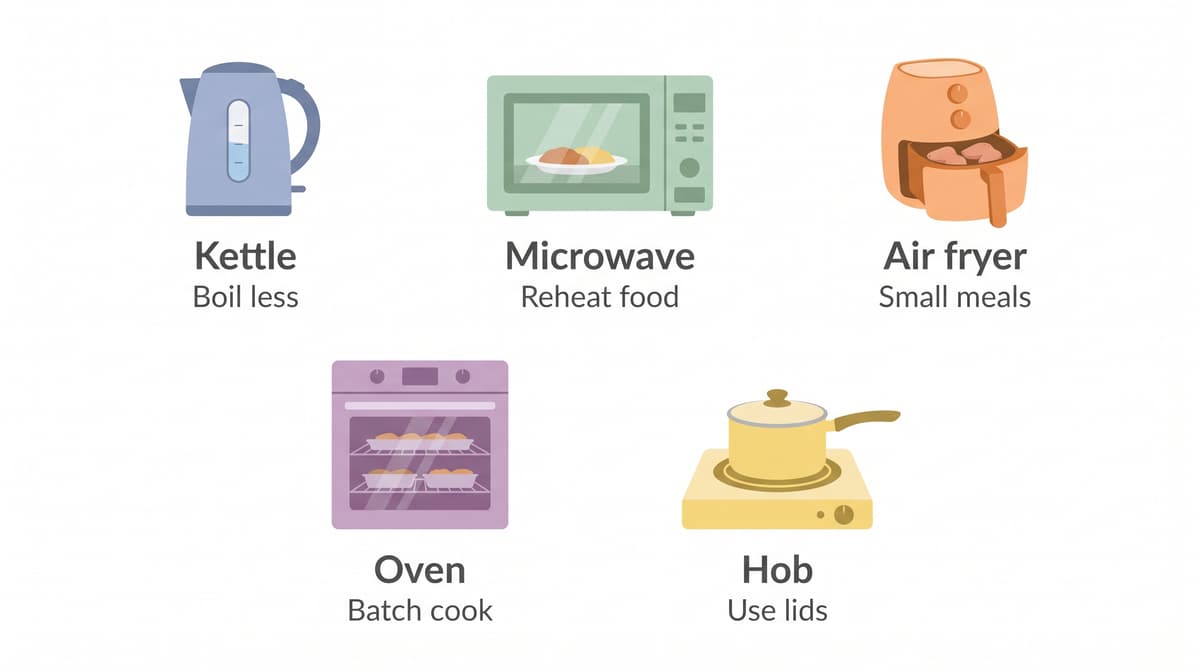
Fill the kettle with only the water required, use lids on pans and match each pan to the correct hob ring. These small changes reduce unnecessary heating.
Choose the appliance according to the portion:
Microwave: useful for reheating or small portions
Air fryer: often efficient for one or two people
Oven: better when batch cooking or using several shelves
Energy Saving Trust recommends matching the appliance to the amount of food being cooked. UK homeowner discussions also show that an air fryer is not always cheaper, especially when several batches are needed instead of one full oven load.
6. Replace Frequently Used Old Bulbs With LEDs
LEDs use around 80% less electricity than equivalent halogen bulbs. Start with frequently used lights, such as kitchen spotlights, living-room lamps and outdoor lighting, and check dimmer compatibility before replacing them.
Turn lights off in empty rooms, and do not replace bulbs that are already LEDs. See the Energy Saving Trust’s lighting guidance for further UK advice.
7. Improve Fridge and Freezer Efficiency
Keep your fridge at 5°C or below and your freezer at -18°C or below. Use an appliance thermometer if the controls do not display the actual temperature, and avoid setting either appliance colder than necessary. (Food Standards Agency)
Check the door seals, leave space around the vents and defrost excessive ice so the appliance does not work harder than needed. Avoid leaving the door open for long periods, and do not switch a fridge-freezer on and off with a timer.
8. Reduce Electricity Used for Hot Water
Shorten electric showers where practical and use an immersion-heater timer so water is heated closer to when you need it. On Economy 7 or another time-of-use tariff, schedule heating during the cheaper period.
Insulating a suitable hot-water cylinder and exposed pipes can also help retain heat for longer.
Should an Immersion Heater Be Left On All Day?
Usually not. A timer is often more efficient, but the best schedule depends on your cylinder, household routine and tariff.
9. Control Electric Heating and Heat Pumps Efficiently
This tip is for homes with electric heating. Set the temperature and timer so you only heat rooms when needed, and block draughts so the system does not have to work as hard. For bigger upgrades to heating, insulation or controls, see How to Improve Your EPC Rating.
Direct Electric and Storage Heating
Set panel heaters around your routine. With storage heaters, adjust the input or charge setting for the next day, control when stored heat is released and use peak-rate boost heating sparingly.
Heat Pumps
Heat pumps usually work best at steady temperatures for longer periods. Appropriate flow temperatures and heating-curve settings can improve efficiency, so ask your installer for help if the controls are unclear.
10. Shift Flexible Use to Cheaper or Solar-Rich Periods
Economy 7 and other UK time-of-use tariffs offer cheaper electricity during set periods. Check both the peak and off-peak rates, then schedule flexible demand such as:
EV or battery charging
Immersion heating
Suitable washing or dishwasher cycles
If you have solar panels, run flexible appliances while they are generating and compare solar production with grid imports. Panel choice depends on your roof, budget and electricity needs, so see the different types of solar panels for homes before investing.
Moving use to a cheaper period can lower your bill, but it does not reduce the amount of electricity consumed.
Which Electricity-Saving Changes Should You Try First?
Start with the areas that usually use the most electricity, such as electric heating, hot water and tumble drying. Then check your smart meter data for large or repeated spikes that may point to an appliance, timer or routine worth changing.
Next, improve habits that happen every day, including laundry, cooking and dishwashing. Small changes can add up when they are repeated regularly.
Once avoidable use is under control, review your EPC recommendations for larger property improvements. Time-of-use tariffs and solar can also help, but they work best when you already understand when and how your home uses electricity.
See Whether Your Electricity-Saving Changes Worked
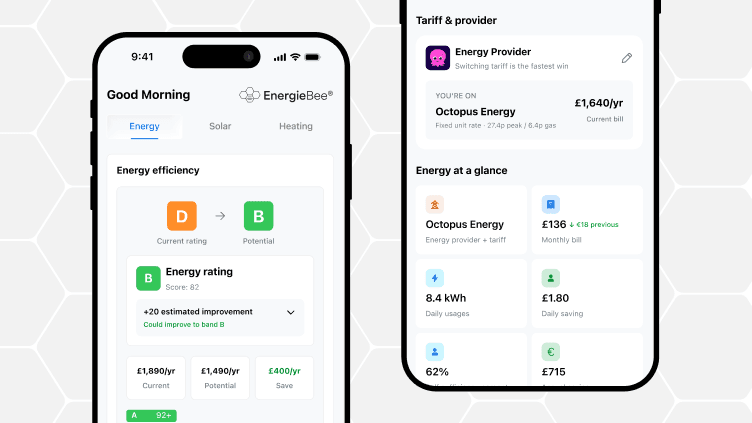
Compare similar days before and after changing an appliance routine, timer or heating setting. Check whether repeated peaks became smaller, while allowing for colder weather that may increase heating demand.
EnergieBee brings electricity, heating and solar patterns into one view, helping you see changes without waiting for the next monthly bill.
What People Ask About Saving Electricity
What Uses the Most Electricity in a UK Home?
The biggest users are usually appliances and systems that heat, cool or run for long periods, such as:
Electric heating
Electric showers and immersion heaters
Tumble dryers
Ovens
Fridge-freezers
How Can I Lower My Electricity Bill Without Spending Money?
Start with free changes:
Air dry clothes
Wash full loads at 30°C
Shorten electric showers
Boil only the water you need
Switch unnecessary devices off standby
Does Switching Appliances Off at the Wall Save Electricity?
Yes. Devices can still use electricity on standby, although the saving varies. Focus on televisions, games consoles, computers and grouped office equipment.
Does Washing Clothes at 30°C Save Electricity?
Yes. A 30°C wash uses less electricity because less energy is needed to heat the water. Use a warmer cycle when hygiene needs or clothing labels require it.
Can a Smart Meter Identify Individual Appliances?
Not automatically. A smart meter shows whole-home electricity use. To identify a specific appliance, compare usage spikes, test devices one at a time or use a plug-in monitor.
Is Electricity Cheaper at Night?
Only if your tariff includes cheaper off-peak periods, such as Economy 7 or a smart time-of-use tariff. Standard single-rate tariffs usually charge the same unit rate all day.