An energy tariff is the pricing plan your supplier uses to charge for gas or electricity. It includes a unit rate (pence per kWh) and usually a daily standing charge. Tariffs can be fixed, variable or offer cheaper electricity at certain times. Citizens Advice explains the main options.
But the cheapest-looking tariff isn't always the cheapest for your home. What matters is how much energy you use and when. This guide explains UK tariff types, the price cap, switching costs and how to check whether you're on the best energy tariff.
What Is an Energy Tariff?
An energy tariff is the pricing plan your supplier uses to charge you for gas or electricity. Most tariffs have two main charges:
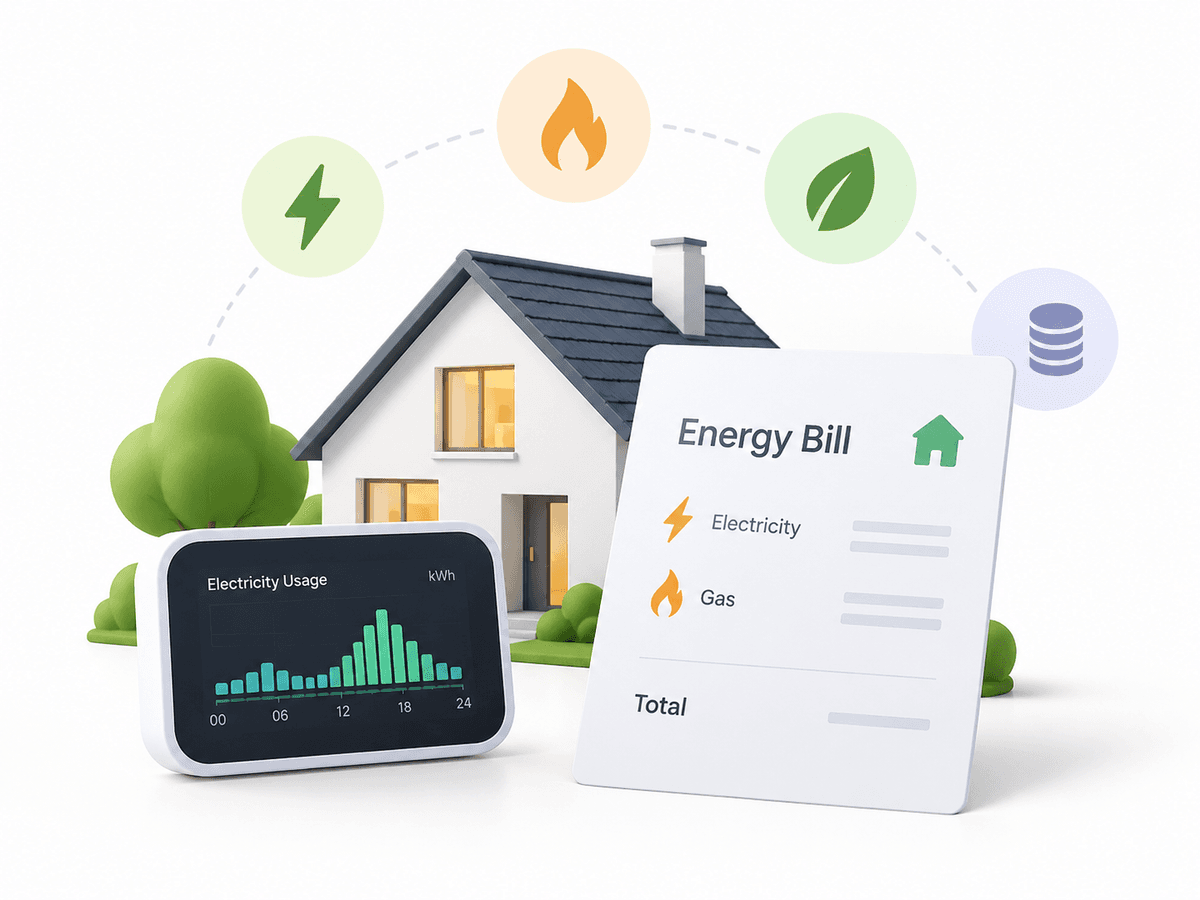
Unit rate: The price you pay for each kilowatt-hour (kWh) of energy used.
Standing charge: A daily fee you pay even when you use no energy.
Your supplier provides the energy, your meter measures consumption, and your tariff determines the price. You can choose electricity-only, gas-only or dual-fuel plans that combine both fuels.
Tariffs also differ in how prices change, as explained in Ofgem's energy billing guide.
How Is Your Energy Bill Calculated?
Your energy bill is calculated from the energy you use, your tariff's unit rates and daily standing charges. In simple terms:
Energy used (kWh) × unit rate + standing charges = your energy cost
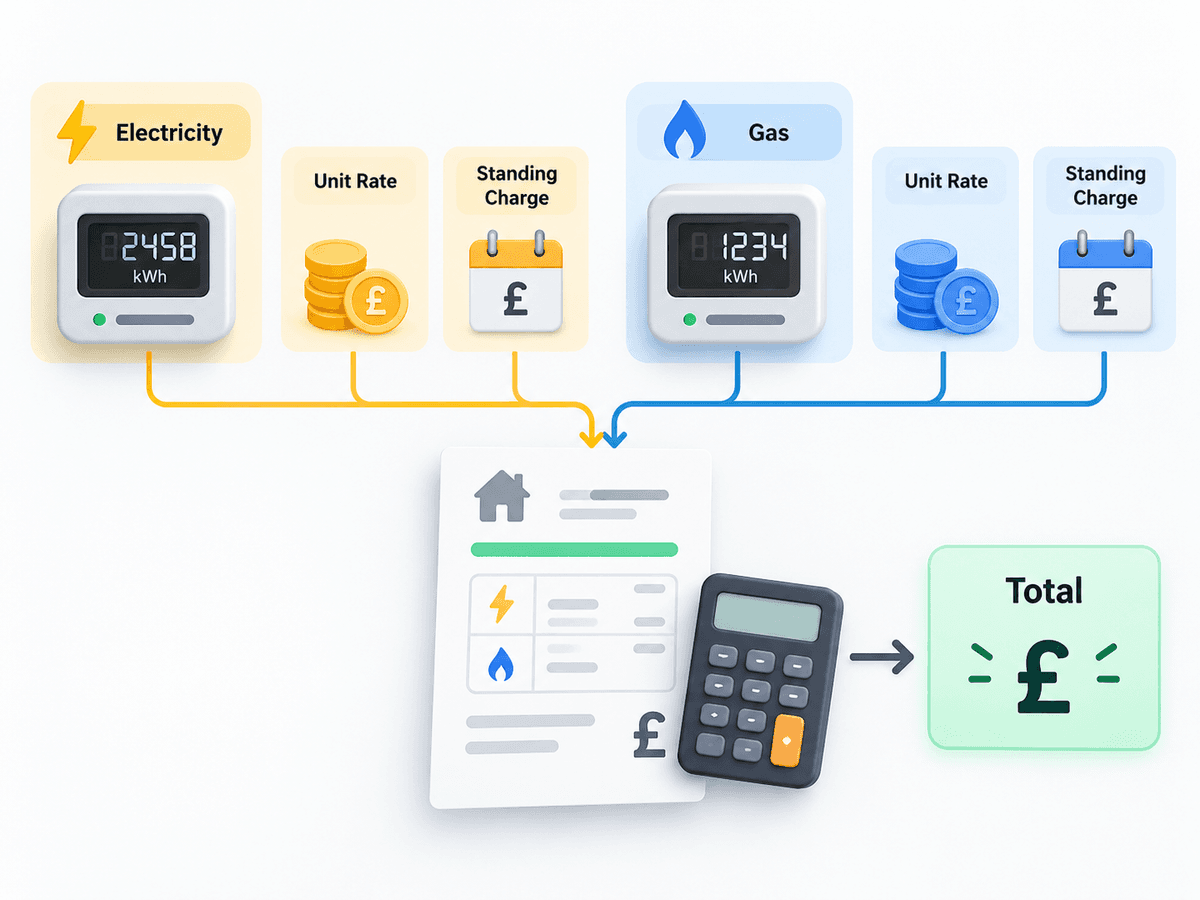
For example, using Ofgem's October–December 2026 average Direct Debit rates, a typical dual-fuel household using 2,500kWh of electricity and 9,500kWh of gas would pay roughly:
Cost | Annual amount |
Electricity | £658 |
Gas | £757 |
Standing charges | £308 |
Total | ~£1,723 |
Your actual bill can be higher or lower because rates vary by region, payment method and tariff, while your consumption depends on your household. Electricity is also temporarily charged at 0% VAT from 1 October 2026 to 31 March 2027, which we explain in our guide to the UK electricity VAT cut.
Direct Debit, prepayment and paying after receiving a bill can also have different rates, so compare the unit rate and standing charge, not just the supplier's estimated monthly payment.
Fixed vs Variable Energy Tariffs: What's the Difference?
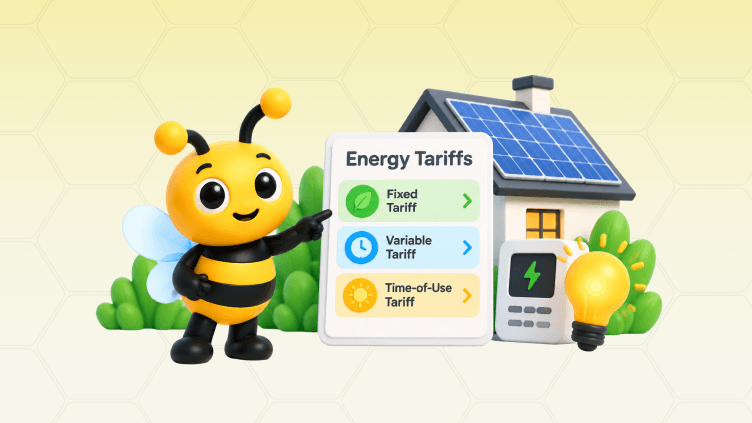
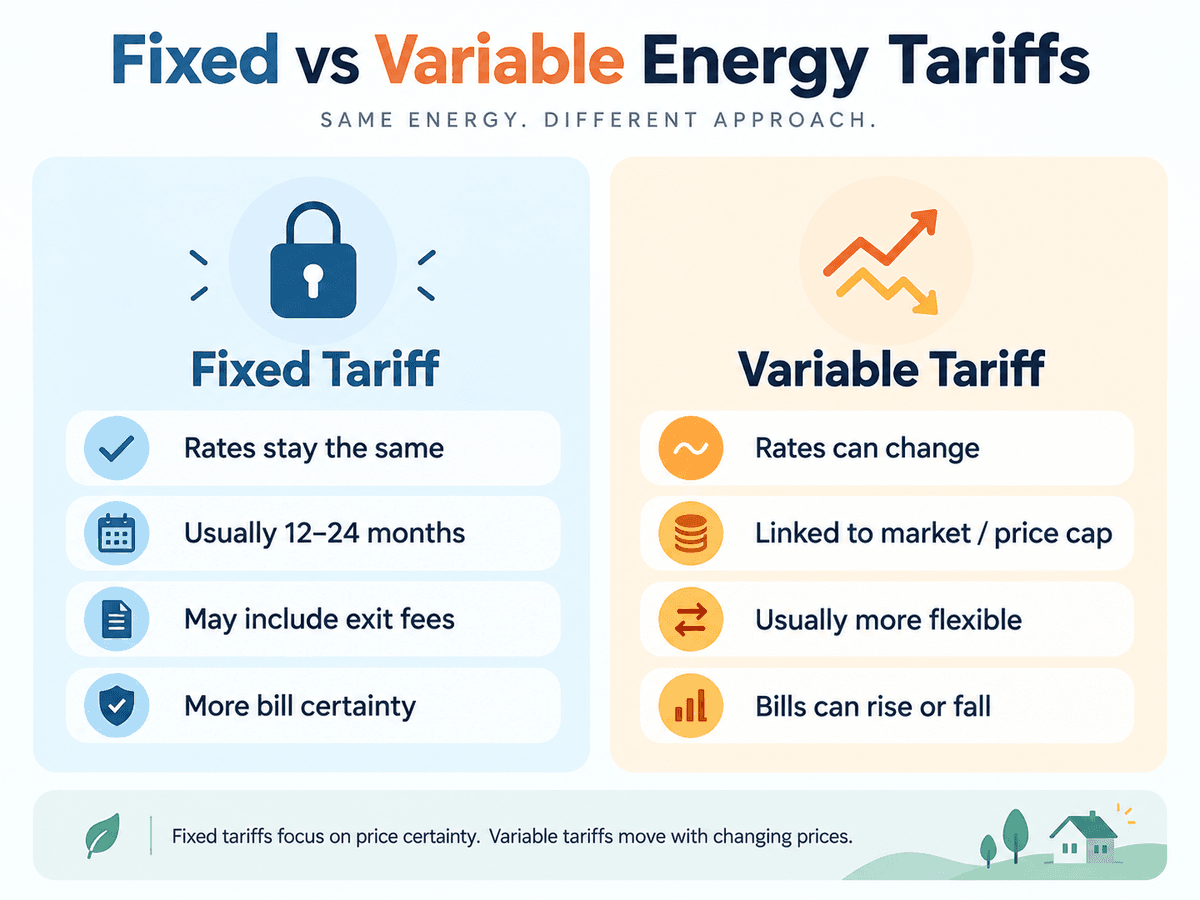
A fixed tariff locks your unit rates and standing charges for a set period, while a variable tariff can change when energy prices change. Fixed tariffs offer more price certainty, while variable tariffs give you more flexibility to switch.
Feature | Fixed tariff | Variable tariff |
Unit rates | Fixed for contract term | Can rise or fall |
Contract | Usually 12–24 months | Usually no fixed end date |
Exit fees | Often apply | Usually none |
If prices rise | Your rates stay fixed | Your rates may rise |
If prices fall | You may remain on a higher rate | You may benefit sooner |
What Is a Fixed-Rate Energy Tariff?
A fixed-rate energy tariff keeps your unit rates and standing charges unchanged for an agreed period, commonly 12 months or longer. Some plans charge an exit fee if you leave early.
However, fixed tariff does not mean fixed bill. Your rates stay the same, but if you use more gas or electricity, you still pay more.
What Is a Standard Variable Energy Tariff?
A standard variable tariff (SVT) has rates that can change. For households in Great Britain on default tariffs, rates are limited by Ofgem's energy price cap and normally change when the cap is updated.
Variable tariffs usually have no exit fee. If your fixed deal ends and you do not choose another tariff, you will normally move onto your supplier's standard variable tariff.
Should You Fix Your Energy Tariff or Stay Variable?
Fixing can make sense if you value predictable rates and want protection from potential price increases. Staying variable gives you more flexibility if prices fall or a better deal becomes available.
As of October 2026, some fixed deals are available below the current price cap, while forecasts suggest prices could rise again in January 2027. However, forecasts can change, so compare the unit rates, standing charges and exit fees, not just an estimated annual figure. MoneySavingExpert's current fixed-tariff analysis tracks how available fixes compare with the cap.
You can also follow our January 2027 energy price cap forecast before deciding whether the certainty of a fix is worth it for your household.
What Is the Energy Price Cap and How Does It Affect Your Bill?
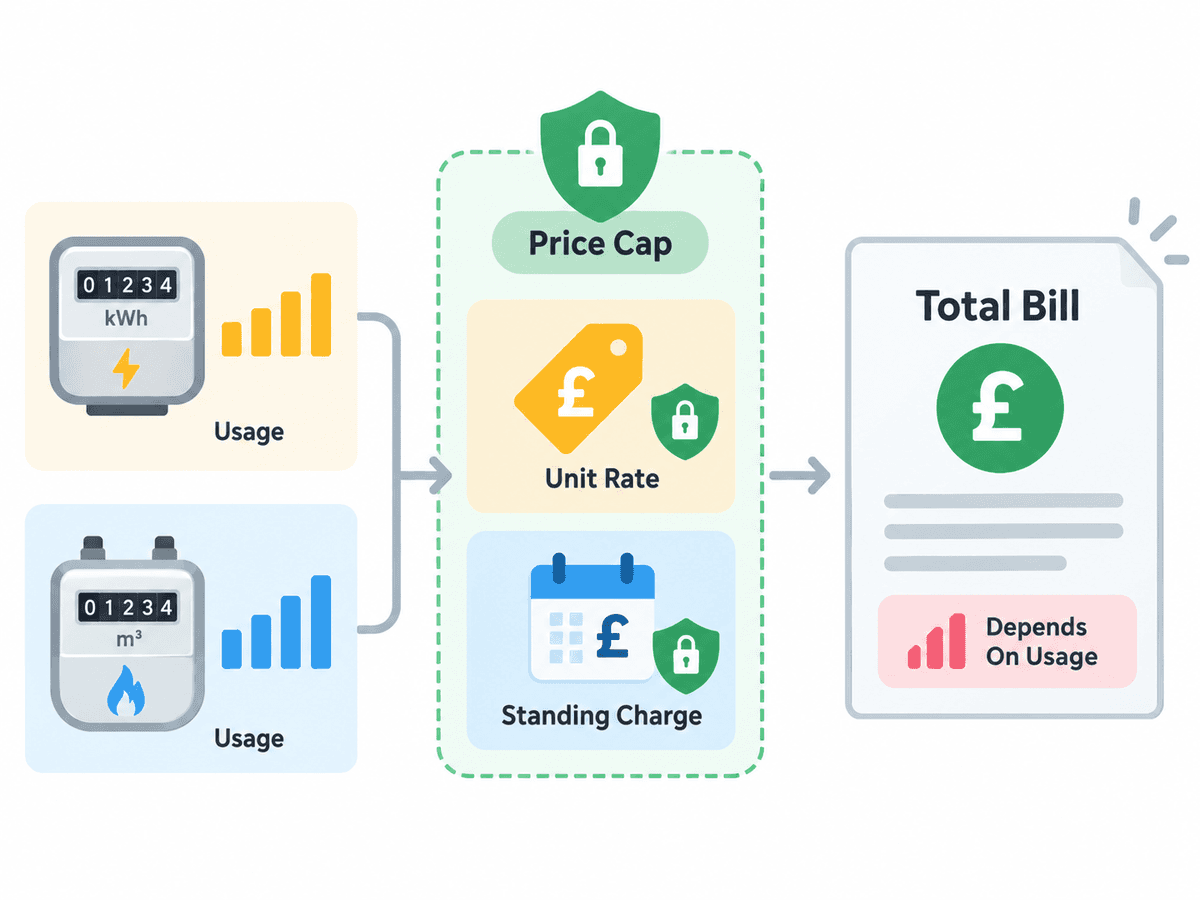
The energy price cap limits the unit rates and standing charges suppliers can charge households on standard variable tariffs in Great Britain. It does not cap your total bill.
If the cap rises, the maximum rates your supplier can charge may also rise, so the same amount of energy can cost more. If the cap falls, those rates can come down.
For example, two homes on the same capped tariff can receive very different bills because one may use much more gas or electricity than the other. The cap controls the price per unit, not the number of units you consume.
So your bill still depends mainly on:
how much energy you use;
your unit rates and standing charges;
your payment method and region.
From 1 October to 31 December 2026, Ofgem's typical annual figure is £1,723 for a dual-fuel household paying by Direct Debit. This is an illustration based on typical use, not a maximum bill.
For the full rules, see Ofgem's energy price cap guidance.
What Are the Different Types of Energy Tariffs in the UK?
UK energy tariffs include fixed, standard variable, tracker, time-of-use, EV, heat pump, prepayment, green and solar export tariffs. Most are variations of fixed or variable pricing, but they differ in when rates change, whether you need a smart meter and how you use energy.
Tariff type | How it works | Often suits |
Fixed | Rates stay fixed for a set term | Households wanting price certainty |
Standard variable | Rates can change, usually with the price cap | Households wanting flexibility |
Tracker | Rates follow another price, such as wholesale costs or the price cap | People comfortable with changing prices |
Economy 7/10 | Cheaper electricity during set off-peak hours | High overnight electricity users |
Dynamic time-of-use | Prices change throughout the day | Flexible smart-meter users |
EV | Cheap charging periods, usually overnight | EV owners |
Heat pump | Special electricity rates for heat-pump use | Heat-pump households |
Prepayment | Energy is paid for before use | Households wanting pay-as-you-go control |
Green | Supports renewable energy purchasing or generation | Households prioritising renewable energy |
Solar export | Pays for eligible electricity sent to the grid | Homes with qualifying renewable generation |
Tracker Energy Tariffs
Tracker tariffs have prices that move rather than staying fixed. Some follow wholesale energy prices, while others offer rates linked to or discounted against the energy price cap.
They can become cheaper when market prices fall, but bills can also rise more quickly. Check how often rates change, whether there is a maximum rate and any restrictions on leaving or rejoining.
Economy 7 and Economy 10 Tariffs
Economy 7 and Economy 10 give you cheaper electricity during specific off-peak periods and a higher rate at other times.
They can work well for homes using a large share of electricity overnight, particularly those with storage heaters. If you're unsure what heating system you have, understanding your setup should come before choosing a specialist tariff.
Your exact off-peak hours can vary, so check your meter and tariff rather than assuming every Economy 7 plan uses the same times.
Static and Dynamic Time-of-Use Tariffs
Time-of-use tariffs charge different electricity prices depending on when you use it.
Static tariffs have predetermined cheap and expensive periods. Dynamic tariffs can change prices much more frequently, sometimes every half hour.
They are most useful if you can shift appliances, battery charging or other flexible demand away from expensive periods.
Electric Vehicle Tariffs
EV tariffs usually offer cheaper electricity for charging during overnight or off-peak hours. Some require a compatible smart meter, EV or charger.
Compare the cheap charging rate alongside the normal household rate. A very low overnight price may not save money overall if your daytime electricity is substantially more expensive.
Heat Pump Tariffs
Heat pump tariffs are designed around the higher electricity demand created by electric heating. They may offer cheaper electricity at particular times or special rates for compatible equipment.
If you combine heating with solar, batteries or smart tariffs, our guide to running heat pumps with solar panels explains how these systems can work together.
Prepayment and Dual-Fuel Tariffs
A prepayment tariff requires you to pay for energy before you use it, usually through a prepayment meter or smart meter.
A dual-fuel tariff simply means one supplier provides both your gas and electricity. It is convenient, but it is not automatically cheaper than using separate suppliers.
Green Energy and Low-Standing-Charge Tariffs
Green tariffs are marketed around renewable energy, but the details differ between suppliers. Check the supplier's fuel-mix information and how its renewable claims are supported rather than relying on the tariff name alone.
Low or no-standing-charge tariffs reduce the fixed daily cost but may charge more per unit. They can therefore suit some low-energy users better than high-consumption homes.
Solar Export Tariffs and the Smart Export Guarantee
Solar export tariffs pay eligible households for electricity they generate and send to the grid. The Smart Export Guarantee requires participating suppliers to offer payments for eligible exported renewable electricity.
An export tariff is separate from the tariff you use to buy electricity. If you're considering solar, see whether solar panels are worth it for your home before comparing export rates.
Which Energy Tariff Is Right for Your Home?
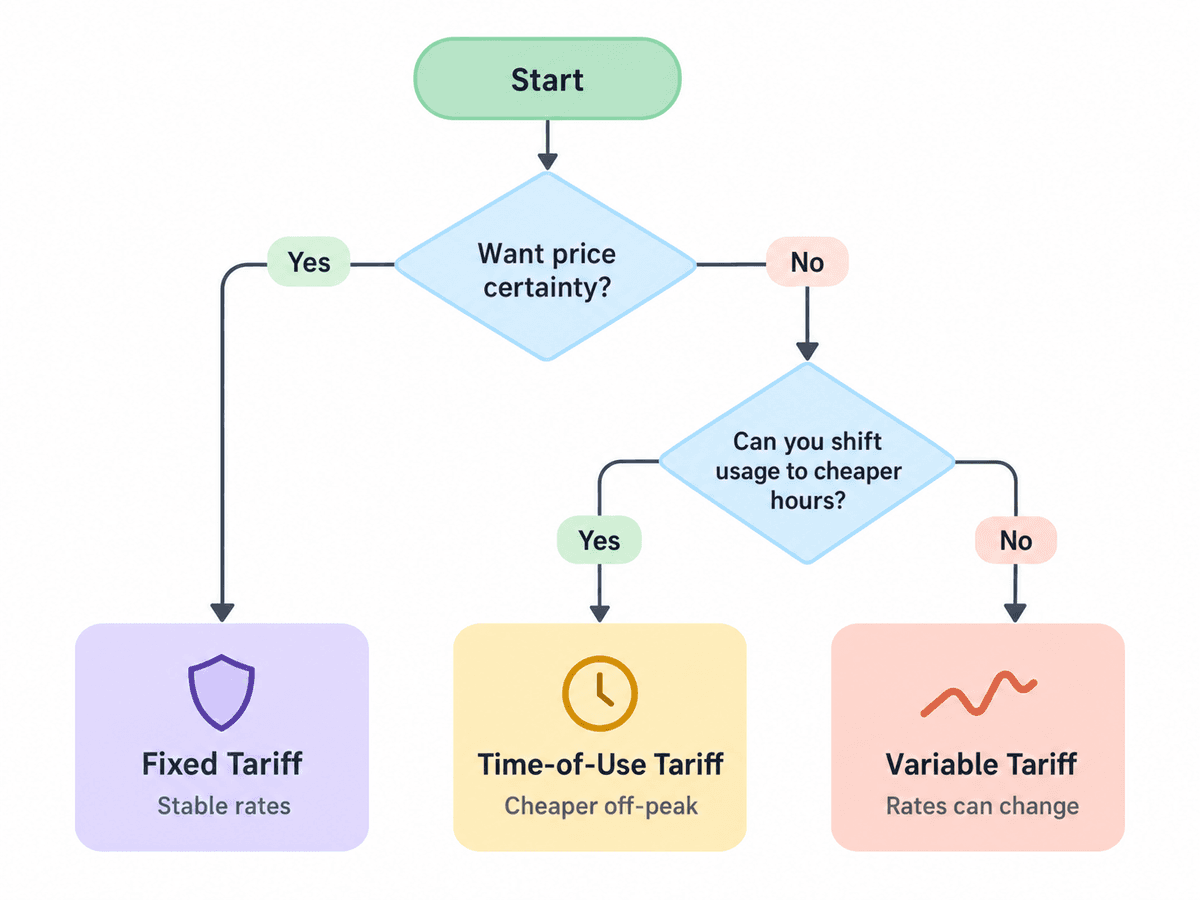
The right energy tariff depends on when and how much energy your household uses. A fixed tariff may suit someone who wants predictable rates, while time-of-use tariffs can work better if you can move a large share of electricity use to cheaper periods.
Your situation | Tariff worth comparing | Why |
You want predictable rates | Fixed tariff | Protects against rate increases during the contract |
You want flexibility | Standard variable tariff | Usually easier to leave without exit fees |
You use lots of electricity overnight | Economy 7 or time-of-use | Offers cheaper off-peak electricity |
You charge an EV at home | EV tariff | Can provide much cheaper overnight charging |
You heat with a heat pump | Heat pump tariff | May offer cheaper periods suited to heating demand |
You have solar panels | Import tariff + export tariff | Lets you buy electricity while earning from eligible exports |
You use very little energy | Low-standing-charge tariff | A lower daily charge may matter more |
You prefer pay-as-you-go budgeting | Prepayment tariff | Lets you pay for energy before using it |
If your home uses storage heaters or other electric heating, first understand which type of heating system you have, because this can strongly affect whether an off-peak tariff saves money.
The key is to compare tariffs using your own annual consumption and usage times, rather than choosing solely from the advertised unit rate. A cheap night rate, for example, offers little benefit if most of your electricity is used during expensive daytime hours.
How Do You Compare Energy Tariffs Properly?
Compare Tariffs Using Your Own Annual Energy Use, Not Just The Advertised Monthly Cost. Check:
Unit Rates And Standing Charges.
Contract Length And Exit Fees.
Peak And Off-Peak Hours.
Smart Meter Requirements.
For Time-Of-Use Tariffs, Also Consider When You Use Electricity. Our Guide On Using Hot Water To Store Cheap Electricity Shows Why Shifting Usage Can Change Which Tariff Works Best.
Practical Tariff Comparison Checklist
Before Switching, Make Sure You Know:
Your Annual Electricity And Gas Usage In kWh.
The Tariff's Unit Rate And Standing Charge.
Any Exit Fee.
The Contract End Date.
Cheap-Rate Hours, If Applicable.
Whether A Smart Meter Is Required.
The Estimated Annual Cost Based On Your Own Usage.
What Do Energy Supplier Tariff Names Actually Mean?
Energy suppliers often use brand names for tariffs, but the important part is the pricing structure behind the name. A name such as “Agile” or “Drive” tells you less than whether the tariff is fixed, variable, tracker or time-of-use.
Supplier Tariff Name | What It Generally Means |
Octopus Tracker | Wholesale-linked tracker tariff |
Agile Octopus | Dynamic time-of-use tariff |
Octopus Go | EV-focused time-of-use tariff |
Cosy Octopus | Heat-pump time-of-use tariff |
E.ON Next Pledge | Price-cap-linked tariff |
E.ON Next Drive | EV tariff |
E.ON Next Pumped | Heat-pump tariff |
E.ON Next Flex | Standard variable tariff |
OVO Simpler Energy | Standard variable tariff |
Current supplier pages use these names for different tariff structures, but products and terms can change, so always check the unit rates, standing charges and eligibility before switching.
The CMA cleared E.ON's anticipated acquisition of OVO on 1 October 2026. That clearance does not by itself mean the ownership transfer has completed, so customers should continue following official communications about their existing tariff.
How Can You Switch Energy Tariffs Without Paying Unnecessary Fees?
Check your exit fee before switching and compare it with the amount you could actually save. If you are within the final 49 days of a fixed tariff, suppliers cannot charge an exit fee for switching.
A domestic energy switch normally takes up to five working days, and you have a 14-day cooling-off period after agreeing a new contract. Ofgem's switching guidance explains the process and your rights.
If your supplier goes out of business, your energy supply will continue. Ofgem appoints a new supplier and protects domestic customers' credit balances, so take a meter reading and wait for the new supplier to contact you before making another switch.
How Can You Reduce Energy Bills Without Switching Tariffs?
You can lower your bill by reducing unnecessary consumption and moving flexible electricity use into cheaper periods where your tariff allows it.
Find repeated electricity spikes and unnecessary standby use.
Shift EV charging, laundry or hot-water heating to cheaper hours where possible.
Improve heating schedules and avoid heating rooms when they are not needed.
For more practical ideas, see 10 Ways to Save Electricity at Home and How Can I Save Money on Heating?.
Understand and Manage Your Energy Tariff With EnergieBee
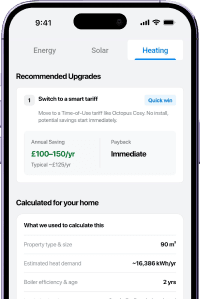
The best tariff becomes easier to identify when you know when and how your home actually uses energy. EnergieBee Energy shows live consumption, daily usage patterns and tariff-aware bill forecasts, helping you see whether shifting electricity to cheaper periods could reduce costs.
EnergieBee can also work with smart tariffs, solar, batteries and EV charging to help move flexible energy use into cheaper periods. Before changing tariff, use your real household data rather than relying only on an advertised average.
Understand Your Energy Tariff With EnergieBee
See how your home uses energy and choose a tariff that better fits your daily usage.
Frequently Asked Questions About Energy Tariffs
How Do I Find Out Which Energy Tariff I'm Currently On?
Check your latest energy bill or online account. It should show your tariff name, unit rates, standing charges and contract end date. If you cannot find them, ask your supplier directly.
Can I Change My Energy Tariff If I Rent My Home?
Yes, if you pay the energy supplier directly, you can normally choose your own tariff or supplier. If your landlord pays the supplier and includes energy in your rent, you usually cannot switch it yourself. Citizens Advice explains energy switching for tenants.
Can I Switch Energy Suppliers If I'm in Debt?
Sometimes. If you have been in debt for less than 28 days, you can normally switch and the balance goes onto your final bill. Prepayment customers can also switch with up to £500 debt per fuel under Ofgem's rules.
Can I Keep My Fixed Energy Tariff When I Move House?
Sometimes, but it is not automatic. Check whether your supplier allows the tariff to move with you, as your new property's region, meter and existing supplier can affect what happens.
Why Are My Economy 7 Electricity Charges Different in Summer?
Some Economy 7 off-peak periods can appear one hour later during British Summer Time because the tariff or meter timing may remain tied to GMT or UTC. Exact hours vary, so check your meter and supplier rather than assuming the same times all year. Ofgem's Economy 7 guide explains how peak and off-peak periods work.
Are Energy Tariffs in Northern Ireland Different From Great Britain?
Yes. Northern Ireland has a separate energy market and regulatory system, so Great Britain's Ofgem price cap does not apply in the same way. Tariffs are overseen by the Utility Regulator for Northern Ireland.