The cheapest standing charge for electricity is 0p a day. Utilita and E Energy offer zero-standing-charge options for prepayment customers, but charge more for the first two units used each day. That higher unit price can reduce or cancel the saving.
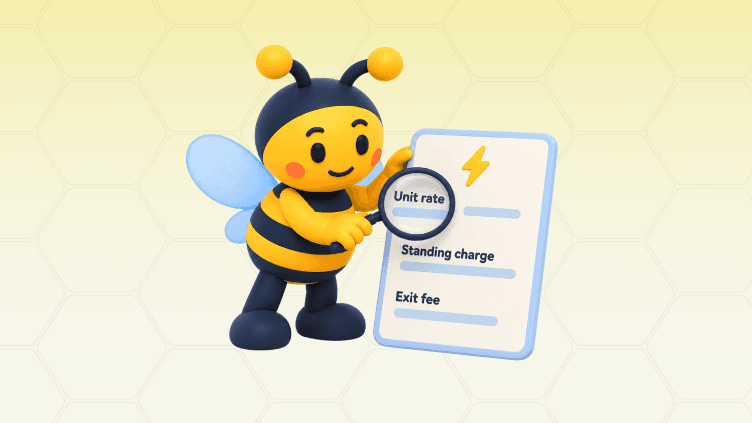
To find the cheapest deal for your home, compare the full yearly bill. Check the standing charge alongside the unit rate, your electricity use and any exit fee. A higher daily charge could still mean a cheaper bill.
What Is an Electricity Standing Charge?
An electricity standing charge is a fixed daily fee, separate from the price you pay for each kilowatt hour (kWh). If your tariff includes one, you normally pay it even when you use no electricity.
It helps cover electricity networks, metering and billing. These costs still exist on zero-standing-charge tariffs; suppliers recover them differently.
Find the daily charge on your bill or tariff information label, alongside unit rates and exit fees.
What Is the Average Electricity Standing Charge?
For 1 October to 31 December 2026, Ofgem’s Great Britain average for households paying by Direct Debit is 54.83p a day. That is around £200 over 365 days if the rate stays unchanged.
The corresponding average electricity unit rate is 26.32p/kWh. The £1,723 annual price-cap benchmark covers a typical dual-fuel Direct Debit household; it is not an electricity-only figure or a limit on your bill.
These benchmarks apply to price-capped tariffs, not every deal. Actual rates depend on your region, payment method and tariff.
Why Does It Vary by Region and Payment Method?
Regional electricity network costs differ, including the cost of building and maintaining infrastructure. Customer numbers and consumption also affect how costs are shared.
The House of Commons Library explains that network charges account for about 60% of electricity standing charges under this cap.
Payment method matters too. Standard-credit customers generally face higher standing charges because of higher operating and debt-related costs. Compare offers for your postcode and payment method; another region’s lower benchmark is not a tariff you can choose for your address.
Which Suppliers Offer Low or No Standing Charges?
Utilita offers zero-standing-charge tariffs for Pay As You Go customers. E Energy also offers an option for smart prepayment customers, as explained in MoneySavingExpert’s low and no standing-charge guide. Confirm meter eligibility and current prices before switching.
What Is the Catch With Zero Standing-Charge Tariffs?
Utilita and E Energy charge a higher rate for the first 2 kWh used each day, followed by a lower rate for subsequent consumption.
Savings depend on daily usage, both unit rates and how often you use no electricity. Even an empty property may consume electricity through a fridge, freezer or other equipment left running.
Compare the complete charging structure rather than the daily fee alone.
What Other Low Standing-Charge Options Are Available?
EDF’s Simply Tracker currently advertises £25 a year off standing charges for one fuel, or £50 for both. Prices can rise or fall with the price cap, and exit fees apply.
Our dual-fuel tariff guide explains why gas and electricity charges should be checked separately.
Eligible customers may also access lower-charge pilot tariffs through Ofgem’s one-year trial with EDF, E.ON, Octopus and British Gas, explained below. Places are limited.
Include fixed electricity deals in your comparison. Check unit rates, daily charges, contract length and exit fees using the same annual consumption.
Does a Lower Standing Charge Mean a Cheaper Bill?
Not always. A higher unit rate can outweigh the saving from a lower daily charge.
How Do You Compare Annual Electricity Costs?
For a single-rate tariff:
Annual cost = (annual kWh × unit rate) + (365 × daily standing charge).
Convert pence to pounds, use the same consumption for every quote and include relevant fees. Calculate day/night or tiered rates separately.
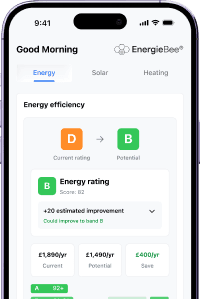
Check Your Next Tariff With EnergieBee
A low daily charge can hide a higher bill. Compare rates and yearly estimates in one free app.
When Does a Lower Unit Rate Save More?
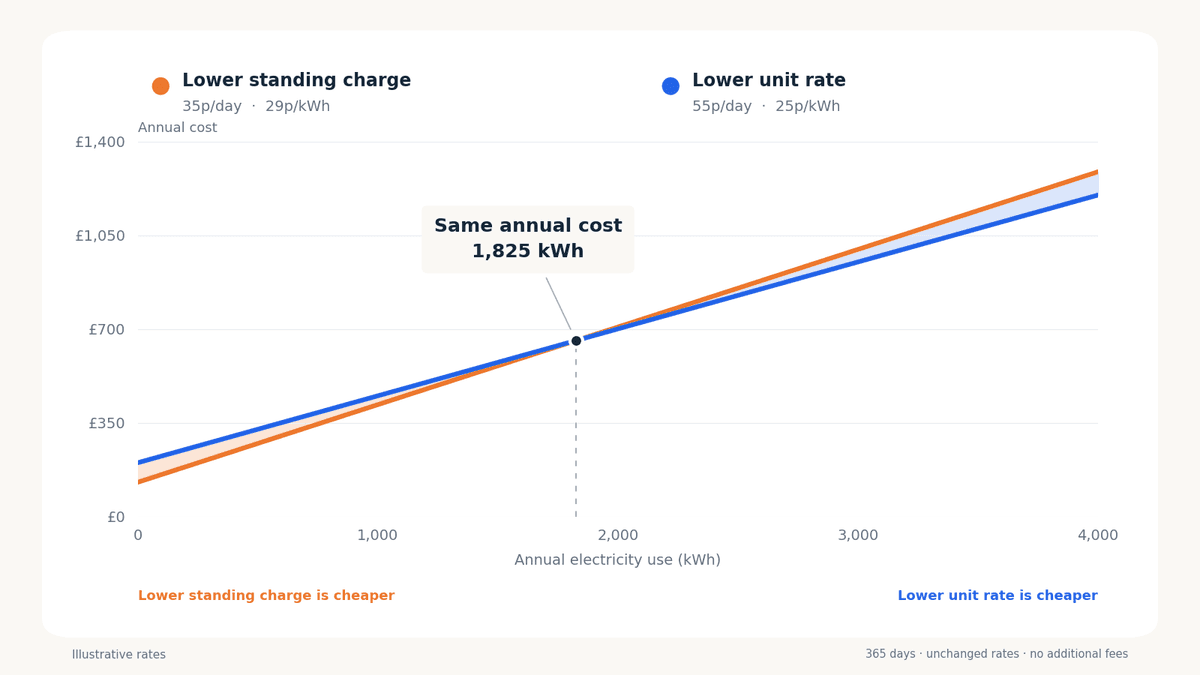
These illustrative figures assume 2,500 kWh, unchanged rates for 365 days and no fees:
Daily charge | Unit rate | Annual cost |
35p | 29p/kWh | £852.75 |
55p | 25p/kWh | £825.75 |
The lower unit rate saves £27 annually. These tariffs break even at 1,825 kWh a year; below that, the lower standing charge costs less.
Will Electricity Standing Charges Be Scrapped?
As at 27 October 2026, electricity standing charges have not been abolished across Great Britain. Ofgem’s one-year pilot, launched from June 2026, tests lower daily charges rather than removing them for everyone.
Pilot dual-fuel customers could pay about £150 less annually in standing charges, split across both fuels. However, higher unit rates could outweigh that reduction. A lower daily charge does not guarantee a cheaper bill.
Understand Your Energy Use With EnergieBee
Before switching, check what the whole tariff could cost you. EnergieBee brings available plans into one app, letting you compare daily standing charges, unit rates and estimated annual bills together.
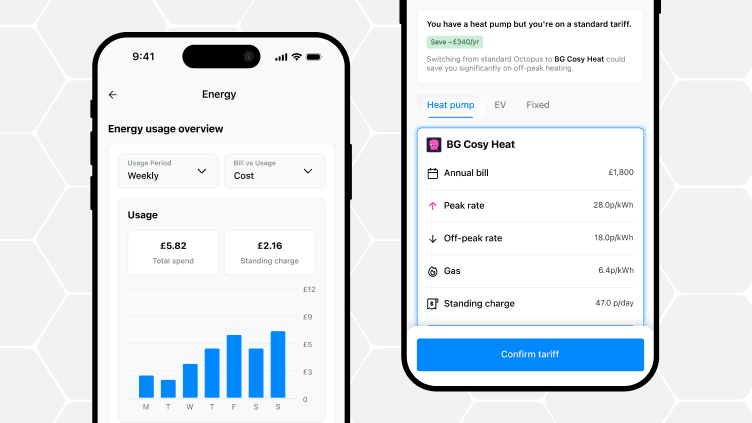
You can also explore your home’s energy use and how everyday habits affect your bills.
Download EnergieBee for free, create your account and add your home. Compare available plans with your current tariff before choosing your next deal.
Frequently Asked Questions
Do You Pay Standing Charges When You Use No Electricity?
Yes, if your tariff includes one. The daily charge normally applies even while you are away. Zero-standing-charge tariffs recover costs differently.
Do Half-Price Electricity Offers Reduce Standing Charges?
Usually not. British Gas PeakSave discounts eligible electricity use, while the standing charge remains payable.
Its Charge Power battery tariff gives 50% off the tariff’s electricity unit rate between midnight and 5am daily. The full standing charge still applies.
Does Martin Lewis Recommend Fixing Energy Prices?
Martin Lewis’s guidance favours considering a competitive fix, not accepting any fixed offer. Compare the full cost, exit fees and the risk of variable prices changing. Our guide to fixing energy prices explains the decision.
Is EDF or Octopus Cheaper for Electricity?
Neither is always cheaper. Compare current quotes for your postcode, payment method and annual usage, including unit rates, standing charges and exit fees.
 David Price