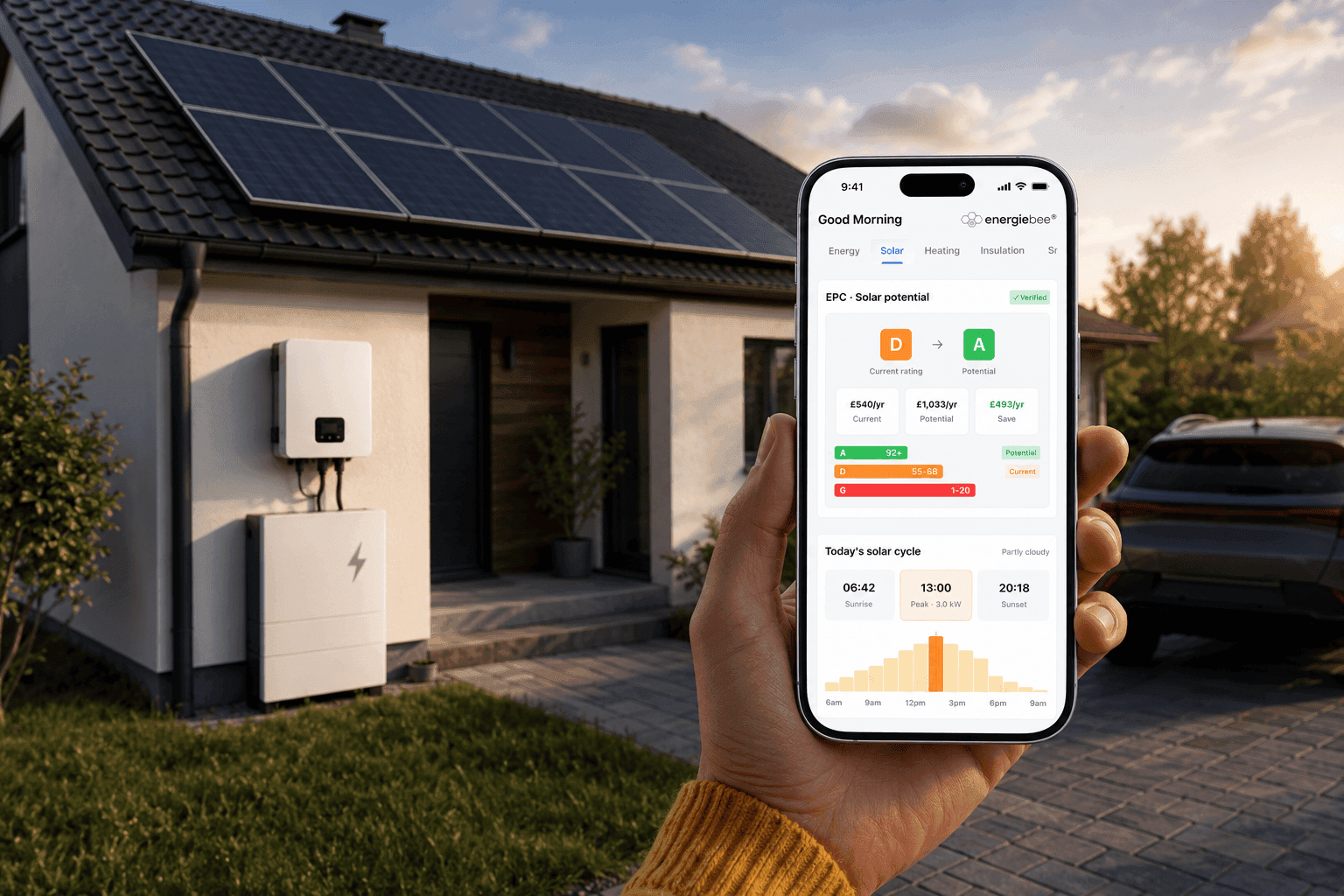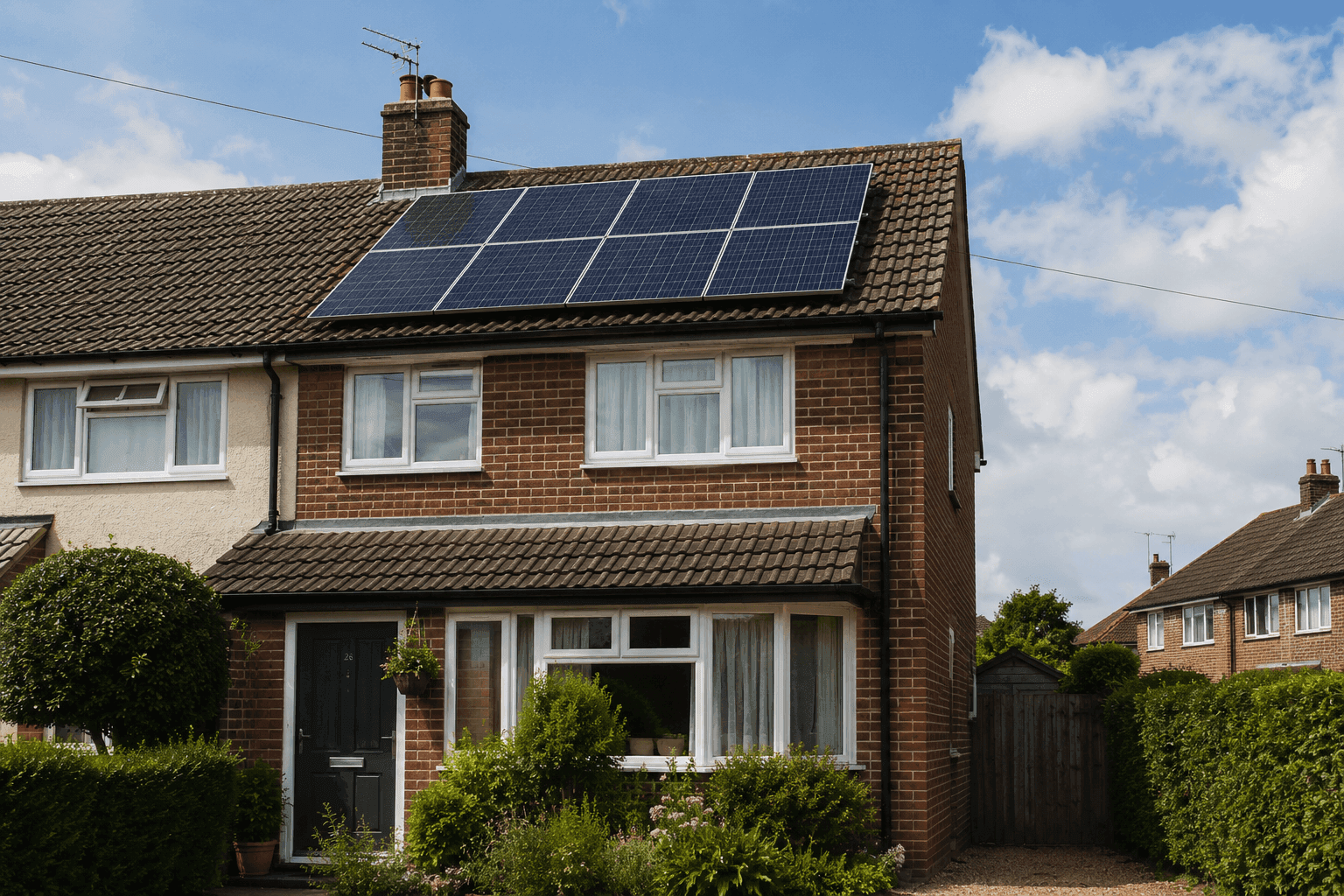
Solar energy has become one of the most widely used renewable energy sources in the world today.
It is simple in concept but complex in behaviour: sunlight is constant in presence, but variable in intensity, timing, and distribution. This variability shapes how solar energy systems perform across homes, cities, and larger energy networks.
Understanding solar energy means understanding how sunlight becomes part of everyday energy systems.
What solar energy is
Solar energy is energy produced from sunlight.
It exists in the form of radiation, which can be captured and transformed into usable energy through different technologies. The two most common forms are electricity generation and heat production.
Photovoltaic systems convert sunlight directly into electricity. Solar thermal systems convert sunlight into heat.
Both rely on the same source, but they behave differently depending on how energy is captured and used.
How solar energy fits into modern energy systems
Solar energy plays an increasingly important role in global energy systems. Its growth is part of a broader transition toward renewable energy sources that reduce reliance on fossil fuels and respond more directly to environmental conditions.
According to the International Energy Agency, renewable energy is expected to account for most global electricity growth in the coming years, with solar energy representing a major part of that expansion. https://www.iea.org
What makes solar energy significant is not only its scale, but the way it changes how energy is produced: generation becomes distributed, and environmental conditions become part of system performance.
Why solar energy matters for households
At the level of the home, solar energy changes the relationship between energy consumption and energy production.
Instead of relying exclusively on external supply, households with solar systems generate part of their own energy locally.
This creates a closer link between daily routines and environmental conditions. Energy production follows sunlight, while energy use follows human activity.
How photovoltaic systems work
How solar thermal systems work
Solar thermal systems use sunlight to produce heat instead of electricity.
This heat is commonly used for water heating or supporting household heating systems.
In larger installations, solar thermal technology can be used at industrial scale to produce high-temperature heat for energy generation.
Unlike photovoltaic systems, solar thermal systems focus on capturing and storing thermal energy directly.
Passive solar energy in buildings
Some solar energy systems do not rely on technology at all.
Passive solar design uses architecture to manage how sunlight interacts with a building.
This includes how a building is oriented, how light enters interior spaces, and how materials absorb or retain heat.
In these cases, energy is shaped by design rather than devices.
Hybrid solar systems
Solar energy is often used together with other energy sources.
Hybrid systems combine solar with wind energy, battery storage, or grid electricity to balance variability in production.
These systems help align energy availability with demand over time, especially when sunlight conditions change.
Advantages of solar energy
Solar energy is widely used because it combines environmental and practical benefits:
It is based on a renewable source that is naturally replenished every day.
It produces energy without direct emissions during operation.
It can be deployed at different scales, from homes to large power plants.
It supports distributed energy generation closer to where energy is used.
These characteristics make solar energy a central component of modern energy systems.
How solar energy is used in everyday life
Solar energy is present in many parts of daily life, even when it is not directly visible.
In homes, it supports electricity generation and water heating.
In agriculture, it powers irrigation systems in remote areas.
In cities, it contributes to lighting and public infrastructure.
In industrial systems, it is integrated into larger renewable energy networks.
Its applications continue to expand as technology develops and costs decrease.
Why solar energy is part of a larger transition
Solar energy can be a structural change in how energy systems operate.
Production is becoming more distributed.
Energy supply is increasingly influenced by environmental conditions.
Homes and buildings are becoming active parts of energy systems rather than passive endpoints.
This shift changes how energy is understood at both technical and everyday levels.
At EnergieBee, we believe in the importance of finding smart solutions for balance and comfort. Solar energy is key to create a balanced, cosy future for all.

 David Price
 Danie Latorre