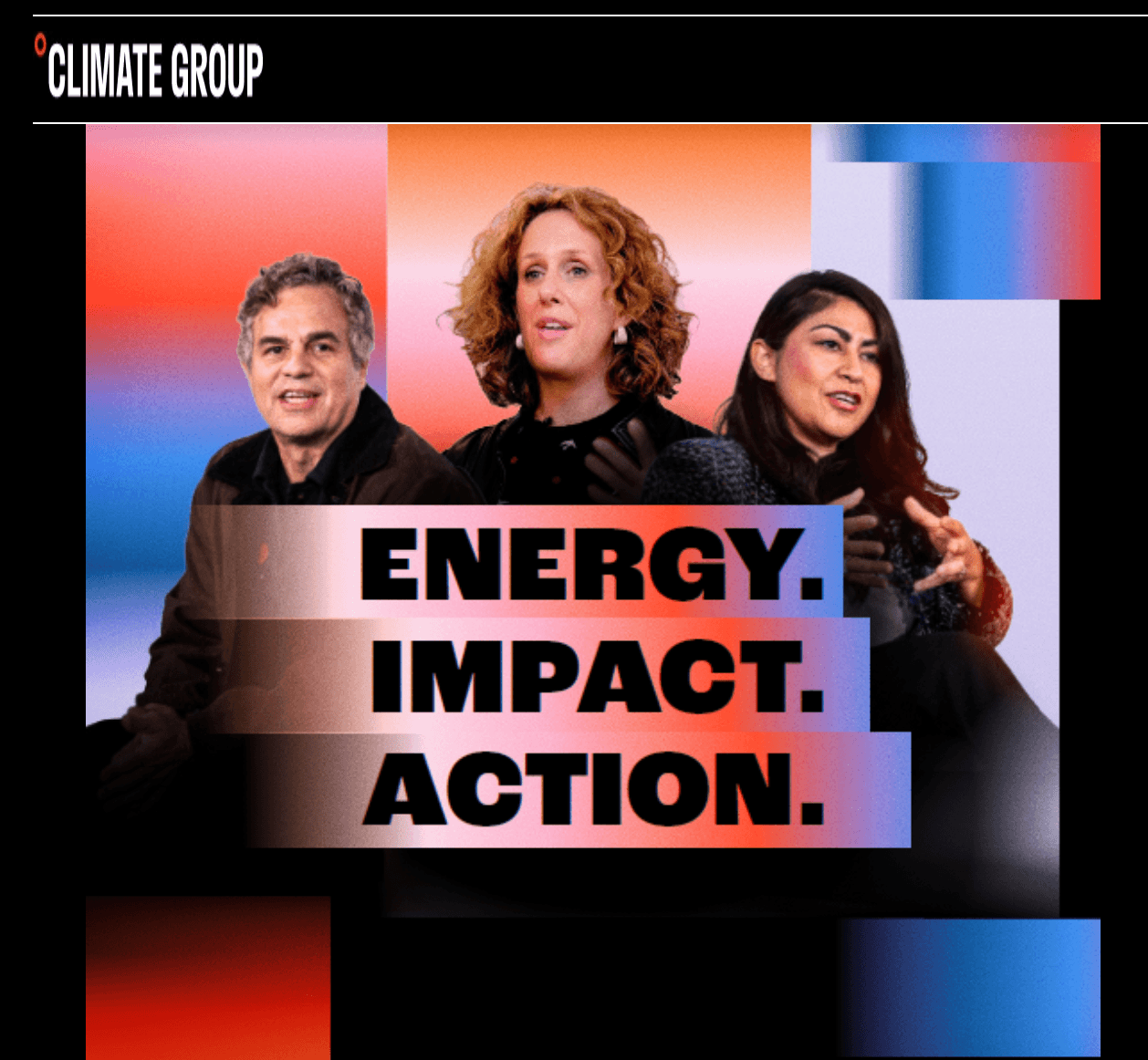
Climate Week NYC is the largest annual climate event of its kind anywhere in the world. Run by Climate Group since its launch in 2009, it was originally conceived to build momentum ahead of the Copenhagen climate talks, and it has grown every year since. The 2026 edition, held from 20 to 27 September, brought together more than 1,000 events across the city — in person, hybrid and online — drawing well over 100,000 participants, from heads of state and city mayors to investors, scientists and campaigners.
Unlike a UN climate summit, Climate Week NYC isn't a negotiating forum with binding outcomes. It runs deliberately alongside the UN General Assembly's High-Level Week, using that overlap to pull governments, businesses and civil society into the same rooms, conversations and headlines at once. What comes out of it tends to be partnerships, corporate pledges, procurement decisions and policy signals, rather than treaties — the sort of commitments that then get tracked, and sometimes challenged, in the months that follow.
Why it matters to anyone who cares about nature
For people following environmental issues closely, Climate Week NYC works as something close to an annual check-up on where climate action actually stands, separate from the diplomatic choreography of COP. It's where corporate net-zero pledges get tested against delivery, where city governments compare notes on heat, flooding and housing, and where the energy industry lays out what it's actually building rather than only what it's promising.
This year's edition landed at a particularly tense moment. Organisers pointed to record heat, strained supply chains and conflict-affected energy systems as the backdrop to the week, and several participants were candid that climate, security and energy policy are now impossible to separate. The week also followed a widely criticised COP30, which fell short on fossil fuel phase-out commitments, renewable energy targets and global energy efficiency goals — leaving Climate Week NYC to pick up some of that unfinished business ahead of COP31, due to be hosted by Turkey in November.
What came out of this year's edition
A few themes ran through the week more strongly than others.
Electrification took centre stage. The 2026 agenda put energy and electrification above almost everything else, tied to the electrification target due to be formally discussed at COP31: 35% global electrification by 2035. A coalition of government and industry leaders used the week to launch Electrify Now, a multi-year global platform aimed at accelerating clean electrification of the world economy, strengthening energy security, cutting reliance on volatile fossil fuels and supporting jobs and resilient supply chains.
Cities showed up with results. C40, the global network of climate-focused mayors, used its closing recap to stress that city leaders "aren't waiting for the future" — citing New York's $350,000 expansion of its cooling pop-up programme for outdoor workers across all five boroughs, alongside a new C40–Ramboll report, Where Housing Meets Climate, linking affordable housing expansion to building emissions cuts.
New York State brought concrete funding. Governor Kathy Hochul and the New York State Energy Research and Development Authority (NYSERDA) used the week to confirm a second $1 billion instalment in the state's Sustainable Future Program, alongside $1 billion in energy rebate cheques for roughly 8 million New Yorkers facing high utility costs. NYSERDA also confirmed contracts for 1.7 gigawatts of new large-scale energy resources, including eight bulk energy storage projects and 13 land-based renewable energy projects.
Science delivered a sobering headline. The Global Commons Alliance used the week to launch the Planetary Health Check 2026, produced by more than 60 scientists at the Potsdam Institute for Climate Impact Research's Planetary Boundaries Science Lab. Its central finding: seven of the nine recognised planetary boundaries have now been transgressed, though the report's authors maintain there's still room to change course.
Not every signal was encouraging. Bloomberg Green noted that Turkey, hosting COP31 and pushing the 35% electrification target discussed throughout the week, isn't currently on track to meet that goal itself — a reminder that Climate Week NYC's energy is easier to generate than to convert into delivery.
What was said about energy, solar power and other renewables
Energy was arguably the loudest thread running through the entire week, and the conversation split fairly cleanly into two camps: enormous ambition, and the practical grid-level obstacles standing in its way.
On the ambition side, the Global Renewables Summit returned to Climate Week NYC for its third year, bringing together heads of state, ministers, CEOs and investors specifically to accelerate renewable-powered electrification — with the Electrify Now platform as its headline outcome. Governments and companies used the week to frame renewables not just as a climate necessity but as an energy security strategy, reducing exposure to volatile fossil fuel markets.
On the practical side, sessions hosted by groups including the Environmental Defense Fund dug into exactly why that ambition keeps colliding with reality. Electricity demand is rising fast, driven simultaneously by transport and building electrification, a surge in data centre and AI infrastructure, and growing distributed energy resources feeding power back into the grid. Panellists pointed to interconnection backlogs and generator queues — the waiting lists new solar, wind and storage projects face before they can actually connect to the grid — as one of the biggest practical brakes on renewable deployment in the US, alongside the need for closer coordination between federal regulators, grid operators, state authorities and utilities.
A second, less comfortable theme surfaced too: local opposition to renewable energy projects on the ground. Columbia Law School's Sabin Center for Climate Change Law used the week to launch two new reports examining why utility-scale wind and solar projects are increasingly contested at community level, and how misleading claims have fuelled some of that resistance — alongside a session on practical strategies to help real projects move forward despite it. The implicit message was that building public trust, at the same pace as building panels and turbines, is now part of the renewables story.
New York's own announcements fit squarely within this picture: the state's 13 newly contracted land-based renewable projects and eight storage projects aren't abstractions, but with the interconnection and permitting friction raised elsewhere in the week, a live test of whether a state-level commitment can actually be delivered on the promised timeline.
The takeaway
Climate Week NYC 2026 didn't produce a single defining breakthrough, and organisers were fairly open that this wasn't really its job. What it did produce was a clearer picture of where climate action genuinely stands: strong institutional appetite for electrification and renewables, real funding commitments at state and city level, a stark scientific reminder of how much ground has already been lost on planetary boundaries, and an honest airing of the grid, permitting and public trust problems that now sit between ambitious targets and actual megawatts on the ground. For anyone tracking the shift from climate promises to climate delivery, that mix of hard numbers and harder obstacles is arguably more useful than another round of pledges would have been.
Sources
Climate Group / Wikipedia — Climate Week NYC history and scale
GenZero — 2026 event format and attendance figures
The Planet Brief — 2026 agenda themes and framing
New York Big Event — 2026 purpose and participation figures
Global Renewables Alliance — Global Renewables Summit 2026 and the "Electrify Now" platform
C40 Cities — city-level results recap, cooling pop-ups, housing-climate report
Empire Report / NYSERDA — New York State funding and renewable energy contracts
Global Commons Alliance — Planetary Health Check 2026 launch
Energy.gov / Environmental Defense Fund — grid, interconnection and electrification panel details
Columbia Law School, Sabin Center for Climate Change Law — reports on local opposition to renewable energy siting
Bloomberg Green — Pocket Guide to Climate Week NYC 2026, Turkey's electrification track record
Iberdrola — 2026 thematic overview and electrification focus
State of Green — COP30 outcomes and context ahead of COP31
 David Price
 Danie Latorre