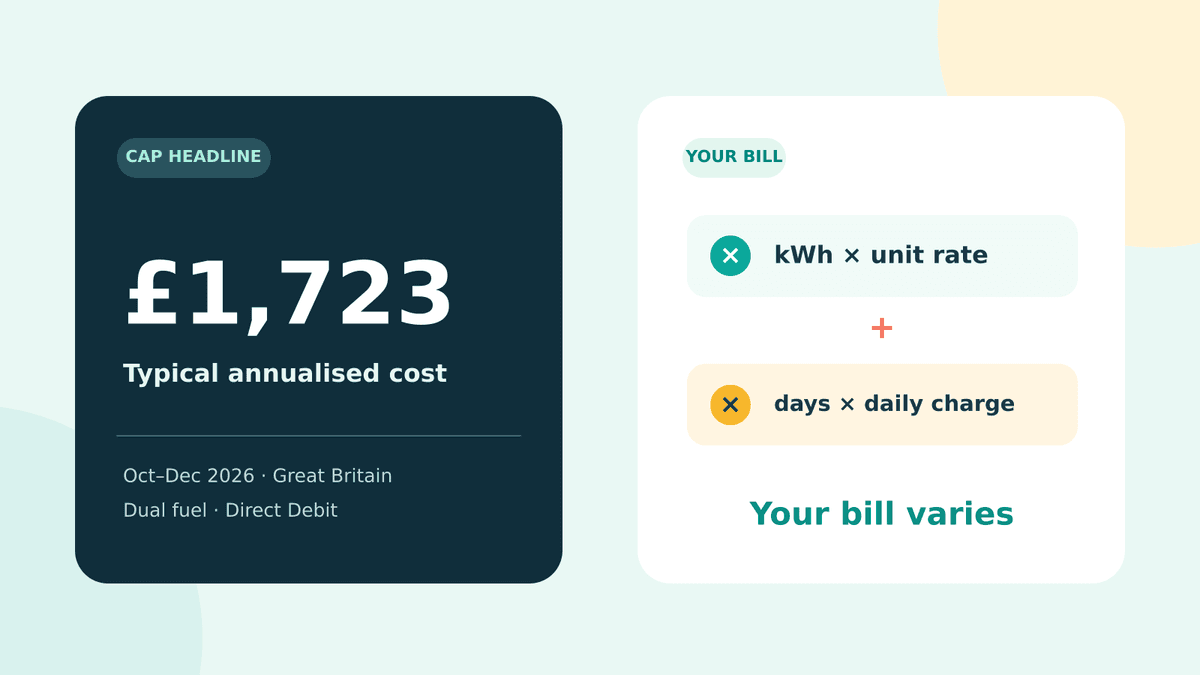
Energy prices are going up for many households on standard variable tariffs in Great Britain. Ofgem’s October price cap rose 4% to £1,723 a year for a typical dual-fuel home on 1 October 2026. Cornwall Insight forecasts another rise in January 2027, but Ofgem will confirm the figure by 25 November. The cap limits rates, not your total bill. For the choices behind the headlines, see our energy tariffs guide and fixed-tariff guide.
How Much Have Energy Prices Gone Up in 2026?
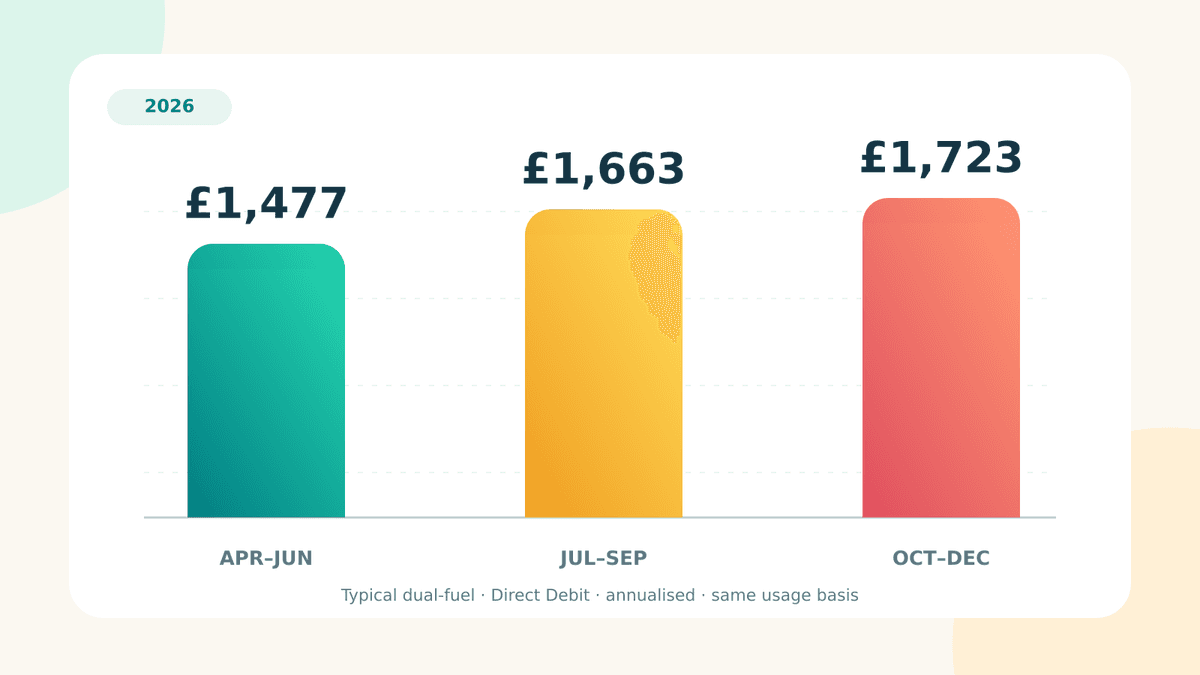
The price cap rose 13% in July and a further 4% in October for a typical dual-fuel household paying by Direct Debit in Great Britain.
Period | Typical annual figure | Change from previous period |
April–June | £1,477 | — |
July–September | £1,663 | +13% |
October–December | £1,723 | +4% |
These are annualised examples at Ofgem’s revised typical usage, not fixed prices for every home. Ofgem recalculated the earlier figures on the same usage basis, making this comparison like for like. The October figure comes from its confirmed cap update. Your bill depends on the units you use and your region, meter and payment method. See what the rates on your tariff label mean.
Are Energy Prices Going Up Again in January 2027?
A further rise is forecast, not confirmed. January estimates differ because wholesale prices can change before Ofgem finishes setting the cap.
What Do the Latest Energy Price Forecasts Say?
Forecast source | Published or updated | January annualised figure | Versus October’s £1,723 |
30 September 2026 | £1,999 | +£276, about 16% | |
15 October 2026 | £2,185 | +£462, about 27% — low confidence |
Both are estimates for typical dual-fuel use, not what your household will necessarily pay. Forecasts can move; our January price-cap news update explains the earlier Cornwall Insight estimate in context.
When Will the January Price Cap Be Confirmed?
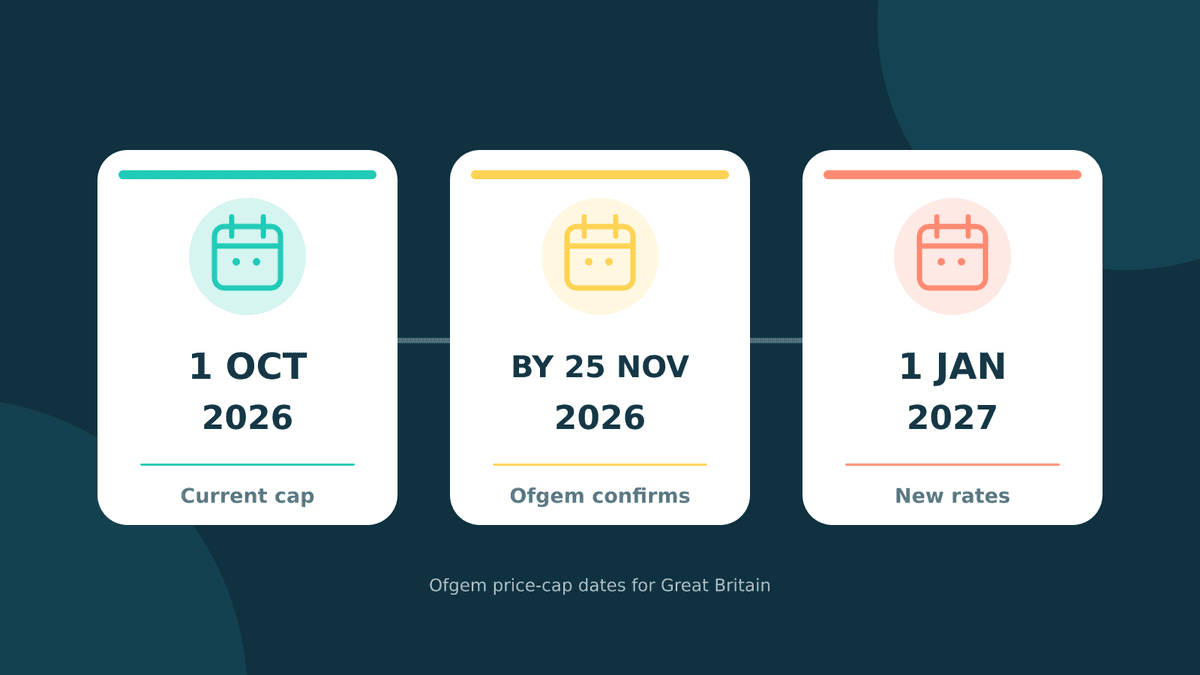
Ofgem says it will announce the cap by 25 November 2026. The new rates take effect 1 January 2027 for covered default tariffs. If you have a fixed deal, its agreed rates do not automatically follow the cap; our fixed-tariff explainer covers the difference.
Why Are Energy Prices Going Up?
Higher wholesale gas costs are the main recent driver. Ofgem says the Middle East conflict has increased gas-market uncertainty, while wholesale costs feed into the price cap alongside network and supplier costs. The temporary electricity VAT cut has softened the October increase, but has not cancelled it.
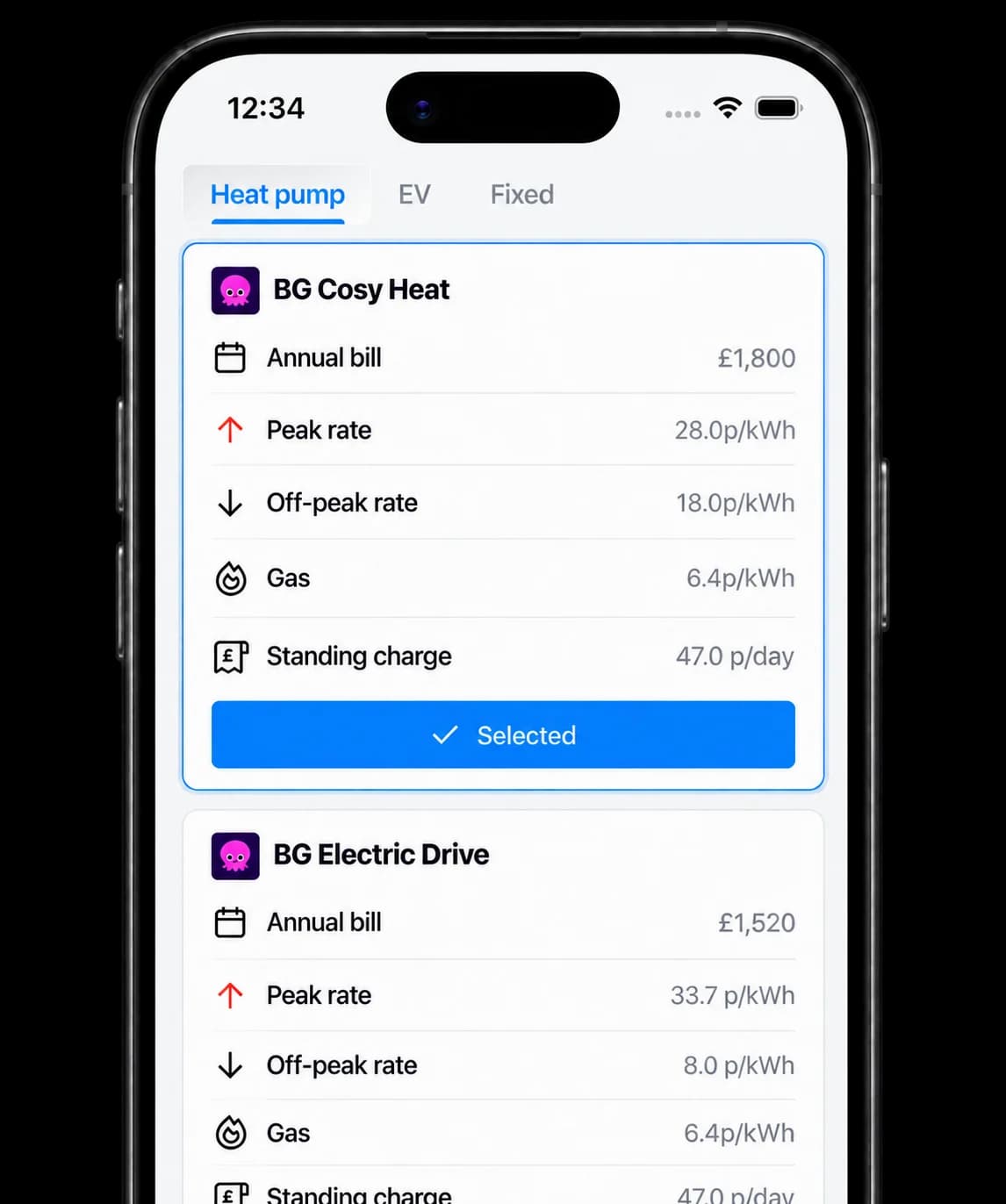
Energy Prices Going Up? See What You Can Change
See your home's energy patterns, spot waste and take control with EnergieBee.
How Do Wholesale Gas Prices Affect Your Bills?
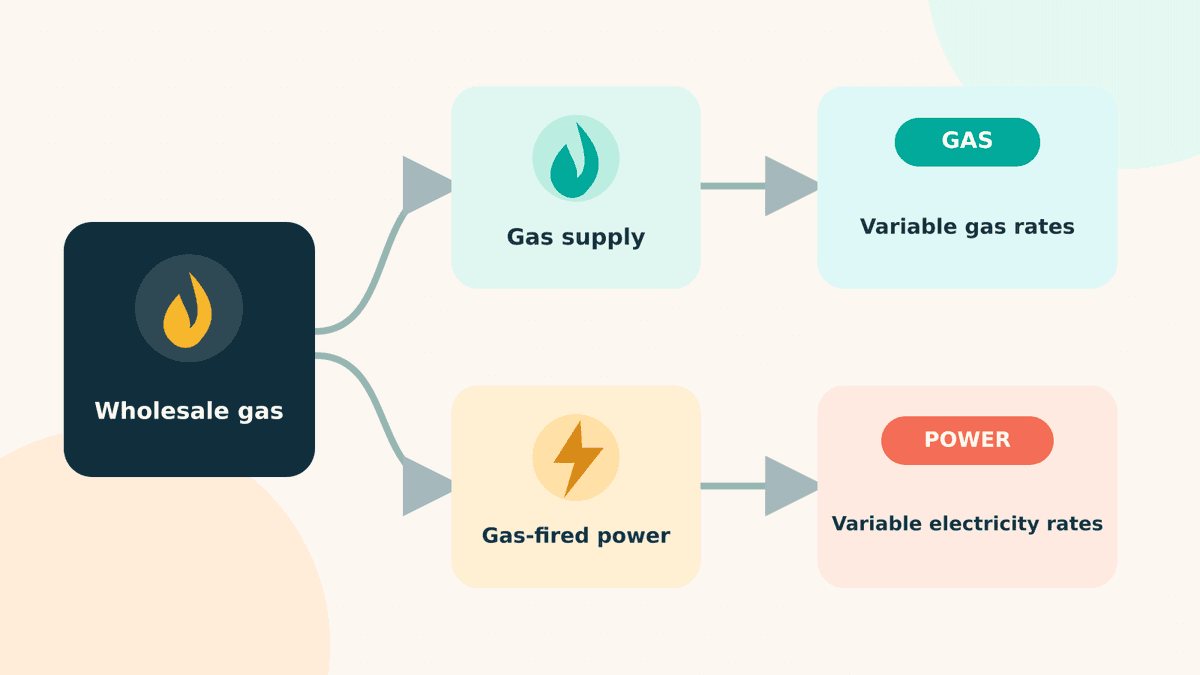
Suppliers buy energy in advance. When the wholesale gas they need costs more, that pressure can appear in later tariff prices and quarterly cap updates. It does not mean your capped rates change every time the wholesale market moves. Ofgem explains the wholesale-cost link.
Why Does Gas Affect Electricity Prices?
Gas-fired power stations still help meet electricity demand. When one is needed to supply the final unit of power, its higher cost can set the wholesale electricity price for that period—even when some electricity comes from cheaper renewables. That is why a gas-price shock can affect both gas and electricity bills.
Why Do Energy Price Cap Figures Differ?
Different figures can be correct if they use different assumptions. Ofgem changed its “typical household” usage figures in July 2026, so an older headline and a newer one may not be directly comparable.
Check | Why it matters |
Usage basis | A lower “typical” annual total does not itself cut your tariff rates. |
Region and payment method | Unit rates and standing charges vary. |
Tariff type | The cap covers standard variable tariffs, not fixed deals. |
Compare your own pence per kWh and daily charges, not just an annual headline. Ofgem explains the differences.
When Do Energy Prices Change, and Could They Come Down?
Capped variable rates can change on 1 January, 1 April, 1 July and 1 October. The next change is due on 1 January 2027; Ofgem will announce it by 25 November 2026. Rates could fall in a later quarter if underlying costs ease, but there is no guarantee. A fixed tariff follows its agreed terms instead of each cap update.
Could Standing Charge Changes Reduce Your Bills?
They could for some households, but no general gas standing-charge removal has been confirmed. On 21 October, the government said it would examine removing gas standing charges. If those costs move into the unit rate, low-gas-use homes may benefit while higher-use homes could pay more. Compare the total annual cost of any lower-standing-charge offer, not that charge alone.
What Can You Do About Energy Prices Going Up?
Start with your actual usage and tariff. These four checks are more useful than comparing your bill with the “typical household” headline.
Check Your Current Tariff and Contract End Date
Find your tariff name, electricity and gas unit rates, standing charges, annual kWh and contract end date on your bill or account. If you are on a fixed deal, check its exit fees; Citizens Advice says you can usually switch without an exit fee in the final 49 days. See how to check whether your tariff still suits you.
Compare Fixed and Variable Tariff Costs
Use the same annual kWh for both quotes and compare:
Include | Why |
Unit rates + standing charges | Both contribute to your annual cost. |
Contract length + exit fees | These affect your flexibility. |
Payment method + region | They can change the quoted rates. |
A fixed price offers rate certainty, not a fixed total bill. Our fixed-tariff comparison guide explains what to check.
Reduce Energy Waste Without Sacrificing Comfort
Use heating controls to warm rooms when needed, block draughts and switch off unused lights and appliances. Keep essential heating on if you need it for your health. For practical ideas, see our heating guide and electricity-saving tips.
Find Support If You Cannot Afford Your Bills
Contact your supplier before you miss a payment. Ask about an affordable repayment plan, payment break or hardship fund; Ofgem lists your options. Check whether you qualify for the £150 Warm Home Discount in Great Britain. Eligibility varies, and the scheme does not cover Northern Ireland.
Understand What Rising Energy Prices Mean for Your Home With EnergieBee
The price cap tells you about a typical home. What about yours? With energy prices going up, EnergieBee helps you see how your own energy use, heating and solar fit together.
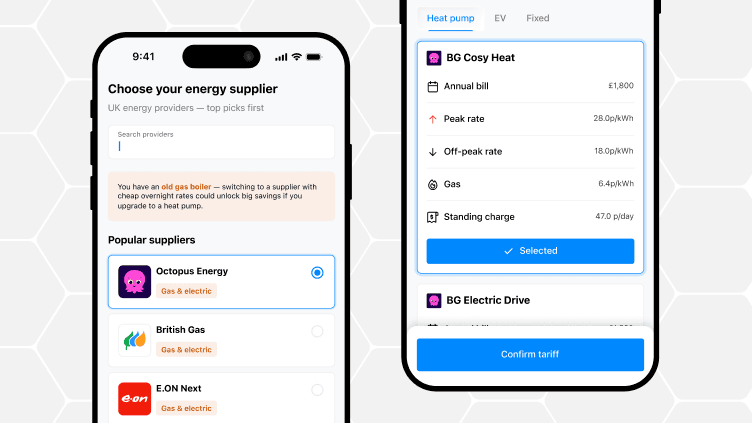
Spot your patterns: See when your home uses more energy.
Make sense of the changes: Understand how weather, heating and solar affect your home.
Find your next step: Use clear insights to identify energy waste without giving up comfort.
Download the free EnergieBee app, create your account and connect your home to start understanding your energy use.
Frequently Asked Questions
Does the Price Cap Limit Your Total Energy Bill?
No. Ofgem caps the unit rates and daily standing charges on covered variable tariffs. Your total bill still depends on how much energy you use. Ofgem explains the cap.
Will Your Bill Increase by the Headline Percentage?
Not necessarily. The headline rise describes a typical dual-fuel household paying by Direct Debit, not every home. Your usage, region, payment method and tariff can make the change different; a fixed tariff does not follow a cap increase. See our dual-fuel tariff guide.
Can Your Direct Debit Increase on a Fixed Tariff?
Yes. A fixed tariff keeps your agreed unit rates and standing charges steady, but your supplier may adjust the monthly Direct Debit if your usage or account balance changes. Check your meter readings and ask for the calculation if the increase looks wrong. Our fixed-tariff explainer covers this.
Are Business Energy Prices Going Up Too?
They can, but Ofgem’s household price cap does not cover business contracts. A fixed business deal usually holds its agreed rates until it ends; variable or new contract prices may change with market conditions. Check Ofgem’s business contract guidance.
Is AI Contributing to Rising Energy Prices?
AI data centres use substantial electricity and can add pressure on local grids. Their effect on household bills depends on how new supply and network costs are paid for; it is not an established cause of the current GB price-cap rise, which Ofgem mainly links to wholesale gas costs. See the IEA’s analysis.
Do the Same Energy Price Changes Apply in Northern Ireland?
No. Ofgem’s price cap applies in Great Britain, not Northern Ireland. Northern Ireland’s Utility Regulator reviews regulated electricity and gas tariffs separately, so check your supplier’s current rates rather than using a GB cap headline.