

The cheapest fixed energy tariff in the comparison below is Fuse Energy's 24-month fix at £1,685 a year. That is close to Ofgem's £1,723 price cap, so fixing now is mostly protection against a January rise, not a big saving today.
A fixed energy tariff locks in your unit rates and standing charges for a set period, usually 12 to 24 months. Your bill still depends on how much energy you use.
With Ofgem’s price cap up around 4% this October, it’s worth checking your options. We’ll compare fixed deals, explain the costs to watch for and help you decide whether fixing makes sense for your home.
What Are the Cheapest Fixed Energy Tariffs Right Now?
Some of the cheapest fixed energy tariffs in October 2026 come from Fuse Energy, Octopus Energy and E.ON Next. The best deal for you depends on your location and energy use.
Here are the cheapest dual fuel fixed tariffs in October 2026, according to Energy tariff tracker.
SL. | Supplier and tariff | Term | Est. annual cost | vs London cap | Exit fee (dual fuel) |
1 | Fuse Energy, October 2026 Fixed (24m) V4 | 24 months | £1,685 | £21 below | £100 |
2 | E.ON Next, Next Fixed 24m v77 | 24 months | £1,759 | £53 above | £200 |
3 | Octopus Energy, 18M Fixed October 2026 v4 | 18 months | £1,768 | £62 above | £150 |
4 | E.ON Next, Next Fixed 12M V160 | 12 months | £1,785 | £78 above | £100 |
5 | Fuse Energy, October 2026 Fixed (14m) V7 | 14 months | £1,809 | £103 above | £100 |
6 | EDF, Simply Fixed 2Yr Oct28v5 | 25 months | £1,842 | £136 above | £200 |
7 | So Energy, So Lobster 18m | 18 months | £1,846 | £139 above | £190 |
8 | Octopus Energy, 12M Fixed October 2026 v4 | 12 months | £1,862 | £155 above | £100 |
9 | Fuse Energy, October 2026 Fixed (12m) V8 | 12 months | £1,865 | £159 above | £100 |
10 | British Gas, Fix and Fall Oct28 v3 | 24 months | £1,894 | £188 above | £250 |
Ofgem price cap (London) | Variable | £1,706 | n/a | None |
Note: Figures are for a typical London household using 2,500 kWh of electricity and 9,500 kWh of gas a year, paying by monthly Direct Debit. Rates are from 9 to 15 October 2026, according to Energy tariff tracker. The national typical price cap is £1,723, so these figures are not directly comparable with it. Deals can be withdrawn or repriced within days.
The price cap row uses Ofgem's national typical usage, so the figures are not a like-for-like comparison.
Don't choose by annual estimate alone. Check unit rates, standing charges and exit fees too. A cheaper-looking deal might not be cheapest for your home.
What Is a Fixed Energy Tariff and How Does It Work?
When you sign up for a fixed energy deal, your supplier agrees to charge you the same unit rates and standing charges throughout your contract.
You'll pay for each unit of gas or electricity you use, plus a daily standing charge. Your supplier calculates your bill based on these rates and your energy consumption.
Once your contract ends, you'll need to choose another deal or you'll usually move onto your supplier's standard variable tariff.
Price Cap Forecast: Why January Matters
Ofgem’s price cap rose from £1,663 to £1,723 a year on 1 October 2026 for a typical dual-fuel household paying by Direct Debit. Higher wholesale gas costs, linked to conflict in the Middle East, drove the increase.
January could bring another rise. Ofgem will confirm the January–March 2027 cap by 25 November 2026, but forecasts differ.
Cornwall Insight’s September forecast puts it at £1,999 a year. Meanwhile, Uswitch’s supplier forecast average, updated on 13 October, suggests £2,098, based on predictions from British Gas, EDF and E.ON Next.
Should I Fix My Energy Tariff Now or Stay on a Variable Rate?
Fixing now is worth considering if you find a competitive deal and want protection from further price rises. MoneySavingExpert’s current guidance favours cheap fixes for many households on the price cap, but not every fixed offer is good value.
Staying on a standard variable tariff may suit you better if you’re comfortable with changing rates and want to benefit if prices fall. The trade-off? You’ll also face higher rates if prices rise.
Before deciding, look beyond what you could save this month. A fix needs to offer value over its whole contract, not just against today’s prices. Be especially careful with longer deals: rates that look attractive now could become less competitive later. Fix for certainty, but don’t treat future savings as guaranteed.
What Costs and Conditions Should You Check Before Choosing a Fixed Tariff?
A low price is a good start, but the small print matters too. Here’s what to check before you commit to a fixed deal.
Unit Rates and Standing Charges
Compare both charges using your annual energy use. For example, a standing charge that’s 10p higher per day adds £36.50 a year. Check whether the lower unit rate saves you enough to cover that difference.
Contract Length and Early Exit Fees
Check the contract’s end date and whether exit fees apply to each fuel separately. A £50 fee per fuel would mean £100 to leave a dual-fuel deal early.
However, you can switch without an exit fee during the final 49 days of your fixed contract.
Payment Methods and Eligibility Conditions
Some deals require Direct Debit, online account management or a smart meter. Check the requirements before signing up, and make sure you’re comfortable with them. Don’t assume every advertised tariff is available with your current payment method or meter setup.
How to Compare Fixed Energy Tariffs Without Checking Multiple Supplier Websites
Comparing deals shouldn’t mean keeping five supplier websites open and trying to remember which offered what.
EnergieBee brings available tariff plans into one app. Choose a supplier, tap See tariff plans, then select Fixed to browse its fixed-rate options.
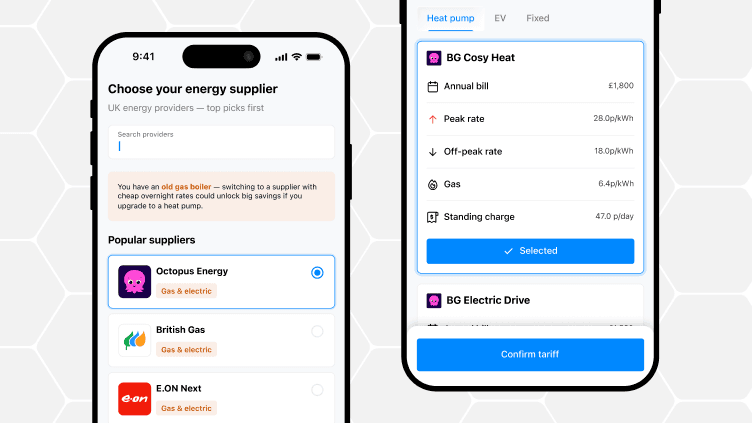
Each plan shows an estimated annual bill, energy rates and a daily standing charge. This makes it easier to spot differences between offers without keeping your own spreadsheet.
Have an EV or heat pump? You can explore those tariff categories too, rather than limiting your search to standard fixed deals.
See the Costs Before You Commit
Compare available fixed tariffs, estimated yearly bills and energy rates in one place with EnergieBee. See how the costs stack up without jumping between supplier websites.
Frequently Asked Questions
Does the Ofgem Price Cap Apply to Fixed Tariffs?
No. The price cap does not apply to fixed tariffs. Your agreed rates won’t automatically change when the cap rises or falls.
Can I Get a Fixed Electricity-Only Tariff?
Yes. Fixed electricity-only tariffs are available whether your home runs entirely on electricity or you buy gas from a separate supplier. You don’t need a dual-fuel deal to fix your electricity prices.
My Fixed Energy Tariff Is Ending. What Should I Do?
Compare your supplier’s renewal offer with other deals before your contract ends. If you do nothing, you’ll usually move onto a standard variable tariff, so check what your new rates would be.