If you’re trying to get an EPC rating, start by checking whether your home already has one. You can find your rating online for free and download the certificate without booking an assessment.
But the EPC is only one piece of the picture. It gives your home an efficiency score based on standard conditions. It does not show what your home is actually costing you each day.
This guide shows you how to get your EPC rating, find your certificate, and understand what the score means for your home and energy costs.
What Is an EPC Rating and Why Does It Matter?
An EPC rating shows how energy efficient your home is.
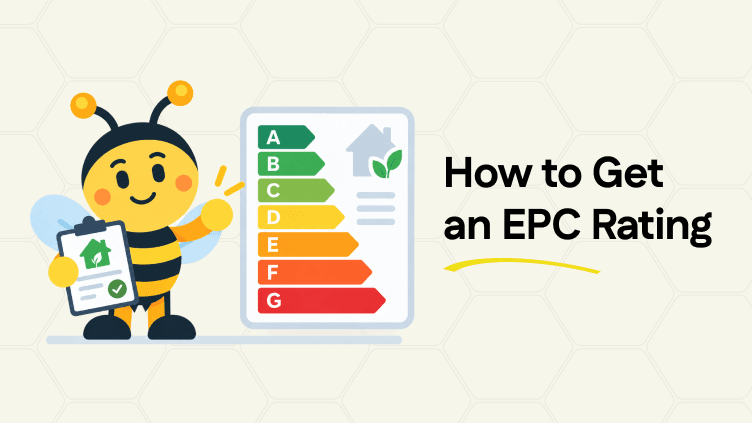
Every EPC gives your property an energy efficiency score from 1 to 100, which places your home into one of seven bands:
A (92–100) – Very energy efficient
B (81–91)
C (69–80)
D (55–68)
E (39–54)
F (21–38)
G (1–20) – Least energy efficient
Your EPC rating is calculated using factors such as:
Insulation: How well your walls, roof and floors keep heat inside.
Heating: How efficiently your heating system uses energy.
Windows and doors: How well they prevent heat loss.
Hot water: How efficiently your home heats and stores hot water.
Lighting: How efficiently your fixed lights use energy.
Renewables: How much energy systems such as solar panels can generate.
A higher EPC rating usually means your home needs less energy to heat and run.
Your EPC certificate also includes recommendations to improve your home's energy efficiency.
EPCs are valid for 10 years and are required when selling or renting a property in the UK. You can check the official guidance on Energy Performance Certificates guidance.
The government plans to raise the minimum energy standard for privately rented homes in England and Wales. From 1 October 2030, most rented homes will need to reach EPC C or an equivalent standard. For now, the minimum is usually EPC E.
However, your EPC rating does not show everything about your daily energy use. Two homes with the same EPC rating can still have very different energy costs.
The score is based on your home’s modelled energy costs under standard conditions, not your household’s actual energy use.
Your real energy costs also depend on:
Your energy tariff
Heating habits
Appliance usage
Solar generation
Battery or EV charging

Discover your home’s energy performance
Get a clearer view of your EPC rating and understand what changes could help improve your home
How to Get an EPC Rating and Certificate
If your home may already have a valid EPC, check the register before paying for a new assessment.
If the property has been sold, rented or built in recent years, there may already be a certificate on the register.
For Scotland: Use the Scottish EPC Register to check your certificate or find an approved EPC organisation.
Check Your EPC Rating With Your Postcode
You can complete a free EPC check by postcode using the official EPC register.
You will need:
Your postcode
Your property’s full address
Once you get the EPC certificate, you can see the followings:
Information | What it shows |
Current EPC rating | How your home performs now |
Energy score | Your numerical EPC score |
Potential rating | What your home could reach after improvements |
Estimated energy costs | Modelled heating, hot water and lighting costs |
Recommendations | Improvements that could raise your rating |
How to Find and Download Your EPC Certificate
Once you locate your property on the EPC register, you can download a copy of your certificate online.
How to Search the Register:
Enter details: Search using your postcode, street and town, or certificate number.
Select property: Choose your exact address from the list of results.
View and download: Open the valid certificate to view your energy rating band (A-G) and download the full PDF report.
If you cannot find your EPC online, it may mean your property does not have a valid certificate, or the details may not match the register. In that case, you may need to arrange a new EPC assessment with an accredited assessor.
EnergieBee: Understand Your Home Energy in One Simple Dashboard
Managing your home energy can feel overwhelming when your EPC rating, energy usage, tariffs and improvement options are spread across different places.
EnergieBee brings your EPC rating, energy usage, tariffs and improvement opportunities together in one simple dashboard.
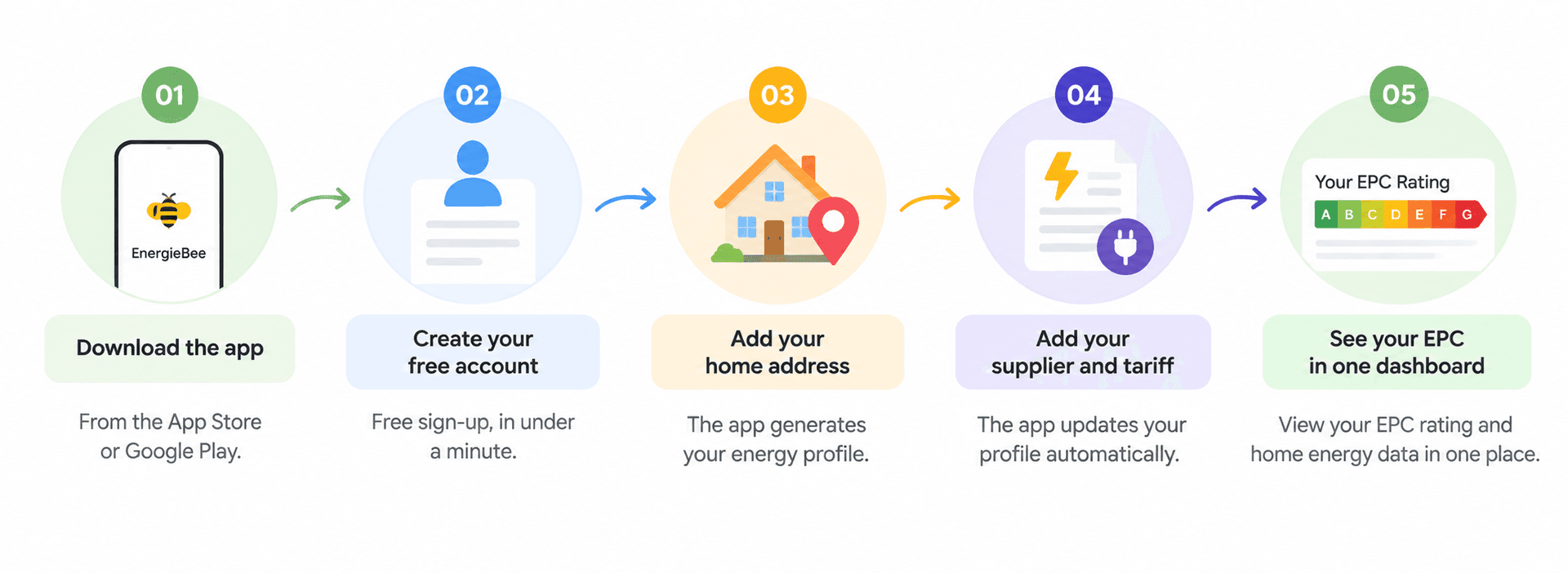
All you need to do is download EnergieBee, create your account, add your home address, and start seeing your home energy data in one place.
See Your Current and Potential EPC Rating
Once you log in to your account, EnergieBee shows your home’s EPC rating directly in the dashboard.
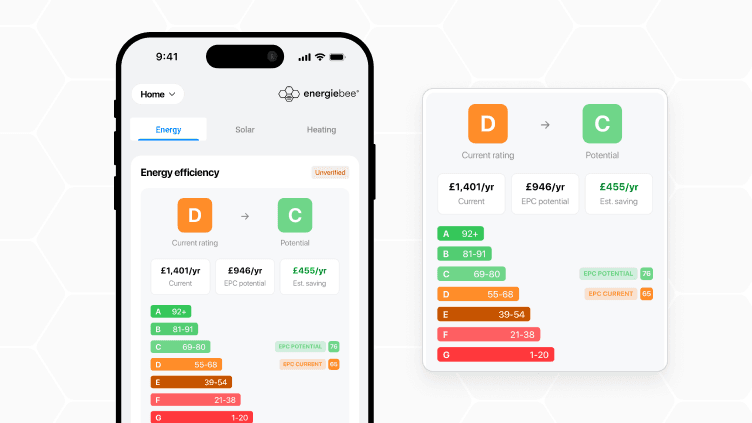
You can check:
Current EPC rating: Your home's existing energy efficiency score.
Potential EPC rating: The score your home could reach after recommended improvements.
Current energy cost: Your estimated yearly energy cost based on your home profile.
Potential savings: The estimated yearly savings if you improve your home towards the suggested EPC potential.
This helps you understand where your home stands and what improvements could make the biggest difference.
Track Where Your Energy Goes With Live Energy Flow
EnergieBee shows your home’s energy flow, helping you understand how different energy sources work together.
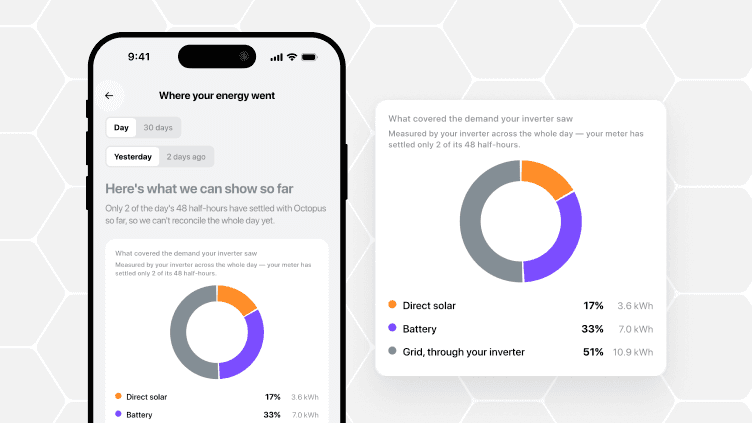
You can track:
Solar generation: How much energy your solar panels produce.
Battery usage: How much stored energy powers your home.
Grid usage: How much energy you use from the grid.
Daily energy breakdown: A clear view of your energy usage throughout the day.
Instead of waiting for your monthly bill, you can see your energy habits as they happen and find opportunities to reduce waste.
Get Personalised Recommendations to Improve Your Home
Knowing your EPC rating is only the first step. EnergieBee shows which improvements could help your home perform better.
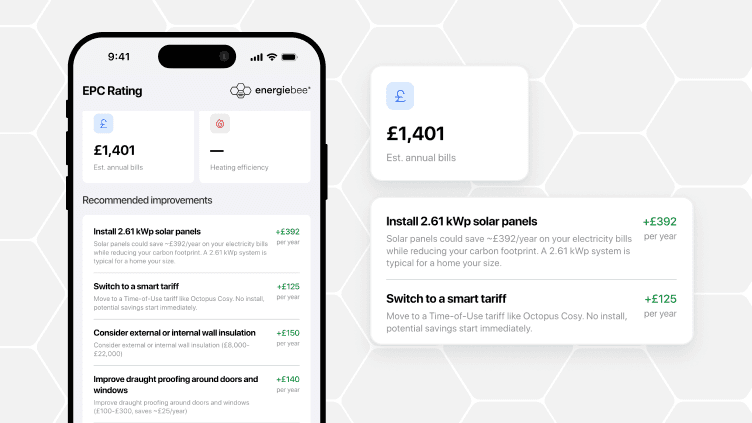
Get personalised suggestions for upgrades like solar panels, insulation, and glazing, along with estimated savings.
Make smarter decisions based on your home's energy data, not guesswork.
See Potential Savings Tips Before Making Energy Upgrades
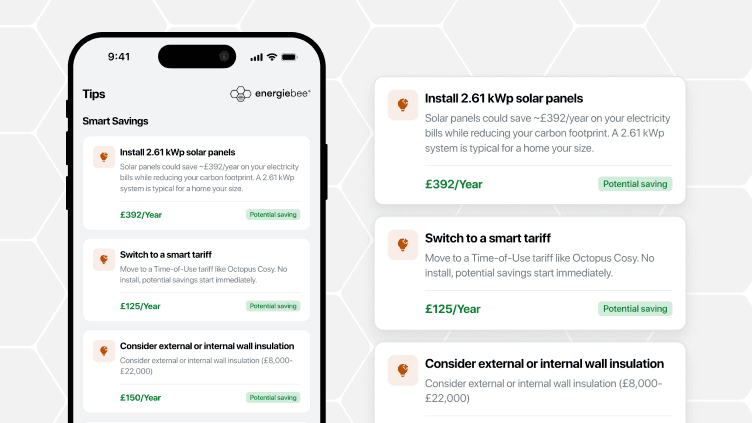
Energy improvements can be a big investment.
EnergieBee shows the estimated yearly savings for different improvements, such as solar panels, insulation, and smart tariffs.
Compare potential savings and understand which changes could have the biggest impact on your energy costs before you invest.
Compare Energy Tariffs Based on Your Energy Usage
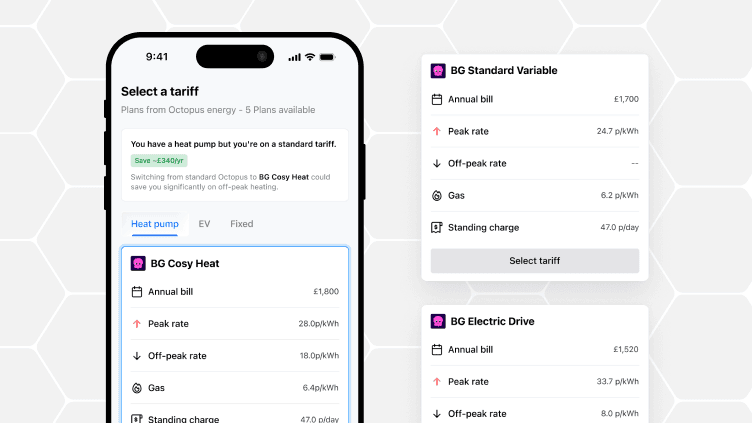
The cheapest tariff is not always the best fit for your home. Your energy habits, heating system, solar setup, and daily usage all affect your costs.
EnergieBee compares tariffs based on your energy profile, helping you find options that better match your home's needs.
You can compare:
Tariff pricing: See different energy rates and estimated costs.
Energy usage: Understand how your current usage affects your bills.
Potential savings: Find tariffs that could help reduce your yearly energy costs.
Choose a tariff based on how your home actually uses energy, not just the headline price.
How to Get a New EPC Certificate
If you need a new EPC, you must use an accredited energy assessor.
For England, Wales and Northern Ireland, use the official GOV.UK assessor service. You can find assessors near you and contact them directly.
There is no fixed EPC assessment price. The cost depends on the assessor and the size of your property.
If you live in Scotland: The process is different. Use the Scottish EPC guidance to find an approved assessor.
What Happens During an EPC Assessment?
The assessor visits your home and checks the main features that affect energy efficiency.
Area | What they check |
Property | Size, age and construction |
Insulation | Walls, roof, loft and floors |
Heating | Boiler, heat pump and heating controls |
Windows | Glazing type and window features |
Hot water | How your water is heated and stored |
Lighting | Fixed energy-efficient lighting |
Renewables | Solar panels and other installed systems |
The assessment is mainly visual. The assessor will also take measurements and may take photos. They do not normally open walls or floors to check hidden insulation.
If you have completed energy upgrades, keep proof such as:
Installation certificates
Invoices
Product details
Photos of hidden insulation
This can help the assessor include improvements that are difficult to see.
The information collected is then used to calculate your EPC score. Read our guide on how an EPC rating is calculated to see how your home moves from these checks to an A to G rating.
How to Improve Your EPC Rating
Start with the recommendations on your current EPC. They show which parts of your home have the most room for improvement.
You do not need to upgrade everything at once. Focus on the changes that can make the biggest difference for your home.
Common ways to improve your EPC rating include:
Improve insulation: Add loft, wall or floor insulation to reduce heat loss.
Upgrade your heating system: Replace old heating systems or improve heating controls.
Install energy-efficient windows: Reduce heat loss with better glazing and draught-proofing.
Use LED lighting: Replace older bulbs with more efficient lighting.
Improve hot water efficiency: Insulate your hot water tank and pipes to reduce wasted energy.
Add renewable energy: Solar panels can improve your home's energy performance.
Read our guide on how to improve your EPC rating to explore each improvement in detail.
Bottom Line
Getting your EPC rating starts with checking if your home already has a valid certificate. If it does, you can view your rating online for free and download the report.
If you want a simpler way to understand your home’s EPC rating and energy performance, download the EnergieBee app. It helps you see your EPC rating, energy insights, and improvement opportunities in one place.
If your home does not have an EPC, you will need to arrange an assessment with an accredited EPC assessor. Once you have your rating, use the recommendations to understand which improvements could help increase your home's energy efficiency.