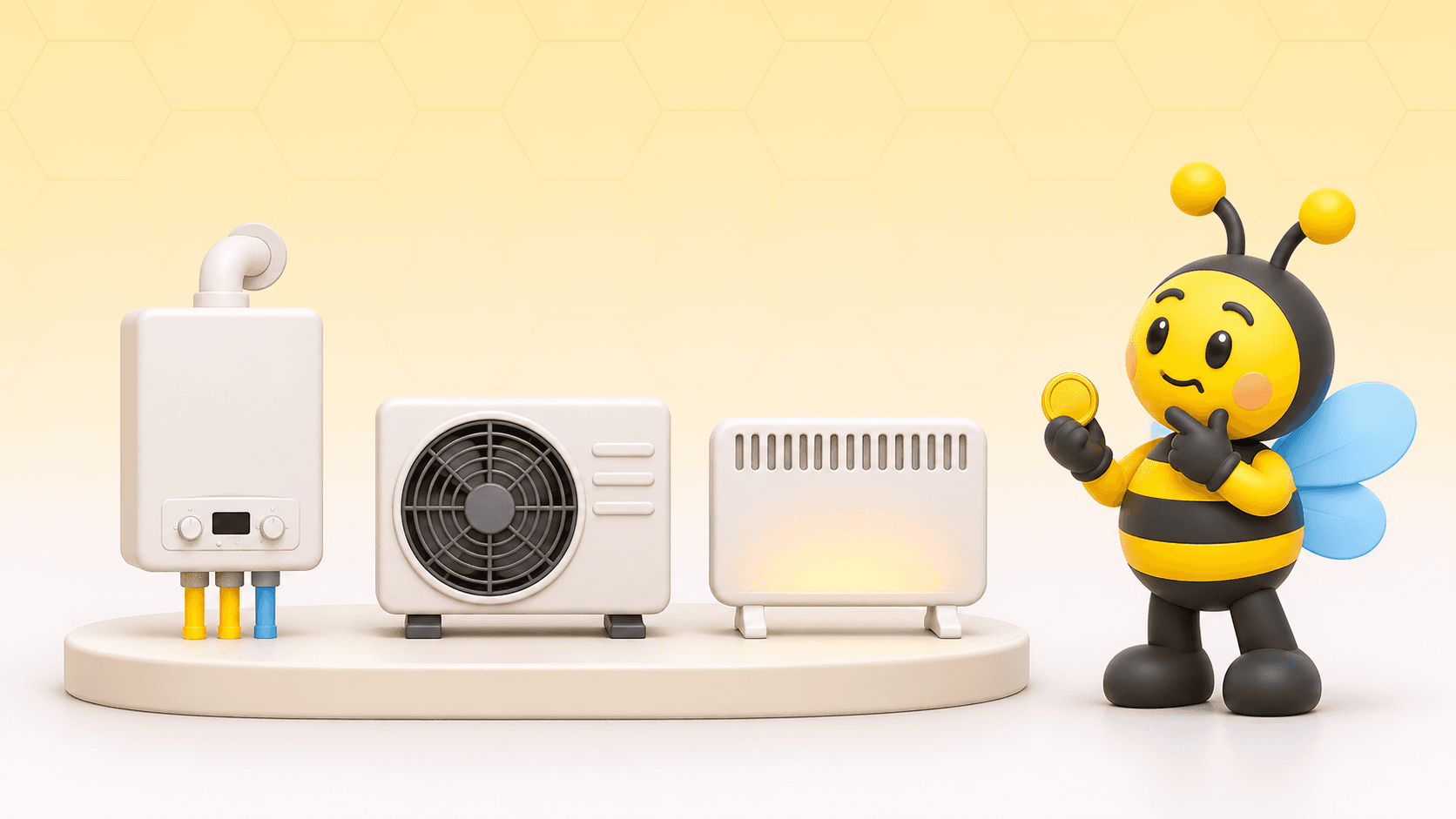
For whole-home heating, a gas boiler and an efficient heat pump can cost almost the same to run in a worked example using Great Britain’s October to December 2026 price-cap rates. Ofgem price-cap rates · Energy Saving Trust heat pump running costs
For a low upfront cost, a plug-in electric heater needs no fixed installation. If you only need to warm one room for a short time, a portable heater can cost less than heating the whole house. Energy Saving Trust electric heating guidance
Your own costs depend on your tariff, your heating system’s efficiency and how quickly your home loses heat.
Cheapest Heating Options at a Glance
The cheapest option depends on how much of your home you need to heat and whether you already have a working system.
Your priority | Where to start |
Low whole-home running costs | Compare mains gas with an efficient heat pump. Both can deliver heat at a similar cost per kWh under the assumptions below. |
Low upfront cost | A plug-in electric heater gives you heat without paying for fixed installation. |
Heating one room briefly | A portable heater can cost less than switching on central heating for the whole house. If you can heat that room separately with your existing system, compare that option too. |
Ofgem price-cap rates · Energy Saving Trust air source heat pump guide · Energy Saving Trust electric heating guidance
Heating Costs per kWh of Useful Heat
A kWh of gas or electricity is what you buy. A kWh of useful heat is what the system delivers. To compare running costs, divide the fuel unit rate by the boiler’s efficiency or the heat pump’s seasonal coefficient of performance, known as SCOP. A heat pump with a SCOP of 3 delivers about 3 kWh of heat for each kWh of electricity it uses over a heating season. Energy Saving Trust air source heat pump guide · Energy Saving Trust air-to-air heat pump guide
Worked example using Ofgem’s average Direct Debit rates for Great Britain, 1 October to 31 December 2026. Ofgem price-cap rates
Heating system | Fuel cost per kWh | Example performance | Cost per kWh of useful heat |
Heat pump | 26.32p | SCOP of 3 | 8.77p |
Mains gas boiler | 7.97p | 90% efficient | 8.86p |
Direct electric heating | 26.32p | 100% at point of use | 26.32p |
The heat pump and gas boiler are close enough for your tariff or system efficiency to change the order. The table excludes installation and daily standing charges. If you keep your gas supply for cooking or hot water, you’ll still pay the gas standing charge. Ofgem price-cap rates · Energy Saving Trust air source heat pump guide
Use the unit rates on your latest bill for a comparison based on what you actually pay. Energy tariffs explained · Ofgem’s guide to reading your energy bill
Compare Your Heating Costs With EnergieBee
Pick two days with similar outdoor temperatures and household routines. On one day, run your central heating as usual. On the other, use a portable heater for a short period in the room you’re using, if that keeps you equally comfortable. Check daily energy use in EnergieBee and apply your tariff’s unit rate to each fuel. Keep an eye on other large uses such as cooking or EV charging, which can affect the comparison. EnergieBee daily energy overview · Track household electricity use with EnergieBee
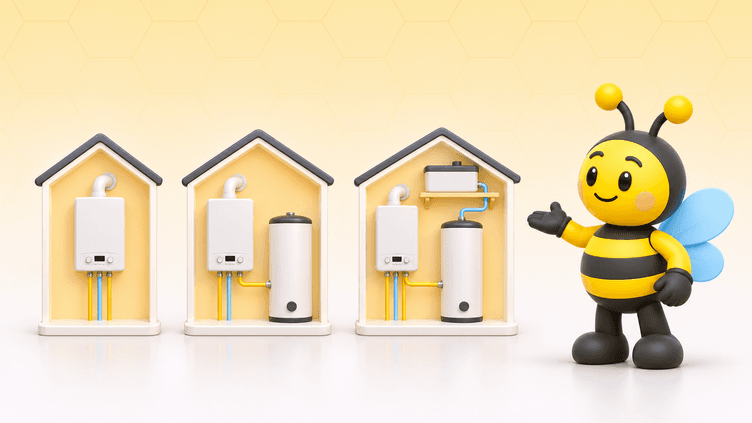
UK Heating Systems Compared
Check the fuel and tariff available to your home before comparing systems. Economy 7 storage heaters and boilers that use delivered fuels need different prices from those in the worked example. Energy Saving Trust electric heating guidance · Energy Saving Trust heating guidance
Heating system | What affects the running cost |
Mains gas boiler | Your gas unit rate and how efficiently your boiler heats the water for radiators or underfloor heating. |
Air-to-water heat pump | Its seasonal performance, electricity tariff and the water temperature your radiators or underfloor heating need. |
Air-to-air heat pump | Its seasonal performance, electricity rate and which rooms the indoor units serve. Most setups need a separate hot water system. |
Economy 7 storage heaters | How much heat you can store at the cheaper overnight rate and how much daytime top-up you need. |
Electric boiler | Your electricity tariff. It heats water for radiators or underfloor pipes, so it can be expensive to use for whole-home heating on a standard tariff. |
Direct electric heating | The wattage, hours of use and electricity rate. This includes panel heaters, plug-in heaters and electric underfloor heating. |
Oil or LPG boiler | Your delivered fuel price and boiler efficiency. Use a recent supplier quote for your comparison. |
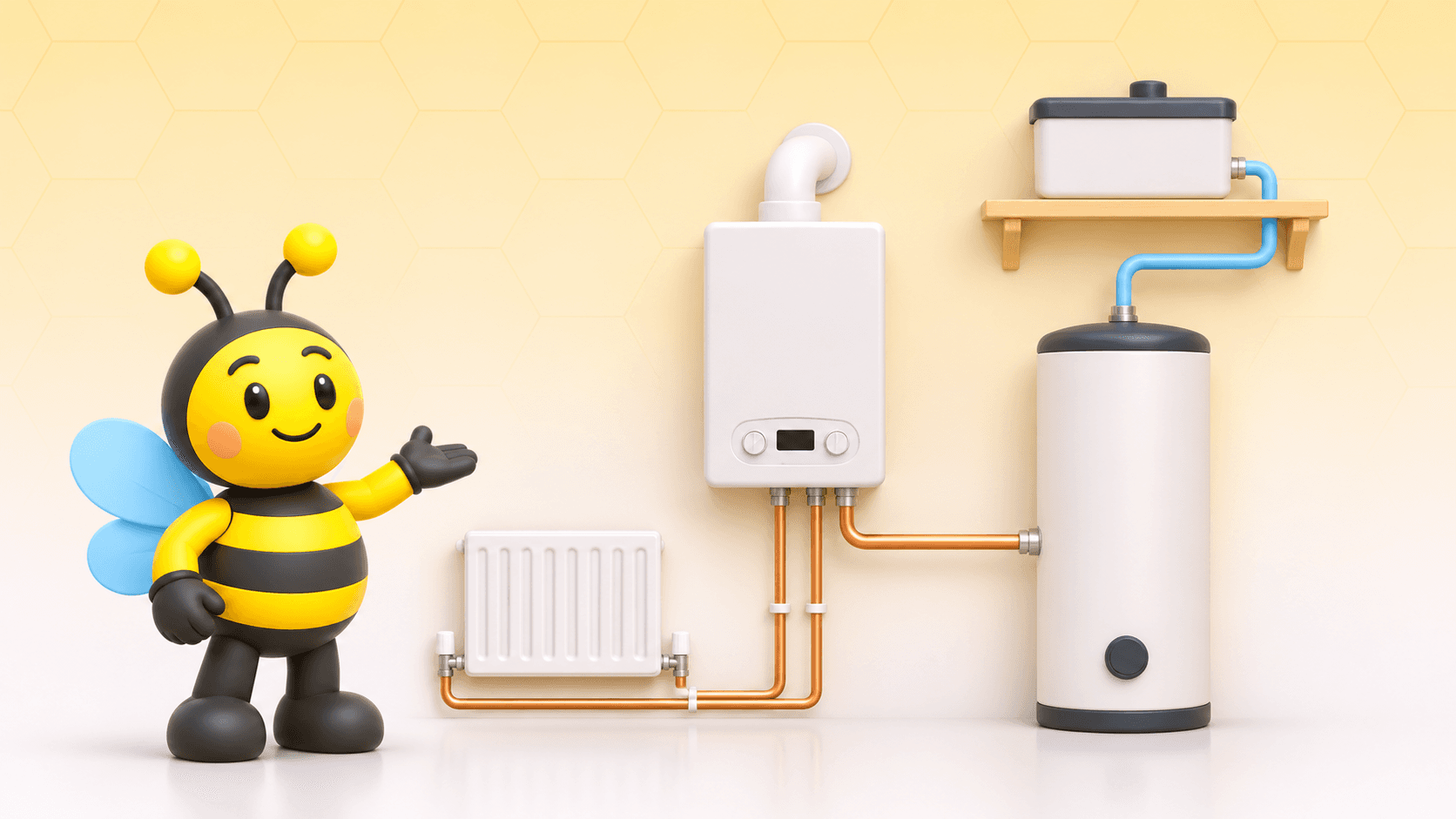
If you’re unsure what you have, check what heats your home and how the heat reaches each room. How your home heating system works
Compare Economy 7 tariffs · Energy Saving Trust heating guidance · Energy Saving Trust electric heating guidance · Energy Saving Trust air-to-air heat pump guide · Energy Saving Trust air source heat pump guide
If you’re comparing homes or planning a new build, start with the building’s heat demand and the energy supply available. In England, the Future Homes and Buildings Standards set out a move towards low-carbon heating in new homes. For an existing home, check what can work with your current radiators and available space. Types of central heating systems in the UK · Future Homes and Buildings Standards · Energy Saving Trust air source heat pump guide
Cheapest Way to Heat One Room
A plug-in electric heater can be economical for short periods if it lets you avoid heating rooms you aren’t using. At the same wattage and tariff, resistive heaters cost about the same to run while drawing full power. Choose the heater for how and where it delivers warmth. Centre for Sustainable Energy room heater guide · EECA heater guide
Heater type | Best suited to |
Halogen | Immediate warmth in the area the heater faces. |
Fan | A quick burst of warm air. |
Ceramic fan | Quick warm air from a heater with a ceramic element. Choose based on wattage, controls and noise. |
Oil-filled radiator | Steadier warmth over a longer period. It warms up more slowly. |
A 1 kW heater drawing full power for an hour uses 1 kWh, or 26.32p at the Great Britain average Direct Debit electricity rate for October to December 2026. That can work for a short spell at a desk. If you need to warm a large room for hours, compare the cost of heating that zone with your existing system. For warmth while sitting, MoneySavingExpert also suggests options such as a heated throw. Ofgem price-cap rates · Centre for Sustainable Energy room heater guide · MoneySavingExpert personal heating guide
If you already have radiators with thermostatic valves, use the controls to keep the room you’re using comfortable and set less-used rooms cooler. For a portable heater, use a wall socket and avoid extension leads. Energy Saving Trust guide to heating controls · Electrical Safety First portable heater guidance
What Size Electric Heater Do You Need?
Choose a heater based on how quickly the room loses heat. A small, well-insulated room needs less output than a draughty living room. The figures below show what each heater costs for an hour at full power. EECA heater guide
Heater output | Where it may suit | Cost for one hour |
500 W | Local warmth or a top-up in a small, well-insulated space | 13.16p |
1,000 W | Short use in a small room with modest heat loss | 26.32p |
2,000 W | A larger room or faster warm-up, depending on heat loss | 52.64p |
Costs use the October to December 2026 Great Britain average Direct Debit electricity rate of 26.32p per kWh. Ofgem price-cap rates
See How Your Energy Use Changes
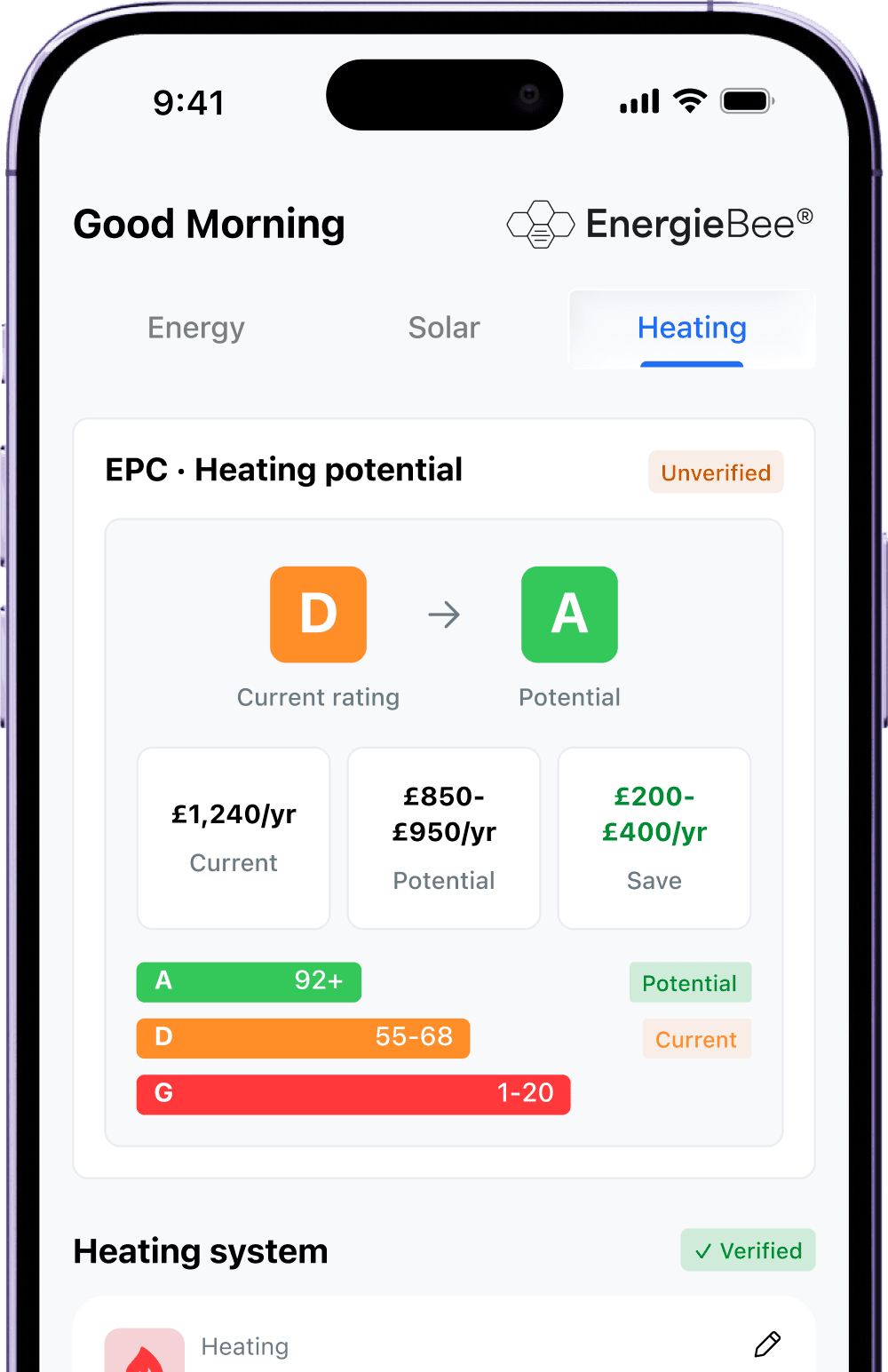
Use EnergieBee to compare daily household electricity use before and after changing how you heat your home.


Download EnergieBee
Scan with your phone's camera to get the app.
If the thermostat turns the heater off for part of the hour, it will use less electricity. For specifications that use British thermal units, a 1,500 W heater delivers about 5,100 BTU per hour. EECA heater guide
How to Keep Heat in Your Home
Open curtains when the sun reaches your windows and close them at dusk to keep heat in. Seal unwanted draughts around doors and windows while keeping ventilation clear. The NHS advises heating regularly used rooms to at least 18°C if you can, especially if you have a health condition. EnergieBee’s guide to saving money on heating · Energy Saving Trust heating tips · Energy Saving Trust draught-proofing guidance · NHS winter health guidance
If you’re planning a longer-term upgrade, check your loft insulation. It reduces the heat that escapes through the roof. Ways to improve your EPC rating · Energy Saving Trust guide to loft insulation
Heat Pump and Air Conditioning Costs
Start with the rooms you need to heat and whether you also want summer cooling. That helps narrow down which systems to consider. For each option, compare the full installation quote, expected running costs and any grant you qualify for.
What Does a Heat Pump Cost to Install?
A heat pump moves heat from outside into your home. An air-to-water model sends that heat through radiators or underfloor pipes. The installed cost depends on the unit size and whether you need radiator upgrades, a hot water cylinder or space for new equipment. An online estimate can help you budget. For a firm quote, ask for a room-by-room heat-loss survey so the installer can size the system and check whether your radiators can keep rooms warm at lower water temperatures. Central heating installation costs · Energy Saving Trust air source heat pump guide · MCS heat pump guidance · MoneySavingExpert heat pump guide
Heat pumps generally work best at a steady temperature over longer periods. Ask the installer to show you how to set the controls for your home. Energy Saving Trust heat pump controls
In England and Wales, the Boiler Upgrade Scheme offers £7,500 for eligible air-to-water and ground-source installations. That rises to £9,000 until 31 March 2027 for eligible off-gas-grid homes replacing oil or LPG heating. Compare the quote after any grant with the cost of replacing your existing system, and use your own tariff to estimate running costs. Running a heat pump with solar panels · Ofgem Boiler Upgrade Scheme guidance · GOV.UK grant amounts
If you’re still deciding whether to switch, check what changes your home may need and whether the grant applies to your property. Should you upgrade to a heat pump? · Check Boiler Upgrade Scheme eligibility
Air-to-Air Heat Pumps and Air Conditioning
A reversible air-to-air heat pump can warm your home in winter and cool it in summer. Wall-mounted indoor units serve individual rooms, while a ducted system distributes air through ducts. Installation cost depends on how many rooms you want to serve and whether you need new pipework or ducts. Electricity use varies with the weather, temperature setting and hours of use. If split-system work involves F gas, use an installer qualified to handle it. Energy Saving Trust air-to-air heat pump guide · DESNZ air-to-air heat pump research · GOV.UK F gas qualifications
The Boiler Upgrade Scheme offers £2,500 for qualifying air-to-air heat pump installations in England and Wales. Ask your installer to confirm that the equipment and heating design meet the scheme’s requirements before including the grant in your budget. Ofgem Boiler Upgrade Scheme guidance · GOV.UK grant amounts
Frequently Asked Questions
What Is the 30-Minute Heating Rule?
For boiler heating, it’s a timer tip. Start by setting the heating to come on about 30 minutes before you get up and switch off about 30 minutes before bed. Adjust the timing to how quickly your home warms up and cools down. If you have a heat pump, longer runs at a steady temperature are usually more efficient.
More ways to save money on heating
What Is the 4pm Heating Rule?
It’s a reminder to close your curtains as it gets dark to help keep heat in. That may be around 4pm in winter. Octopus Energy advises closing them before sunset, so use local dusk as your guide and keep curtains clear of radiators.
Can You Run a 2 kW Heater on a 13 A Plug?
Yes, if the heater is designed for a standard UK 13 A socket. Follow the manufacturer’s instructions and use the specified fuse. Plug the heater directly into a wall socket in good condition and avoid extension leads.
Is Gas Heating Cheaper Than Electric Heating?
Mains gas usually costs less per kWh of heat than direct electric heating on a standard tariff. An efficient heat pump can bring running costs close to gas or below it, depending on your tariff and how the system performs. Use the unit rates on your latest bill and your system’s efficiency to compare.
Find your unit rates on a Tariff Information Label
Can You Get a Grant for Air Conditioning?
In England and Wales, you could get £2,500 through the Boiler Upgrade Scheme if your air conditioning system is a qualifying air-to-air heat pump that can meet your home’s full space-heating demand. A cooling-only unit falls outside the scheme. Ask your installer to confirm eligibility before including the grant in your budget.
 Syed Reza