

Improving your EPC rating does not always mean a full renovation. The smartest place to start is your current certificate, which shows where your home is losing energy and which upgrades are most likely to raise the score.
For some properties, better insulation may be enough. Others may benefit more from improved heating controls, a newer heating system or solar panels. The key is to choose changes that suit the home, rather than simply installing the biggest or most expensive option.
Use your EPC as a practical plan. Start with the highest-impact recommendations, keep evidence of the work and check whether the changes improve comfort, energy use and running costs.
This guide primarily covers domestic EPCs in England and Wales. EPC assessment methods, grants and requirements may differ in Scotland and Northern Ireland.
What Does an EPC Rating Mean?
Your EPC rating is a quick scorecard for your home’s energy efficiency. It runs from A to G, with A at the top of the class and G showing the most room for improvement. The score behind the letter matters too, especially when your home is sitting close to the next band.
EPC band | Score | What it suggests |
A | 92 and above | Very energy efficient |
B | 81 to 91 | Highly efficient |
C | 69 to 80 | A good, practical target |
D | 55 to 68 | Fair, but often has room to improve |
E | 39 to 54 | Less efficient |
F | 21 to 38 | Poor efficiency |
G | 1 to 20 | The least efficient |
Your current rating reflects the insulation, heating, hot water, lighting and other fixed features the assessor can verify today.
Your potential rating estimates where the home could reach if the cost-effective recommendations listed on the certificate were completed. Think of it as a route map rather than a guaranteed finishing point.
For many homeowners, EPC band C or above is a useful benchmark. Band C begins at 69, so a home scoring 68 may only be one point away, even though it still appears as a D.
According to ONS data covering EPC records from the ten years to March 2025, the median recorded score was 69, or Band C, in England and 68, or Band D, in Wales. ONS energy-efficiency data for England and Wales.
Why You Should Upgrade Your EPC Rating
A better EPC rating can make your home cheaper to run, easier to heat and more comfortable throughout the year. It also gives you a clearer picture of which improvements are worth making first, rather than spending money on upgrades that may not suit your property.
Here are the main reasons to improve your EPC rating:
Lower energy costs: Better insulation, heating and controls can reduce wasted energy and help bring bills down.
A warmer, more comfortable home: Fewer draughts and less heat loss can make rooms feel more consistent and comfortable.
Lower carbon emissions: Using less energy can reduce the environmental impact of running your home.
More appeal to buyers or tenants: A stronger EPC rating can make expected running costs easier to understand and may make the property more attractive.
Better preparation for future requirements: EPC rules and expectations may continue to change, so improving now can make future decisions easier.
The key is to choose improvements that work for your home. A higher score is useful, but the best upgrades should also improve comfort, reduce waste and deliver results you can actually see.
How EPC Ratings Work
An EPC measures the energy efficiency of the property, not the daily habits of the people living in it.
An EPC assessor looks at the home’s main energy features, including:
Insulation
Heating and hot water
Windows and doors
Lighting
Renewable systems, such as solar panels
This information is used to create a numerical score, which places the property in an A-to-G rating band. A is the most efficient, while G is the least efficient.
The certificate also shows a potential rating based on recommended improvements. This helps you see how upgrades such as insulation, better heating controls or solar panels could improve your EPC rating.
The exact result depends on the property, the systems installed and the evidence available during the assessment.
Key Factors That Affect Your EPC Rating
Your EPC rating is shaped by how the whole home performs, not by one feature alone. A new boiler, better insulation or solar panels can all help, but the final score depends on how these parts work together.
Three of the main areas are how well the home retains heat, how efficiently it is heated and whether it generates or manages energy efficiently.
How well your home retains heat
A home that loses heat quickly needs more energy to stay warm. This can happen through the roof, walls, floors, windows, doors and small gaps around the property.
The EPC assessment looks at:
Loft, wall and floor insulation
Windows and external doors
Draughts and air leakage
Better insulation helps slow down heat loss, while good windows and doors can reduce cold spots and draughts. If insulation is hidden behind walls or under floors, keep photos, invoices or certificates so the work can be included in the assessment.
How efficiently your home is heated
Your heating system affects both comfort and energy use. An older or poorly controlled system may need more energy to provide the same amount of warmth.
The assessment considers:
The main heating system
Thermostats and timers
Heating zones and radiator controls
The hot-water system
Good controls can help you heat the right rooms at the right time. The exact make, model and efficiency of a boiler or heat pump can also affect the EPC score, so it is useful to keep the product details.
How your home generates and manages energy
Your EPC can also recognise systems that reduce energy use or generate some of the home’s power.
These may include:
Solar panels
Heat pumps
Battery storage
Ventilation with heat recovery
Smart heating controls
Battery storage may support the use of electricity generated by solar panels, but its treatment in an EPC depends on the applicable assessment methodology and the evidence available. Ask an accredited assessor how the system will be recorded.
See How Your Energy Use Changes
An EPC estimates the efficiency of your home’s fixed features, but it does not show your daily energy use. The EnergieBee app brings electricity, heating and solar patterns into one view, helping you compare usage before and after an upgrade. A new EPC assessment is still needed to confirm any change in the official rating.
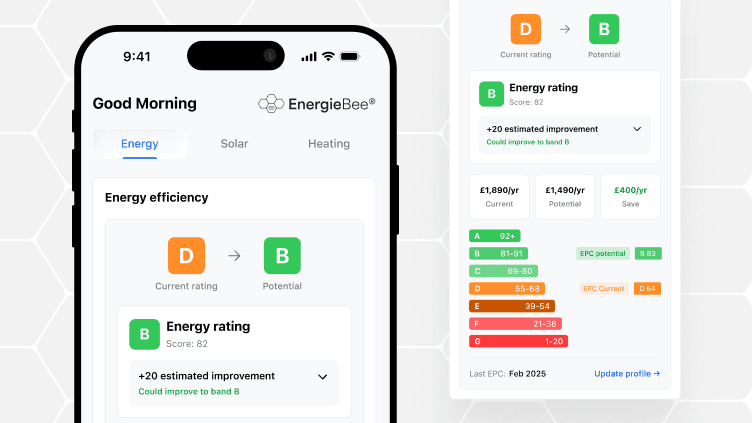
Keeping certificates, model numbers and installation details in one place makes it easier for the assessor to record these upgrades correctly.
The same improvement will not raise every property by the same number of points. The final impact depends on the home, the system installed and the evidence available.
10 Practical Ways to Improve Your EPC Rating
If your property is currently in Band E, follow our focused guide on how to improve an EPC rating from E to C.
1. Install or Upgrade Loft Insulation
Check whether your existing loft insulation is thin, uneven, damaged or compressed. Where needed, top it up to the recommended depth so it can hold heat more effectively.
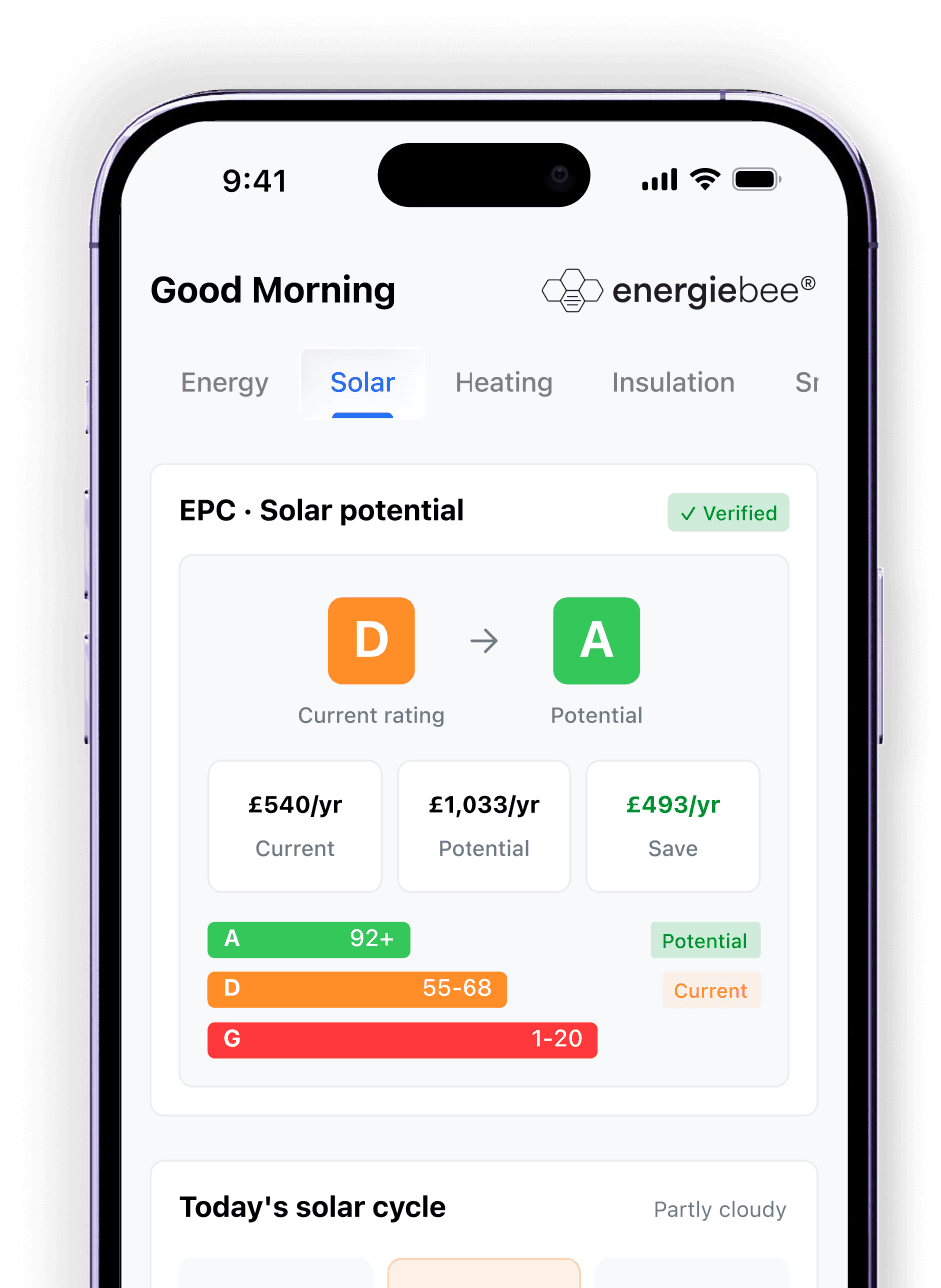
Take Control of Your Home Energy
EnergieBee turns complex energy data into clear, useful insights, helping you understand your home
Before adding more insulation:
Fix any damp, leaks or condensation
Keep ventilation points around the eaves clear
Avoid squashing insulation under storage boards
Check the loft hatch is also insulated
Take photos and keep installation records
Loft insulation can be one of the simpler ways to reduce heat loss and improve your EPC rating, especially in older homes with little insulation already in place.
Cost:
Around £900 to professionally insulate an uninsulated semi-detached loft, or about £750 to increase existing insulation from 120mm to 270mm.
Savings:
Around £190 a year when insulating a previously uninsulated loft. Topping up an existing 120mm layer may save about £20 a year.
See the Energy Saving Trust’s roof and loft insulation guide for current UK guidance on insulation depth, costs and savings.
2. Install Wall Insulation
Start by finding out whether your home has cavity or solid walls. Suitable cavity walls can usually be filled with insulation, while solid walls need insulation added internally or externally.
Before going ahead, have the walls checked for damp, damaged brickwork and exposure to heavy rain. This helps avoid choosing an unsuitable system or trapping moisture inside the wall.
Cost:
Cavity-wall insulation costs around £2,200 for a typical home. For a three-bedroom semi-detached home, internal solid-wall insulation costs around £12,000, while external insulation is about £15,000.
Savings:
Typical annual savings are around £200 for cavity-wall insulation and £280 for solid-wall insulation. Actual savings depend on the property and heating use.
Before installing it, check whether cavity-wall insulation is suitable for your property.
3. Insulate Your Floors
Floor insulation is most useful where rooms feel cold from below or draughts come through timber floorboards. Suspended timber floors can be insulated between the joists, while solid floors are usually better tackled during a larger renovation.
Any damp or damaged timber should be fixed first, and the airflow beneath suspended floors must stay clear.
Cost:
Around £1,400 to £2,500 for suspended-floor insulation.
Saving:
Around £55 a year, depending on the property and heating use.
4. Upgrade Windows and External Doors
Replace single glazing where it makes sense, but check the seals and frames first. Repairing failed seals or stopping draughts may be enough if the windows are otherwise in good condition.
For period or listed properties, secondary glazing can improve comfort without replacing the original windows. Poorly insulated external doors may also be repaired, draught-proofed or replaced. Compare the likely EPC improvement with the cost before committing to a full-house upgrade.
Cost:
A set of A-rated windows for a semi-detached home typically costs around £4,800. A replacement uPVC external door may cost around £400 to £1,000, depending on its size and design.
Savings:
Replacing all single glazing in a semi-detached home with A-rated double glazing could save around £85 a year in Great Britain.
5. Upgrade an Inefficient Heating System
An old boiler or direct electric heating can limit your EPC rating. A modern boiler may suit some homes, while a heat pump can be a better long-term option where the property is well insulated.
Before upgrading, check the home’s heat demand, insulation and radiator sizes. This helps avoid choosing a system that is too large, too small or expensive to run.
Cost:
Around £3,500 for a replacement gas boiler or £12,000 for an air-source heat pump before grants.
Eligible homeowners may be able to reduce the upfront cost through the Boiler Upgrade Scheme.
Savings:
Up to around £420 a year when replacing a G-rated boiler with an A-rated model and better controls. Heat-pump savings vary by property and tariff.
6. Consider a Hybrid Heating System Where Suitable
A hybrid system combines a heat pump with a boiler. The heat pump handles most everyday heating, while the boiler helps during colder weather or periods of higher demand. This can suit larger homes where a heat pump alone may not be the best fit.
Before installing:
Arrange a room-by-room heat-loss check
Make sure both systems use one control system
Check how the setup will be recorded on your next EPC
The current EPC calculation is based partly on energy costs, so adding a heat pump does not always guarantee a higher rating. Check the likely EPC impact before committing.
Cost:
Around £5,000 to £10,000 for a standard hybrid system. More complex installations may cost more.
Savings:
There is no reliable fixed figure. Savings depend on fuel prices, controls and how often the boiler needs to run.
7. Add Smart Thermostats, Zoning and Advanced Controls
Smart controls make it easier to set heating times and temperatures around your routine. Zoning goes further by letting areas such as upstairs and downstairs run independently, so you are not heating unused rooms.
Choose controls that properly match your boiler or heat pump. A mobile app alone may not count as full time-and-temperature zoning for an EPC. Keep the product details and installation paperwork so the system can be recorded correctly during reassessment.
Cost:
Around £174 to £274 for a smart thermostat supplied and fitted. A fuller setup with a programmer, thermostat and radiator controls may cost about £600.
Savings:
Heating controls could save around £100 a year, although the benefit may be smaller if your existing controls already work well.
8. Install Mechanical Ventilation With Heat Recovery
MVHR removes stale, damp air and uses its heat to warm the fresh, filtered air entering bedrooms and living areas.
It works best after draughts and air leaks have been reduced. Before installing, check that there is enough space for the unit and ductwork, and make sure the system is properly designed, tested and balanced. MVHR is unlikely to deliver its full benefit in a draughty home.
Cost:
A domestic MVHR installation costs around £6,450 on average. Retrofitting an existing home may cost more.
Savings:
There is no reliable fixed figure. Savings depend on the home’s airtightness, heating demand and how well the system performs.
9. Install Solar Panels
Solar panels can improve your EPC rating by generating electricity at the property. The result depends on the system size, roof direction, shading and available space.
Check the roof condition first, compare the installation cost with the likely EPC benefit, and keep the system certificate and specifications for reassessment.
Cost:
Around £7,600 for a typical 4.5kWp system.
Savings:
Usually depend on how much solar electricity you use at home and how much you export.
The Energy Saving Trust’s solar-panel guide explains current installation costs, possible savings and factors such as roof direction and shading.
10. Improve Your Hot-Water System
A few small changes can stop stored hot water losing heat before you use it:
Add or upgrade the cylinder jacket to at least 80mm
Insulate accessible hot-water pipes
Use a timer and cylinder thermostat
Choose a suitable cylinder if adding solar panels or a heat pump
Avoid storing more hot water than the household needs
Replace the cylinder only if it is old, poorly insulated or unsuitable for the wider heating system.
Cost:
Around £30 for a hot-water cylinder jacket. A new cylinder and controls will cost more, depending on the system.
Savings:
Upgrading a poorly insulated cylinder could save around £45 a year, with accessible pipe insulation saving about £6 more.
Explore More EPC Guides
Check Your Results After Making Improvements
Before arranging a new EPC assessment, make sure you have:
Invoices and installation certificates
Product names and specifications
Photos of insulation or hidden work
A copy of your previous EPC
Share this evidence during the assessment, then compare the new score with the old one. You can also use EnergieBee’s home energy monitoring to compare electricity, heating and solar patterns before and after making improvements.
Frequently Asked Questions (FAQs)
What improvements increase an EPC rating the most?
Insulation, heating upgrades and solar panels often make the biggest difference. Your current EPC will show which area needs attention first.
How can I improve my EPC rating from D to C?
Band C starts at 69. Focus on the highest-impact recommendations, such as:
Loft or wall insulation
Better heating controls
A more efficient heating system
How much does it cost to improve an EPC rating?
It may cost a few hundred pounds for smaller upgrades or several thousand for heating, wall insulation or solar panels.
Can a hybrid heating system improve an EPC rating?
Yes, but the result depends on the property, system design and how it is recorded during the assessment.
Does MVHR improve an EPC rating?
It can help in a well-insulated, airtight home. It offers less benefit where draughts and heat loss remain.


