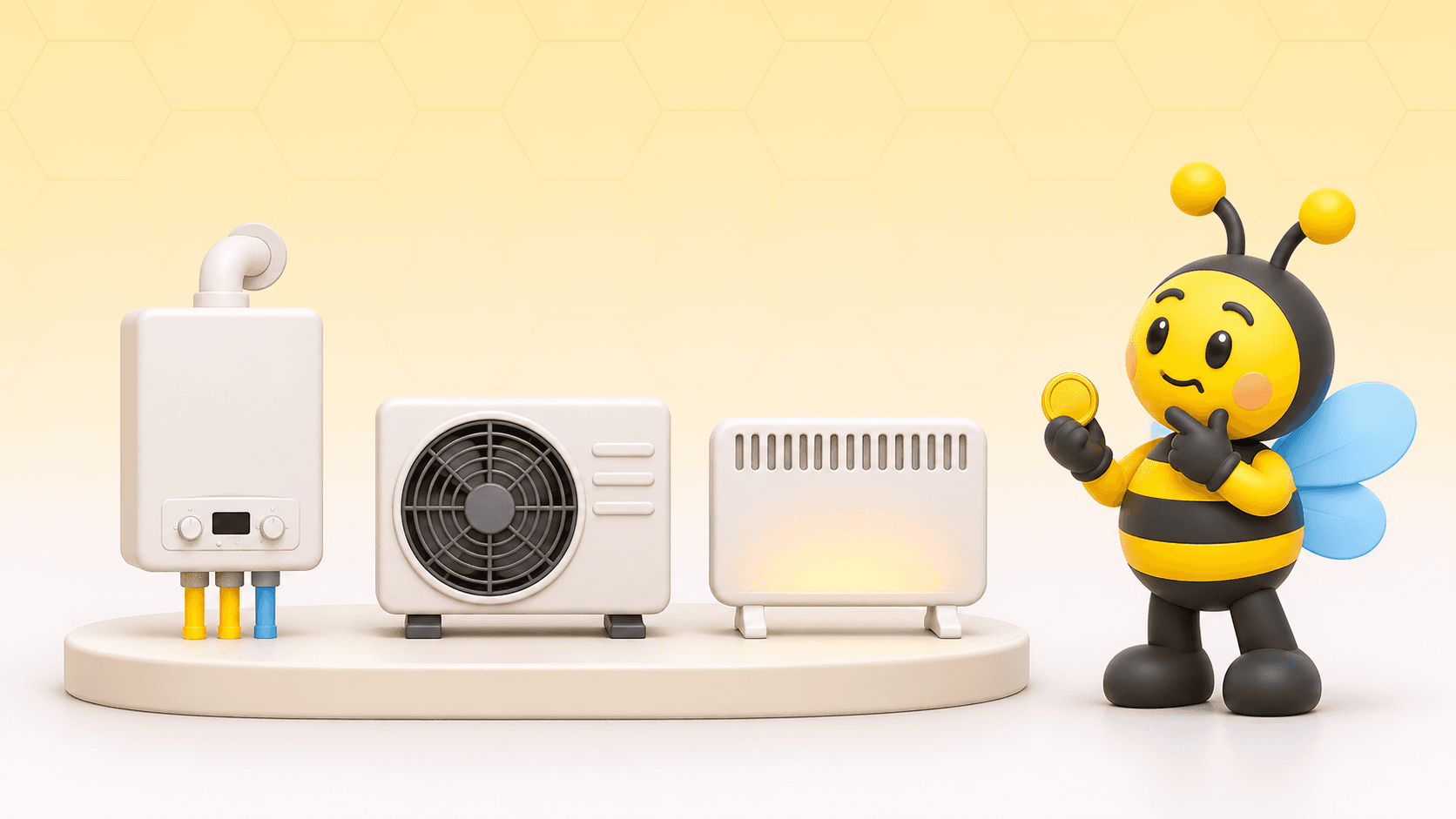
If your heating runs while you're out or warms rooms nobody uses, smart heating controls can help you cut that waste.
They let you set heating schedules, adjust temperatures from your phone and, with the right setup, control rooms separately.
And the savings are real. A UK government trial found that households using smart thermostats alongside energy-use feedback consumed around 5% less gas than the comparison group.
Let's look at what smart heating controls cost, how much you could save and how to choose the right ones for your home.
What are smart heating controls and how do they work?
A smart heating control system lets you decide when your heating comes on, how warm your home gets and when it switches off. A smart thermostat checks the room temperature and tells your heating system when more heat is needed.
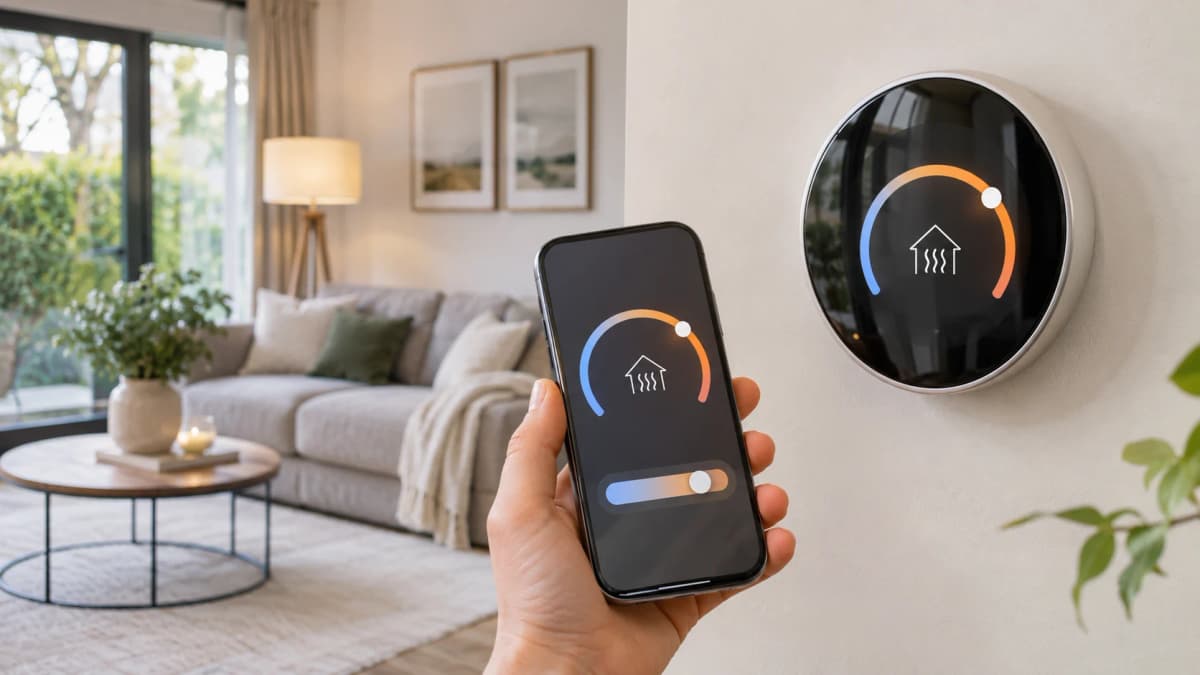
Unlike basic controls, smart heating controls can connect to the internet, so you can manage your heating remotely and set schedules that suit your daily routine.
Smart heating controls vs traditional controls
Traditional heating controls let you set temperatures and heating times manually. A smart central heating controller does the same but adds features such as remote access, flexible schedules and automatic adjustments.
Here's a quick comparison:
Feature | Traditional controls | Smart controls |
Temperature | Adjust at the thermostat | Adjust at the thermostat or through an app |
Heating schedules | Set using a timer or programmer | Set and change through an app |
Remote control | Usually not available | Control heating from anywhere with internet access |
Automation | Limited | Some adjust heating based on your routine |
Upfront cost | Usually lower | Usually higher |
Can you control your heating from your phone?
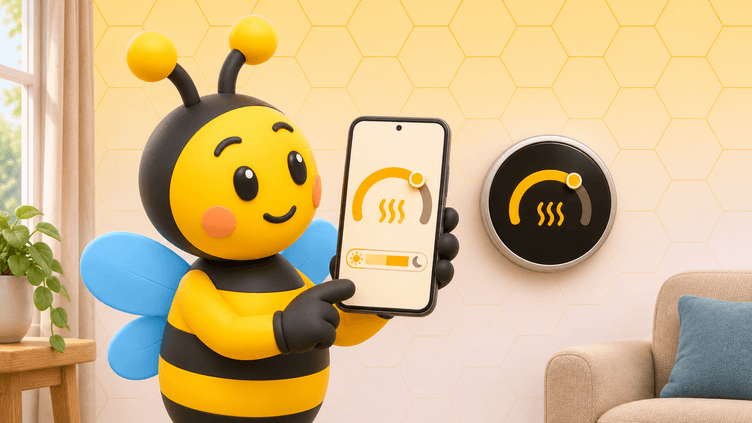
Yes. With a compatible Wi-Fi heating control system, you can turn your heating on or off, change temperatures and update schedules through an app.
For example, if you're working late, you can delay the heating instead of warming an empty house. Some systems can even make these adjustments automatically using your phone's location.
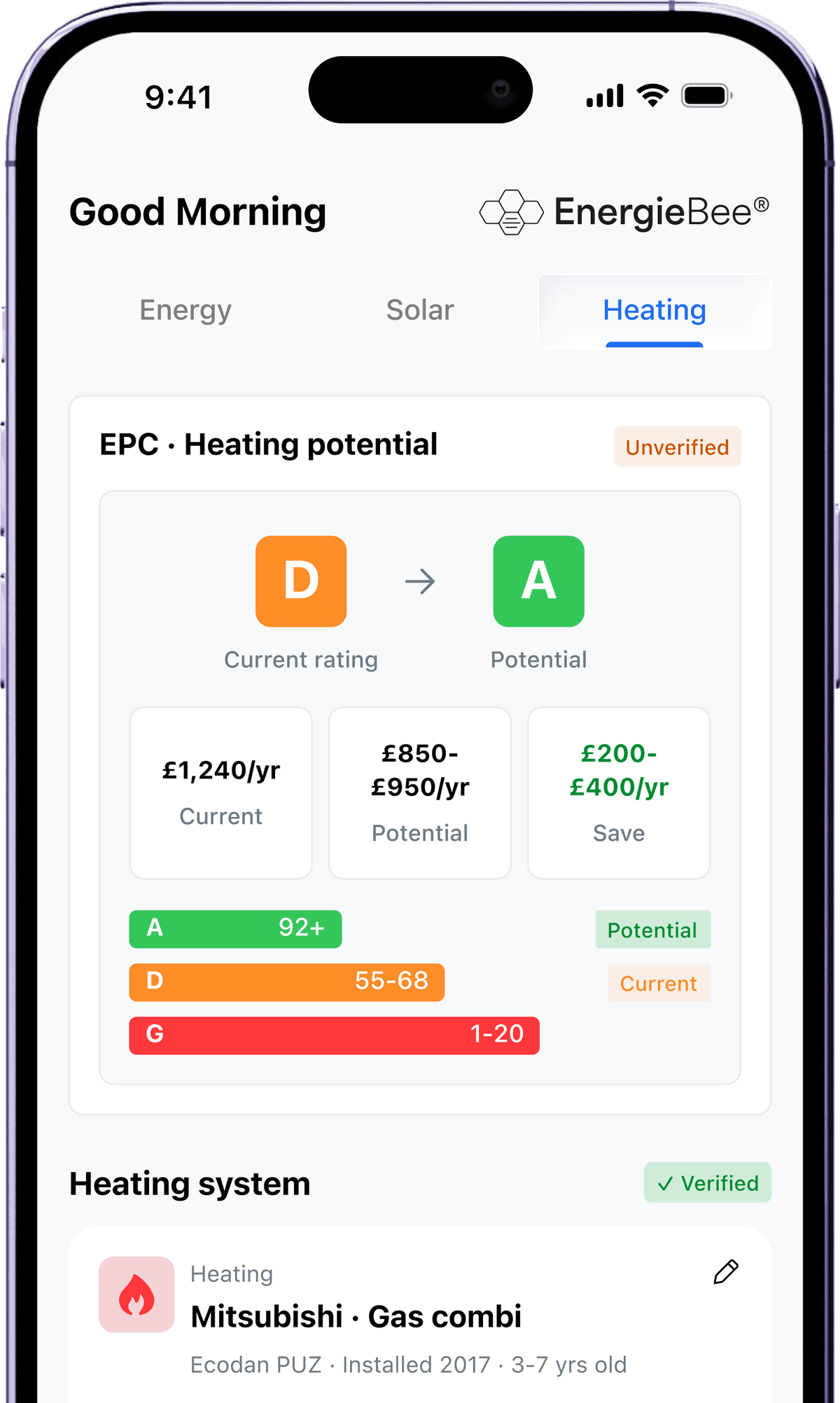
Control your heating and cut energy waste
See your heating, solar and home energy use in one dashboard. Spot wasted energy, understand your costs and find ways to save.


Download EnergieBee
Scan with your phone's camera to get the app.
Smart thermostat or Smart radiator valves: Which do you need?
Not every home needs both. The right choice depends on whether you want to control your whole heating system or adjust temperatures in individual rooms.
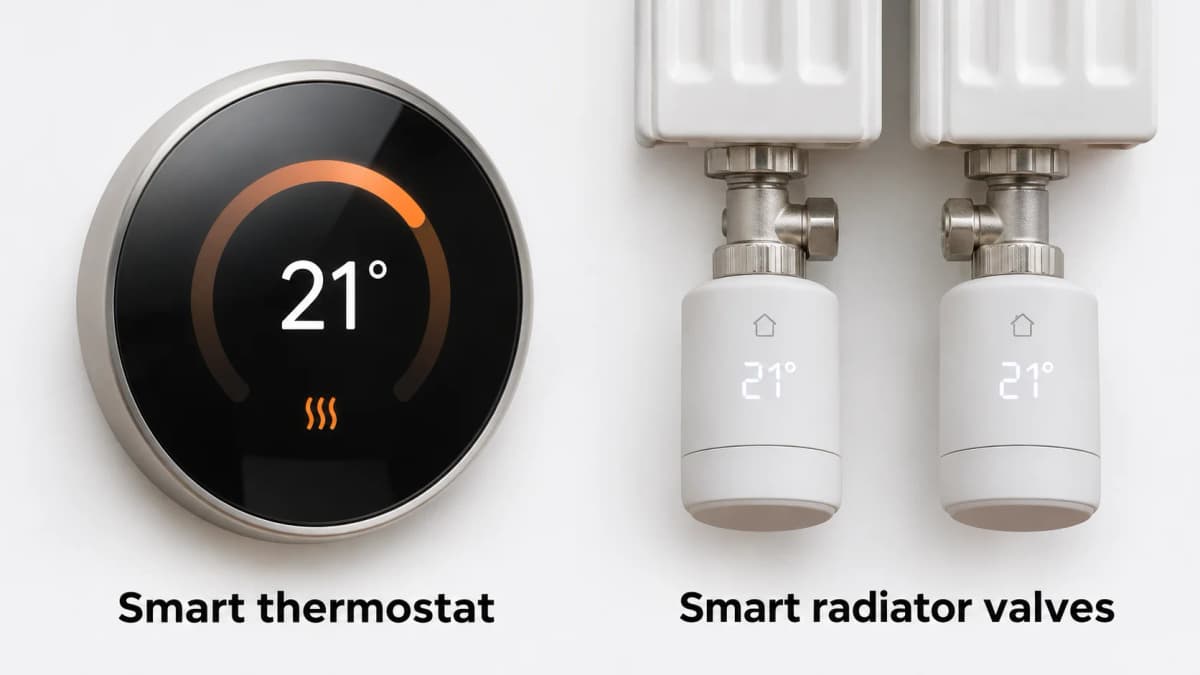
Smart thermostats vs smart radiator valves
A smart thermostat controls when your central heating runs and your home's temperature. Smart radiator valves (TRVs) control the heat going into individual radiators.
Here's how to decide which works best for you.
Choose a smart thermostat for whole-home control
If you mainly want to set heating schedules, adjust temperatures from your phone or switch off heating when you're away, a smart thermostat may be enough.
Choose smart radiator valves for individual rooms
If some rooms are rarely used, smart TRVs let you keep them cooler without turning down every radiator.
For example, you can heat your living room while keeping the spare bedroom at a lower temperature.
Combine both for greater heating control
Using a smart thermostat with compatible smart radiator valves gives you more flexibility over when and where your home is heated.
Some systems also let individual rooms request heat from the boiler. Just make sure the devices work together before buying.
How much money can smart heating controls save?
Smart home heating control can help you save money by making sure your home only gets heated when and where it's needed.
Whether you're out at work, running late or spending time in just one room, smarter heating schedules can help you avoid wasting energy.
UK research shows some promising results:
5% less gas: A UK smart thermostat trial found that households using a smart thermostat alongside energy-use feedback consumed around 5% less gas than the comparison group.
3.5% less gas: A study of 68 homes in England found that room-by-room heating controls reduced average gas use by 3.5% compared with homes keeping their existing controls.
These are results from specific studies, not guaranteed savings for every household.
When might it save very little?
If you already have a well-programmed thermostat and turn your heating down when you're away, switching to smart controls might not reduce your bills much further.
Your existing heating habits matter just as much as the technology.
For example, if your heating already switches off before you leave for work, a smart thermostat won't necessarily save more energy by following the same schedule.
In that case, the biggest benefit may be convenience rather than lower bills.
How much do smart heating controllers cost in the UK?
A basic smart heating setup typically costs around £175–£275, including installation. The final price depends on your thermostat, heating system and any extra devices you need.
Equipment and installation costs
Here are the estimated prices from recent UK smart thermostat cost guides:
Item | Estimated UK cost |
Smart thermostat (device only) | £119–£219 |
Professional installation | £30–£80 |
Smart thermostat supplied and fitted | £174–£274 |
Additional smart radiator valves | Around £35–£80 each |
These are guide prices, not fixed quotes. Extra wiring, hubs or additional radiator valves can increase the total.
Monthly subscriptions and 0% VAT eligibility
Some smart heating features come with optional subscriptions:
tado° AI Assist: £3.99/month or £29.99/year.
Hive+: £3.99/month or £39.90/year.
Basic heating schedules and remote control are available without these subscriptions on compatible models.
You could also save on installation tax. In Great Britain, qualifying central heating controls can be installed at 0% VAT until 31 March 2027. This applies to eligible installations, not devices bought separately. Northern Ireland has different VAT rules.
How long will it take to recover the cost?
The real question is how long it takes for your heating bill savings to cover what you've spent on smart controls. This depends on how much energy you save and whether you pay for any extra features.
Here's a simple example to help you work it out:
Cost and savings | Amount |
Smart thermostat and installation | £240 |
Estimated annual heating savings | £80 |
Optional yearly subscription | −£30 |
Net annual savings | £50 |
Estimated payback period | 4.8 years |
This is an illustrative example, not a guaranteed saving. If you already use your heating efficiently, recovering the cost could take longer.
Will smart heating control work with your heating system?
Yes, smart heating control can work with most UK gas boilers and some heat pumps. However, you'll need a thermostat that's compatible with your heating system.
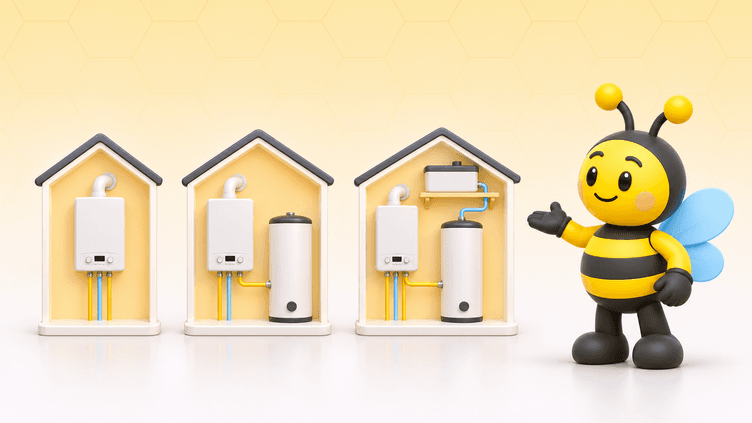
Before buying, check your boiler model, existing wiring and whether your home has a separate hot water cylinder.
Combi boilers, OpenTherm and Boiler Plus
If your home has a combi boiler, choosing the right smart controls is usually straightforward. But there are a few things worth checking first:
Combi boilers: Usually only need heating controls, as hot water is supplied whenever you turn on a tap.
OpenTherm: If your boiler and thermostat both support OpenTherm, they can adjust the boiler's heating output instead of simply switching it on and off.
Boiler Plus: In England, installing a gas combi boiler in an existing home requires an extra energy-saving measure. Under Boiler Plus standards, qualifying smart controls are one option, but not every smart thermostat meets the requirements.
System boilers, hot water cylinders and heat pumps
If your home uses a system boiler, hot water cylinder or heat pump, you'll need controls suited to how your heating works. Here's what to know:
System and regular boilers: Usually have a separate hot water cylinder. Choose controls that can manage both heating and hot water schedules.
Hot water cylinders: You'll also need a suitable cylinder thermostat to keep stored water at a safe temperature.
Heat pumps: Generally work best with steady heating rather than frequent switching on and off. Many use weather compensation to adjust heating temperatures based on the weather.
If you have a heat pump, check with your installer before changing its controls.
What are the disadvantages of smart controls?
Smart controls for heating offer more convenience, but they also come with a few drawbacks worth considering before you buy.
Wi-Fi, compatibility and installation limitations
Wi-Fi dependence: You may lose remote access and smart features if your internet stops working. Basic heating controls usually continue to work.
Compatibility: Not every smart thermostat works with every boiler or heating system.
Installation: Some systems need professional installation, adding to the overall cost.
These are common limitations of smart thermostats, so it's worth checking before upgrading.
Software support and older Nest thermostats
Smart heating controls also depend on ongoing software support.
For example, Google ended support for first- and second-generation Nest Learning Thermostats on 25 October 2025.
Affected devices can still control heating manually, but remote app access and software updates are no longer available.
Before buying, check how long the manufacturer promises to support your device.
How to choose and install the right smart home heating system
The best smart controls are the ones that suit your home, heating system and daily routine. You don't need the most expensive setup to get better control over your heating.
Which controls suit your home and heating routine?
Here's a quick guide to help you choose:
Your home or situation | Recommended control |
Combi boiler with OpenTherm support | Compatible OpenTherm smart thermostat |
Older boiler | Smart thermostat compatible with its existing controls |
Large home with rarely used rooms | Smart thermostat with compatible smart TRVs |
Regular daily heating schedule | Basic programmable thermostat may be enough |
Heat pump | Manufacturer-recommended heating controls |
Want to avoid monthly fees | Smart thermostat with subscription-free essential features |
Before buying, check which features you'll actually use. A good heating schedule and suitable room controls may already help you avoid unnecessary heating.
How to get the most from your smart heating
Getting the most from your smart heating controls starts with a few simple adjustments:
Set heating schedules: Match heating times to your daily routine and avoid heating an empty home.
Choose a comfortable temperature: For most people, 18–21°C is a good starting point.
Adjust individual rooms: Keep rarely used rooms cooler using smart radiator valves.
Use smart features: Enable geofencing or automatic scheduling if your system supports them.
Monitor energy use: Check your consumption regularly to see whether your adjustments are saving energy.
If you have a heat pump, follow its recommended heating schedule.
Frequently asked questions
Do Smart Thermostats Need Wi-Fi to Work?
Not always. Many can still control heating without Wi-Fi, but remote access and some smart features won't work. It depends on the model.
Can I Install Smart Heating Controls Myself?
Some smart radiator valves are easy to fit yourself. Wired thermostats may require professional installation, especially if electrical wiring needs changing.
Can Smart Radiator Valves Work Without a Smart Thermostat?
Yes, they can control individual radiator temperatures. However, they usually need a compatible controller to switch the boiler on independently.
Are Smart Heating Controls Better Than a Normal Thermostat?
They offer more convenience, remote access and automation. But they won't necessarily save more money if your existing thermostat is already used efficiently.
Can Smart Heating Controls Improve My EPC Rating?
Yes, potentially. The EPC calculation method recognises certain heating controls, including eligible smart thermostats. However, an upgrade won't always improve your rating.
 Sharieaz Kavier