
Solar panels can help power a heat pump, but they usually cannot provide all the electricity needed for heating throughout the year. The main challenge is that solar panels generate the most energy during summer, while heat pumps need more electricity during colder winter months. Combining solar panels with battery storage and smart tariffs can help reduce grid electricity use and improve efficiency.
A heat pump and solar panel system can work well together when planned around your home’s heating needs, roof suitability and energy usage. Before installing both technologies, understand how heat pumps can improve home heating efficiency and whether solar panels are suitable for your home. The right setup depends on your property, energy habits and how you manage electricity throughout the year.
Can You Run a Heat Pump With Solar Panels?
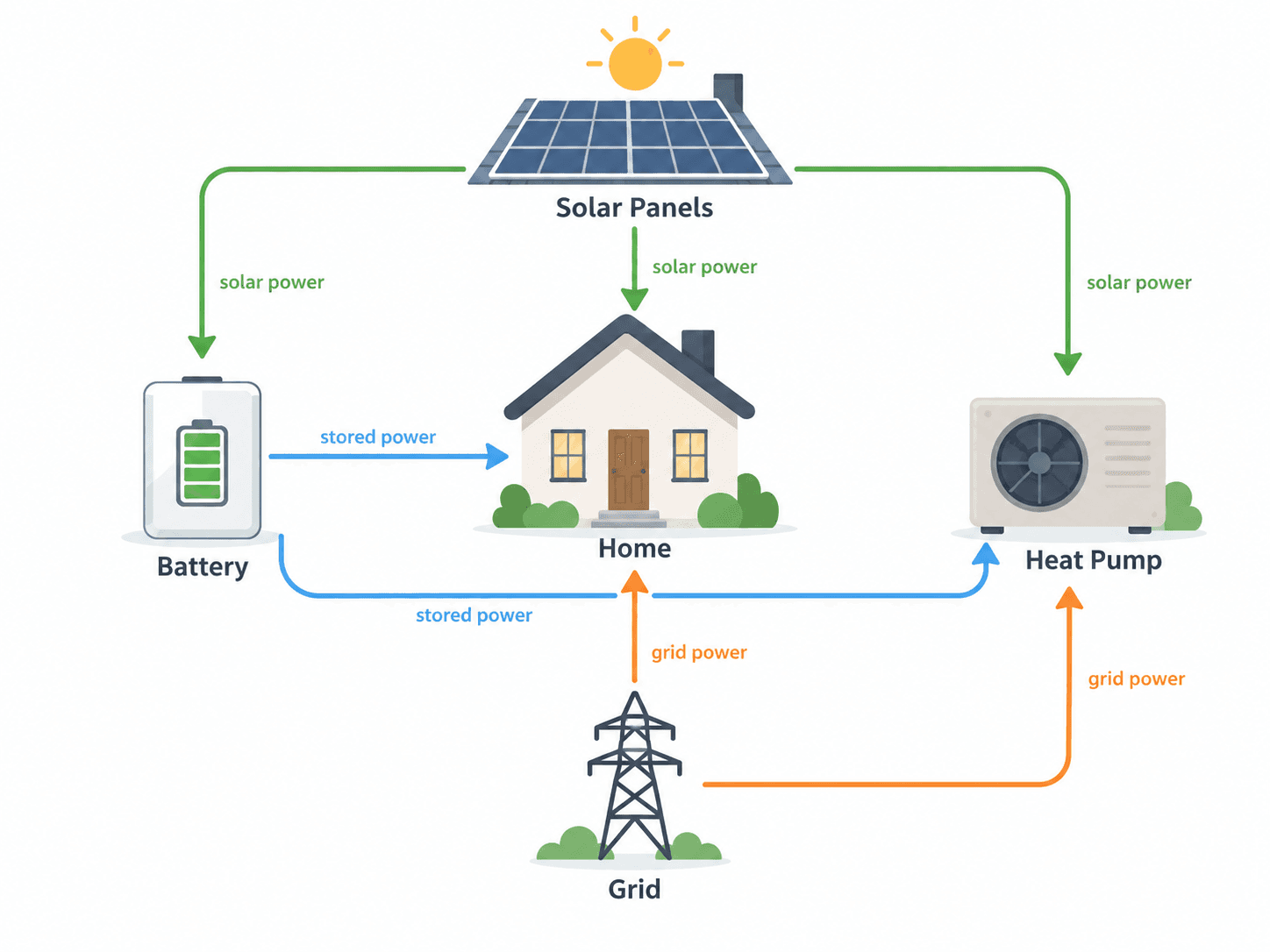
Yes, a heat pump can run using electricity generated from solar panels. Solar panels generate electricity, and the heat pump uses that electricity to provide heating for your home.
There is no separate “solar heat pump” technology. The system simply combines two technologies:
Technology | Role |
Solar panels | Generate electricity from sunlight |
Heat pump | Uses electricity to produce heat efficiently |
A heat pump can produce around 3–4 kWh of heat from 1 kWh of electricity depending on the system efficiency and conditions.
However, solar electricity is shared across your home. Your heat pump competes with other appliances such as lighting, cooking and household devices, so the amount of solar power used for heating depends on when your home generates and uses electricity.
Learn more about heat pump upgrades for your home before planning a solar and heat pump system.
Why Solar Panels Cannot Fully Power a Heat Pump All Year
Solar panels and heat pumps work well together, but their energy patterns do not perfectly match.
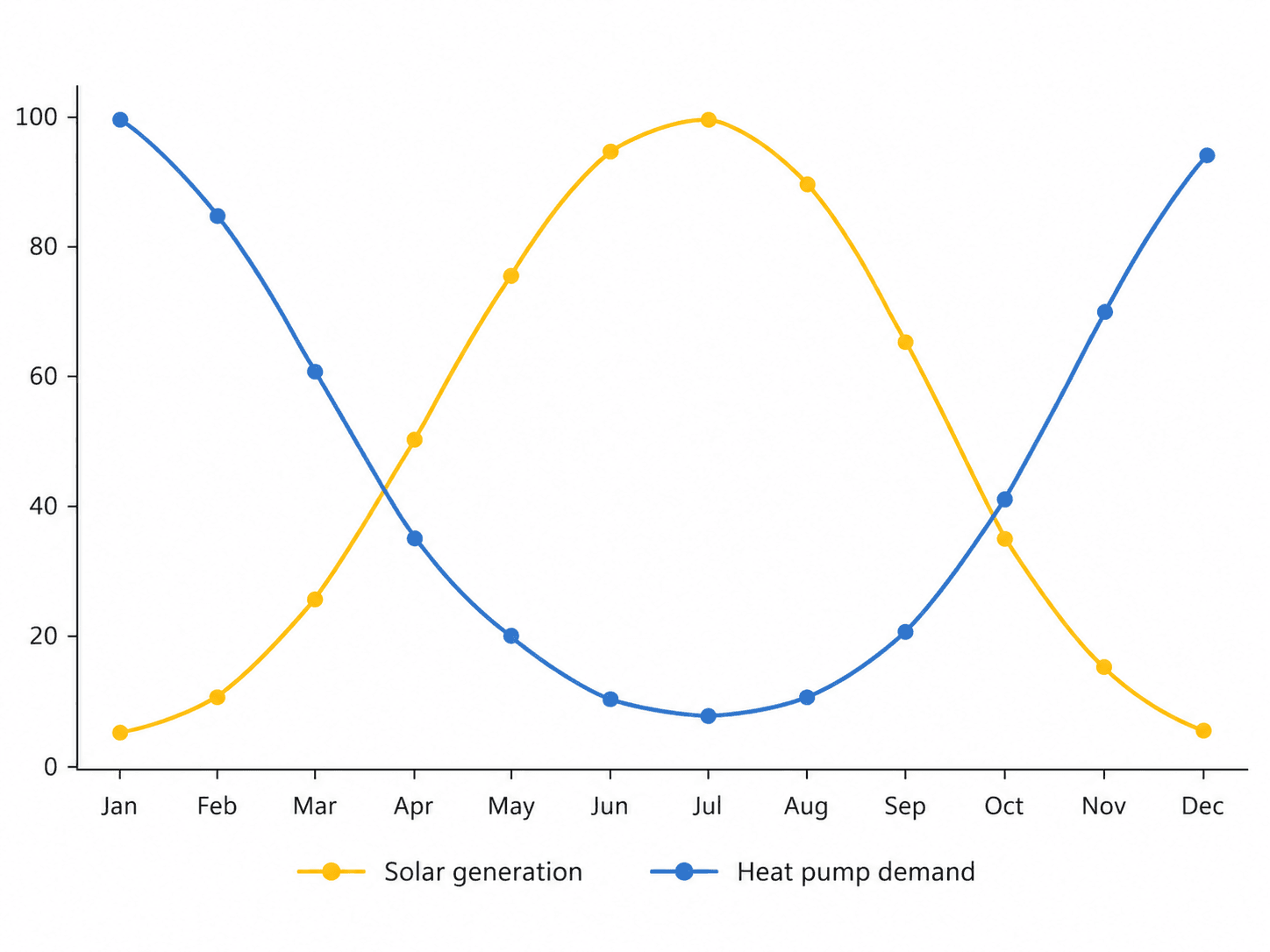
Season | Solar Generation | Heat Pump Demand |
Summer | Highest solar output | Lower heating demand |
Winter | Lowest solar output | Highest heating demand |
During summer, solar panels can often generate more electricity than your home needs. However, in winter, shorter days and lower sunlight mean solar output drops just when your heat pump needs more energy for heating.
This is why many homes combine solar panels with:
Battery storage to save excess solar energy for later use
Smart tariffs to use cheaper electricity periods when solar generation is low
The goal is not to make solar cover every unit of heat pump electricity, but to reduce grid usage and make the system more efficient throughout the year.
How Many Solar Panels Do You Need to Run a Heat Pump?
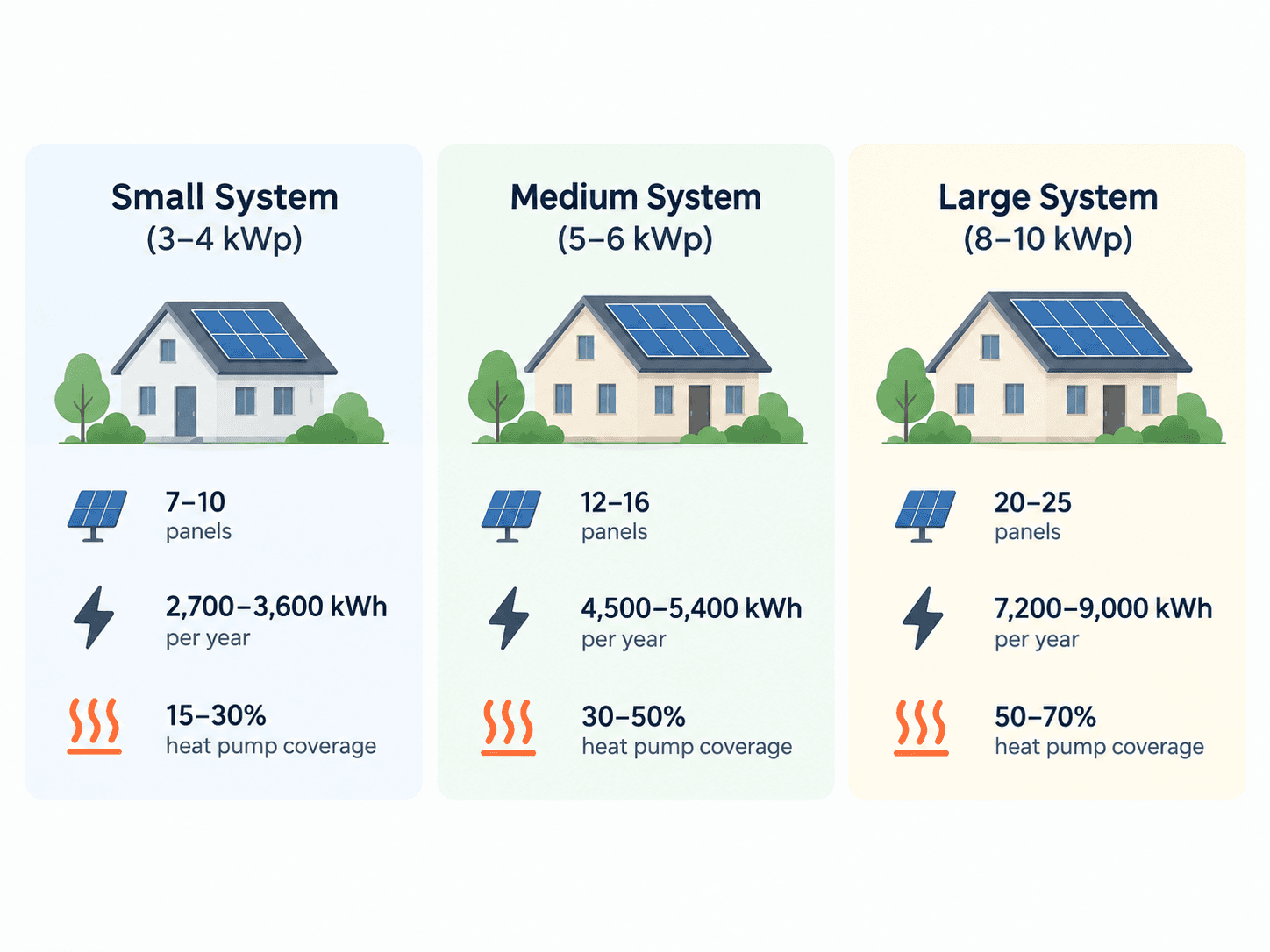
The number of solar panels needed depends on your home’s electricity use, heat pump size, available roof space and daily energy habits. A typical UK home uses around 3,400 kWh of electricity per year, while a heat pump can add around 3,200 kWh, creating a combined demand of approximately 6,600 kWh per year.
Solar System Size | Approximate Coverage |
Smaller system | Partial household contribution |
Medium system | Higher daytime coverage |
Larger system | Greater annual electricity generation |
Most homes will not have enough roof space to install enough panels to fully match yearly heat pump electricity demand. However, even partial solar generation can reduce grid electricity use and lower the amount of energy you need to buy.
The right system size depends on your property, so consider your current electricity usage, future heat pump demand and whether you plan to add battery storage. Learn more about whether solar panels are suitable for your home before choosing a system size.
Do You Need a Battery With Solar Panels and a Heat Pump?
A battery is not essential for running a heat pump with solar panels, but it can help you use more of your own solar electricity. Solar panels usually generate the most energy during the daytime, while heating demand is often higher in the morning, evening and winter when solar output is lower.
A battery stores excess solar electricity and makes it available when your home needs it most, reducing reliance on grid electricity.
When a Battery Makes Sense
A battery can be useful for homes that:
Have higher heat pump electricity demand
Use less electricity during sunny daytime hours
Want more control over when they use stored energy
Plan to use smart tariffs with cheaper electricity periods
Battery Size Considerations
Heat pump homes may need larger batteries than standard solar setups because heating can significantly increase electricity demand.
The right battery size depends on:
Household electricity usage
Heat pump energy consumption
Solar generation capacity
Electricity tariff strategy
A larger battery is not always the best option. The system should be designed around your actual energy needs rather than simply maximising storage capacity.
How Smart Tariffs Help Run Heat Pumps With Solar Panels
Solar panels alone are not the complete solution because their generation does not always match when your heat pump needs electricity. Smart tariffs can help by allowing you to use cheaper electricity periods and reduce running costs, especially during winter when solar output is lower.
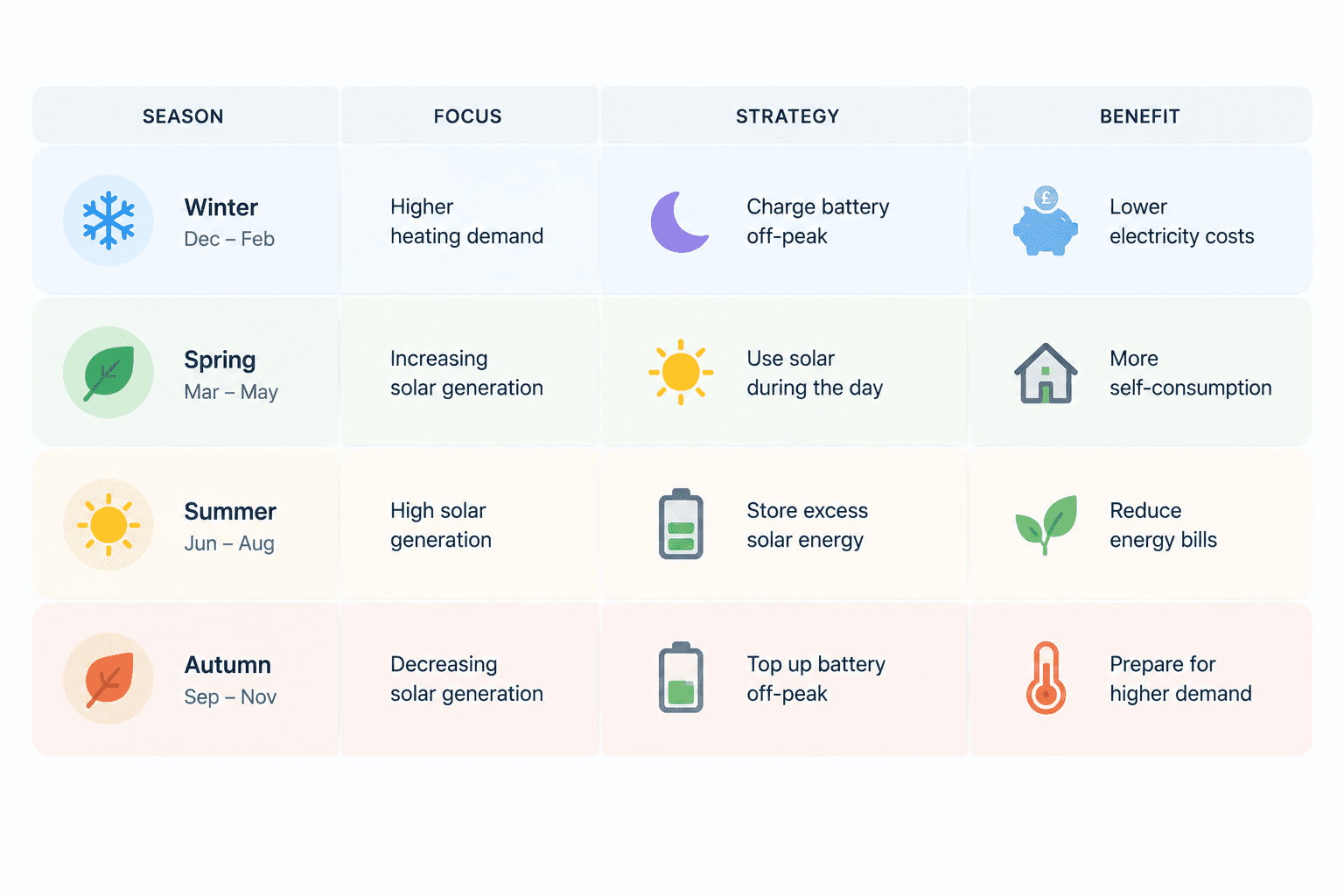
A common approach is charging a battery when electricity prices are cheaper, then using stored energy when your heat pump and home demand more power.
Season | Strategy |
Winter | Use cheaper electricity periods and battery storage |
Spring/Autumn | Combine solar generation with smart energy use |
Summer | Maximise solar generation and use excess energy for hot water |
The right tariff can have a major impact on savings. A well-planned system combines solar generation, battery storage and electricity pricing to reduce the amount of energy you need to buy at higher rates.
Can Solar Panels Help Heat Your Hot Water?
Solar panels can be especially useful for heating hot water because hot water demand often continues through warmer months when solar generation is highest. Excess solar electricity can be used by your heat pump system or stored for later use instead of exporting unused energy back to the grid.
Solar Energy Use | Benefit |
Heat pump hot water | Uses solar electricity to heat water efficiently |
Excess solar generation | Reduces wasted electricity |
Export to grid | Earns payment but may provide less value than using energy at home |
During summer, when heating demand is lower, solar generation can help cover more of your hot water requirements. However, whether you should use excess solar at home or export it depends on your electricity tariff, export payments and overall energy usage.
How Much Does a Heat Pump and Solar Panel System Cost?
The cost of combining a heat pump with solar panels depends on your home, system size and energy goals. The main factors include the type of heat pump, solar panel capacity, battery storage and any changes needed to make your property suitable.
System | Cost Factors |
Heat pump | Installation, heat loss requirements and property suitability |
Solar panels | Roof size, panel capacity and system design |
Battery | Storage size and energy usage patterns |
A combined system can involve a significant upfront investment, but available support can reduce some costs. The Boiler Upgrade Scheme can help eligible UK homeowners with heat pump installation costs, while some energy improvements may qualify for 0% VAT depending on current government rules.
The payback period depends on more than the installation cost. Your savings will vary based on electricity tariffs, household energy usage, solar generation, battery settings and how efficiently the heat pump is running. A well-designed system that matches your home’s needs will usually deliver better long-term value than simply installing the largest possible setup.
Should You Install Solar Panels or a Heat Pump First?
There is no single answer for whether you should install solar panels or a heat pump first. The best approach is to plan both systems together, so your solar capacity, heating requirements and future energy use work well together.
If Installing a Heat Pump First
Understand your home’s future electricity demand.
Use your heat pump usage to help plan the right solar system size.
Consider future battery storage and tariff options.
If Installing Solar Panels First
Consider how a future heat pump will increase electricity demand.
Avoid installing a system that is too small for your future needs.
Leave room for possible battery or solar expansion.
Planning both systems together can help avoid costly changes later and create a more efficient home energy setup. For heat pump suitability, explore upgrading to a heat pump before making a decision.
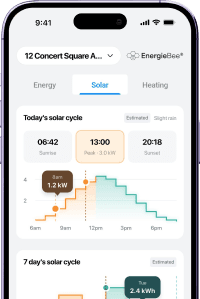
Track Your Solar Heat Pump Use
Monitor solar generation and heat pump energy use with EnergieBee.
Track Your Energy Use Beyond Your Solar and Heat Pump Setup
Installing solar panels and a heat pump can improve your home’s efficiency, but installation estimates do not show how your home actually uses energy every day. Real energy monitoring helps you understand whether your system is performing as expected.
With EnergieBee Energy, you can track:
Electricity consumption patterns
Solar generation and energy usage
Changes before and after upgrades
How your heating system affects daily energy demand
By comparing real energy data over time, you can see which improvements are making a difference and make better decisions about future energy upgrades.
Frequently Asked Questions
Can Solar Panels Fully Power a Heat Pump?
Solar panels can help power a heat pump, but fully covering its electricity demand throughout the year is difficult. Solar generation is lowest in winter when heat pumps usually need the most energy for heating.
Is a Heat Pump Worth It If I Already Have Solar Panels?
A heat pump can work well with existing solar panels by using renewable electricity to provide efficient heating. However, suitability depends on factors such as your home’s insulation, heating requirements, solar system size and how much electricity your heat pump uses.
How Many Solar Panels Do I Need for a Heat Pump?
The number of panels depends on your property, electricity usage, heat pump size and available roof space. Larger systems can generate more electricity, but most homes will use solar as a contribution rather than fully covering heat pump demand.
Is It Cheaper to Leave a Heat Pump Running All Day?
Heat pumps are generally designed to run differently from traditional boilers, often working efficiently at lower temperatures for longer periods. The best settings depend on your system design, home insulation and energy tariff.
Why Is My Electricity Bill High After Installing a Heat Pump?
Higher electricity bills after installing a heat pump can happen for several reasons, including:
Using an unsuitable electricity tariff
Incorrect system settings
Poor system sizing or installation
Higher household energy usage than expected
Monitoring your energy use can help identify where electricity is being used and whether adjustments are needed.
Should I Install Solar Panels Before a Heat Pump?
There is no fixed order that works for every home. Planning both systems together can help ensure your solar capacity, heating requirements and future energy needs are considered from the beginning.


