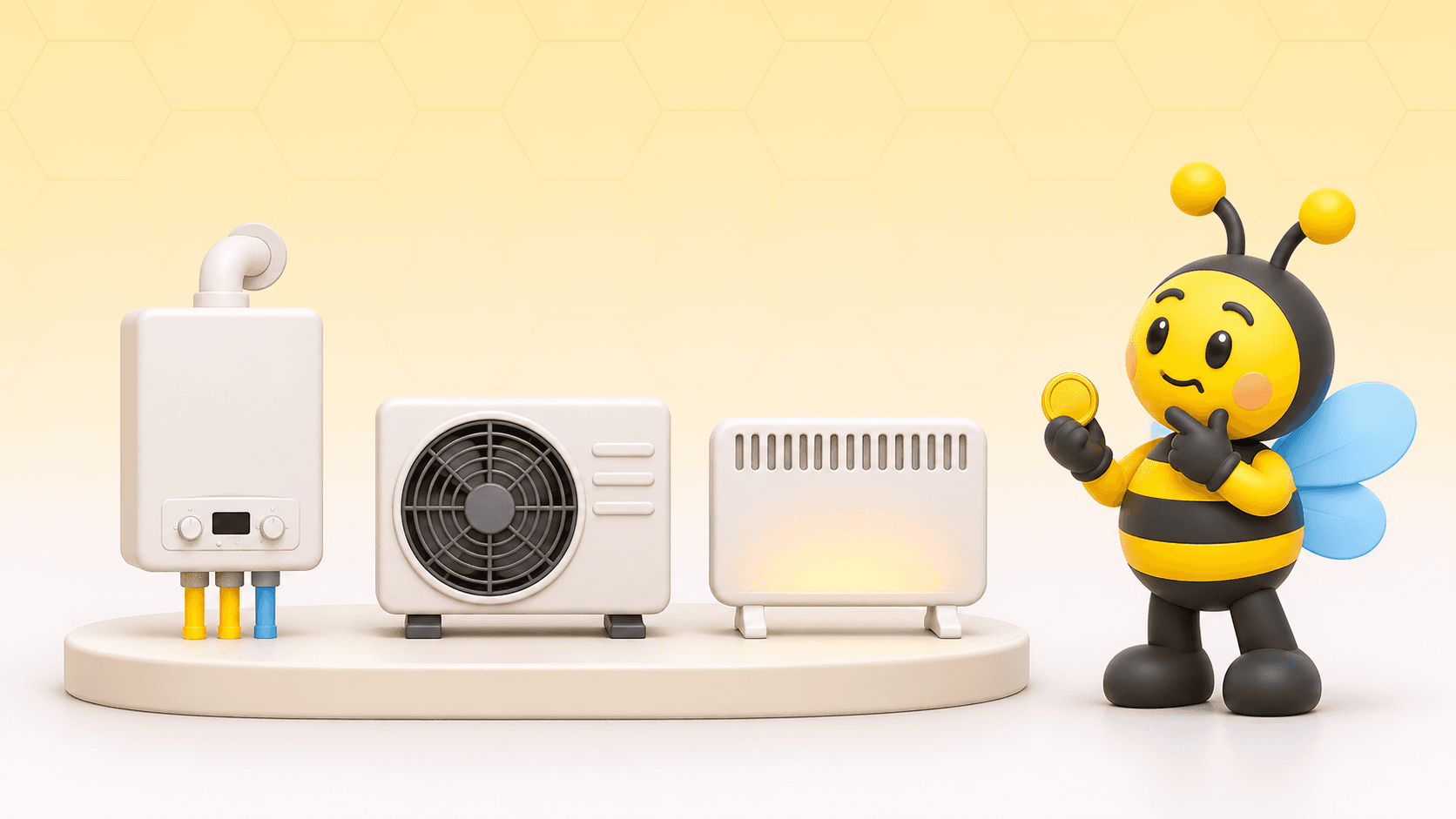
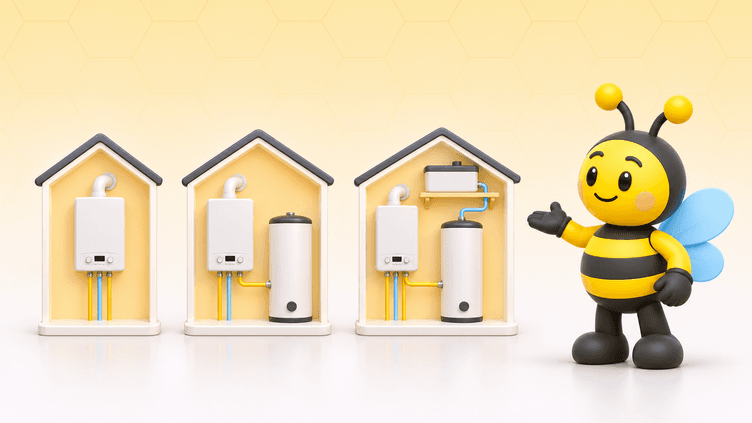
The most commonly used boiler types in the UK homes are Combi, System and Regular boilers. They all provide heating and hot water, but they work in different ways.
Some heat water as soon as you turn on the tap, while others store it in a separate hot-water cylinder. Choosing the right one isn't just about the size of your home. It also depends on how much hot water your household needs, your water supply and the space you have available.
This guide explains different types of boiler, how do boilers work, what they cost and which one might be right for your home
What Are the Different Types of Boiler?
There are 3 main types of boilers:
Combi boilers
System boilers
Regular boilers
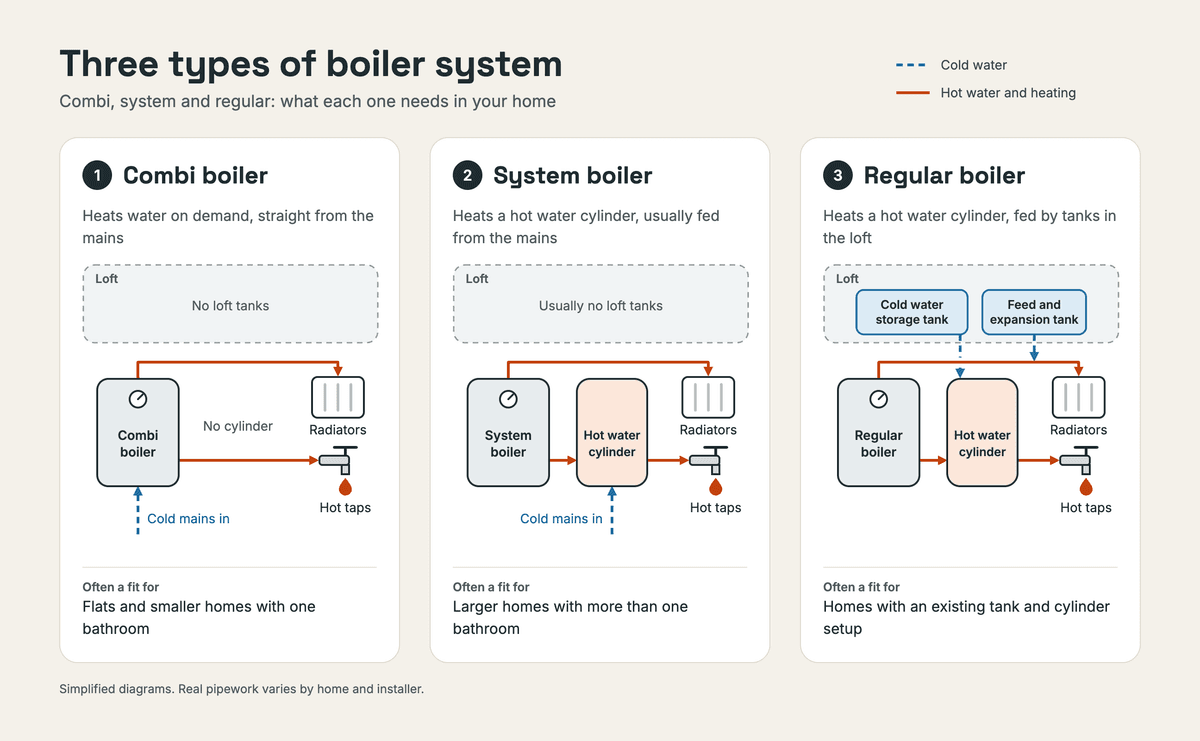
From the outside, most boilers look quite similar. But behind the scenes, their heating systems can be very different.
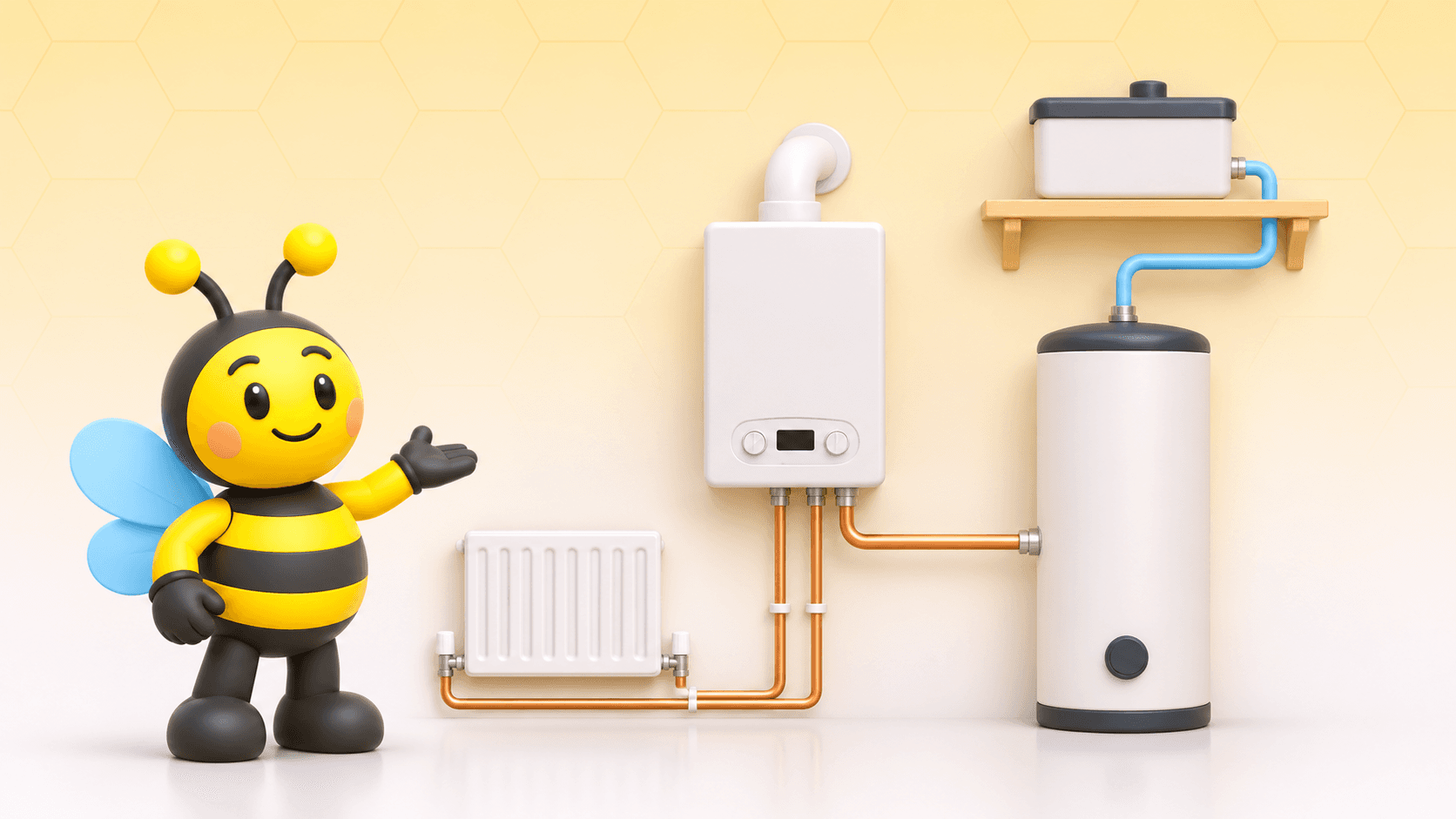
Here's what each setup looks like:
Combi Boiler
A combi boiler, short for combination boiler, provides central heating and hot water from one compact unit. It's a popular choice for smaller UK homes and flats where space is limited.
Unlike boilers that store hot water, a combi boiler heats water when you need it. So you don't need a separate hot-water cylinder taking up space in your home.
How Does a Combi Boiler Works
A combi boiler heats water directly from the mains, so you don't need a separate hot-water cylinder.
Here's how it works:
You turn on a hot tap: Cold water flows into the boiler from the mains.
The boiler heats the water: A heat exchanger transfers heat to the incoming water.
Hot water reaches your tap: The heated water flows straight to your shower or tap without being stored.
Your heating works separately: When your thermostat calls for heat, the boiler circulates hot water through your radiators.
Most combi boilers prioritise hot water over central heating, so the radiators briefly stop receiving heat while you're using a hot tap.
Standard Combi vs Storage Combi
Both provide heating and hot water from a single unit. The main difference is how much hot water they can supply during busy periods.
Standard combi boiler: Best suited to homes with one bathroom, where people usually shower at different times. It can work well for couples or families who rarely use multiple hot-water outlets at once.
Storage combi boiler: Better suited to busier households with two bathrooms, where several people may need hot water around the same time. Its built-in hot-water store provides an extra supply during periods of higher demand.
Advantages and Disadvantages of a Combi Boiler
Combi boilers are convenient and space-saving, but they aren't the best fit for every household. Here's where they work well and where they may fall short.
Advantages | Disadvantages |
Saves space: No separate hot-water cylinder or loft tanks needed. | Limited hot-water flow: Running two showers at once can reduce the flow from both. |
Hot water on demand: No need to wait for a cylinder to heat up. | Depends on mains supply: Poor water pressure or flow can affect performance. |
Less heat loss: No separate cylinder gradually losing stored heat. | Less suitable for high demand: A standard combi may struggle when several bathrooms are in use. |
Simpler installation: Fewer external components, especially when replacing an existing combi. | No separate hot-water backup: If the boiler stops working, there's normally no cylinder with an immersion heater to fall back on. |
System Boiler
If several people in your household need hot water around the same time, a system boiler could be a better fit.
It works with a separate hot-water cylinder, which means your family can use stored hot water rather than relying entirely on the boiler to heat it as each tap is turned on.
How Does a System Boiler Works
A system boiler heats water for your radiators and a separate hot-water cylinder. Here's how it works:
Heating starts: Your thermostat or hot-water controls tell the boiler when heat is needed.
Water gets heated: The boiler heats water and uses a built-in pump to move it around the system.
Heat is delivered: Warm water flows through your radiators or a coil inside the hot-water cylinder.
Water returns: As the water cools, it flows back to the boiler to be heated again.
Unlike a traditional regular boiler, a system boiler has most of its heating components built in, so it usually doesn't need additional water tanks in the loft.
Advantages and Disadvantages of a System Boiler
System boilers work well for households that need plenty of hot water, but they also require more space and planning. Here's where they work best and what to consider.
Advantages | Disadvantages |
Good for busy households: A suitable cylinder can provide hot water to several outlets. | Needs extra space: You'll need room for a separate hot-water cylinder. |
No traditional loft tanks: Frees up loft space compared with many regular boiler setups. | Hot water can run out: Heavy use may empty the stored supply. |
Works with solar water heating: A compatible cylinder can store water heated by solar thermal panels. | Some heat is lost during storage: Even well-insulated cylinders gradually lose heat. |
Flexible hot-water capacity: You can choose a cylinder size that suits your family's needs. | Potentially higher installation costs: Adding a cylinder and extra pipework can increase the bill. |
What Is a Regular or Conventional Boiler?
A regular boiler, also called a conventional or heat-only boiler, is commonly found in older UK homes. It works with a separate hot-water cylinder and usually has two water tanks in the loft.
It's often a practical choice for homes that already have a traditional heating system, especially where replacing the entire setup would mean extra plumbing work.
How Does a Regular Boiler Work?
A regular boiler uses separate tanks and a cylinder to provide heating and hot water.
Here's how it works:
The boiler heats water: When heating is needed, the boiler warms water for your radiators or hot-water cylinder.
Heat reaches your radiators: A pump circulates heated water through the radiators to warm your rooms.
Hot water is stored: Heat from the boiler warms water inside a separate cylinder, which is supplied by a cold-water tank in the loft.
You use the hot water: When you open a hot tap, stored hot water flows from the cylinder to your tap or shower.
A traditional system also has a smaller feed-and-expansion tank in the loft. It keeps the radiator circuit topped up and allows the water to expand as it heats.
Advantages and Disadvantages of a Regular Boiler
Regular boilers can work well with existing plumbing, but the extra tanks and pipework come with some drawbacks.
Advantages | Disadvantages |
Suitable for older properties: Can often work with existing traditional heating systems. | Needs more space: Traditional setups require a cylinder and loft tanks. |
Supports higher hot-water demand: A suitable cylinder can serve several taps and showers. | Hot water can run out: You'll need to wait for the cylinder to heat another supply. |
Works with low mains pressure: Gravity-fed systems can be useful where the mains supply is limited. | Potentially weaker shower pressure: Gravity-fed hot water may need a suitable pump for stronger flow. |
Easier like-for-like replacement: Keeping suitable existing components can avoid major plumbing changes. | More components to maintain: Extra tanks and pipework may need attention. |
Flexible heating setup: Can work with a compatible solar hot-water cylinder. | Heat loss and freezing risks: Stored water loses some heat, while poorly insulated loft tanks and pipes can freeze in cold weather. |
Boiler Fuel Types: Gas, Oil, LPG, Electric and Biomass
Combi, system and regular boilers describe how your heating system works. But there's another difference worth knowing: what fuel powers your boiler.
Here are the five main fuel types used in UK homes:
Gas boilers: Run on natural gas supplied through the mains gas network. They're the most common choice in UK homes and are generally cheaper to run than other conventional boiler fuels where mains gas is available.
Oil boilers: Burn heating oil stored in a tank outside your home. They're common in rural areas without mains gas, but you'll need space for a tank and regular fuel deliveries.
LPG boilers: Use liquefied petroleum gas stored in a tank. Like oil boilers, they're suitable for homes without a mains gas connection, although LPG can be more expensive to run.
Electric boilers: Use electricity to heat water for radiators and hot taps. They don't burn fuel or need a flue, but electricity's higher unit price can make them expensive to run compared with gas boilers.
Biomass boilers: Burn wood pellets, logs or chips to provide heating and hot water. They're an alternative to fossil fuels, but biomass heating systems need fuel storage, regular maintenance and suitable ventilation.
Which fuel should you choose? Start with what's available at your home. If you're connected to mains gas, compare the cost of keeping gas with switching to another heating option. If you're off the gas grid, explore suitable alternatives based on your heating needs.
Which Type of Boiler Is Best for Your Home?
The best boiler isn't necessarily the biggest or most expensive one. It's the one that can comfortably meet your household's heating and hot-water needs without wasting energy or space.
Three Example Homes
Here's how different boiler systems might suit three typical UK homes.
Example Home | Boiler to Consider | Why It Might Suit |
One-bedroom flat with one bathroom | Combi boiler | Saves space and provides hot water for modest household demand. |
Three-bedroom family home with two busy bathrooms | System boiler | A suitably sized cylinder can supply hot water to several outlets. |
Older four-bedroom house with loft tanks and low mains pressure | Regular boiler | May work with the existing plumbing without major changes. |
These are starting points, not fixed recommendations. A heating engineer should check your home's heat loss, water supply and existing pipework before recommending the right boiler type and size.
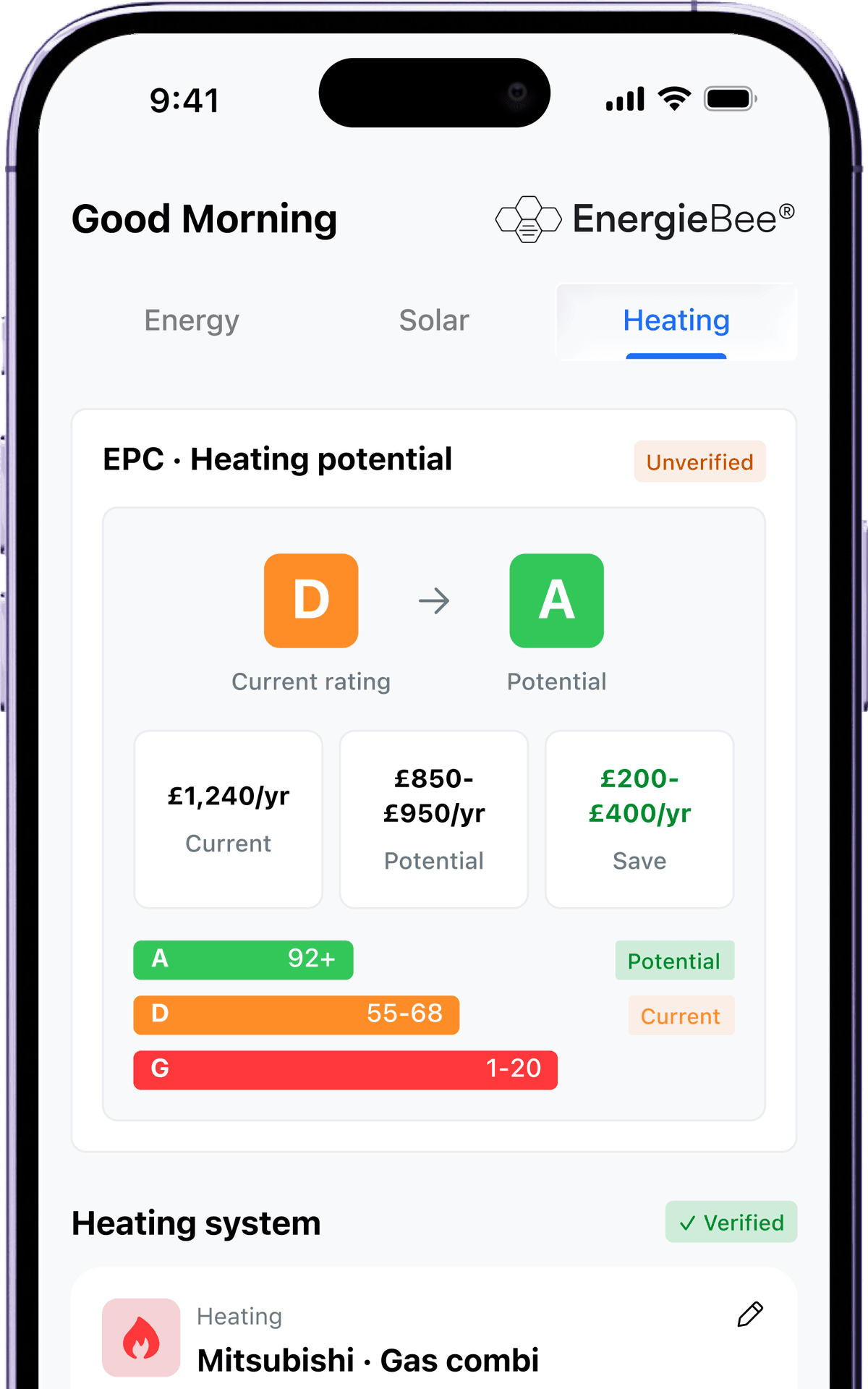
Lower your energy bills without any Guesswork
Track your heating, energy use and tariffs in one place with EnergieBee. Spot wasted energy and find ways to save.


Download EnergieBee
Scan with your phone's camera to get the app.
How Much Do Different Boiler Systems Cost Depending on Boiler Types?
A new boiler typically costs a few thousand pounds, but the final price depends on what you're replacing and how much installation work is needed.
For a rough idea, here are the latest UK boiler installation cost estimates for 2026.
Boiler Type | Estimated Cost (Supply + Installation) | Installation Scenario |
Combi boiler | £2,500–£4,000 | Replacing an existing combi in the same location |
System boiler | Around £3,000 | Replacing an existing system boiler |
Regular boiler | Around £3,000 | Replacing an existing conventional boiler |
Switching to a combi | Around £4,000 | Converting from a system or regular boiler |
These are indicative UK prices for typical replacements, mainly gas boilers. Your quote may be higher if you need new pipework, a hot-water cylinder or other changes.
What makes boiler installation more expensive?
Changing boiler type: Removing tanks, adding a cylinder or modifying pipework costs extra.
Moving the boiler: A new location may require additional pipes and flue work.
Boiler size and brand: Larger or premium models can cost more.
Extra equipment: New heating controls, filters or system cleaning can increase the bill.
Before you spend: Don't choose a boiler simply because it's cheaper to install. Compare the total fitted price, expected running costs and what your home actually needs.
Are Gas Boilers Being Banned? What Is Changing
There's currently no blanket ban on gas boilers in existing UK homes. However, new-build rules are changing, and the government is encouraging homeowners to consider cleaner heating alternatives.
Here's what the latest rules mean for you.
Existing Homes
If your home already has a gas boiler, you can continue using it or replace it with another gas boiler when needed.
You might have heard about a gas boiler ban in 2035. That was an earlier government target, not a legal deadline requiring homeowners to replace their boilers.
The government's 2026 Warm Homes Plan focuses on making low-carbon heating more affordable rather than forcing households to remove working boilers.
New Builds
The rules are different for newly built homes.
In England, the Future Homes Standard takes effect on 24 March 2027. New homes covered by the standard will need low-carbon heating, such as heat pumps. Traditional gas boilers won't meet the requirements.
There are transitional arrangements for developments approved before that date.
Scotland already has restrictions on fossil-fuel heating in new buildings. Wales and Northern Ireland have separate building regulations.
Heat Pumps, Hybrids and the Boiler Upgrade Scheme
If you're thinking about replacing your boiler, a heat pump is another option worth considering. It uses electricity to move heat from outside into your home rather than burning gas.
A hybrid system combines a heat pump with a gas or oil boiler, allowing the two to share heating duties.
To make low-carbon heating more affordable, the Boiler Upgrade Scheme currently offers eligible homeowners in England and Wales:
£7,500 towards an air-to-water or ground-source heat pump.
Up to £9,000 for eligible off-gas-grid homes replacing oil or LPG heating with these heat pumps, until 31 March 2027.
£2,500 towards an eligible air-to-air heat pump.
£5,000 towards an eligible biomass boiler.
Hybrid systems combining a fossil-fuel boiler with a heat pump aren't eligible for these grants.
Frequently Asked Questions About Boiler Systems
How Many Main Types of Boiler Systems Are There?
There are three main types of domestic boiler systems in the UK: combi, system and regular boilers. Each provides central heating and hot water, but uses a different setup to deliver them.
Which Type of Boiler Lasts the Longest?
No single boiler type is guaranteed to last longer. Combi, system and regular boilers typically last 10–15 years, although well-maintained models can last longer. Regular servicing, installation quality and how heavily you use your boiler matter more than the type.
Is a Combi Boiler Better Than a System Boiler?
A combi is often better for smaller homes with one bathroom because it saves space and heats water on demand. A system boiler is generally more suitable for busy households that need hot water from several outlets at once.
What Boiler Is Best for a Three-Bedroom House?
A combi boiler may be enough for a three-bedroom house with one bathroom. If your family regularly uses two showers at once, a system boiler with a suitable hot-water cylinder could be better. Your hot-water demand and available water supply matter more than bedroom count alone.
Can a System Boiler Work With Low Water Pressure?
Yes, but it depends on the hot-water cylinder and plumbing setup. Most modern system boilers use mains-fed cylinders, which need adequate water pressure and flow. If your mains supply is weak, an installer should check whether a different cylinder arrangement or heating system would work better.
Is a Condensing Boiler the Same as a Combi?
No. A combi boiler describes how heating and hot water are supplied, while a condensing boiler describes how efficiently the boiler uses heat. Modern gas combi, system and regular boilers can all use condensing technology.
Do I Need to Replace My Boiler if My Energy Bills Are High?
Not necessarily. High bills can come from poor insulation, inefficient heating settings or simply using more energy. Before replacing your boiler, check your energy usage, tariff and heating controls. If your boiler is also unreliable or struggling to heat your home, have it checked by a qualified engineer.

 Sharieaz Kavier