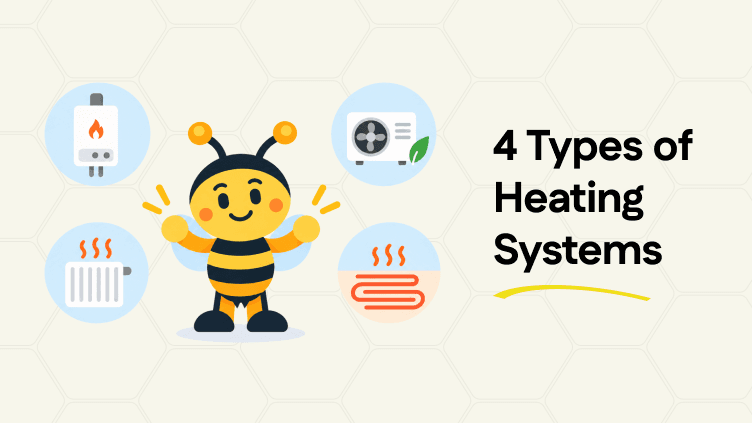
Central heating options in UK homes include combi, system and heat-only boiler systems, alongside heat pumps that supply radiators or underfloor heating. The differences include how they generate heat, provide hot water and use space in your home.
A combi heats tap water on demand, while system and conventional boilers use a separate cylinder, as the Energy Saving Trust explains. This guide compares the options, helps you identify your existing setup and explains what to consider when choosing a replacement.
What Are the Different Types of Central Heating Systems?
This guide compares four central heating options, covering three boiler arrangements and water-based heat pump systems:
The boiler types differ mainly in how they supply and store hot water. Heat pumps use a different heat source but can also supply radiators or underfloor heating. Here is how each option compares.
Combi Boiler Systems
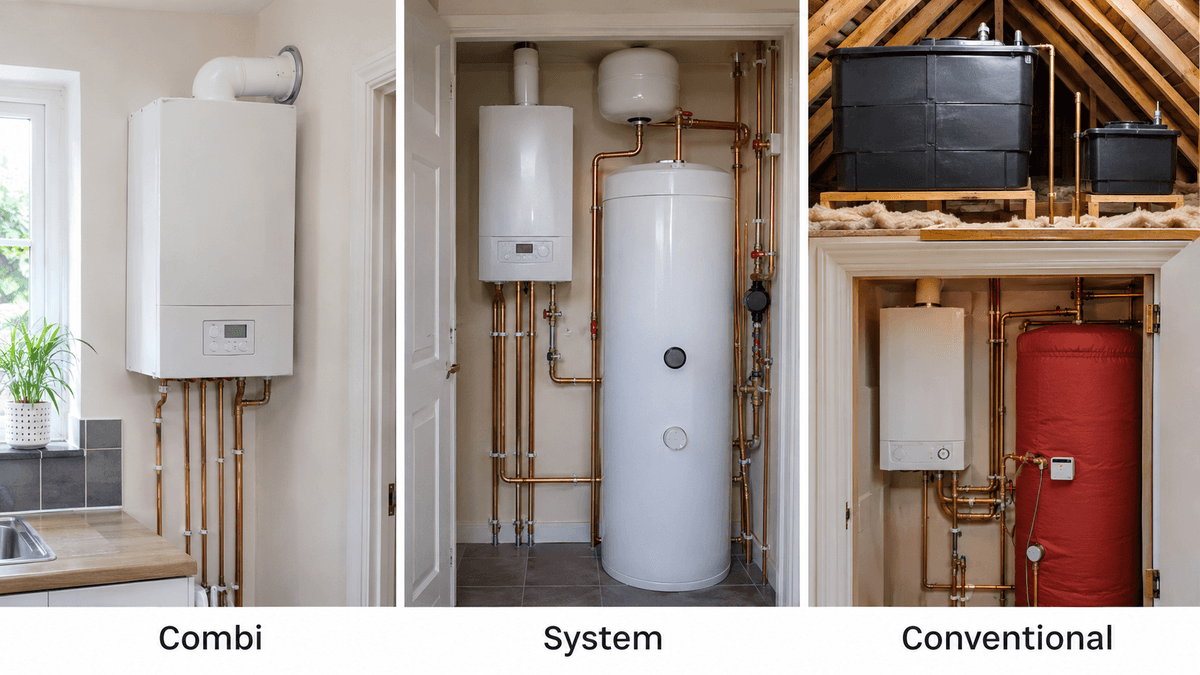
A combi boiler supplies heating and heats tap water on demand, without a separate cylinder.
Best for: Smaller households with adequate mains pressure.
Pros: Saves space; no cylinder to reheat.
Cons: Hot-water flow can drop when several outlets run together.
The Energy Saving Trust’s boiler guide explains these considerations.
System Boiler Systems
A system boiler supplies heating and stores hot water in a separate cylinder. A typical modern setup needs no loft tank.
Best for: Households with higher hot-water demand.
Pros: Stored hot water can supply several outlets.
Cons: Needs cylinder space; stored water loses heat and requires reheating.
Heat-Only (Conventional) Boiler Systems
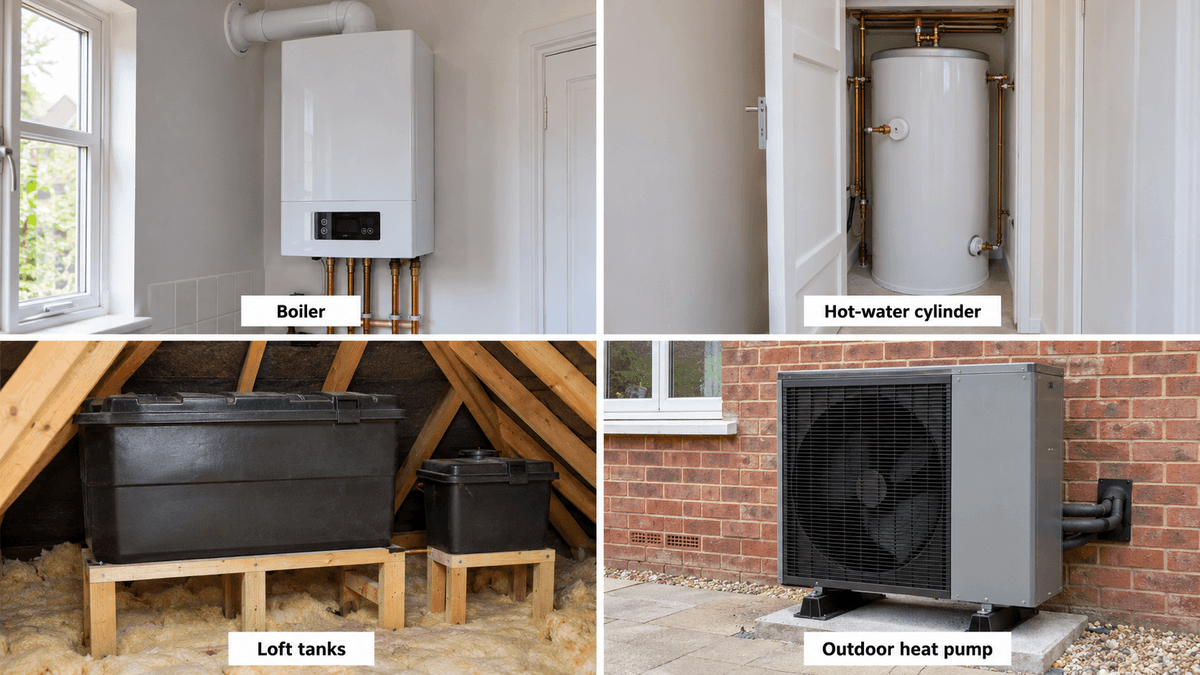
A heat-only boiler works with a hot-water cylinder, usually alongside loft tanks in traditional installations.
Best for: Homes already using this arrangement, including those with low mains pressure.
Pros: Stored hot water can serve several taps.
Cons: Bulky equipment; hot water can run out until reheated.
For a visual comparison, watch British Gas’s video explaining the three boiler types.
Heat Pump Central Heating
A water-based heat pump uses electricity to transfer heat into water for radiators or underfloor heating.
Best for: Homes where an installer confirms a suitable system design.
Pros: Efficient heating; can use solar-generated electricity.
Cons: May need radiator upgrades and equipment space. Running costs depend on tariffs and system performance.
Install EnergieBee Before Your Next Heating Bill
Understand your energy use before your next bill. Install EnergieBee free and start tracking today.


Download EnergieBee
Scan with your phone's camera to get the app.
Eligible properties in England and Wales can receive a standard £7,500 grant towards an air-to-water or ground-source heat pump through the Boiler Upgrade Scheme.
Read more about running heat pumps with solar panels.
Central Heating Systems Compared
The main differences are hot-water storage, space requirements and suitability for your household.
System | Hot-water supply | Space needed | Main consideration |
Combi boiler | Heated on demand | Boiler only | Mains pressure and simultaneous hot-water use |
System boiler | Stored in a cylinder | Boiler and cylinder | Cylinder capacity and reheating time |
Heat-only boiler | Stored in a cylinder | Boiler, cylinder and usually loft tanks | Space for equipment |
Water-based heat pump | Usually stored in a cylinder | Heat pump equipment and usually a cylinder | Heat loss, radiator suitability and electricity tariff |
These are typical arrangements; individual installations can differ.
What Type of Central Heating System Do I Have?
Start with the appliance’s model name and manual, then check whether you have a cylinder or loft tanks. These clues can help identify your setup.
What you can see | Likely arrangement |
Boiler without a separate hot-water cylinder | Usually a combi boiler |
Boiler and cylinder, without loft tanks | Often a system boiler; other arrangements are possible |
Boiler, cylinder and loft tanks | Usually a conventional, open-vented setup |
Outdoor fan unit connected to water-based heating | May be an air-source heat pump; confirm the model |
A pressure gauge alone does not distinguish a combi from a system boiler. Confirm the arrangement with your installer or landlord.
How Can You Recognise an Older Central Heating System?
A cylinder and two loft tanks often indicate a traditional open-vented arrangement. Typically, the larger tank stores cold water, while the smaller feed-and-expansion tank serves the heating circuit. The APHC’s central heating guide explains these components.
These clues identify the layout, rather than proving the boiler’s age. Check installation or service records, and confirm with a Gas Safe registered engineer for gas equipment, your installer or your landlord.
Which Central Heating System Suits Your Home?
Compare these five factors before choosing:
Hot-water demand: How many taps or showers run together?
Space: Is there room for cylinders or outdoor equipment?
Water pressure: Can the mains supply support your chosen system?
Budget: Compare installation, running costs and grants.
Home suitability: Consider insulation, heat loss and radiator requirements.
Ask a qualified installer to confirm which arrangement suits your home.
Install EnergieBee Before Your Next Heating Bill
See your energy use and costs in one place with EnergieBee. Spot usage patterns and get personalised recommendations to help reduce bills. With compatible smart heating controls, you can also manage heating schedules around your routine.
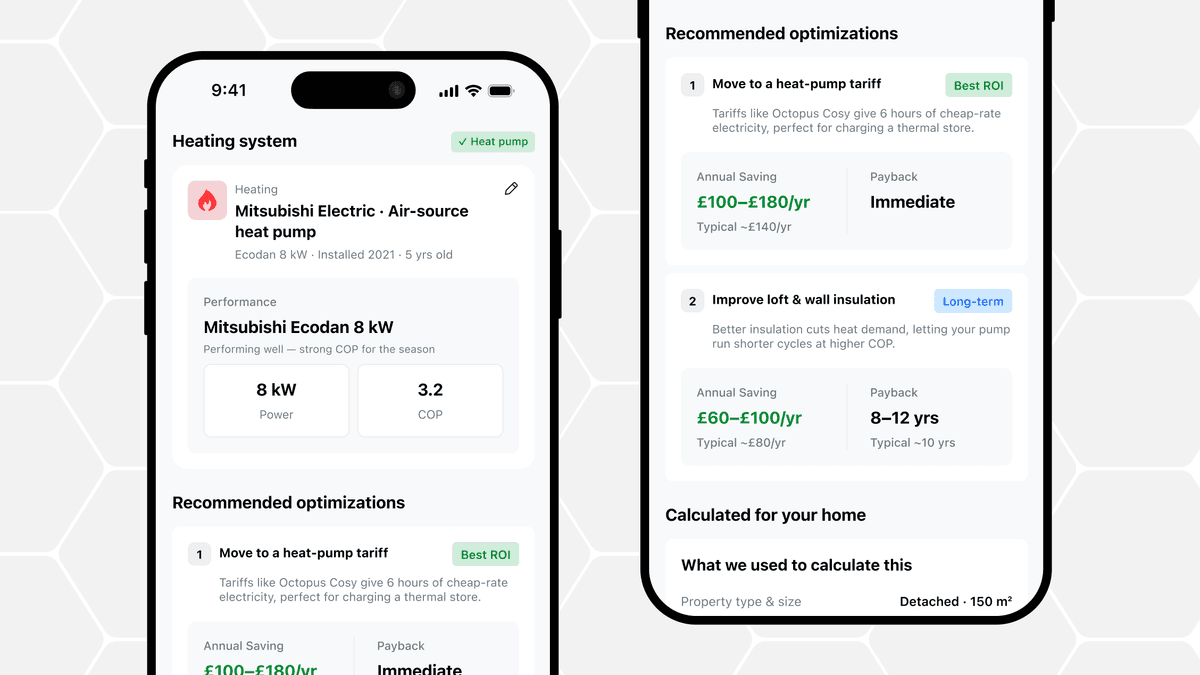
Download EnergieBee for free, create your account and connect your home’s energy data. Start today, so you have a clearer picture of your usage before your next heating bill.
Frequently Asked Questions
Which Central Heating System Is Most Common?
Condensing combi boilers are the most common boiler type in England. The English Housing Survey 2024–25 found that 63% of homes in England had one in 2024. This figure covers England, rather than the whole UK.
What Does a Condensing Boiler Mean?
A condensing boiler recovers heat from exhaust gases that would otherwise escape through the flue. This improves efficiency. “Condensing” describes the heat-recovery technology: combi, system and heat-only boilers can all use it, as the Energy Saving Trust explains.
What Is the Difference Between Sealed and Open-Vented Heating?
A sealed heating circuit is pressurised and uses an expansion vessel to accommodate expanding water. An open-vented circuit uses a feed-and-expansion tank, usually in the loft. These terms describe the heating-water circuit, separately from how tap water is stored.
Can You Switch From a Conventional Boiler to a Combi?
Yes, if your home’s water supply, pipework and hot-water demand are suitable. Conversion usually involves removing the cylinder and redundant tanks, adapting pipework and fitting the new boiler. British Gas’s conversion guide explains the process. A Gas Safe registered engineer should assess and carry out a gas boiler conversion.

 David Price