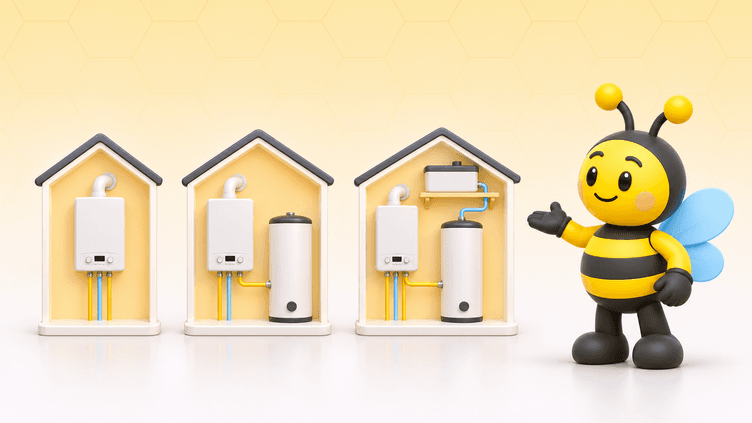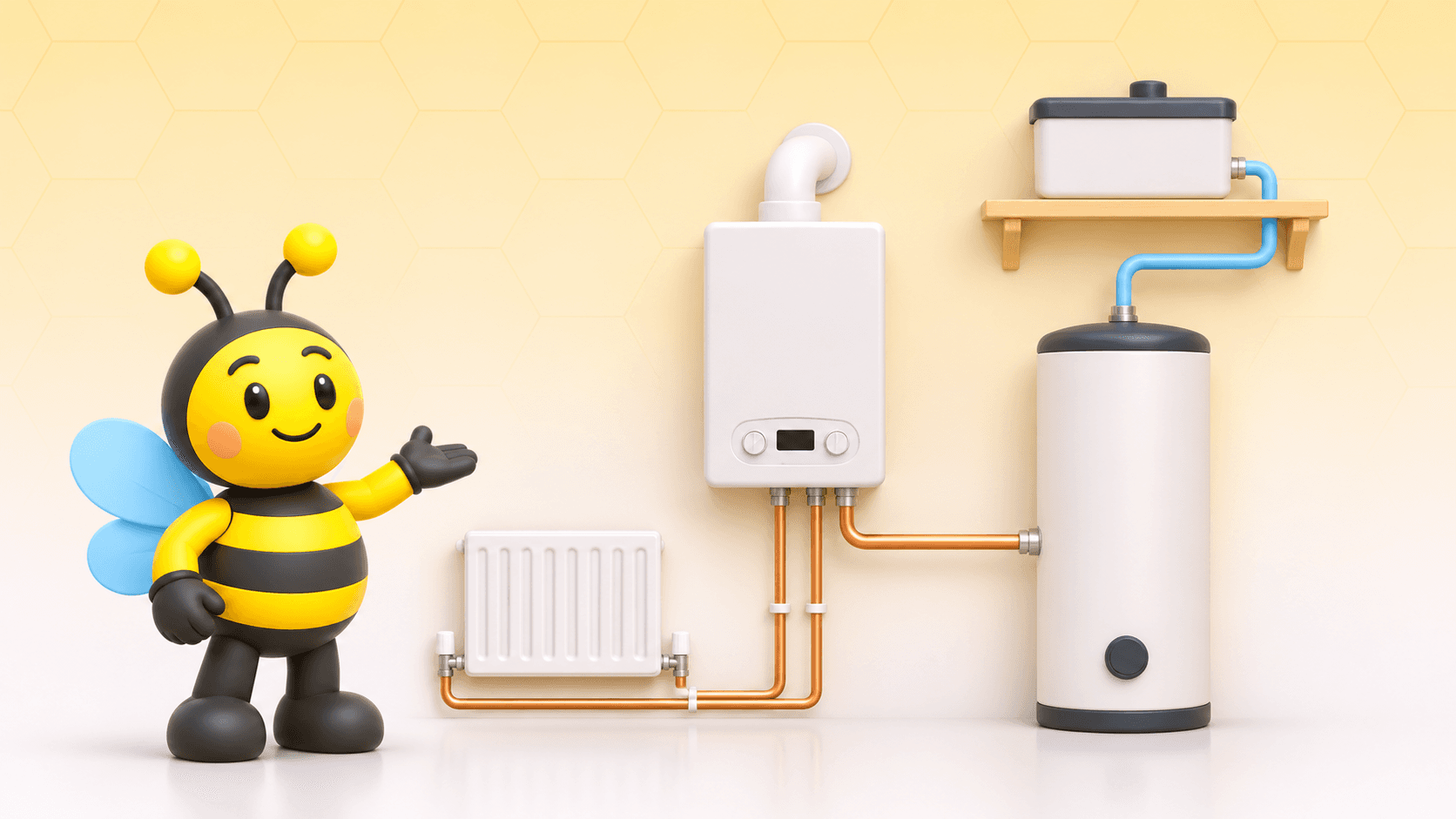
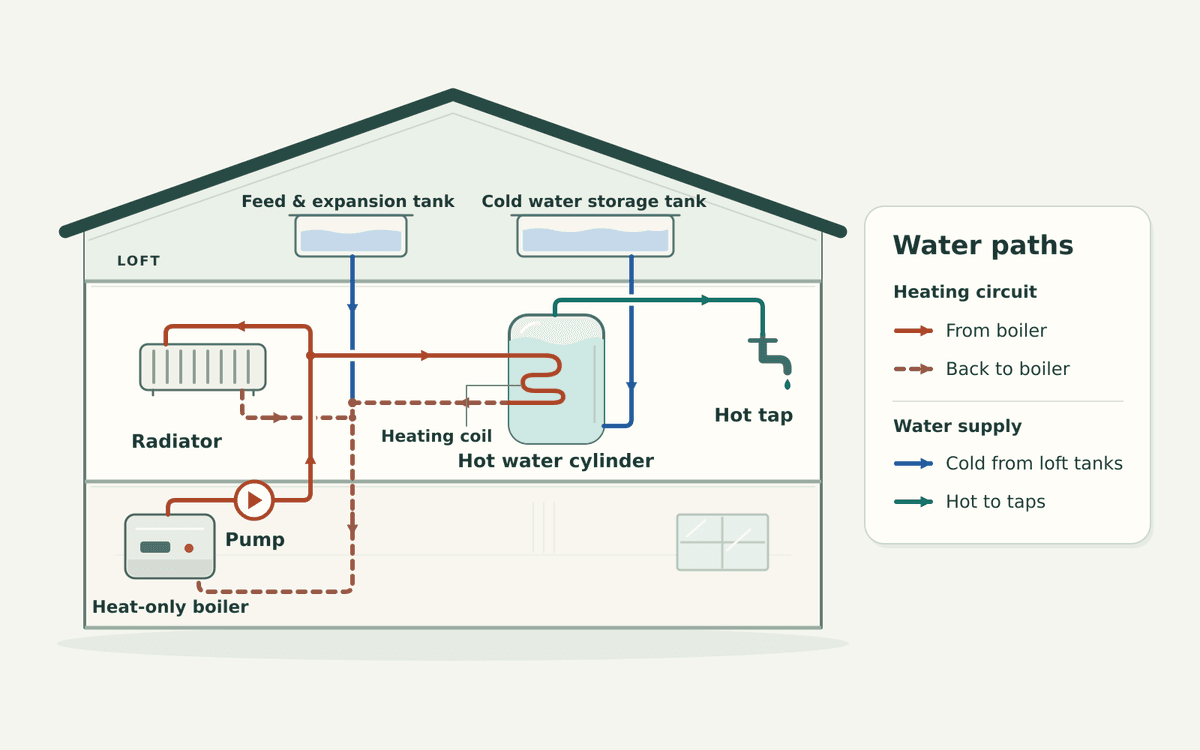
A heat only boiler heats water for your radiators and warms a separate hot water cylinder that supplies your taps and showers. It’s also called a regular or conventional boiler. In a traditional setup, you’ll usually find two water tanks in the loft. Baxi’s heat only boiler guide
If your cylinder and tanks are in good condition, replacing your old boiler with another heat only model can mean less pipework to change. Before switching to a combi for more cupboard space, check how often your household runs two showers or hot taps at once. Compare UK central heating systems · Baxi’s combi boiler guide
How Does a Heat Only Boiler Work?
A pump circulates water from the boiler through your radiators or through a coil inside the hot water cylinder. The coil warms the stored water you use at the taps. Water in the heating circuit returns to the boiler to be heated again. How your home heating system works · Baxi’s heat only boiler guide
Radiators, the Hot Water Cylinder and Loft Tanks
Your radiators release heat into the rooms, and the cylinder keeps a supply of hot water ready for baths and showers. In a traditional setup, the larger loft tank feeds cold water to the cylinder. The smaller feed and expansion tank tops up the heating circuit and gives the water room to expand as it warms. Baxi’s guide to boiler tanks and cylinders
After several showers, the cylinder may need time to reheat. Energy Saving Trust recommends setting the cylinder thermostat to 60°C to help control harmful bacteria in stored water. Energy Saving Trust’s guide to heating controls
Watch British Gas explain conventional boilers
Open-Vented vs Sealed Systems
An open-vented heating circuit uses a feed and expansion tank. A sealed circuit uses an expansion vessel and runs under pressure. Some heat only boilers can work with either arrangement. The hot water cylinder has its own supply, so a sealed heating circuit can still have a larger loft tank if the cylinder is tank-fed. Ideal Heating’s guide to vented and sealed systems · Baxi’s cylinder guidance
Gas, Oil and Condensing Models
Gas and oil describe the fuel a boiler burns. Oil models can suit homes without mains gas. A condensing boiler recovers heat from its exhaust gases. New gas boilers are generally condensing, with limited exceptions for existing homes under England’s building guidance. Worcester Bosch’s regular oil boiler range · Baxi’s guide to condensing boilers · GOV.UK building guidance for England
Track Your Heating Use With EnergieBee
Use EnergieBee to check how your home energy use changes after you adjust your heating schedule. Compare days with similar outdoor temperatures and household routines. Keep your hot water schedule the same for the comparison, since reheating the cylinder also uses energy.
Download the free EnergieBee app
Heat Only vs System vs Combi Boilers
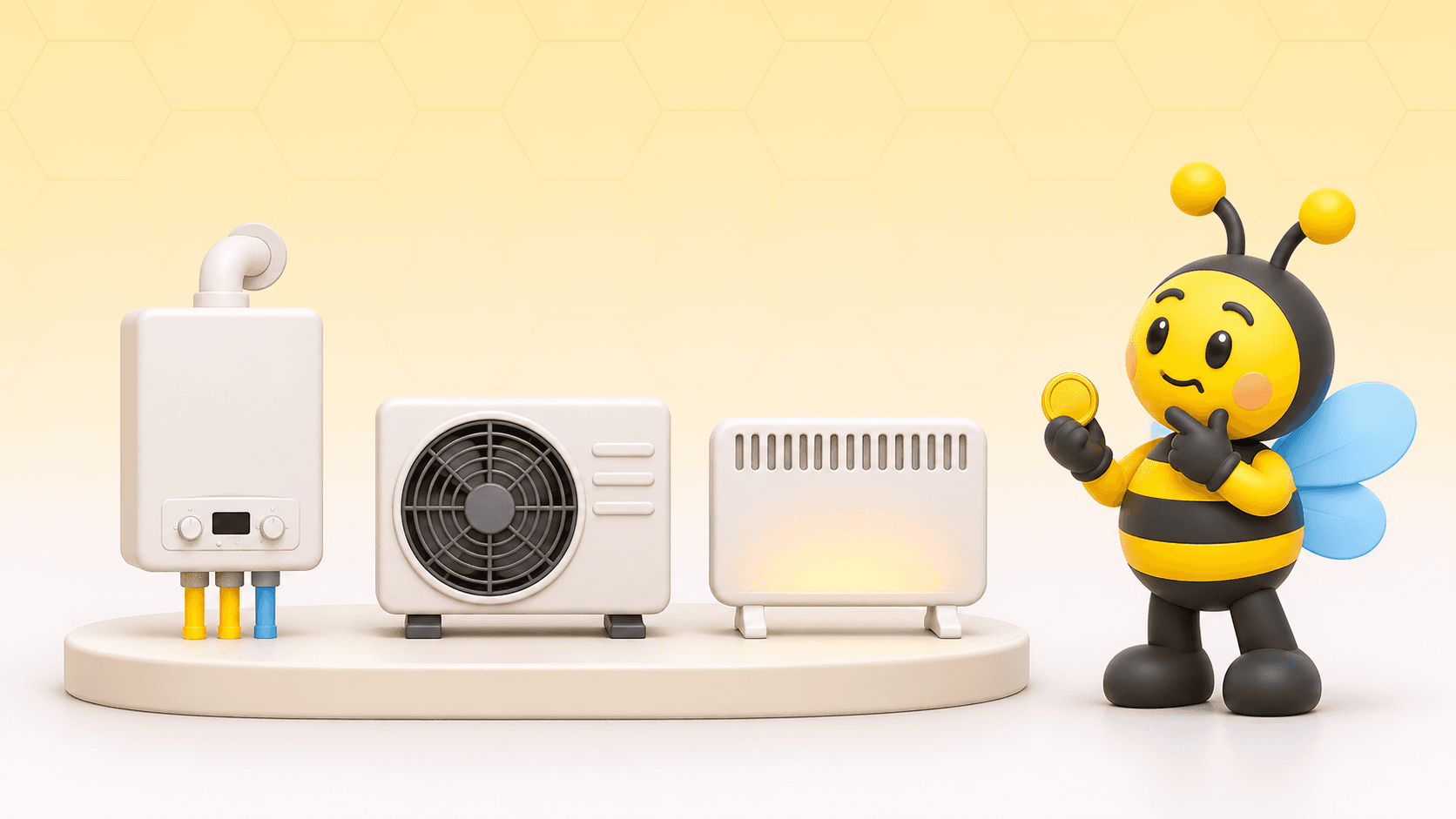
Heat only and system boilers both use a separate hot water cylinder. A system boiler usually has the pump and expansion vessel built in. A combi heats water as you need it, so it can free up the space a cylinder would take. Baxi’s system boiler guide · Baxi’s combi boiler guide
Feature | Heat only | System | Combi |
Hot water | Stored in a separate cylinder | Stored in a separate cylinder | Heated on demand |
Circulation pump | Usually separate | Usually built in | Usually built in |
Loft tanks | Usually two in a traditional open-vented setup | A cold-water tank only if the cylinder is vented | None |
Water supply | A tank-fed cylinder gets its pressure from the height of the loft tank | An unvented cylinder needs adequate mains pressure and flow | Hot water flow depends on the mains supply and boiler output |
With a combi, two outlets share the available hot water flow. If someone opens a kitchen tap while you’re in the shower, you may notice a drop in flow. A suitably sized cylinder can suit homes that use several hot outlets together. British Gas’s guide to boiler types
Track Your Heating Use With EnergieBee
Compare your household energy use before and after changing your heating schedule.


Download EnergieBee
Scan with your phone's camera to get the app.
Should You Keep or Replace Your Heat Only Boiler?
Keep it if it works safely and meets your heating and hot water needs. When it needs replacing, check which parts of the system you could reuse and whether a different setup would suit how you use hot water. Baxi’s heat only replacement guidance
When a Like-for-Like Replacement Makes Sense
Replacing a heat only boiler with another heat only model can mean less disruption if the cylinder, loft tanks and pipework can stay. When you compare quotes, ask each installer which of those parts they would keep and which they would replace. Central heating installation and replacement costs
If you’re keeping a gas boiler, arrange an annual service with a Gas Safe registered engineer. Energy Saving Trust’s boiler servicing guide · HSE gas safety guidance
When to Consider a Combi, System Boiler or Heat Pump
Combi boiler. Consider one if you want more storage space and rarely use several hot outlets at once. Ask the installer to check your mains pressure and flow. Baxi’s combi boiler suitability guide
System boiler. Consider one if you want to keep stored hot water for more than one bathroom. With a suitable mains-fed cylinder, you can also free up loft space. Baxi’s system boiler guide
Heat pump. Ask whether your radiators and cylinder would suit an air-to-water heat pump and what changes your home might need. Energy Saving Trust’s heat pump guide · Should you upgrade to a heat pump?
Frequently Asked Questions
How Can I Tell if I Have a Heat Only Boiler?
A separate hot water cylinder and two loft tanks usually point to a heat only boiler. A system boiler can also have a cylinder, so check the make and model in your boiler manual to confirm. How to recognise a heat only boiler · How to identify your boiler model
How Long Does a Heat Only Boiler Last?
Around 10 to 15 years is a rough guide. How long yours lasts depends on factors such as how often you use it and how well it’s maintained. More frequent repairs or trouble finding spare parts can make replacement worth considering. Worcester Bosch’s guide to boiler lifespan
Why Is My Radiator Still Hot When the Valve Is Closed?
It may still be cooling down. If it heats up again, check whether the dial is on the snowflake setting. That setting can reopen the valve when the room gets cold. If the radiator keeps heating up with the valve fully off, ask a heating engineer to check it. How to turn a radiator off · British Gas radiator guidance
What Size Heat Only Boiler Do I Need?
The right output in kilowatts depends on how much heat your home loses on a cold day and how quickly your hot water cylinder needs to reheat. Ask your installer for a heat-loss calculation and a boiler size that accounts for both. Worcester Bosch’s boiler sizing guidance
 Syed Reza