Switching energy suppliers could help you save money, and it's easier than you might think. Simply compare deals, choose a new supplier and sign up. Your new supplier handles the switch, so you won't lose your gas or electricity supply in the process.
But how do you know if switching will actually save you money? And what about exit fees or your existing contract?
This guide walks you through 6 simple steps to switch energy suppliers, what to check before making the move and how to avoid paying more than you need to.
Note: This guide covers England, Scotland and Wales. Northern Ireland has different switching rules.
How to Switch Energy Suppliers in 6 Simple Steps
Switching your gas or electricity supplier is easier than you might think. You don't need complicated paperwork or endless phone calls. Just follow these six steps.
Step 1: Check your current deal
Start with your latest energy bill or supplier's app. Look for:
Current tariff: Your tariff name, electricity and gas unit rates, and daily standing charges.
Energy usage: How much gas and electricity you use each year in kWh.
Contract end date: Check when your current deal expires.
Exit fees: See if you'll have to pay anything for leaving early.
Step 2: Compare deals on total yearly cost
Now it's time to find a better deal.
Compare tariffs: Compare available gas and electricity deals online, or check prices directly on suppliers' websites.
Enter your energy usage: Use your actual yearly kWh figures for a more accurate estimate.
Check the total annual cost: Compare unit rates and standing charges, not just the monthly Direct Debit.
Look beyond the price: Check contract length, exit fees and customer service reviews.
Remember: A lower monthly Direct Debit doesn't always mean a cheaper energy deal.
Step 3: Choose a deal and apply with the new supplier
Found a deal that works for you? Here's what to do next:
Choose your tariff: Decide whether to switch gas, electricity or both.
Sign up: Apply online or over the phone with your preferred supplier.
Provide your details: You'll usually need your address, current energy information and payment details.
Let your new supplier handle the rest: They'll contact your old supplier and arrange the switch.
You don't need to cancel your old energy supply yourself.
Step 4: Pick your switch date
You have three options for when your new energy deal starts:
Switch as soon as possible: Your switch should be completed within 5 working days of agreeing your new contract. You still have a 14-day cooling-off period to change your mind.
Wait until the cooling-off period ends: Your new supplier should complete the switch within 5 working days after the 14-day cooling-off period. This usually means waiting around 3 weeks in total.
Choose a specific later date: If your current fixed tariff is ending soon, ask your new supplier to arrange the switch for a later date. This depends on whether they can accommodate your request.
Your new supplier will confirm when the switch is expected to happen.
Step 5: Take a meter reading on switch day
When your switching day arrives:
Take meter readings: Record your electricity and gas readings.
Share them: Send the readings to your new supplier if requested.
Keep a photo: Save a picture of your meter readings in case you need to check your final bill.
Have a smart meter? It may send readings automatically, but check that your new supplier has received the correct figures.
This helps make sure you're charged correctly by both suppliers.
Step 6: Check your final bill and any refund
Once the switch is complete, there are just a few things left to check.
Final bill: Your old supplier should send it within six weeks of switching.
Check the charges: Make sure the meter readings and final balance are correct.
Get your refund: If you're in credit, your old supplier must refund the remaining amount within 10 working days of issuing your final bill.
Check your first new bill: Make sure your new supplier is charging the agreed tariff rates.
And that's it! You've successfully switched energy suppliers. Hopefully, you're now on a deal that costs you less.
How long does it take to switch energy supplier?
Switching energy suppliers usually takes up to 5 working days if you want to switch as soon as possible. But if you prefer to wait until your cooling-off period ends, the whole process can take around 3 weeks.
The exact timing depends on which switching date you choose.
Your three switch date options
Under the UK energy switching rules, you have 3 options for when your new supplier takes over:
Switch as soon as possible: Your new supplier should complete the switch within 5 working days of agreeing to your contract. Weekends and bank holidays don't count.
Wait until the cooling-off period ends: You can wait 14 days before switching. Your supplier then has up to 5 working days to complete it, making the total wait around 3 weeks.
Choose a specific later date: You can ask your new supplier to switch you on a particular date, such as when your existing fixed tariff ends. They will need to agree to your request.
Changing your mind: the 14-day cooling-off period
You normally have 14 days to cancel your new energy contract without an exit fee. You can change your mind even if the switch has already happened.
If you cancel before the switch, you'll simply stay with your existing supplier.
If you've already switched, your new supplier will explain your options. You'll then have 15 working days to arrange another contract, either with your old supplier, your new one or a different company. Otherwise, you'll move onto your new supplier's standard variable tariff.
You'll still pay for any energy used during that time.
You can check your rights when cancelling an energy switch before deciding.
Know Your Energy Use Before You Switch
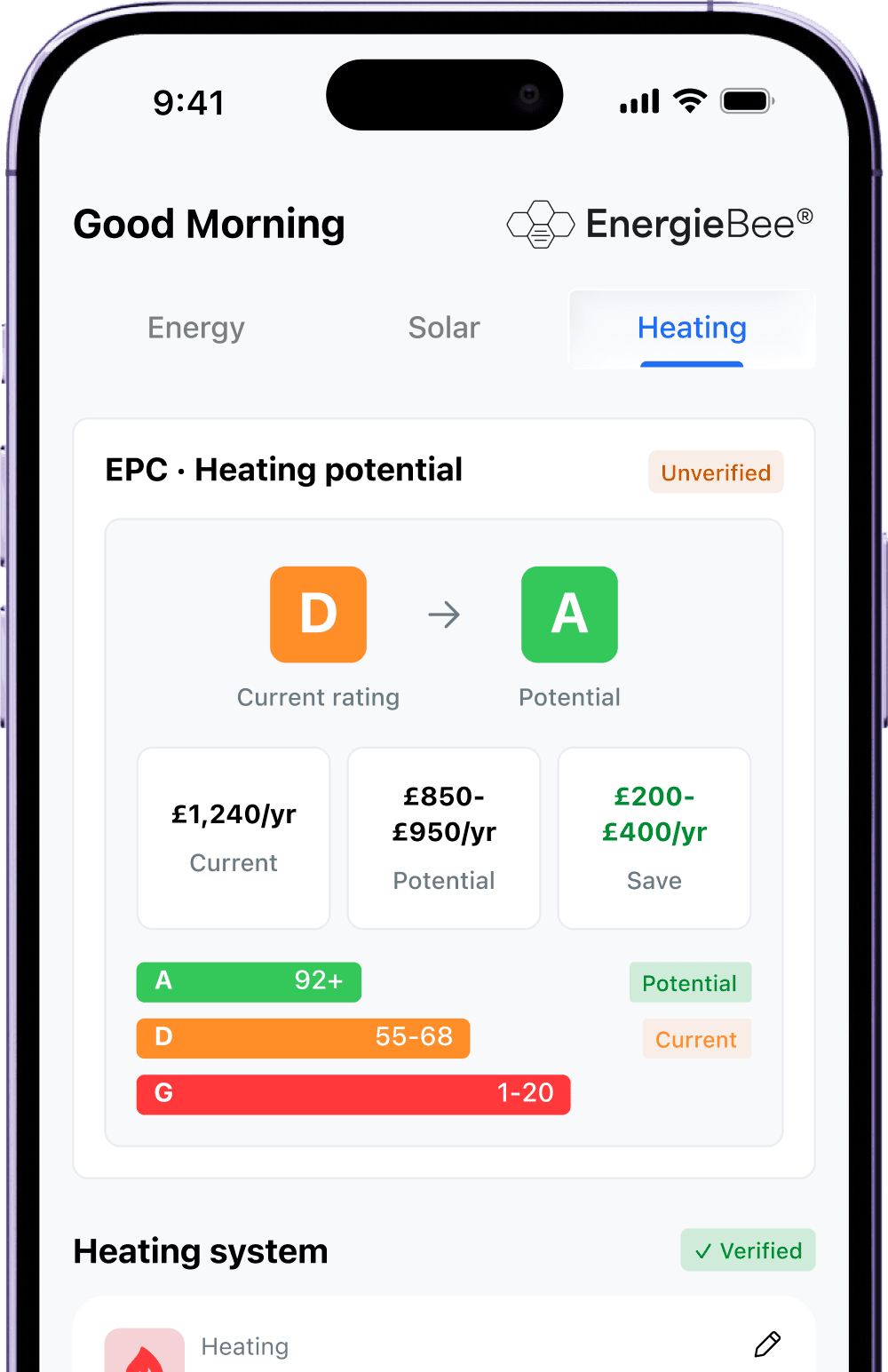
EnergieBee brings your heating, solar and household energy information into one dashboard, helping you understand where your energy goes and make smarter decisions about your next tariff.


Download EnergieBee
Scan with your phone's camera to get the app.
What happens to your supply, meter and old supplier?
Worried about losing electricity or needing a new meter when you switch? Don't be. Your gas and electricity supply will continue as normal, and you won't need any new wiring or pipes.
Here's what happens behind the scenes:
Your energy supply stays on: There's no interruption to your gas or electricity. Only the company supplying and billing you changes.
Your meter stays the same: You won't normally need a new meter. Most smart meters continue sending readings automatically, although some older ones may temporarily lose this feature. You can check whether your smart meter will work after switching beforehand.
Your old supplier is notified automatically: Your new supplier handles the transfer, so you don't need to contact your old supplier to cancel.
Your billing moves to the new supplier: Your old supplier charges you for energy used up to the switch, and your new supplier takes over from there.
So, you're not changing how energy reaches your home. You're simply changing who you pay for it.
When can you change energy supplier without paying a fee?
You can usually switch energy suppliers for free if you're on a standard variable tariff or your fixed deal is close to ending. But if you're leaving a fixed contract early, you might have to pay an exit fee.
Here's how to know whether you'll be charged.
How exit fees work
An exit fee is a charge your current supplier may ask you to pay for leaving a fixed energy contract before it ends.
Whether you pay one depends on your tariff:
Standard variable tariff: You can switch whenever you like without an exit fee.
Fixed tariff: You might have to pay an exit fee if you leave before the final 49 days of your contract.
Fixed tariff with no exit fee: Some deals let you leave early without paying anything.
Exit fees vary between suppliers and tariffs. If you have separate gas and electricity contracts, you could face a fee for each.
You can check your rights when leaving a fixed energy tariff before deciding to switch.
The 49-day window
Here's something worth knowing if you're on a fixed tariff.
You can switch without paying an exit fee during the final 49 days of your contract. That's seven weeks before your deal ends.
For example, if your fixed tariff ends on 30 June, you can start switching from 12 May without an exit fee.
You don't have to wait until the contract actually expires. This gives you time to find a better deal before your current tariff ends.
Does the saving beat the fee?
Even if you have to pay an exit fee, switching early could still save you money.
Let's say:
Potential saving: £15 a month on a new tariff
Time left on your fixed deal: 6 months
Total saving over those 6 months: £90
Exit fee: £60
Net saving: £30
In this example, you'd still save £30 by switching early, assuming your estimated energy use and tariff costs stay the same.
Before deciding, compare the total costs of both deals, including standing charges and any exit fees.
The key is to look at how much you'll save overall, not just how much cheaper the new tariff looks.
Can you switch energy supplier? Debt, renting, moving and other cases
Most people can switch energy suppliers, but your circumstances can make a difference. For example, owing money, renting your home or moving to a new property can affect how you switch.
Here's what you need to know.
Can you switch energy supplier if you are in debt?
Yes, you can sometimes switch even if you owe your current supplier money. It depends on how you pay your bills and how long you've owed the money.
If you pay by Direct Debit or regular bills: You can usually switch if your unpaid bill is less than 28 days old. Older unpaid bills may allow your supplier to block the switch.
If you have a prepayment meter: You can generally switch with up to £500 of debt for gas and £500 for electricity, provided your new supplier agrees to transfer the debt.
If you're disputing a bill: Your supplier should generally let you switch if they agree there may be a mistake with the bill.
Remember, switching doesn't clear your existing debt. You'll still need to repay what you owe.
For more details, see our guide on switching energy suppliers when you're in debt.
Can you switch if you rent?
Yes, renters can usually switch energy suppliers if they pay the energy company directly. You don't normally need your landlord's permission.
However, it depends on how your bills are paid:
You pay the supplier directly: You can choose your own supplier and tariff.
Your landlord pays the bills: If energy costs are included in your rent, you'll need to ask your landlord to switch.
Your tenancy has special conditions: Check whether you need to notify your landlord or return to the original supplier when moving out.
What if you are moving home?
Moving to a new home? You can still choose your energy supplier, but your existing tariff won't automatically move with you.
Here's what to do:
Before moving: Tell your current supplier you're leaving and provide your final meter readings.
On moving day: Take readings at your new home and contact the supplier already serving the property.
After moving in: Compare available tariffs and switch to a better deal if you find one.
If you're on a fixed tariff, ask your existing supplier whether you can keep the same deal at your new address. Some suppliers may allow this.
You can also follow the moving home energy checklist to avoid paying for energy used by previous occupants.
Cases where you cannot switch
Although most households can change suppliers, there are a few situations where switching may be blocked or isn't available:
You have older unpaid energy debt: Your supplier may block the transfer until the debt is resolved.
Your landlord controls the energy account: You cannot switch it yourself if your landlord pays the supplier.
You're connected to a heat network: You generally cannot choose a different heat network provider, although you may still be able to switch your electricity supplier.
Your meter doesn't support your chosen tariff: Some tariffs, such as certain time-of-use deals, require a compatible meter. You may need to choose another tariff or arrange a meter upgrade.
If your switch is rejected, ask your supplier to explain why. You may be able to resolve the issue and try again.
Should you switch energy supplier now? Price cap, fixes and trackers
Switching energy suppliers could save you money, but is now the right time? That depends on your current tariff, what other suppliers are offering and whether energy prices rise or fall.
Before making a decision, here's what you should know.
What the price cap does and does not cover
The energy price cap is set by Ofgem and limits how much suppliers can charge per unit of gas or electricity, along with daily standing charges, on standard variable tariffs.
From 1 October to 31 December 2026, the Ofgem energy price cap is £1,723 a year for a typical household paying by Direct Debit.
But there's an important catch:
It's not a maximum bill: If you use more energy than an average household, you'll pay more.
It doesn't cover fixed tariffs: Your agreed fixed rates don't automatically change when the price cap changes.
It changes every three months: Ofgem updates the cap in January, April, July and October.
The next price cap takes effect on 1 January 2027, with the new rates due to be announced by 25 November 2026.
Fixed, variable or tracker: what you would switch to
Not every energy tariff works the same way. Here's a quick comparison to help you choose.
Tariff | How it works | What to consider |
Fixed | Keeps your agreed unit rates and standing charges steady for a set period. | Good for price certainty, but you could miss out if prices fall. |
Standard variable | Rates can rise or fall, usually following changes to Ofgem's price cap. | More flexibility, with no exit fees, but less certainty about future costs. |
Tracker | Rates follow a specified index, such as wholesale energy prices or Ofgem's cap. | You might benefit when prices fall, but could pay more when they rise. |
A fixed tariff might appeal if you prefer knowing what rates you'll pay for the next year. But remember, fixed rates don't mean fixed bills. You'll still pay more if you use more energy.
You can learn more about how fixed energy tariffs work before deciding.
Switching with solar, a battery, an EV or a heat pump
If your home has solar panels, a battery, an electric vehicle (EV) or a heat pump, choosing the right energy tariff becomes even more important.
A cheaper electricity rate might look tempting, but you also need to consider when you use electricity and how much you earn from exporting solar power.
Import and export can have different suppliers
If you have solar panels, you might be paying one supplier for electricity while receiving payments from another for the extra solar energy you send back to the grid.
Under the Smart Export Guarantee (SEG), you don't have to use the same company for both.
But before switching, check a few things:
Your export tariff: Will you keep receiving the same rate for the solar electricity you export?
Supplier conditions: Some export deals offer better rates only if you also buy electricity from that supplier.
Your overall savings: Compare what you'll pay for electricity with what you'll earn from exporting it.
If you receive payments through the older Feed-in Tariff (FIT) scheme, check those arrangements separately before making changes.
Check your meter and tariff work together
Smart energy tariffs can offer cheaper electricity at certain times of the day. That's particularly useful if you can charge your EV or home battery overnight.
But not every tariff will suit your setup.
Before choosing one, check:
Smart meter: Can your new supplier receive automatic readings? Some smart tariffs need half-hourly readings.
EV or battery: Does the tariff support your charger or battery system, especially if it uses automatic charging schedules?
Heat pump: Are the cheaper electricity hours useful for your heating needs, or will you use most electricity during expensive periods?
Peak and off-peak rates: Will the cheaper hours save you enough to make up for any higher daytime rates?
As Energy Saving Trust explains, time-of-use tariffs can save money if you're able to move more of your electricity use to cheaper hours.
The key is to choose a tariff that fits how your home actually uses energy, not just one with an attractive advertised rate.
After you switch: meter readings, final bill and refunds
Once you've switched, check that your old and new suppliers have used the same meter readings. This makes sure you're not charged twice for the same energy.
Your old supplier should send your final bill within six weeks and refund any remaining credit within 10 working days of issuing it. If your final bill or refund is delayed, you may be entitled to compensation.
Keep your old Direct Debit active until everything is settled. Finally, check your first bill from the new supplier to make sure the rates match your new tariff.
What if your switch goes wrong?
Most energy switches go smoothly, but sometimes things don't go as planned. The good news is that you're protected by Ofgem's rules, and you may be entitled to compensation.
The switch takes longer than 5 working days
If your new supplier takes longer than the required five working days to complete your switch, they must normally pay you £40 in automatic compensation.
You shouldn't need to claim it. The money should be paid into your bank account or energy account.
If the payment is delayed, you could receive another £40. You can check your compensation rights through Ofgem.
You were switched without permission
Received a welcome letter from a supplier you never signed up with? This is called an erroneous transfer.
Contact your original supplier and explain what happened. They should arrange to move you back within 21 working days.
You're also entitled to £40 compensation if your supply was switched by mistake, with additional payments possible if suppliers delay putting things right.
Your supplier fails
If your energy supplier goes out of business, don't panic. Your gas and electricity supply won't be interrupted.
Ofgem will arrange for another company to take over your supply, and any credit you've built up is protected.
You don't need to arrange a switch immediately. Wait for the new supplier to contact you, then check its tariff and compare other deals.
If you're already switching when your supplier fails, your planned switch should still go ahead.
FAQs
Can I change my energy tariff without changing supplier?
Yes. You can ask your current supplier to move you to a different tariff. Just check whether your existing deal has any exit fees before switching.
Can I switch energy supplier if I have a smart meter?
Yes. Your smart meter will usually keep working, although some older models may temporarily stop sending automatic readings after switching.
Does switching affect the Warm Home Discount?
Not necessarily. If you qualified, your supplier on the scheme's qualifying date should still pay your £150 discount. However, different rules apply to Scotland's Broader Group, so check Ofgem's guidance before switching.
Can I keep my energy tariff if I move house?
Possibly. Some suppliers let you transfer your existing tariff to a new address, but it's not guaranteed. Contact your supplier before moving to check.
Will switching involve a credit check?
Most energy suppliers carry out a credit check when you apply. A soft check won't affect your credit score, but a hard check might have a small impact. You can ask the supplier which type they use.


 Sharieaz Kavier