If you're looking for a cheaper energy tariff because your bills are getting harder to manage, you might have heard about social tariffs. But there's currently no nationwide social tariff for energy customers in the UK.
That doesn't mean there's no help available. Depending on your circumstances, you could get £150 off your electricity bill through the Warm Home Discount, receive financial help from your energy supplier or access other support.
So, what help can you actually get, who qualifies, and could an energy social tariff be introduced soon? Let's find out.
Quick Answer: Is There an Energy Social Tariff in the UK Right Now?
No. As of October 2026, there is no dedicated energy social tariff in the UK. Although charities and energy suppliers have been calling for one, the government hasn't introduced a nationwide scheme offering cheaper gas and electricity rates to eligible households.
However, you may still qualify for £150 off your electricity bill through the Warm Home Discount or receive financial help from your energy supplier if you're struggling to pay.
What Is an Energy Social Tariff?
An energy social tariff is a discounted gas or electricity deal designed to help households struggling with high energy bills. It could offer lower unit rates, reduced standing charges or other discounts for people on low incomes or with higher energy needs.
But did you know the UK actually had social tariffs before?
Between 2008 and 2011, the UK's six largest energy suppliers offered discounted tariffs and other support to vulnerable customers under a voluntary agreement with the government.
So, why were they discontinued?
Each supplier had its own eligibility rules, meaning support wasn't consistent and didn't always reach the households that needed it most. In fact, research published by Citizens Advice found that some customers could have saved more by switching to a standard tariff with another supplier.
To address this, the government introduced the Warm Home Discount in April 2011, largely replacing the old voluntary social tariffs with a more consistent support scheme.
Unlike the previous social tariffs, the Warm Home Discount provides eligible households with a fixed annual reduction on their electricity bills, currently £150, rather than permanently cheaper energy rates.
What Energy Bill Support Is Available Instead?
Although there's no dedicated energy social tariff in the UK, you don't have to wait for one to get help with your bills. There are already several schemes that could help, depending on your income, circumstances and energy supplier.
Here are three worth knowing about.
Warm Home Discount 2026/27 – £150 Off Your Bill
The Warm Home Discount gives eligible households £150 off their electricity bill during winter.
It's a one-off annual discount rather than a cheaper energy tariff. The money is normally credited directly to your electricity account, so you won't receive it as cash.
In England and Wales, most eligible households receive the discount automatically. Some customers in Scotland may need to apply through their supplier.
The discount should reach eligible households by 31 March 2027.
You can check the Warm Home Discount scheme on GOV.UK to see how it works where you live.
The scheme is available in England, Scotland and Wales, but not Northern Ireland.
Energy Supplier Hardship Funds and Grants
Struggling to keep up with your energy payments? Your supplier may be able to help, even if you don't qualify for the Warm Home Discount.
Many suppliers, including British Gas, EDF, E.ON Next and Octopus Energy, offer hardship funds or other support for customers having difficulty paying their bills.
Depending on your circumstances, you might receive:
A grant to help clear existing energy debt.
A more affordable repayment plan.
Temporary payment support or help managing your energy costs.
Each supplier has its own eligibility rules, and grants aren't guaranteed.
If you're unsure where to start, Citizens Advice has a useful list of energy grants and support schemes.
You can also contact your supplier directly. You don't need to wait until you've fallen behind with payments to ask for help.
Priority Services Register – Free Support for Vulnerable Customers
The Priority Services Register (PSR) is a free service for people who may need extra help with their gas or electricity supply.
For example, you may qualify if you're of State Pension age, have a disability or long-term health condition, are pregnant, or have young children.
Depending on your needs, the register can provide:
Extra support during power cuts or emergencies.
Advance notice of planned power cuts, where possible.
Bills in large print or Braille.
Help with meter readings or accessing your prepayment meter.
It's important to know that the Priority Services Register doesn't reduce your energy bills. Instead, it makes managing your energy supply safer and easier when you need extra support.
You can check your eligibility and find out how to join through Ofgem.
Registration is free, and you can contact your energy supplier to sign up.
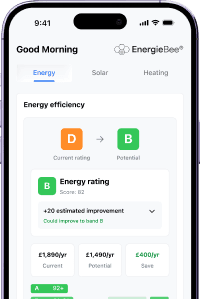
Worried about high energy bills?
EnergieBee brings your heating, solar and household energy use into one dashboard, helping you spot wasted energy and find opportunities to save.
Who Qualifies for the Warm Home Discount in 2026/27?
You could qualify for £150 off your electricity bill if you receive certain benefits and your energy supplier takes part in the scheme.
In England and Wales, you must have met all three conditions on 23 August 2026:
You or your partner received at least one of these benefits:
Universal Credit
Pension Credit (Guarantee Credit or Savings Credit)
Housing Benefit
Income-related Employment and Support Allowance (ESA)
Your electricity supplier was part of the Warm Home Discount scheme.
Your name or your partner's name was on the electricity bill.
You can check the full 2026/27 eligibility rules on GOV.UK.
What if you live in Scotland?
The rules are slightly different. Some households qualify automatically through Pension Credit or other qualifying benefits. Others need to apply directly through their energy supplier, which may have additional eligibility rules.
You can check the Scottish eligibility rules here.
The scheme isn't available in Northern Ireland.
Do you need to apply?
Most eligible households receive the discount automatically. You should receive a letter between late October 2026 and early January 2027.
If you haven't received a letter by early January but think you qualify, contact the Warm Home Discount helpline. If your letter asks for more information, you must provide it by 26 February 2027.
What Changed in the 28 October 2026 Budget?
The 28 October 2026 Autumn Budget didn't introduce an energy social tariff, but it did announce new financial support and changes that could help households with rising energy bills.
Here's what was announced and what it means for you.
£100 Household Energy Payment: If you live in England in a Council Tax band A–D property, you could receive a one-off £100 payment from January 2027. If you pay your Council Tax by Direct Debit, the payment should arrive automatically in your bank account. Other payment arrangements are still being finalised.
Electricity VAT cut extended: The government reduced VAT on household electricity from 5% to 0% on 1 October 2026. The Budget extended this reduction until July 2027. It's expected to reduce the annual Ofgem price cap by around £50 in April 2027.
Help with existing energy debt: A new energy debt relief scheme is planned for 2027. It aims to help eligible households clear historical energy debt and get back on track with payments. The final eligibility rules are still being worked out.
Changes to gas standing charges: The government plans to remove fixed daily standing charges from household gas bills, aiming for the end of 2027 or as soon as possible afterwards. However, those costs would move into gas unit rates, so not everyone would necessarily save money.
The Budget also announced £100 million for local councils in England to support households particularly affected by rising energy costs, including some that won't qualify for the £100 payment.
These changes could make energy bills more manageable, but they're not a permanent social tariff. Some support is already in place, while other measures won't begin until 2027.
Will the UK Introduce an Energy Social Tariff?
Possibly, but there's no confirmed launch date yet.
In August 2026, Energy UK proposed a new social discount that could provide more targeted support from 2028/29.
A new Utilities (Social Tariff) Bill was also introduced in October 2026, aiming to make discounted tariffs available to vulnerable customers.
However, neither proposal has become law. For now, the government has extended the £150 Warm Home Discount until March 2031, rather than introducing a separate social tariff.
Frequently Asked Questions
How Do I Qualify for an Energy Social Tariff?
You can't apply for an energy social tariff because there isn't a nationwide scheme in the UK yet. However, you may qualify for the £150 Warm Home Discount if you receive certain benefits and meet the eligibility rules.
Does British Gas Have a Social Tariff?
No, British Gas doesn't offer a dedicated energy social tariff. However, it participates in the Warm Home Discount scheme, and the British Gas Energy Trust offers grants of up to £2,000 to eligible households struggling with energy debt.
Can I Get Help With Energy Bills If I'm on Universal Credit?
Yes. If you receive Universal Credit, you may qualify for the £150 Warm Home Discount. In England and Wales, you must have met the eligibility conditions on 23 August 2026. Scotland has different rules.
Can I Get Energy Bill Support If I'm Working?
Yes, you may still qualify for support while working. If you receive a qualifying benefit, you could be eligible for the Warm Home Discount. Otherwise, your supplier may offer hardship grants or affordable repayment plans if you're struggling.
Is There a Social Tariff Eligibility Calculator?
There's no official calculator for an energy social tariff because the scheme doesn't exist yet. However, the British Gas Energy Trust's support checker can help you explore benefits and check potential eligibility for energy debt grants.

 Sharieaz Kavier