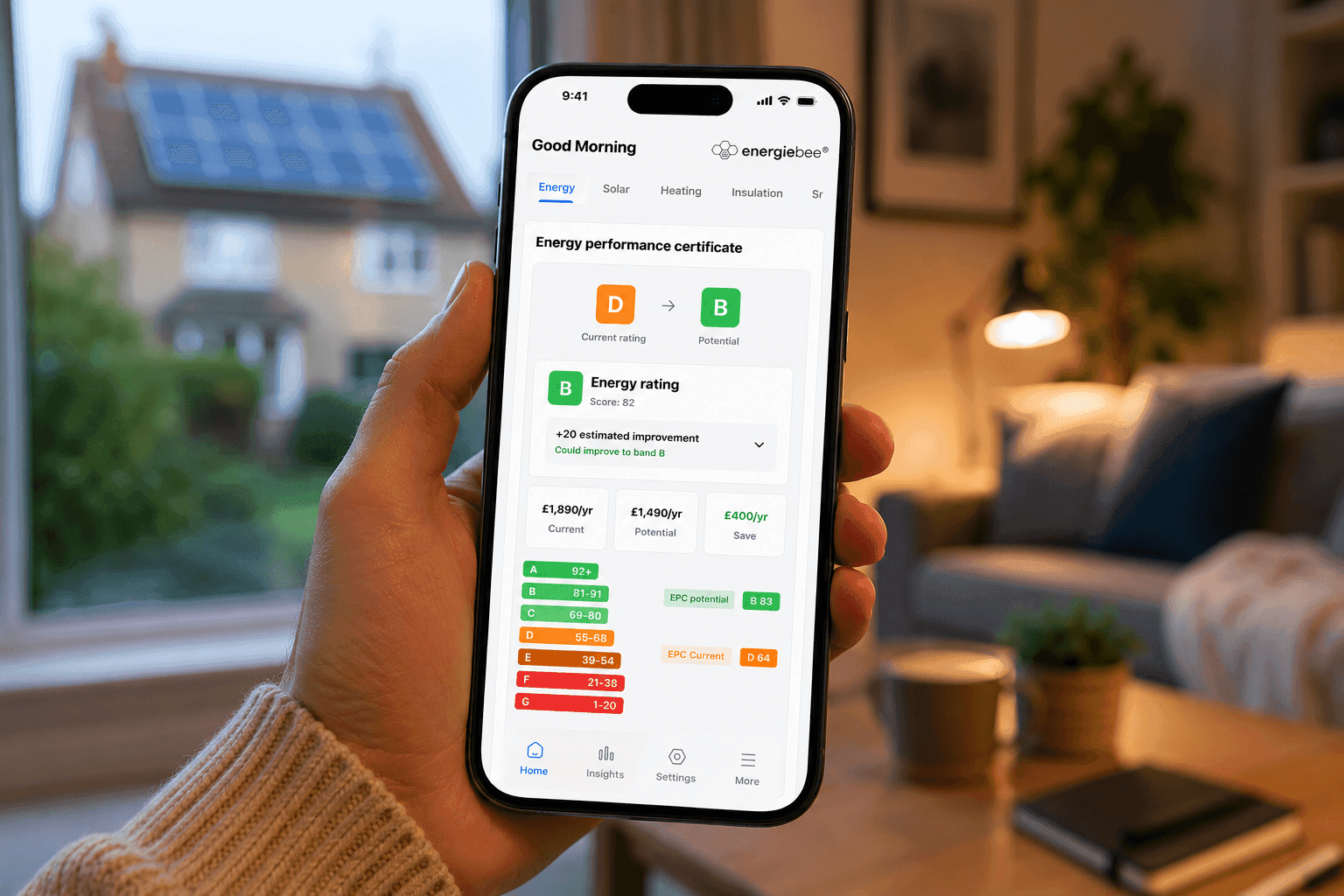
For many UK households, EPC ratings and energy bills seem to describe two different homes.
An EPC suggests one level of energy performance. Monthly bills often tell a different story.
This difference is common, and it comes from how each system is built to measure energy in the home.
Understanding the gap helps explain why energy costs rarely match expectations based on EPC ratings alone.
What an EPC rating actually represents
An Energy Performance Certificate (EPC) is a model-based estimate of how efficiently a home should use energy.
It is calculated using structural and technical features such as insulation, heating systems, and building materials.
The result is a standardized prediction of energy use under assumed conditions.
This makes EPC ratings useful for comparison, but they are not designed to reflect how a home behaves in real time.
Why energy bills reflect something different
Energy bills are based on actual consumption.
They reflect what happens inside the home day by day, across changing conditions.
This includes:
how often heating is used
how long spaces are occupied
how appliances are used in practice
how weather influences temperature needs
how energy prices change across time
Because these factors vary continuously, real costs rarely align with model-based estimates.
The role of behavior in energy costs
One of the main reasons for the EPC cost difference is household behavior.
Even in homes with similar EPC ratings, energy use can vary significantly depending on how people live in the space.
Heating schedules, comfort preferences, and daily routines all shape total consumption.
EPC models do not include these behavioral patterns, which are central to real-world energy use.
How weather affects the gap between EPC and bills
Weather is another major factor behind differences between EPC predictions and actual energy costs.
Colder temperatures increase heating demand. Cloud cover reduces solar generation. Seasonal changes affect both consumption and production patterns.
EPC ratings are based on standardized climate assumptions.
Real homes operate under constantly changing weather conditions.
This difference becomes more visible during extreme or highly variable seasons.
Energy prices and why timing matters
Modern energy tariffs often vary across time. This means the cost of energy depends not only on how much is used, but also when it is used.
EPC ratings do not account for time-based pricing structures.
In real life, energy used during peak price periods can significantly increase total bills, even if overall consumption matches expectations.
This creates another layer of difference between predicted and actual costs.
Why EPC ratings cannot fully predict real bills
EPC ratings are designed to estimate structural efficiency, not financial outcomes.
They do not include:
real occupancy patterns
dynamic weather variation
flexible pricing models
self-generation from solar systems
changing household behavior over time
Because of this, EPC ratings provide a baseline, not a full picture of cost.
What actually determines your energy bill
Real energy bills are shaped by the interaction of three factors:
how the home is built
how the home is used
how external conditions change over time
EPC ratings describe the first factor. The other two evolve continuously.
This is where the gap between prediction and reality appears.
Closing the gap: from static ratings to real insight
Understanding the difference between EPC ratings and real energy use is becoming more important as homes become more dynamic.
Solar panels, heat pumps, and flexible tariffs all introduce variability that static models cannot fully represent.
A more complete view of energy performance requires both structural data and real-world behavior over time.
Where EnergieBee fits in
The EnergieBee app energy health check is designed to bridge this gap.
It combines EPC-based information with real household energy patterns and local weather context.
This creates a clearer view of how a home is actually performing, not just how it is expected to perform.
 David Price