
British weather may not feel especially sunny, but solar panels do not need constant blue skies to work. They generate electricity from daylight, so they can still produce power on cloudy days, just at a lower level than in bright sunshine.
That does not mean solar is right for every home. Your roof direction, available space, shading, energy use and budget all affect whether the investment makes sense.
This guide will help you work out whether solar panels are worth it for your home. We will look at the costs, likely savings, payback time, roof suitability, main drawbacks and what you could earn by selling extra electricity back to the grid.
How Do Solar Panels Work? From Sunlight to Electricity
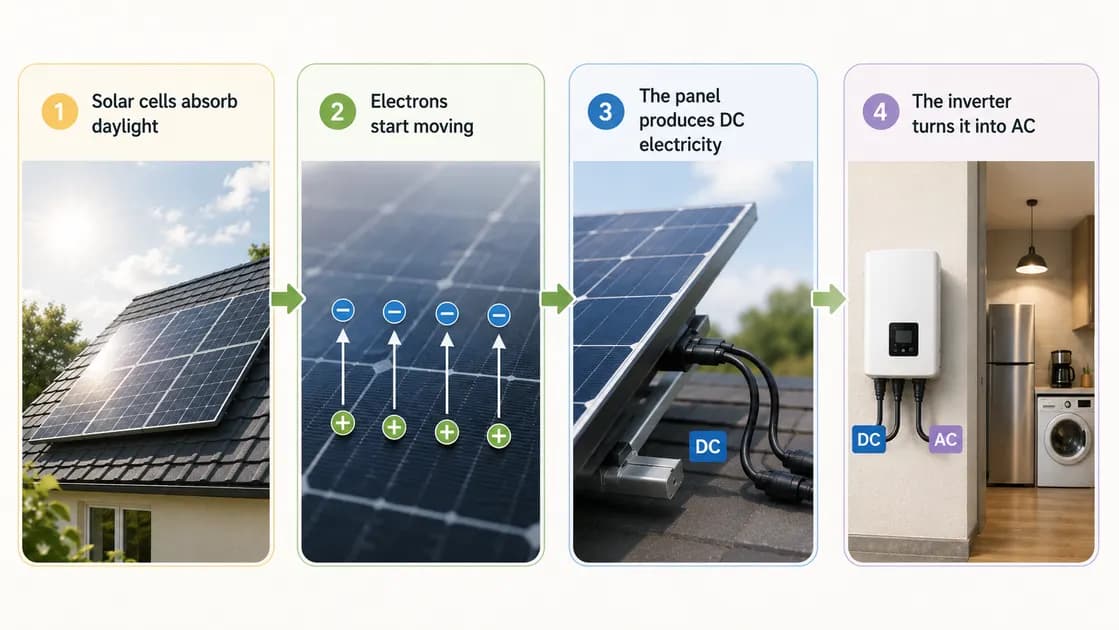
Solar panels may look technical, but the way they generate electricity is quite simple. Here are 4 basic steps to see how daylight becomes power for your home.
Solar panels are made up of silicon cells. These cells absorb energy from daylight.
When sunlight hits these cells, electrons start moving. As they move, they create a flow of electricity.
The electricity produced by the panels is called Direct Current, or DC. DC cannot be used directly into home electricity.
A solar inverter changes the DC electricity into Alternating Current, or AC, so it can power your lights, appliances and other devices at home.
That is the whole process in simple terms. And when you see phrases like photovoltaic cells or PV cells, they simply mean solar cells.
Solar Panel Pros and Cons: Are They Worth the Investment in the UK?
Solar panels can be a great way to cut your electricity bills and rely less on the grid. But how much you save will depend on your roof, your energy habits and the system you choose.
Here’s a quick look at the main pros and cons of solar panels:
Pros: Where Solar Panels Can Deliver Real Value
Lower electricity bills: Using your own solar power means buying less electricity from the grid.
Earn from extra power: The Smart Export Guarantee can pay you for electricity sent back to the grid.
Low maintenance: Solar panels usually need little day-to-day care once installed.
Long lifespan: Most solar panels are designed to keep working for 25 years or more.
Works with batteries, EVs and heat pumps: Solar can help power other energy systems around your home.
Lower household emissions: Solar generates electricity without burning fuel at your home.
Cons: Where Solar Panels May Fall Short
High upfront cost: A home solar system can cost several thousand pounds.
Savings vary: Your return depends on your roof, system size and daytime energy use.
Not every roof is suitable: Heavy shade, limited space or roof damage can reduce performance.
Lower winter output: Shorter days and weaker sunlight reduce generation during colder months.
Payback takes time: You may need several years to recover the installation cost.
So, if the benefits look right for your home, the next step is choosing the right panel. The three main options are Monocrystalline, Polycrystalline and Thin-film.
You can compare them in our guide to the Best Types of Solar Panels for Home.
Real-Time Solar Insights
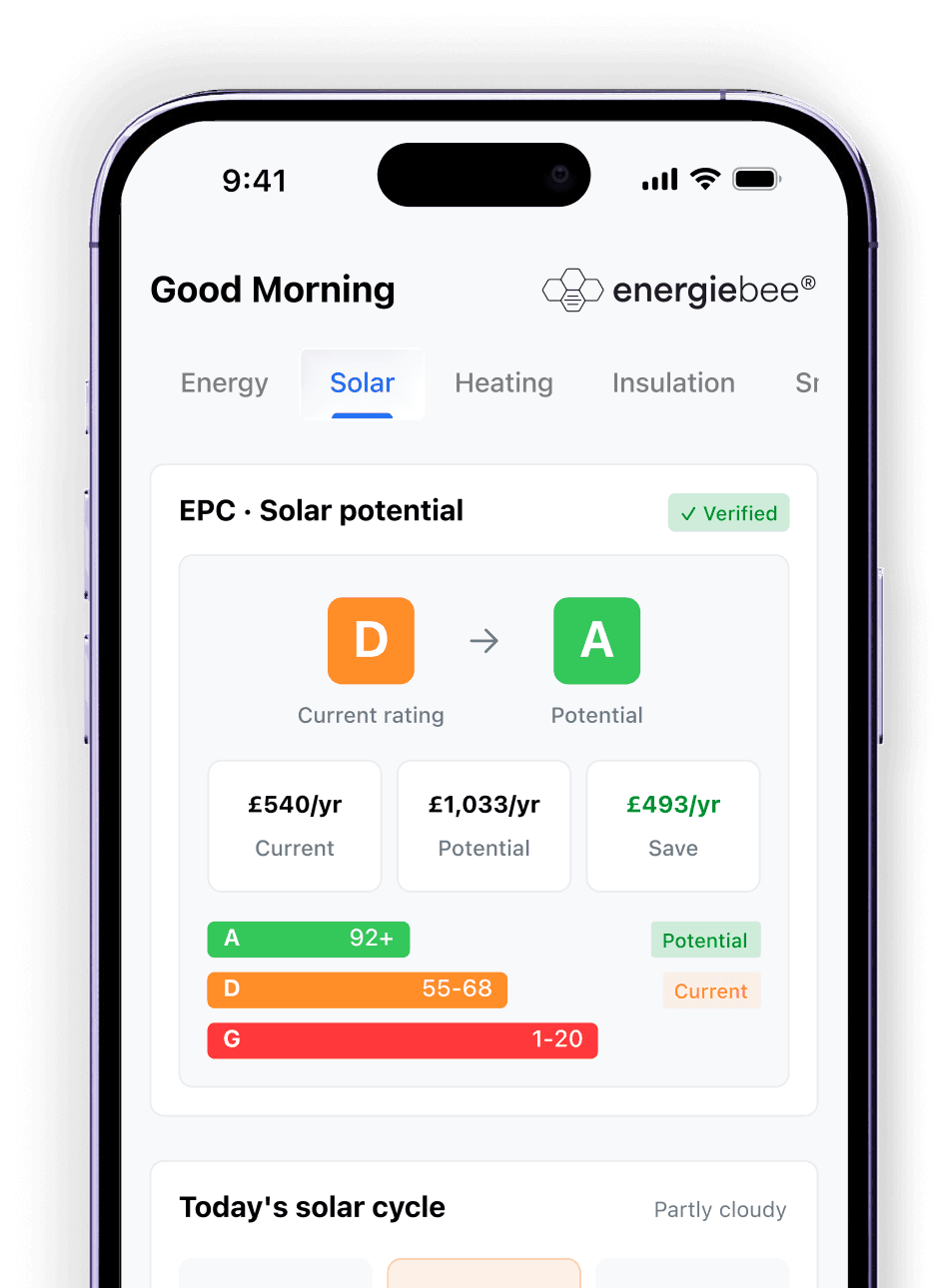
Stop guessing. See your solar output live
See your daily solar production at a glance, including peak generation times and total energy output.
Is Your Home Suitable for Solar Panels? 6 Things to Check First
Before you compare quotes, take a closer look at your home. Solar panels do not need a perfect roof, but space, condition, direction and shade will all affect how well they perform.
1. Do You Have Enough Roof Space?
A typical home system may need around 20–30m² of usable roof space. The exact amount depends on the number, size and output of the panels.
2. Which Direction Does Your Roof Face?
South-facing roofs usually generate the most electricity. East- and west-facing roofs can still work well, although their total output may be lower.
3. Does Anything Shade Your Roof?
Trees, chimneys and nearby buildings can block sunlight and reduce generation. Ask the installer to check how shading changes throughout the day and across the year.
4. Is Your Roof in Good Condition?
Solar panels can stay in place for decades. If your roof needs repairs soon, it is usually better to complete that work before installation.
5. When Does Your Home Use the Most Electricity?
Solar gives you the best value when you can use more electricity during daylight hours. This may include running appliances, charging an EV or heating water while the panels are generating.
6. Do You Need Planning Permission?
Most residential solar installations do not normally need planning permission because they fall under permitted development rights. However, restrictions may apply to listed buildings, flats, conservation areas and protected locations.
💡Quick Tips
Your roof does not have to tick every box. What matters is getting a realistic estimate based on your property and energy use, rather than relying on a general savings promise.
How Much Do Solar Panels Cost in the UK?
The cost of solar panels depends on more than just the number of panels. Your location, installer, equipment brand and roof setup can all change the final price.
Typical Solar Panel Costs by System Size and Annual Electricity Generation:
System size | Panels and roof space | Estimated cost | Estimated annual generation |
3kW | About 12 panels and 21m² | £5,000–£6,000 | Around 2,600 kWh |
4kW | About 16 panels and 28m² | £6,000–£8,000 | Around 3,500 kWh |
5kW | About 20 panels and 32m² | £8,000–£9,000 | Around 4,500 kWh |
6kW | About 24 panels and 43m² | £9,000–£11,000 | Around 5,500 kWh |
These are estimated costs based on current UK market prices, but the final amount can still vary by location and installation needs.
Before buying, speak with a trusted installer who can recommend the right setup for your electricity use, roof space and expected generation.
How Much Can Solar Panels Save You on Energy Bills?
Almost 1.5 million UK homes already had solar panels by the end of 2024, with some households saving up to £480 a year.
Your actual savings will depend on where you live, your system size and how much solar electricity you use yourself.
A Practical Solar Savings Example
Imagine a three-bedroom home in the Midlands with a 3.5kWp south-facing solar system. It generates around 3,000kWh of electricity each year.
The household uses 1,200kWh of that electricity while the panels are generating:
1,200kWh × 26.11p = about £313 saved on electricity bills
The remaining 1,800kWh is exported to the grid. Using an example Smart Export Guarantee rate of 8p per kWh:
1,800kWh × 8p = about £144 earned from exports
That gives the household a total annual benefit of around:
£313 bill savings + £144 export income = £457 a year
If the system costs £6,500, the simple payback period would be roughly:
£6,500 ÷ £457 = around 14 years
The electricity price used here is Ofgem’s average capped rate for July to September 2026. SEG rates vary by supplier, so your export income could be higher or lower.
Adding a battery could increase the amount of solar electricity used at home. However, the battery’s extra cost must also be included when working out the payback period.
Find Out How Much Your Solar Panels Are Really Saving You
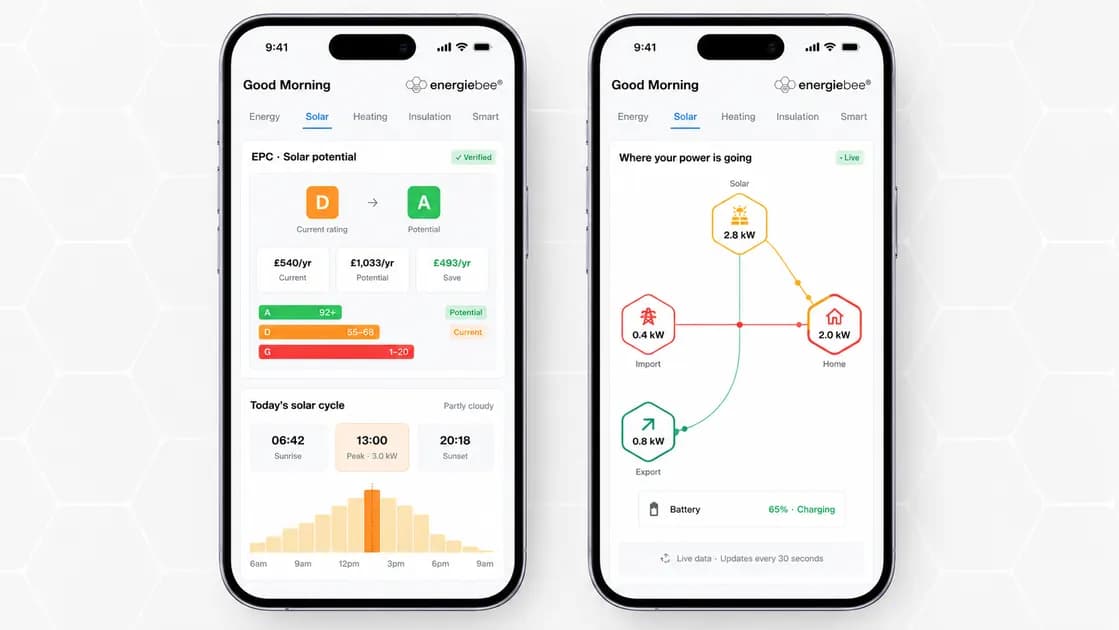
To understand your real solar savings, you need to look at more than generation alone. What matters is how much solar power your home uses, how much electricity you still buy from the grid, what you export, and the rates you pay or earn.
EnergieBee App uses advanced weather data and AI to forecast your solar production. This helps you plan energy usage and maximise savings for free.
How Long Does It Take for Solar Panels to Pay for Themselves?
Solar panels currently take around 10 to 12 years to repay their cost. Your actual payback will depend on the installation price, how much solar electricity you use and what you earn from exports.
Your payback time will mainly depend on:
How much the system costs
How much electricity it generates
How much solar power you use at home
The export rate you receive
Whether you add a battery
Future maintenance or inverter replacement costs
Treat the result as a useful estimate rather than a guarantee. Energy prices, tariffs and household habits can all change over time.
Getting Paid for Solar: The Smart Export Guarantee Explained
Your home gets first use of the electricity your panels generate. When you produce more than you need, the extra power can be sent back to the grid.
The Smart Export Guarantee, or SEG, lets eligible homeowners in England, Scotland and Wales get paid for that exported electricity. You apply through a supplier offering an SEG tariff, and that company does not need to be the same one you buy electricity from.
To apply, you will normally need:
An eligible renewable energy system
A meter that records exports in half-hourly intervals
Proof that the system and installer meet an accepted certification standard
The Final Verdict
Solar panels can be worth it for many UK homes, especially if your roof gets good daylight, you use a fair amount of electricity during the day and you plan to stay in the property for several years.
But they are not an automatic money-saver. The real value depends on the installation cost, your roof, how much solar power you use yourself and what you earn from exports.
The best step is to get a realistic quote based on your home and compare the expected savings against the full cost. That will tell you far more than any headline promise.
Frequently Asked Questions
Do Solar Panels Work in Cloudy UK Weather?
Yes. Solar panels generate electricity from daylight, not heat, so they still work on cloudy days. They simply produce less than they would in strong sunshine.
Are Solar Panels Worth It Without a Battery?
Yes. You can still lower your bills by using solar electricity during the day and earn from unused power through an export tariff. A battery may increase self-use, but its extra cost can lengthen the payback period.
How Long Do Solar Panels Last?
Solar panels should last 25 years or more, although their output gradually reduces over time. The inverter may need replacing sooner, often after around 12 years.
Do Solar Panels Increase Property Value?
They may make your home more attractive to buyers, but a higher selling price is not guaranteed. Recent research found that many estate agents see solar as improving saleability rather than directly raising the valuation.
How Many Solar Panels Do I Need to Power a House?
According to Energy Saving Trust, an average 4.5kWp domestic system uses around 12 panels, but your ideal number depends on household electricity use, available roof space and each panel’s output.
Do You Need Planning Permission for Solar Panels in the UK?
Usually not, as many home installations fall under permitted development. However, restrictions may apply to listed buildings, conservation areas and protected locations, so check the rules for your nation and local authority.