
If you’re wondering whether your EPC rating is calculated from your actual energy bills, it isn’t.
Instead, an energy assessor uses a standard method to estimate how energy-efficient your home is. They look at factors such as insulation, heating, windows, lighting and renewable energy systems.
The calculation uses the government's standard process either SAP for new-build homes or RdSAP for existing properties. These terms may sound technical, but the process is easier to understand than it first appears.
This guide explains how an EPC rating is calculated, what an energy assessor checks in your home, and also the upcoming EPC changes you need to know about.
What Does an EPC Assessor Check and Measure?
When an EPC assessor visits your home, they collect information about the property itself. The aim is to understand how well your home retains heat, how efficiently it is heated and how much energy it would typically need.
Here is what an EPC assessor usually check and record:
What they check | What they record |
Property age, type, construction | Age band, built form (detached, semi, terrace, flat), wall type |
Dimensions of room and floor | Floor area of each room and level |
Walls | Construction type (cavity, solid, timber frame), insulated or not |
Roof and loft | Insulation depth, present or not |
Floors | Solid or suspended, insulated or not |
Heating system | Boiler type, age, fuel, thermostats, TRVs, zoning |
Hot water | How it's heated and stored |
Ventilation | Extractor fans, trickle vents, draught-proofing |
Solar, heat pumps, battery | Presence and type of low-carbon tech |
Lighting | Share of low-energy bulbs |
Once they have everything they need, they enter the details into approved software, which works out your EPC score and you have your final result.
💡Quick Tips
When an Assesor is visiting, keep any paperwork for insulation, new windows, boiler upgrades, extensions or renewable systems close at hand. If the assessor cannot see an improvement, these documents may help prove that the work was completed and make sure it is recorded correctly.
How Does the Software Calculate Your EPC Score?
Once the property information is entered, the software estimates how much energy the home would typically need under standard conditions.
Step 1: Applies standard household assumptions
The software assumes typical occupancy, heating patterns, room temperatures and hot-water use.
Step 2: Estimates annual energy use
It calculates how much energy the home would typically need over one year.
Step 3: Calculates purchased energy
It works out how much energy must be bought after considering system efficiency and renewable generation.
Step 4: Estimates the annual energy cost
Standard fuel prices are applied instead of your actual tariff or energy bills.
Step 5: Calculates the EPC score
The estimated cost is adjusted for floor area and converted into a score from 1 to 100+.
The final score is then matched to one of seven EPC bands:
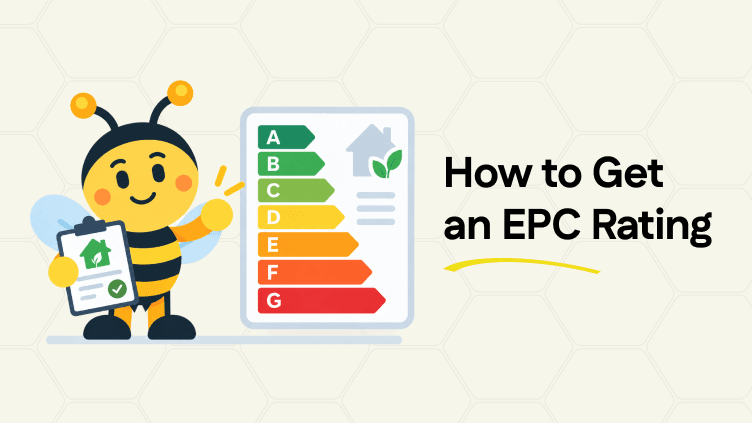
A: 92+
B: 81–91
C: 69–80
D: 55–68
E: 39–54
F: 21–38
G: 1–20
Put simply, the higher your score, the less energy your home is expected to need and the cheaper it should be to run.
EPC Calculation Methods: What’s the Difference between SAP vs RdSAP?
SAP, or the Standard Assessment Procedure, is the government-approved method used to assess the EPC of new homes. Whereas, RdSAP, which stands for Reduced Data SAP, is the method used for existing properties.
How SAP works for new homes
SAP is mainly used for new homes. It checks whether the property meets the latest Part L Building Regulations and helps produce its first EPC.
In simple terms, the calculation compares the home’s expected energy performance with government targets. It looks at things like:
Carbon emissions
Heat loss through the building
Heating and hot water efficiency
Expected energy use
The result is shown as a score from 1 to 100+. A higher score means the home is expected to have lower energy costs and emissions. In the calculation, a score of 100 represents zero energy cost.
ℹ️Information
Part L sets energy-efficiency rules for new homes and building work, covering insulation, heating, hot water and emissions.
How RdSAP works for existing homes
RdSAP is used when a full SAP calculation is not available, which is usually the case for older or existing properties.
Instead of using detailed information from the building plans, an assessor visits the home and records what they can see or confirm. This includes the property’s size, construction, insulation, heating, glazing and renewable systems.
That information is then entered into government approved software, which estimates the home’s energy efficiency and produces the EPC score.
Newer homes may already have a full SAP assessment on record. This is generally expected for homes built after:
6 April 2008 in England and Wales
30 September 2008 in Northern Ireland
1 May 2007 in Scotland
Home Energy Model (HEM): What Homeowners and Landlords Need to Know Before 2027
The government is developing the Home Energy Model, which is expected to replace SAP and RdSAP for homes in England and Wales.
So, what does that mean for you? The good news is that you do not need to replace your current EPC. Reformed domestic EPCs are scheduled to launch in the second half of 2027, although the precise implementation date has not yet been confirmed.
How Will EPC Ratings Be Calculated Under HEM
Under the planned HEM-based system, your future EPC will show four headline measures:
Fabric performance: How well your walls, roof, floors and windows keep heat inside
Heating system: How efficient and low-carbon your heating system is
Smart readiness: How well your home can generate, store and manage energy
Energy cost: How much the home is expected to cost to run
For now, though, your EPC will still be calculated using the current approved method.
What Happens During the EPC Transition Period?
The switch to the new system will not happen overnight. There will be a transition period while assessors, homeowners and the property market get used to the updated EPC format.
During this time, you may come across both the current EPC and the newer HEM-based version. This will make it easier to compare the old and new systems while the change is rolled out.
🔑Key Note
From the second half of 2027, the change is expected to happen gradually. New certificates should show both the familiar A–G rating and the four new performance measures until at least the end of 2029.
What Does it Mean for Homeowners?
There is no need to replace your current EPC straight away. It will remain valid for 10 years from the issue date, unless you need a new certificate when selling or letting the property.
The new EPC should make it easier to see what is helping or hurting your home’s rating. Good insulation will count in your favour, while fossil-fuel heating may score lower and smart technology could help.
What Does it Mean for Landlords?
Landlords will need to pay closer attention to the new EPC system. From 1 October 2030, rental homes are expected to meet EPC C, with a stronger focus on insulation, heating and smart energy features.
The good news is that a property rated C or above under the current system before 1 October 2029 may continue to qualify until that EPC expires or is replaced. The exact scoring rules for the new metrics are still being finalised.
Your EPC Is a Starting Point, Not Your Exact Energy Bill
Your EPC gives you a useful overview of how energy-efficient your home is likely to be. But it cannot reflect every detail of how you actually live, heat your rooms or use electricity.
Your tariff, household size, daily habits and any solar, battery or smart-heating systems will all affect your real costs.
The bottom line is simple: use your EPC to understand where your home could improve, then look at your actual energy data to see what is really driving your bills.