
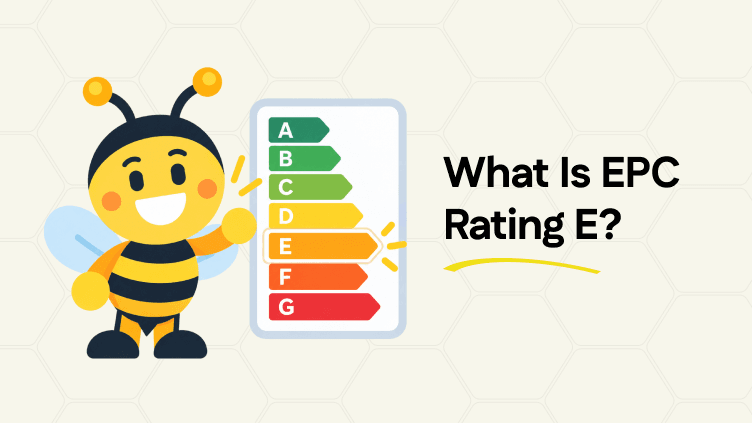
An EPC rating E means your home has an energy efficiency score between 39 and 54 on the UK EPC scale. It indicates that the property has lower energy efficiency compared with higher-rated homes and may have opportunities to improve insulation, heating systems, windows or energy controls.
This guide explains what EPC rating E means, typical running costs, whether an E-rated home is bad, what it means for buyers, renters and landlords, and the improvements that can help increase your EPC score. Learn more about how EPC ratings work and how your property’s score is calculated.
What Does EPC Rating E Mean in the UK?
An EPC rating E means a property has an energy efficiency score between 39 and 54 under the UK’s Standard Assessment Procedure (SAP). It sits below EPC rating D (55–68) and above EPC rating F (21–38) on the EPC scale.
EPC Rating | SAP Score Range |
A | 92–100 |
B | 81–91 |
C | 69–80 |
D | 55–68 |
E | 39–54 |
F | 21–38 |
G | 1–20 |
The exact score within band E matters. A property with an E54 score is close to reaching band D, while an E39 home requires a larger improvement. The EPC score is calculated using factors such as insulation, heating systems, hot water efficiency, windows, lighting and renewable energy features.
Learn more about how EPC ratings work and check your property’s certificate through the official GOV.UK EPC register.
What Does an E Rated Home Usually Look Like?
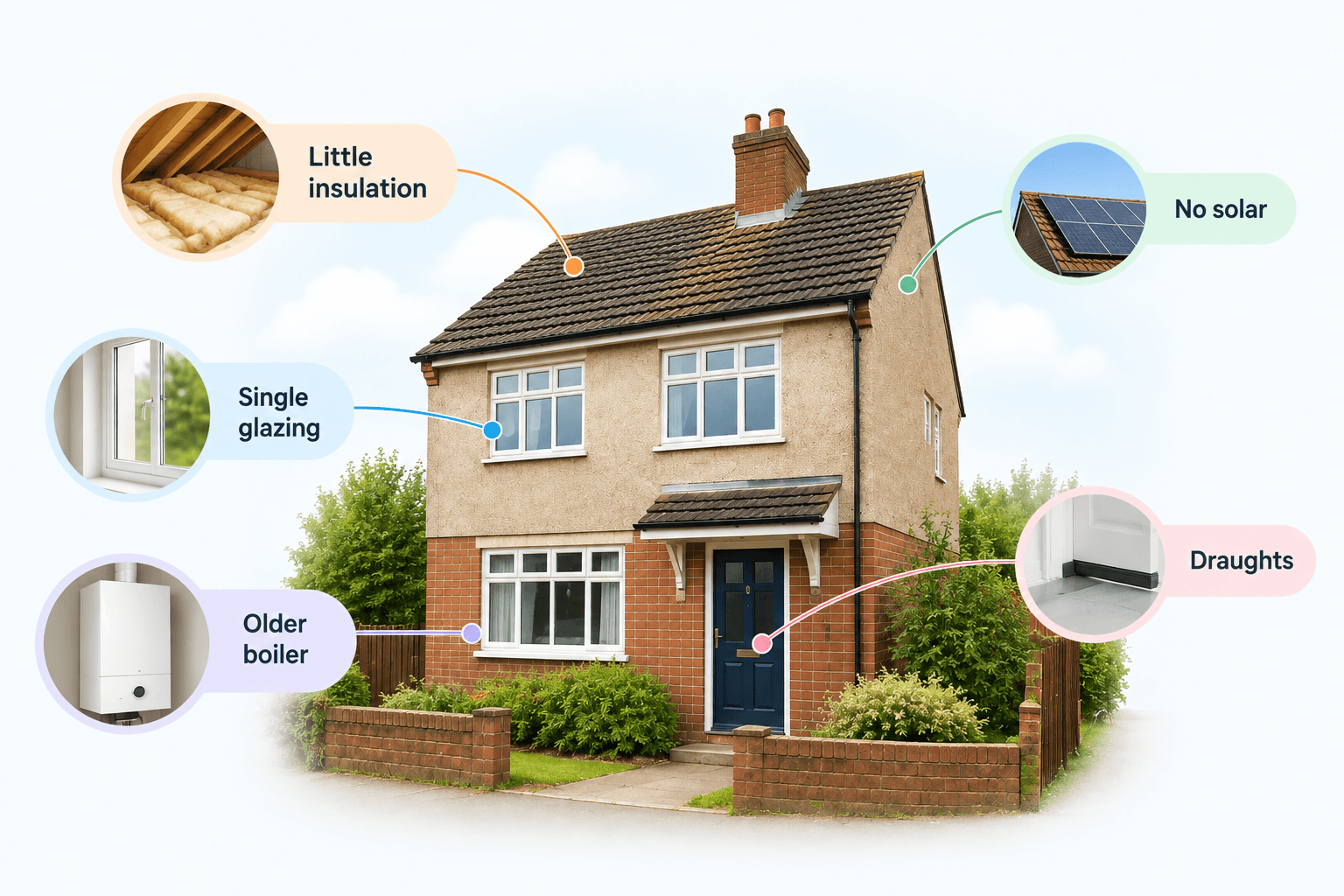
An EPC rating E does not describe one specific type of property. Homes in this band often have areas where energy efficiency can be improved, such as insulation, heating systems or reducing heat loss.
Common features of E-rated homes may include:
Older heating systems
Limited loft or wall insulation
Less efficient windows
Basic heating controls
Older property construction
Many older homes fall into band E because they were built before modern energy efficiency standards. However, two homes with the same EPC E rating can perform differently depending on their size, heating system, insulation and energy use.
You can check the recommendations on your EPC certificate to understand which improvements may have the biggest impact.
How Much Does an EPC E Home Cost to Run?
The running cost of an EPC rating E home depends on factors such as property size, heating system, energy tariff and household usage.
Property Type | Estimated Monthly Cost | Estimated Annual Cost |
1 bedroom flat | £ | £ |
2 bedroom terrace | £ | £ |
3 bedroom semi-detached | £ | £ |
4 bedroom detached | £ | £ |
Why Your Energy Bills May Not Match Your EPC Rating
Your EPC rating is based on a standard assessment, so it does not show your exact energy bills or daily usage. Your actual costs can change depending on heating habits, occupancy, energy tariffs, insulation levels and appliance use.
EnergieBee helps homeowners understand real energy patterns by tracking electricity usage and showing how their home performs beyond the EPC estimate.
Compare energy costs across different efficiency levels with EPC Rating D Monthly Cost.
Is EPC Rating E Bad?
An EPC rating E is below the average energy efficiency level of UK homes, but it does not automatically mean a property is unsuitable or inefficient in every area.
The impact of an E rating depends on the exact score and property condition. An E54 home is close to reaching band D, while an E39 property may require more improvements. Factors such as insulation, heating systems, windows and property size can affect both comfort and running costs.
Two properties with the same EPC E rating can also have different energy performance. Reviewing the full EPC certificate can help you understand the current issues and recommended improvements.
For understanding what affects your score, see how an EPC rating is calculated.
What Does EPC Rating E Mean for Landlords?
For most privately rented homes in England and Wales, an EPC rating E is currently the minimum energy efficiency standard required for renting out a property. Properties with an EPC rating of F or G usually need improvements or a valid exemption before they can be legally rented.
Landlords with an EPC E property should review the recommendations on their EPC certificate and consider future improvements. Upgrading insulation, heating systems or energy controls can help improve efficiency, reduce running costs and prepare the property for possible future changes.
For detailed guidance on landlord requirements and future updates, see New EPC Rules for Landlords.
Should You Buy or Rent an EPC E Home?
An EPC rating E does not automatically mean a property is unsuitable. It can help you understand potential energy costs and improvements before buying or renting.
If You Are Buying
Check the EPC score and recommendations.
Review possible improvement costs.
Consider heating, insulation and window efficiency.
If You Are Renting
Check the heating system and insulation.
Consider potential energy costs.
Look for signs of damp, condensation or heat loss.
An EPC rating is only one factor to consider alongside the property’s condition and how it performs in everyday use.
How Can You Improve an EPC Rating E?
Improving an EPC rating E depends on your current score, property condition and the recommendations listed on your EPC certificate. Some common improvements that can help increase your rating include:
Loft and wall insulation
Heating system upgrades
Better heating controls
Draught proofing
More efficient windows
Renewable energy improvements such as solar panels
Starting Score | Target Rating | Points Needed |
E39 | D | 16 points |
E54 | D | 1 point |
E39 | C | 30 points |
E54 | C | 15 points |
The best improvements vary between properties, so start with the recommendations on your EPC certificate and prioritise upgrades that can provide the biggest improvement.
For a detailed guide, see How to Improve EPC Rating From E to C.
Understand Your Home Energy Beyond Your EPC Rating
An EPC rating shows your home’s estimated energy efficiency, but it does not show how your property uses energy every day. Your actual energy use can change depending on heating habits, appliances, occupancy and lifestyle.
EnergieBee helps you track real household energy patterns by monitoring:
Electricity consumption
Daily energy usage trends
Solar generation
Changes after home improvements
By comparing your real energy data before and after upgrades, you can better understand what improvements are making a difference beyond your EPC score.
Learn more about EnergieBee Energy and track how your home performs over time.
Frequently Asked Questions About EPC Rating E
Can You Rent Out a Property With an EPC Rating E?
Yes. For most privately rented properties in England and Wales, an EPC rating E is currently the minimum required standard. Properties rated F or G usually need improvements or a valid exemption before they can be rented out.
Can You Sell a House With an EPC Rating E?
Yes. You can sell a property with an EPC rating E. However, buyers may consider potential running costs, energy efficiency and future improvement requirements when making a decision.
Why Is My Home Rated E When It Feels Warm?
An EPC rating is based on a standard assessment of your property’s energy efficiency, not how warm your home feels day to day. Heating habits, room usage, insulation and personal comfort preferences can make your experience different from the EPC result.
Is E54 Better Than E39?
Yes. An E54 score is more energy efficient than E39 because it is closer to reaching EPC rating D. Both scores are within band E, but the improvement gap can be very different.
How Long Does an EPC Last?
An EPC is usually valid for 10 years from the date it is issued, unless a new certificate is created after improvements or another assessment. You can check the latest certificate through the GOV.UK EPC register.


