
A tracker energy tariff is a gas or electricity deal where your rates change in line with wholesale energy prices or Ofgem's energy price cap. It could save you money when prices fall, but you might pay more for the same energy when they rise.
If you are looking for cheaper energy tariff options, a tracker is worth a look. Just remember that a low rate today isn't a promise of a low bill next month.
This guide helps you find out how tracker energy tariffs work, how they compare with fixed deals, when they could save you money, and what to check before switching.
How Does a Tracker Energy Tariff Work?
A tracker energy tariff adjusts your gas or electricity prices based on changes in energy costs. When the price it follows goes down, your rates can fall too. But when prices rise, you could end up paying more.
In the UK, there are two main types of tracker tariffs. The difference is what they track and how often your rates change.
What Is a Cap Tracker Tariff
A price cap tracker tariff follows Ofgem's energy price cap, which is reviewed every three months.
These tariffs typically offer a guaranteed discount below the price cap. But the discount can work in two different ways:
Unit rate discount: You pay less for each kWh of gas or electricity. The more energy you use, the more you save compared with the capped rate.
Standing charge discount: You pay a lower daily standing charge, regardless of how much energy you use.
For example, EDF Simply Tracker offers a £25 annual standing charge discount per fuel. Meanwhile, E.ON Next Pledge offers discounted unit rates, with actual savings depending on your energy use.
Even with a guaranteed discount, your rates can still rise when Ofgem increases the price cap. And a fixed tariff elsewhere might still be cheaper.
How Do Wholesale and Daily Tracker Tariffs Work?
A wholesale tracker tariff follows wholesale energy prices, which are the prices suppliers pay when buying gas and electricity.
Unlike cap trackers, wholesale trackers usually change your unit rates daily rather than every three months.
For example, Octopus Tracker uses wholesale market prices and other supply costs to calculate new gas and electricity rates each day.
If wholesale prices fall, you can benefit from lower rates without waiting for the next Ofgem price cap update.
However, the opposite is also true. If wholesale prices suddenly jump, your tracker prices can rise just as quickly, potentially going above Ofgem's price-capped rates.
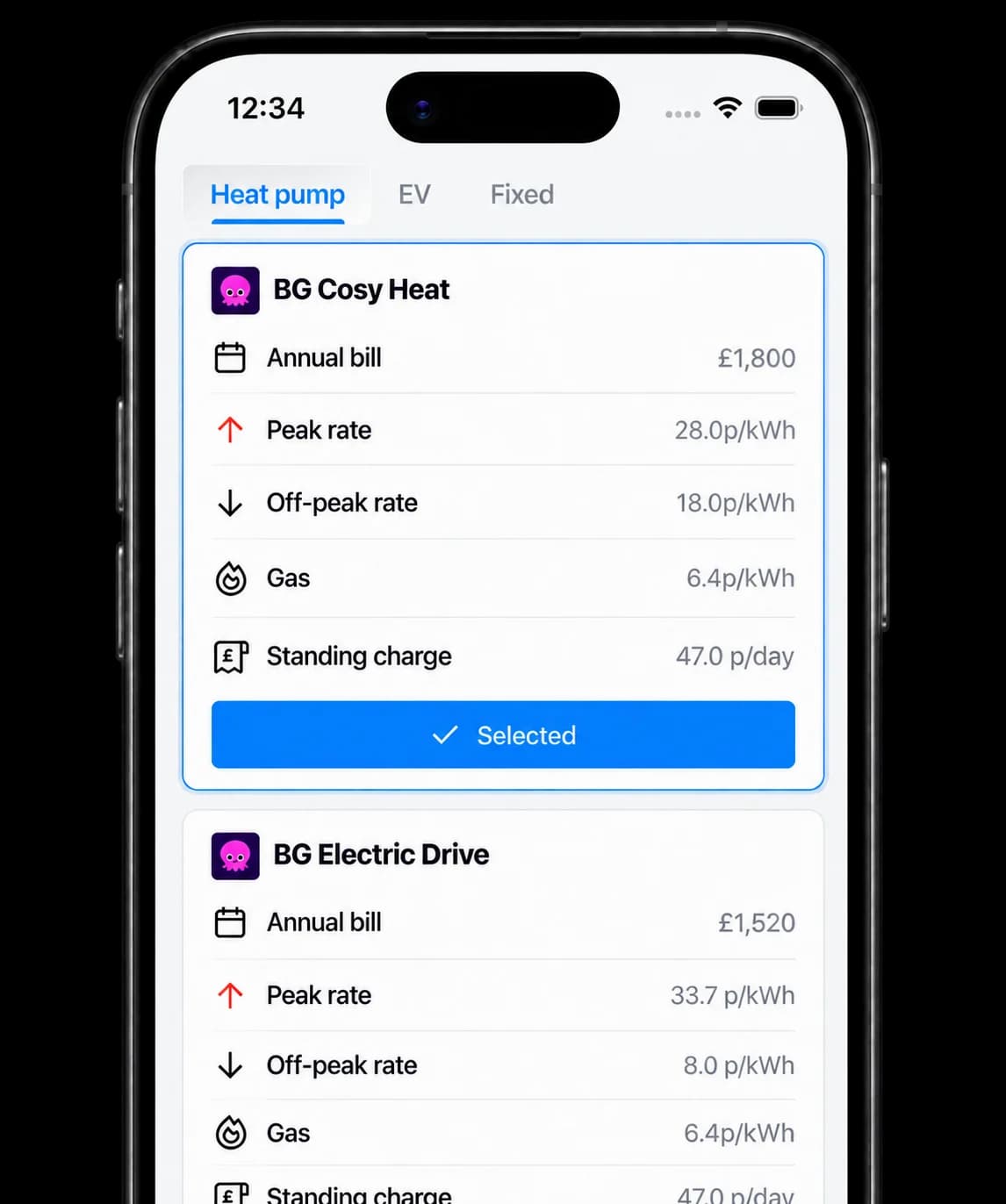
Find the Right Tariff. Save More on Energy.
Before switching tariffs, know how much energy your home actually uses. EnergieBee helps you track your energy use and spot opportunities to save.


Download EnergieBee
Scan with your phone's camera to get the app.
Price Cap Tracker vs Wholesale Tracker: Quick Comparison
Here's how the two types compare:
Feature | Price Cap Tracker | Wholesale Tracker |
What it tracks | Ofgem energy price cap | Wholesale energy prices |
Price changes | Usually every 3 months | Usually daily |
How you save | Discount on unit rates or standing charges | Lower rates when wholesale prices fall |
Main risk | Bills can rise with the price cap | Sudden price increases, potentially above the Ofgem cap |
Example | EDF Simply Tracker, E.ON Next Pledge | Octopus Tracker |
The bottom line: A price cap tracker gives you a more predictable discount against Ofgem's cap, while a wholesale tracker offers the chance of quicker savings but exposes you to bigger price changes.
How Does Tracker Pricing Work?
Tracker pricing depends on what your tariff follows. Wholesale tracker rates usually change daily, while price cap trackers adjust every three months.
So, the question is what makes these prices change, and how does that affect your bill.
What Makes Tracker Prices Go Up or Down?
Tracker prices are influenced by energy supply and demand. The main factors include:
Weather: Cold weather increases heating demand, while windy days can help reduce electricity prices.
Energy supply: Gas shortages or lower electricity generation can push prices up.
Global markets: International gas prices and supply disruptions can affect UK energy costs.
Ofgem price cap: Price cap trackers follow quarterly changes that reflect wholesale costs and other expenses.
These factors influence wholesale energy prices, although daily and price cap trackers respond at different speeds.
How Are Tracker Prices Calculated on Your Bill?
Your bill mainly depends on three things: your unit rate, energy usage (kWh) and daily standing charge.
For a daily tracker, your supplier charges you for the energy used each day at that day's rate.
Here's a simple electricity example:
Day 1 | Day 2 | |
Tracker price | 18p/kWh | 28p/kWh |
Electricity used | 10 kWh | 10 kWh |
Energy cost | £1.80 | £2.80 |
Standing charge | 50p | 50p |
Daily total | £2.30 | £3.30 |
Illustrative prices only, not actual tariff rates. Other billing adjustments may apply.
You used the same electricity on both days but paid £1 more because the tracker price increased.
Suppliers such as Octopus use daily smart meter readings to calculate charges. If readings are missing, they may estimate daily usage using industry methods that account for weather.
The takeaway: Cheaper tracker prices can lower your bill, but how much energy you use matters just as much.
Does the Ofgem Energy Price Cap Apply to Tracker Tariffs?
Not all tracker tariffs are protected by Ofgem's energy price cap. It depends on which type of tracker you're using.
The Ofgem energy price cap limits the unit rates and standing charges suppliers can charge households on standard variable tariffs. It doesn't limit your total bill.
Here's how it affects tracker tariffs:
Price cap trackers: Follow Ofgem's cap and usually offer a guaranteed discount below it. However, your rates can still rise when the cap increases.
Wholesale trackers: Aren't protected by Ofgem's default tariff cap. Their unit rates can rise above it when wholesale prices increase.
What does this mean for you: A tracker tariff might offer cheaper energy today, but it doesn't guarantee protection against future price increases. Always check your tariff's pricing limits before switching.
Tracker Tariff vs Fixed Tariff vs Standard Variable Tariff
The main difference between these three energy tariffs is how often your rates change and how much protection you have against price rises.
A tracker tariff changes with wholesale prices or Ofgem's price cap. A fixed tariff keeps your unit rates and standing charges the same for an agreed period, while a standard variable tariff follows prices set by your supplier, subject to Ofgem's price cap.
Here's a quick comparison:
Feature | Tracker Tariff | Fixed Tariff | Standard Variable Tariff |
Price changes | Daily or quarterly | Rates stay fixed during the deal | Usually quarterly |
Ofgem price cap | Depends on tracker type | Not covered | Protected |
Potential savings | When tracked prices fall or discounts apply | If market prices rise above your fixed rates | When capped rates fall |
Exit fees | Depends on supplier | Usually apply | No exit fees |
Best for | Those comfortable with changing rates | Those wanting predictable rates | Those wanting flexibility |
One thing to remember: A tracker is still a type of variable energy tariff, even if it comes with a fixed contract term.
Also, a fixed tariff doesn't mean a fixed bill. Your energy costs still depend on how much gas and electricity you use.
When Can a Tracker Tariff Save You Money?
A tracker tariff can save you money when the rates you pay are lower than those on fixed or standard variable tariffs.
When wholesale prices fall: Daily trackers can pass on lower energy prices without waiting for the next quarterly price cap update.
When you get a price cap discount: Some trackers offer cheaper unit rates or standing charges, helping you save compared with the Ofgem cap.
When your energy use suits the tariff: Lower unit rates can make a bigger difference if your household uses more energy.
However, as MoneySavingExpert explains, tracker tariffs aren't guaranteed to be cheaper. It depends on your usage and the other deals available.
When Could a Tracker Tariff Cost More?
The biggest risk is that your energy rates can rise when prices increase, sometimes leaving you paying more than you would on a fixed tariff.
Wholesale price spikes: Daily tracker rates can jump quickly when energy costs rise.
Higher winter demand: You could face higher rates just when you're using more gas or electricity for heating.
Price cap increases: Even discounted cap trackers can become more expensive when Ofgem raises the cap.
Some wholesale trackers can also charge more than the Ofgem price-capped rate. For example, Octopus Tracker's terms allow its unit rates to change daily with wholesale costs.
The bottom line: Tracker tariffs offer potential savings, but if predictable energy bills matter more to you, a fixed tariff may be the safer choice.
Is a Tracker Tariff the Same as a Smart Energy Tariff?
Not exactly. Some tracker tariffs are smart tariffs, but not all smart energy tariffs work like trackers.
A tracker tariff follows wholesale prices or Ofgem's price cap. A time-of-use (TOU) tariff, on the other hand, charges different electricity rates depending on when you use it.
For example:
Daily tracker tariff: Your unit rate changes each day, but usually stays the same throughout that day.
Smart time-of-use tariff: Electricity rates can change every half hour or offer set cheaper periods, such as overnight.
If you charge an EV or use a home battery, a smart time-of-use tariff could help you save by moving electricity use to cheaper hours.
Is a Tracker Energy Tariff Right for Your Home?
A tracker tariff could be worth considering if you're comfortable with changing energy prices and can manage occasional increases in your bills.
It might suit you if:
You're happy to accept some price uncertainty for potential savings.
You can reduce electricity use on expensive days.
You regularly check your energy usage and costs.
You might want to think twice if:
You prefer predictable energy rates each month.
You use a lot of energy during winter and can't easily reduce consumption.
You have an EV, heat pump or battery that might benefit more from a specialist time-of-use tariff.
If you have solar panels, also compare your import costs with your Smart Export Guarantee payments. A cheaper import tariff isn't necessarily the best overall deal if it affects your export arrangement.
What Should You Check Before Switching to a Tracker Tariff?
Before switching, make sure the potential savings outweigh the risks.
Here's a quick checklist:
Current energy usage: Check your annual gas and electricity consumption in kWh.
Tracker prices: Compare unit rates and standing charges against your current tariff and available fixed deals.
Price changes: Find out whether rates change daily or quarterly and whether the tariff has a maximum price.
Smart meter requirements: Some trackers, including Octopus Tracker, require a working smart meter.
Exit fees: Check whether you can leave without paying a fee and whether restrictions apply.
Solar and EV compatibility: Check whether switching affects your export payments or access to cheaper EV charging rates.
You should also check whether leaving your current deal triggers an exit fee. The Citizens Advice switching guide explains what to look for.
Remember: The cheapest-looking tracker tariff today might not be the cheapest over the coming months. Compare the costs using your actual energy consumption before deciding.
Tracker Tariff FAQs
Is a tracker tariff cheaper than a fixed tariff?
Not always. A tracker tariff can be cheaper when energy prices fall, but a fixed tariff may save you more if prices rise. The better deal depends on your energy usage and the rates available.
Do you need a smart meter for a tracker tariff?
It depends on the supplier and tariff. Daily wholesale trackers like Octopus Tracker require a working smart meter to join, while other tracker tariffs may have different requirements.
Can tracker energy prices go above the Ofgem price cap?
Yes, wholesale tracker rates can go above Ofgem's price cap when market prices rise. Price cap trackers, however, usually offer a guaranteed discount against the cap.
Does EDF Simply Tracker change prices every day?
No. EDF Simply Tracker follows Ofgem's price cap, so its rates can change every three months rather than daily. It also offers discounted standing charges.
Can I leave a tracker tariff without an exit fee?
It depends on your tariff. Octopus Tracker has no exit fee, although rejoining restrictions apply. EDF Simply Tracker charges £25 per fuel for leaving early. Always check the exit fee conditions before switching.


 Sharieaz Kavier