Heating systems are one of the biggest factors affecting your home’s comfort, energy use and heating costs. In the UK, most homes use one of four main heating system types: wet central heating, heat pumps, electric heating, and district or communal heating.
The system your home uses depends on factors such as property type, location, available energy connections and heating requirements. This guide explains how each heating system works, helps you identify your current setup and shows which options may be suitable for different homes.
What Are the 4 Types of Heating Systems?
Heating systems are classified in different ways depending on how heat is generated and delivered around a home.
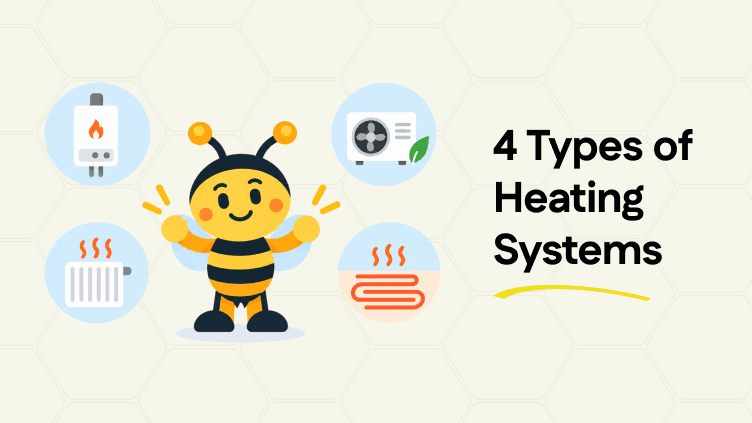
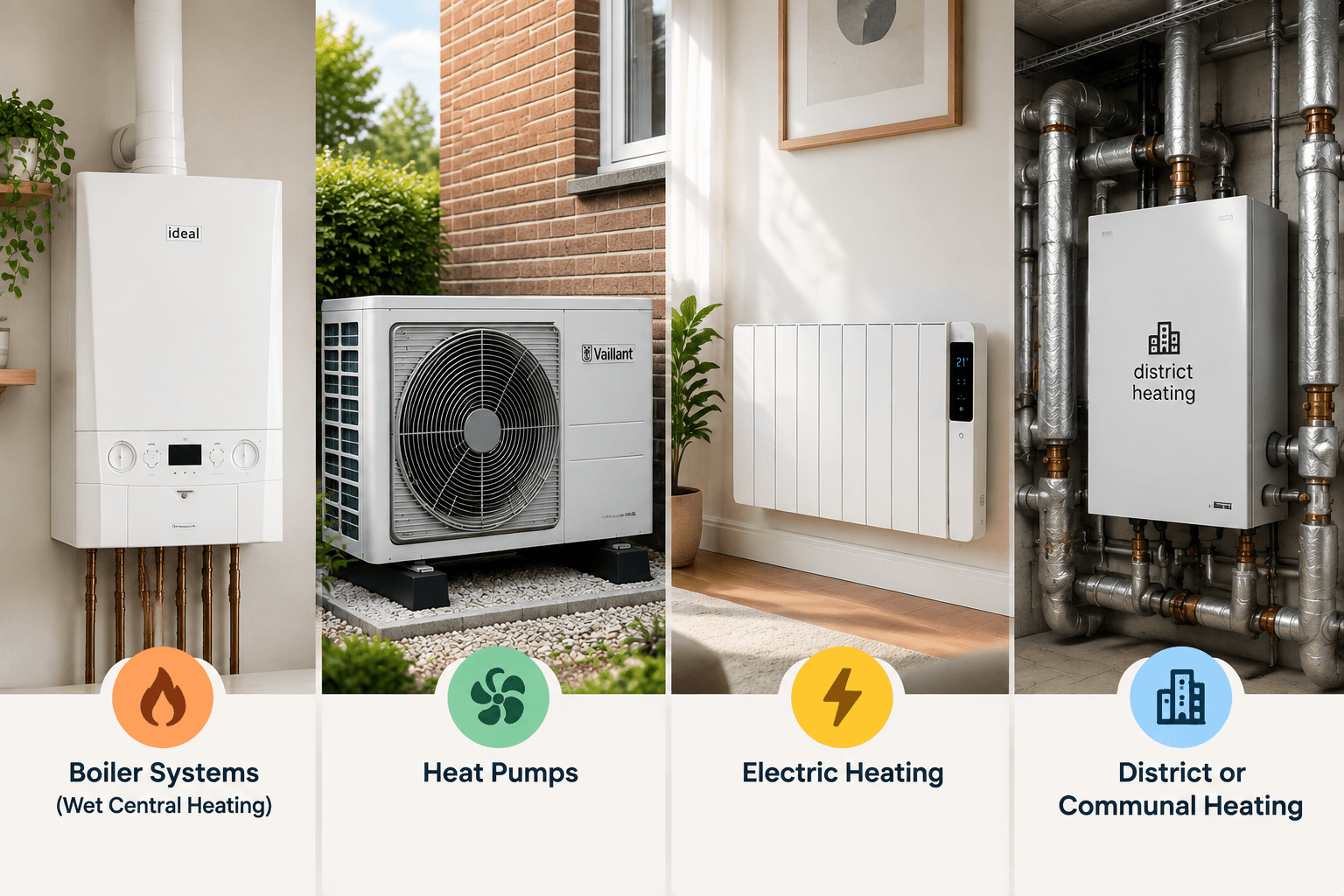
For this guide, we’ll focus on the four main heating system categories used in UK properties:
Wet central heating – Uses a boiler or heat source to warm water, which is circulated through radiators or underfloor heating.
Heat pumps – Transfer heat from the air or ground to provide efficient home heating without directly burning fuel.
Electric heating – Uses electricity to generate heat through systems such as storage heaters, panel heaters and electric boilers.
District and communal heating – Uses a shared heat source to supply heating and hot water to multiple homes or buildings.
The right heating system depends on your property type, available energy sources, location and heating needs. Understanding the system you already have can help you compare alternatives and make better decisions when upgrading your home’s energy efficiency. For more information on how heating affects your home’s efficiency, see our guide on how EPC ratings are calculated.
Type 1: Wet Central Heating (Boilers)
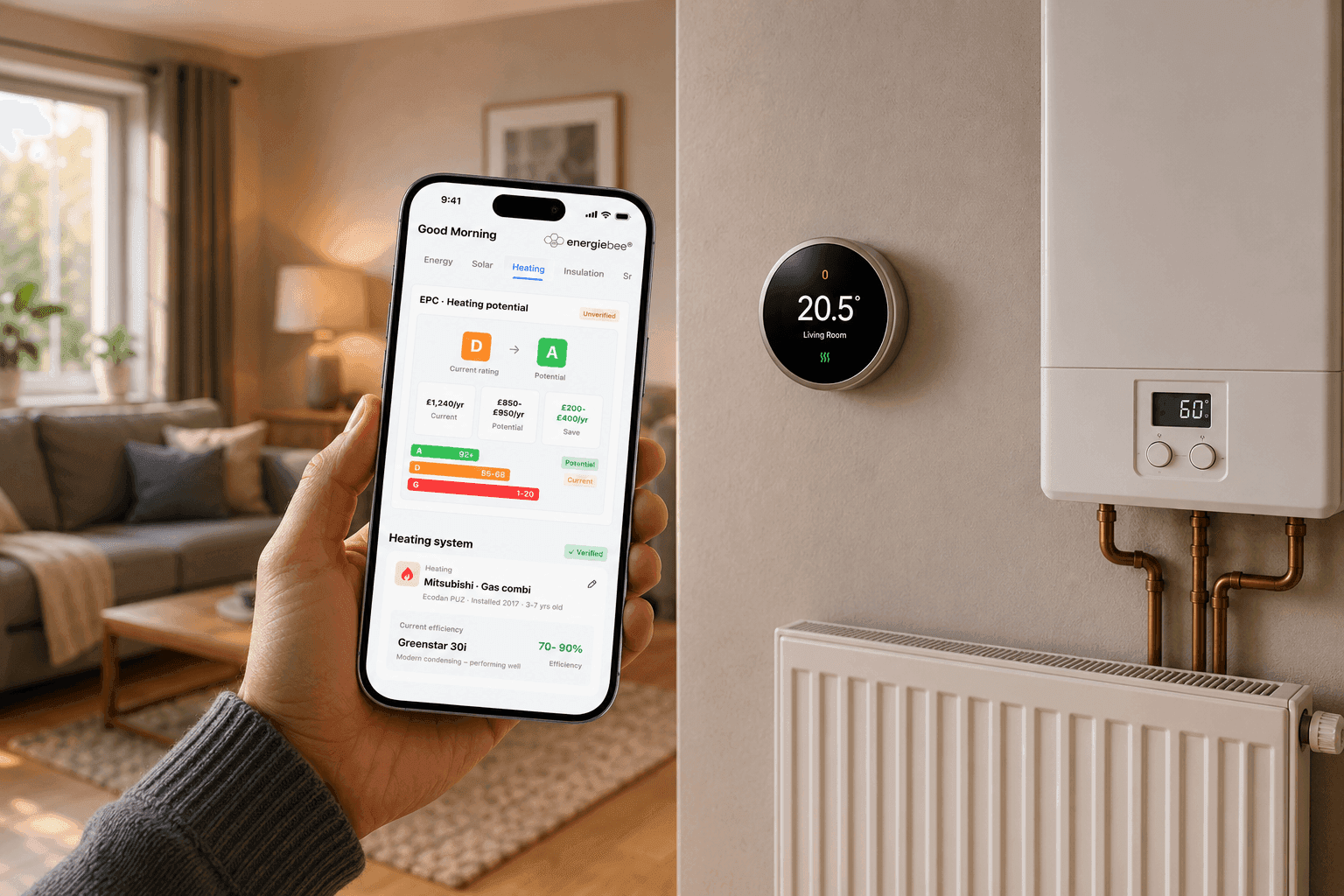
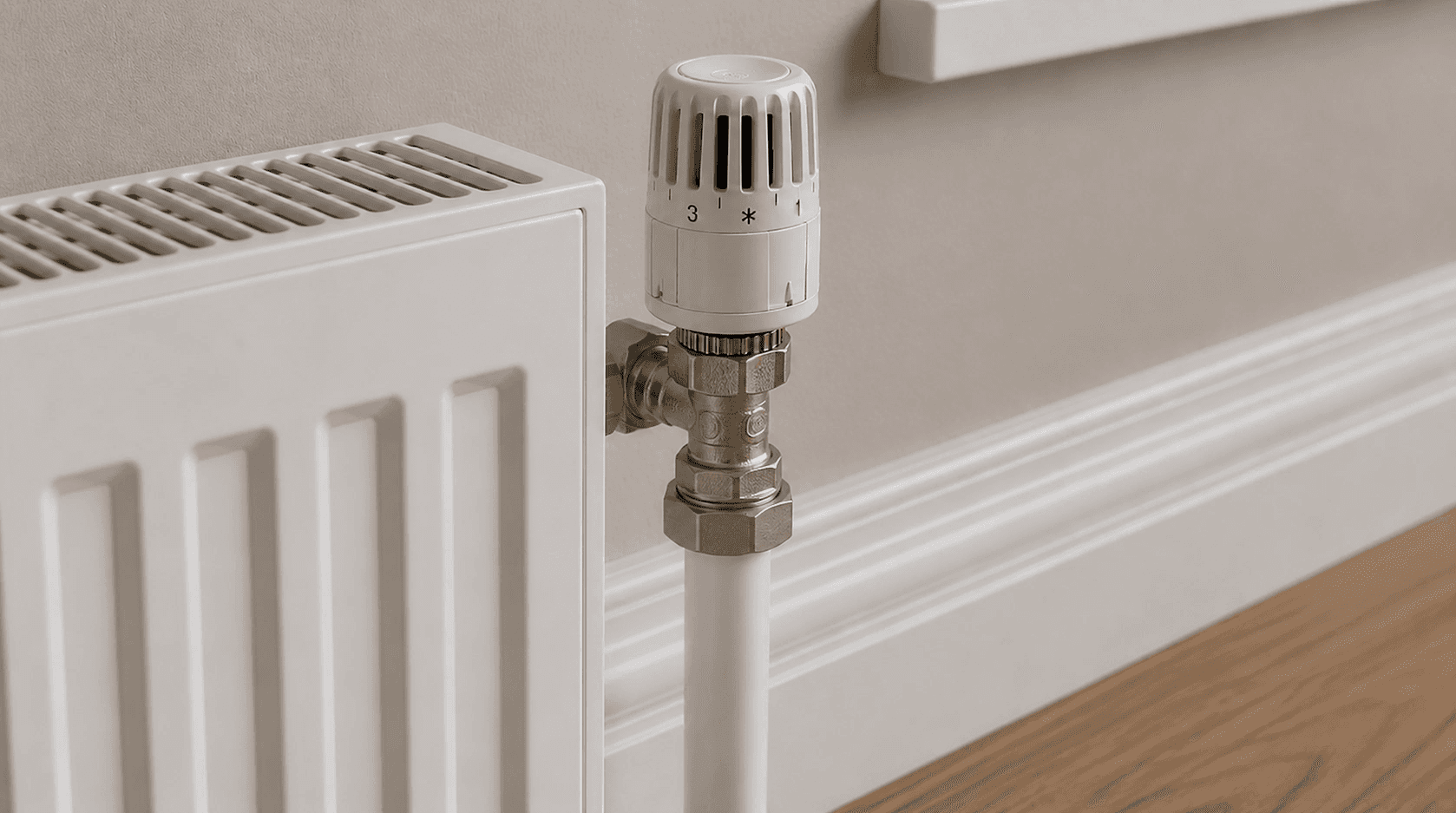
Wet central heating is the most common heating system in UK homes. These systems use a boiler to heat water, which is then pumped through pipes to radiators or underfloor heating systems to warm different rooms.
The type of boiler installed usually depends on the size of the property, hot water demand and existing heating setup. Since heating efficiency affects your home’s energy performance, your heating system is also one of the factors considered in an EPC assessment.
Combi Boilers
A combi boiler provides both heating and hot water from a single unit without needing a separate hot water cylinder or storage tank.
They are commonly installed in flats and smaller homes where hot water demand is lower. However, they may not be suitable for larger households that need hot water from multiple taps at the same time.
System Boilers
A system boiler works with a separate hot water cylinder to store heated water. This allows it to supply hot water to multiple outlets more efficiently than a combi boiler.
They are often used in larger homes with higher hot water requirements but require additional space for the cylinder.
Heat Only Boilers
A heat only boiler (also called a regular boiler) is a traditional system that uses a separate hot water cylinder and cold water storage tank.
These boilers are commonly found in older UK properties where the existing pipework and heating system were designed around this setup. They can still be suitable where upgrading to a different heating system is not practical. For homeowners planning heating upgrades, understanding the current system is an important first step before making changes. Learn more about improving your EPC rating.
Type 2: Heat Pumps
Heat pumps provide heating by moving heat from the air or ground instead of burning fuel. They are a low-carbon heating option that can improve energy efficiency when correctly installed and used with a suitable property.
For heat pump performance, factors such as insulation, heat loss and heating system design are important. Learn more about improving your EPC rating.
Air Source Heat Pumps
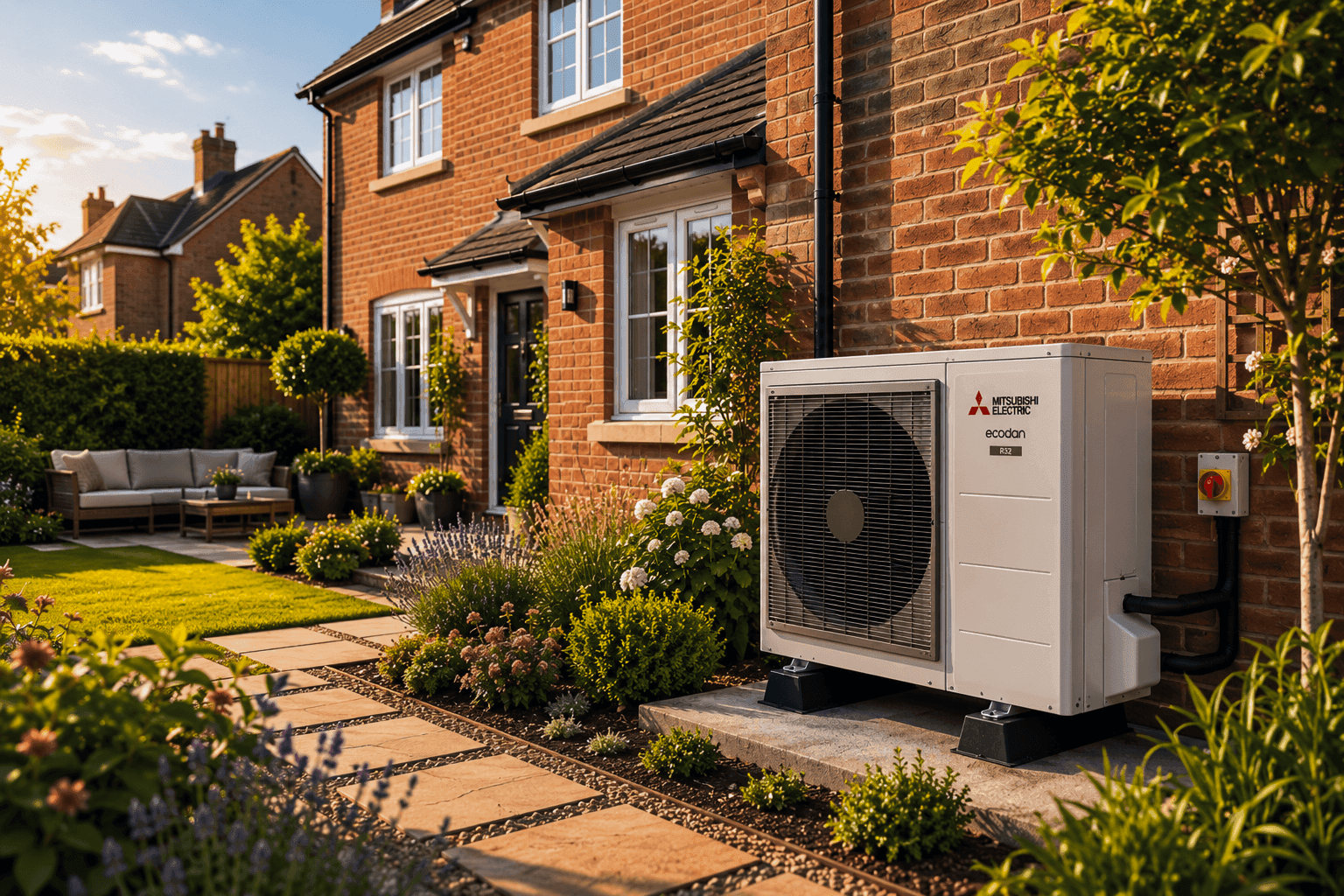
An air source heat pump (ASHP) takes heat from the outside air and transfers it into your home. It is the most common heat pump type in UK homes due to its simpler installation and lower space requirements.
Ground Source Heat Pumps
A ground source heat pump uses underground pipes to collect heat from the ground. These systems usually need more outdoor space, making them better suited to larger properties with available land.
Air-to-Air Heat Pumps
An air-to-air heat pump transfers heat directly into indoor air and can also provide cooling. They are often suitable for flats, smaller homes and properties where hot water is supplied separately.
Do Heat Pumps Work in UK Homes?
Yes, heat pumps can work in many UK homes, including some older properties. However, good insulation and correct installation are important to ensure efficient performance.
For more information, see the Energy Saving Trust heat pump guide.
Type 3: Electric Heating Systems
Electric heating systems use electricity as the main energy source instead of gas or other fuels. They are commonly found in homes without a gas connection, including flats and some rural properties.
The right electric heating option depends on your property size, electricity tariff and heating needs.
Storage Heaters
Storage heaters charge during cheaper electricity periods, such as Economy 7 tariffs, and release stored heat throughout the day.
Modern high heat retention models offer better control and efficiency than older storage heaters.
Electric Panel and Convector Heaters
Electric panel and convector heaters provide direct room heating using electricity. They are simple to install but running costs depend on electricity prices and usage.
Electric Boilers and Underfloor Heating
Electric boilers heat water for radiators or underfloor heating and can be useful in homes without gas. Electric underfloor heating is often used in bathrooms, extensions and smaller areas.
Before choosing an electric heating system, consider your home’s insulation and overall efficiency. Improving insulation can also help your EPC rating and reduce heat loss.
For more guidance on electric heating options, see the Energy Saving Trust heating guide.
Type 4: District and Communal Heating
District and communal heating systems use one central heat source to supply heating and hot water to multiple properties. They are commonly found in flats, apartment blocks and newer housing developments.
Instead of each home having its own boiler, heat is generated at a central location and distributed to connected properties through a shared network.
How District Heating Works
District heating systems use a central plant to generate heat, which is transferred through a network of pipes to individual homes.
Each property usually has a heat interface unit (HIU) that controls the heat supply and provides heating and hot water.
Things to Check Before Choosing a Property With District Heating
Before buying or renting a property with district heating, check:
Heating tariffs and unit rates
Fixed service or maintenance charges
How billing is managed
Whether you can choose your energy supplier
Costs and contracts can vary between developments, so understanding the heating arrangement is important before making a decision. For more information about home energy costs and usage, explore EnergieBee Energy.
What Heating System Do You Have?
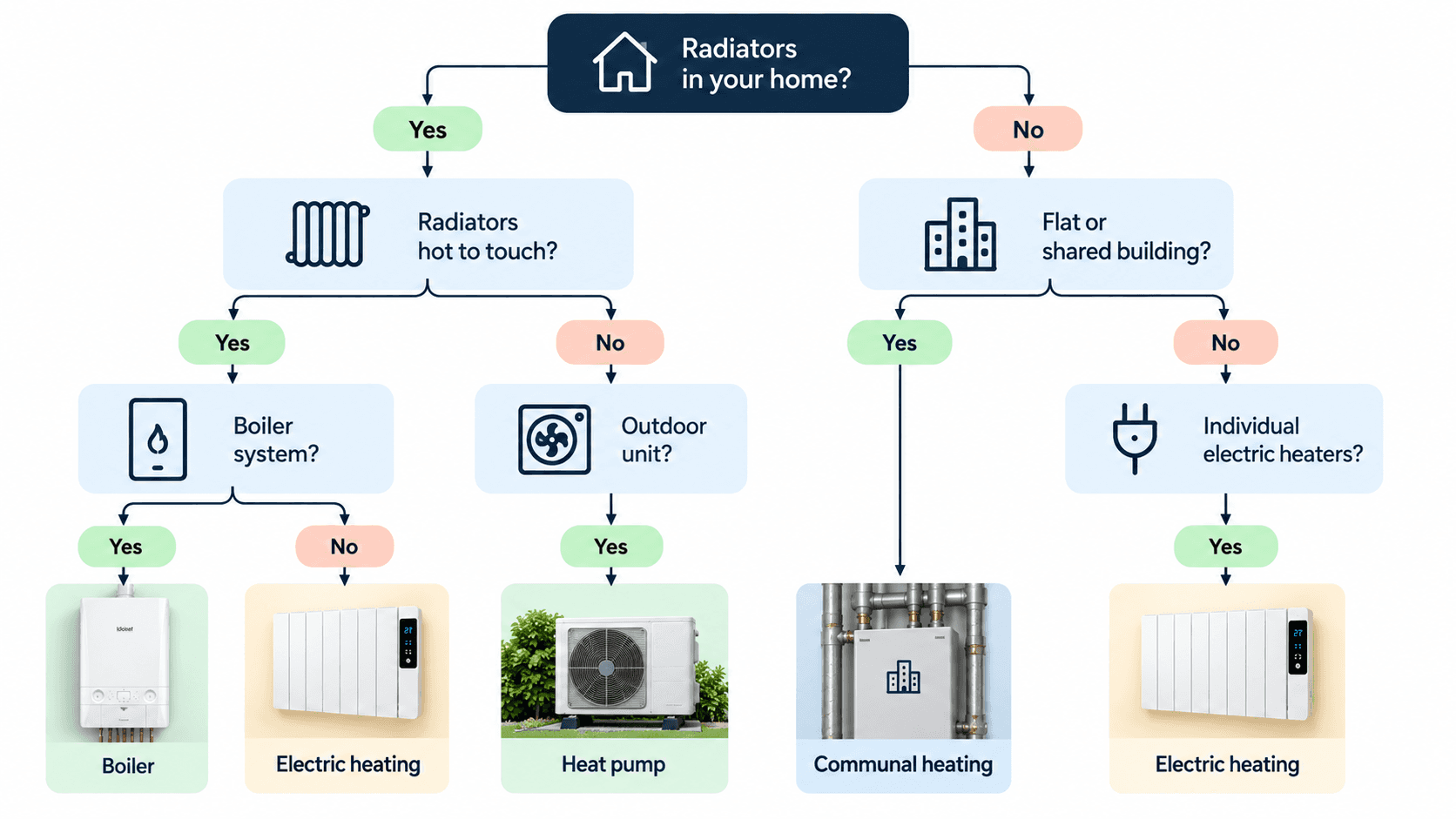
If you are unsure which heating system your home uses, a few simple signs can help you identify it.
Boiler system: You have a boiler that heats water and sends it to radiators or underfloor heating.
Heat pump: You have an outdoor unit connected to your heating system, similar in appearance to an air conditioning unit.
Electric heating: You do not have a boiler or gas supply, and your heating comes from storage heaters, panel heaters or electric underfloor heating.
District or communal heating: Your home does not have its own boiler, and heating is supplied through a shared system, usually managed through a heat interface unit.
Your property type can also provide clues. Flats without gas often use electric or communal heating, while many houses use boiler-based central heating.
If you are comparing heating performance or planning upgrades, tracking your actual usage can help. EnergieBee Heating helps you understand your heating patterns and energy changes over time.
Heating Systems Compared: Cost, Lifespan and Best Uses
The best heating system depends on your property type, budget, energy source and heating needs. The table below gives a general comparison of common UK heating systems.
Heating System | Installation Cost | Running Cost | Lifespan | Best Suited Property Type |
Gas Boiler | Medium | Medium | 10–15 years | Most homes with an existing gas connection |
Air Source Heat Pump | High | Low to Medium | 15–20 years | Well-insulated homes with outdoor space |
Ground Source Heat Pump | Very High | Low | 20+ years | Larger properties with available land |
Electric Heating | Low to Medium | Higher | 10–20 years | Flats, small homes and properties without gas |
District Heating | Depends on development | Depends on tariff | Varies | Flats and modern housing developments |
Running costs can vary depending on energy prices, insulation levels and how the system is used. Improving your home’s efficiency through insulation and better controls can also help reduce heating demand. See our guide on how to improve your EPC rating for more ways to improve home performance.
Which Heating System Is Right for Your Home?
The right heating system depends on your property type, available energy sources and heating needs. Factors such as insulation, space and existing connections can affect which option works best.
Homes With Existing Gas Connection
Most homes with gas use boiler-based heating. Some may upgrade to a more efficient boiler, while others may consider heat pumps depending on the property.
Flats Without Gas
Flats without gas commonly use electric heating, storage heaters or air-to-air heat pumps. The best option depends on available space and building setup.
Older Properties
Older homes often need insulation improvements before changing heating systems. Reducing heat loss can help new systems work more efficiently.
Off-Grid Homes
Homes without mains gas may use oil, LPG, electric heating or renewable options such as heat pumps.
New Build Homes
New builds are often designed for efficient systems like heat pumps and communal heating. Tracking your actual energy use with EnergieBee Energy can help you understand heating performance over time.
Track Your Heating Performance With EnergieBee
Choosing an efficient heating system is only one part of reducing energy costs. Understanding how your home actually uses energy helps you see whether your heating improvements are making a difference.
See How Your Heating System Performs
Track heating patterns, energy use and upgrades to understand your home's real efficiency.
With EnergieBee Energy, you can track:
Energy usage over time
Heating patterns and peak periods
Changes after upgrades or system improvements
By comparing your energy use before and after changes, you can better understand your home’s performance and make more informed decisions about future improvements.
Frequently Asked Questions About Heating Systems
What is the most common heating system in the UK?
Most UK homes use wet central heating with a gas boiler, where heated water is circulated through radiators or underfloor heating.
What is the cheapest heating system to run?
Running costs depend on energy prices, insulation and how the system is used. Heat pumps can be efficient in suitable homes, while well-maintained boilers can also provide cost-effective heating.
Are gas boilers being banned in the UK?
Gas boilers are not currently banned in existing homes. However, the UK is moving towards lower-carbon heating options, and future heating policies may encourage alternatives such as heat pumps.
Do heat pumps work in old houses?
Yes, heat pumps can work in older homes if the property is suitable. Good insulation and reducing heat loss can help improve performance.
What is the difference between combi, system and regular boilers?
Combi boilers: Provide heating and hot water without a cylinder.
System boilers: Use a hot water cylinder for higher demand.
Regular boilers: Use separate tanks and cylinders, often found in older homes.
Can you switch supplier with district heating?
It depends on the heat network provider and agreement. Unlike standard gas or electricity supplies, many district heating systems have limited supplier choice, so check the terms before moving into a property.