
Can you really improve your EPC rating from E to C? Yes, absolutely.
Start by checking your exact score, then focus on the part of the property that is holding it back instead of paying for every suggested upgrade.
EPC Band E covers scores from 39 to 54, while Band C starts at 69. So, one property may need 15 extra points and while another may need 30. The most cost-effective route depends on your current score and which part of the property is holding it back.
This guide will show you how to improve EPC rating from E to C, which upgrades to prioritise and what they may cost. You will get a clear order of work to help you reach Band C without unnecessary spending.
Before You Spend: Check What Your Property Actually Needs?
Start with the problem that wastes the most energy, not the upgrade that sounds most impressive.
Here’s a quick guide to where you should start:
What you notice | Start by checking |
Rooms cool down quickly | Loft, wall and floor insulation |
Some rooms overheat while others stay cold | Radiator valves, zoning and heating controls |
Heating runs for long periods | Insulation, controls and system efficiency |
Boiler is old and unreliable | Heating-system replacement |
Home feels draughty | Draught-proofing and glazing |
Hot water cools quickly | Cylinder, pipes and hot-water controls |
Recent work is missing from the EPC | Documents, photographs and reassessment |
Once you have identified the likely problem, speak to an accredited energy assessor before committing to expensive work.
Use the official GOV.UK assessor service and check that the assessor belongs to a government-approved accreditation scheme.
A domestic EPC assessment typically costs £60–£120, although fees vary by assessor, location and property size.
Step-by-Step: What to Improve to Move Your EPC Rating from E to C
A clear EPC improvement plan helps you prioritise the right work instead of paying for every recommendation at once.
A low EPC house will not necessarily need every upgrade below. The best route depends on the current score, the building’s construction and which feature is holding the rating back.
Improve insulation and reduce heat loss
Insulation is often one of the first areas to investigate. A more efficient boiler will not solve the problem if heat escapes soon after the heating switches off.
In a typical uninsulated home, around 25% of heat can escape through the roof, 35% through the walls and 15% through the floor, according to official heat-loss guidance.
1. Check the loft or roof
Look for thin, uneven or missing insulation, especially around the loft hatch. Fix damp or condensation before adding more, and never block ventilation.
2. Check the walls
The right option depends on whether the property has cavity, solid or traditional walls. Older homes may need specialist advice before insulation is installed.
3. Check the floors and hot-water system
Suspended timber floors can let in cold air. Insulating exposed pipes and the hot-water cylinder can also help the home retain heat for longer.
Improve heating controls and reduce wasted energy
A working boiler can still waste energy by heating empty rooms or running for longer than needed. Thermostats, timers, heating zones and radiator valves give you more control over where and when heat is used.
The challenge is knowing whether those changes are actually reducing energy use. You can use the EnergieBee mobile app and see all energy information into one dashboard for free. It will help you compare consumption before and after changing schedules, controls or insulation.
Upgrade the heating system only when needed
Consider replacing the heating system when it is old, unreliable or inefficient. Improve insulation and controls first, because a new boiler cannot stop heat escaping through the roof, walls or windows.
New domestic gas boilers installed in England must meet the 92% ErP standard, although correct installation and suitable controls still matter.
For a heat pump, arrange a room-by-room heat-loss assessment. The property may also need better insulation or larger radiators.
Stop guessing where your energy goes. EnergieBee helps you find the causes behind high bills and take control of your home energy.
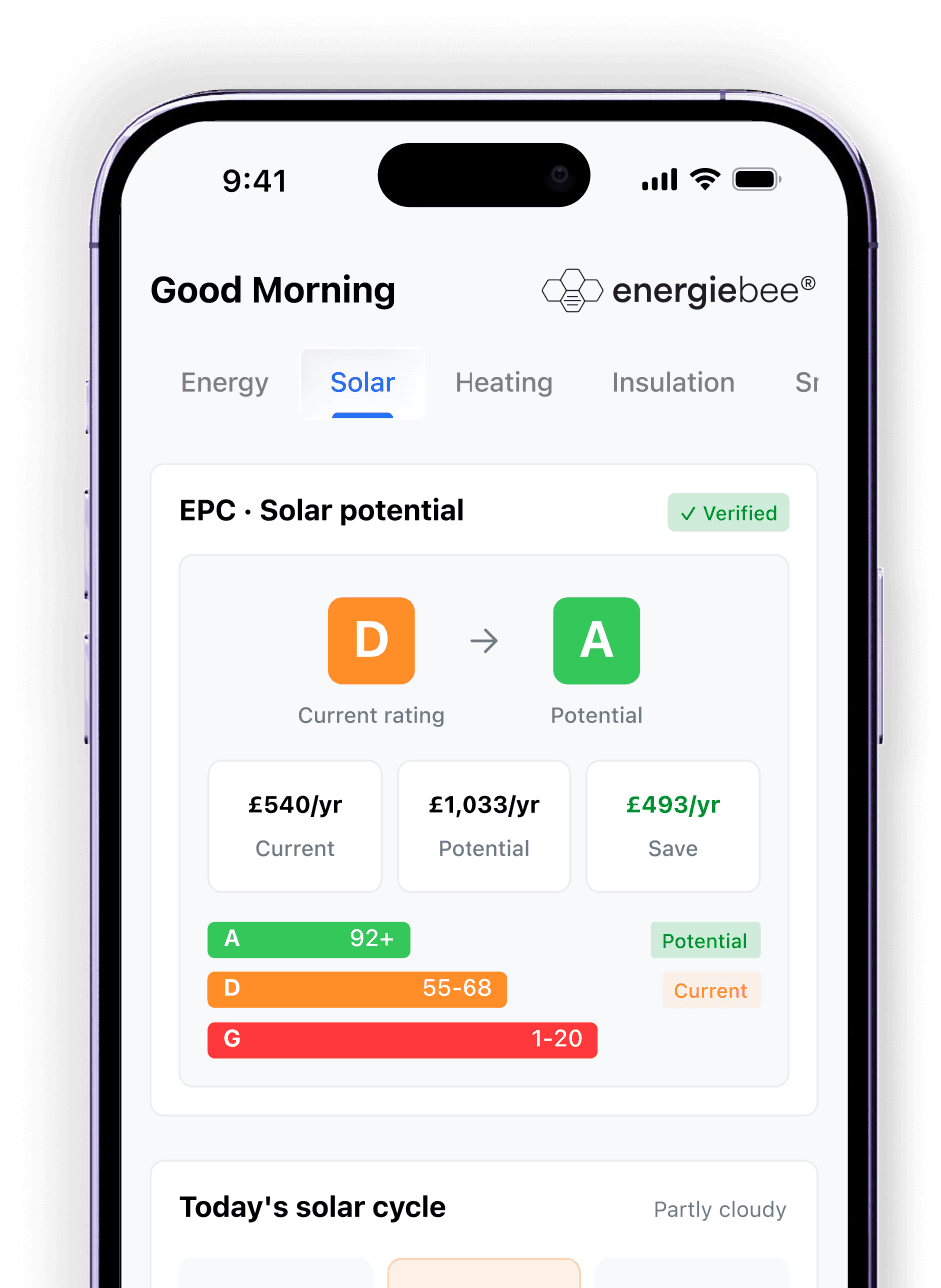
Energiebee mobile app
Take control of your bills
Track your heating, solar and household energy in one place. Discover waste, reduce unnecessary usage and make smarter energy decisions.
Reduce draughts and improve poor glazing
Check around windows, external doors, floor edges and unused chimneys. Seal unwanted gaps and consider replacing particularly poor single glazing.
Do not block trickle vents, air bricks or other designed ventilation. Draughts are unwanted, but ventilation is necessary.
Make smaller energy-saving improvements
LED bulbs, pipe insulation, a better cylinder jacket and improved hot-water controls can all reduce waste.
These measures may help improve an EPC rating when the property is already close to Band C. However, they are unlikely to close a large points gap on their own.
Consider solar after reducing energy waste
Solar panels can reduce the amount of electricity imported from the grid and may support progress towards Band C. But solar cannot fix poor insulation or uncontrolled heating, so reduce energy waste first.
See all your solar efficiency information including generation, household use and grid imports, to understand how well your system is performing and where further upgrades may help.
How much could EPC improvements cost?
EPC improvements can range from small changes costing under £100 to major building work costing several thousand pounds. The table below gives indicative government figures, but your actual cost will depend on the property, access and the amount of work required.
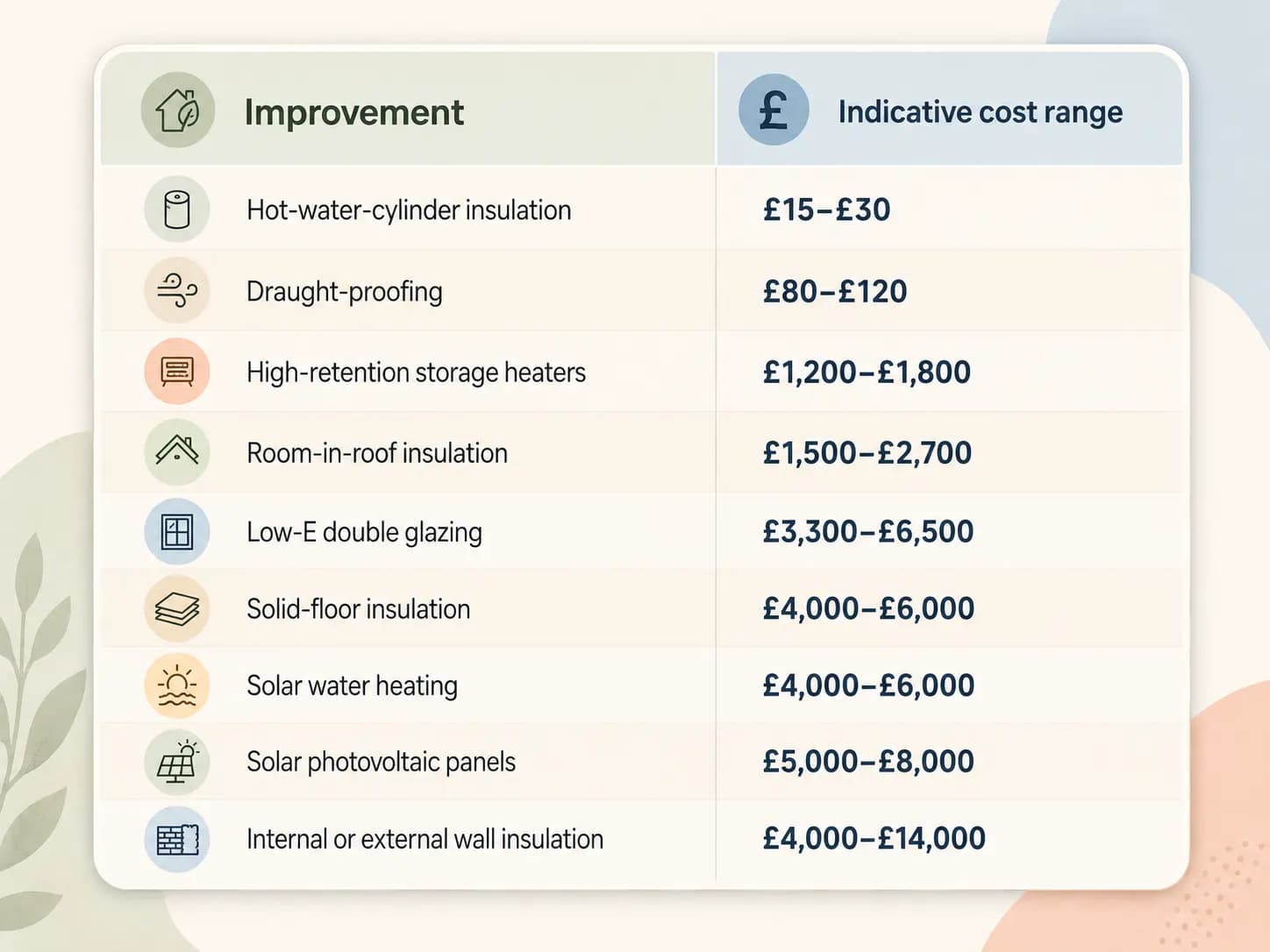
These are indicative ranges published in the government’s landlord guidance, not fixed market prices. Your EPC may recommend only one or two of these measures, so check the property’s score and speak to an assessor before budgeting for a full package.
Keep evidence of every completed improvement
Keep invoices, installation certificates, product details and commissioning documents. Photograph insulation before it is hidden behind walls, floors or ceilings.
Without suitable evidence, concealed insulation may not be included in the next EPC assessment. The expert guidance also recommends keeping clear photographic proof and records of completed work.
Looking ahead: EPCs are changing
From the second half of 2027, the Home Energy Model (HEM) is expected to replace SAP and RdSAP for new EPCs in England and Wales. It will use more detailed property data and half-hourly calculations to assess heat loss, heating performance and smart-energy technology more accurately.
EnergieBee brings your heating, solar and household energy data into one dashboard. It helps you see how everything works together for free as EPC assessments become more detailed.
Frequently Asked Questions (FAQs)
How can I improve my home’s energy efficiency to move from EPC E to C?
Check the exact score and follow the improvement order shown on your EPC. Start with missing insulation and poor heating controls, then consider glazing, heating upgrades or solar only if more points are still needed.
What affordable insulation can help raise an EPC rating from E to C?
Start with thin loft insulation, an uninsulated hot-water cylinder and exposed hot-water pipes. Government examples put cylinder insulation at £15–£30, but smaller measures may need to be combined with loft or wall insulation to reach C.
What government schemes support EPC improvements?
In England, the Warm Homes: Local Grant can fully fund insulation, smart controls, solar or a heat pump for eligible D–G homes, usually where household income is £36,000 or less. The Boiler Upgrade Scheme also offers £7,500 towards eligible heat pumps, rising to £9,000 for some off-grid homes until March 2027.
How much does it typically cost to improve an EPC rating from E to C?
It can range from hundreds to more than £10,000. Government examples include £80–£120 for draught-proofing, £1,500–£2,700 for room-in-roof insulation, £3,300–£6,500 for double glazing and £4,000–£14,000 for wall insulation.
Can EnergieBee improve my EPC rating?
EnergieBee helps you spot wasted energy, optimise heating schedules and understand how insulation, controls and solar affect your home’s performance.
By showing heating, solar and household energy use in one dashboard, it gives you the clarity to make smarter improvements and track the results; while a new EPC assessment confirms your official rating.


