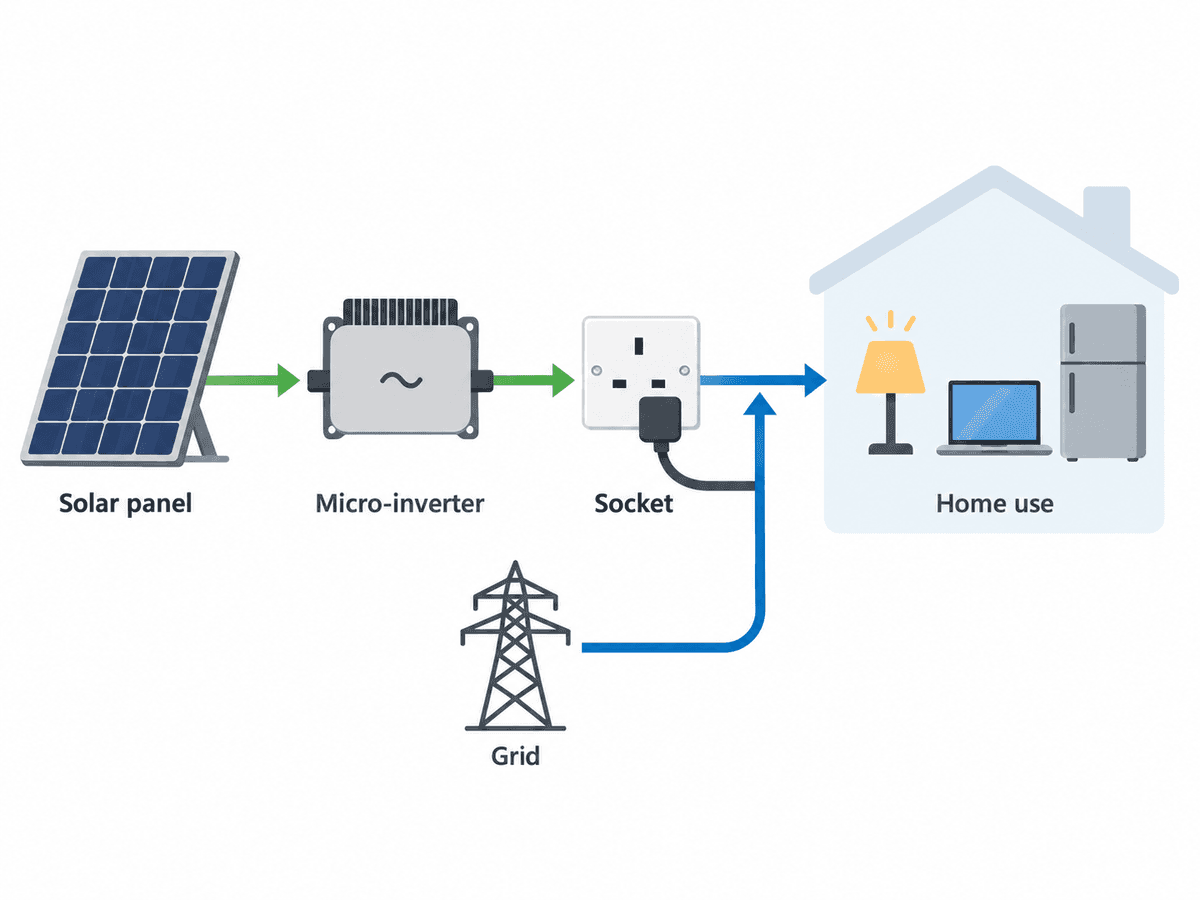
Plug-in solar panels work by turning sunlight into electricity that helps power your home through a compatible socket connection. A solar panel generates electricity, and a micro-inverter converts it into power your household appliances can use. That means less electricity drawn from the grid, without needing a full rooftop solar installation.
But can a small panel on your balcony or in your garden really make a difference to your electricity bill? If you're renting, living in a flat, or looking for a cheaper way to try solar, it's a question worth asking. This guide explains how plug-in solar panels work, what the latest UK rules allow, how much you could realistically save, and whether they're worth buying for your home.
How Do Plug-In Solar Panels Actually Work?
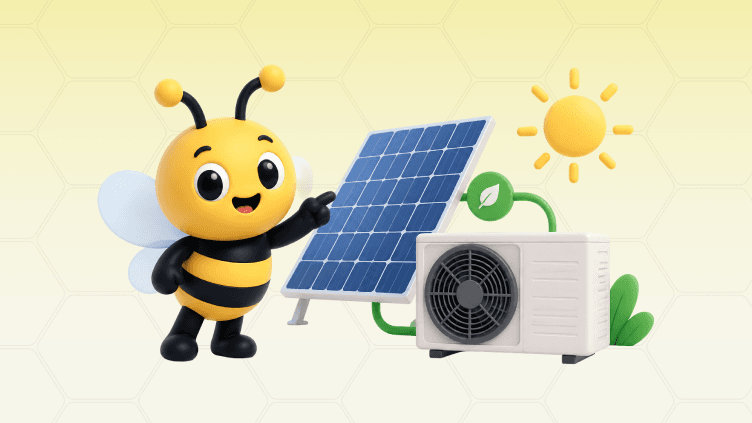
Plug-in solar panels generate electricity from sunlight and supply it to your home through a compatible socket connection.
Here's how they work:
Generate: Solar panels convert sunlight into DC electricity.
Convert: A micro-inverter changes DC into usable AC electricity.
Supply: Electricity flows into your home's electrical circuit.
Save: Your appliances use solar power, reducing electricity drawn from the grid.
For example, if your panels generate 300W and your home needs 500W, the grid supplies the remaining 200W.
A typical kit includes solar panels, a micro-inverter, cables and mounting equipment. Unlike off-grid systems, plug-in solar works alongside your existing electricity supply.
Learn more about the types of solar panels.
Are Plug-In Solar Panels Legal in the UK?
Yes, plug-in solar panels became legal in Great Britain on 27 August 2026, following new government regulations. Households can now use approved systems without professional installation.
Here are the main rules:
800W limit: The system's maximum AC output must not exceed 800W.
Approved kits: Equipment must meet the UK's official plug-in solar safety requirements.
No electrician required: Compliant kits can be self-installed, provided the electrical connection is suitable.
DNO notification: You must notify your Distribution Network Operator within 28 days of connection.
Plug-in batteries are not covered by these rules. Installation restrictions also apply to certain buildings, including combustible-clad walls and timber balconies.
Before buying, check the official UK government guidance and confirm your property is suitable.
How Much Electricity Can Plug-In Solar Panels Generate?
An 800W plug-in solar system can generate around 700–800 kWh annually in the UK, depending on location and sunlight.
UK City | Annual Generation |
Cardiff | 807 kWh |
London | 793 kWh |
Edinburgh | 704 kWh |
Manchester | 696 kWh |
These estimates assume south-facing panels tilted at 30°. Shading, direction and weather affect actual output.
How Much Money Can Plug-In Solar Panels Save?
Plug-in solar panels could save you up to £110 a year, according to the UK government. Actual savings depend on how much electricity you generate and use at home.
Here's how the kit price affects payback, assuming £110 in annual savings:
Kit Cost | Estimated Payback |
£350 | 3.2 years |
£600 | 5.5 years |
£800 | 7.3 years |
Your savings depend on self-consumption. Electricity you generate but don't use won't reduce your bill, and daily standing charges still apply.
How Can You Make the Most of Plug-In Solar Electricity?
Use more electricity while your panels are generating to maximise savings. The more solar power you use directly, the less you buy from the grid.
Cover your base load: Use solar power for everyday devices like fridges, routers and standby appliances.
Time your appliances: Run washing machines and dishwashers during sunny hours.
Avoid wasting surplus: Don't assume you'll receive payments for unused electricity exported to the grid.
An 800W system cannot fully power high-demand appliances, but it can reduce how much electricity they draw from the grid.
Where Can You Install Plug-In Solar Panels and Who Are They Best For?
Plug-in solar panels can be installed on balconies, in gardens, on walls, or on sheds and garages, provided there's enough sunlight and a safe connection.
They're particularly useful for:
Renters: A portable option that can move with you, subject to landlord permission.
Flat owners: Suitable for balconies with adequate space and safe mounting.
Homeowners: A lower-cost way to try solar without a full rooftop system.
Homes with limited roof space: Garden or wall-mounted panels may be an alternative.
Before installing, check shading, mounting safety, building restrictions and any required permissions.
What Should You Check Before Buying and Installing a Plug-In Solar Kit?
Before buying, make sure your plug-in solar kit meets UK safety requirements and suits your home.
Approved equipment: Choose a complete kit that meets the UK plug-in solar product specification.
Kit contents: Check the micro-inverter, cables, connectors, mounting equipment and warranty.
Electrical safety: Use a suitable wall socket. Never connect through extension leads or multi-plug adaptors.
Secure installation: Mount panels firmly against wind and check for shading or installation restrictions.
Before purchasing, check whether solar is right for your home and compare the kit's expected output with your electricity needs.
Plug-In Solar Panels vs Traditional Rooftop Solar Panels
Plug-in solar panels are cheaper and easier to set up, while rooftop solar systems generate more electricity and offer greater potential savings.
Feature | Plug-In Solar | Rooftop Solar |
System size | Up to 800W output | Typically 3–5kW |
Installation | Approved kit and suitable socket | Professional installation |
Cost | Lower upfront cost | Higher upfront cost |
Best for | Renters, flats, small spaces | Homes with suitable roofs |
Savings | Mainly daytime electricity use | Higher savings potential and possible export income |
If you own your home and have suitable roof space, rooftop solar may offer better long-term value. Compare solar installation costs and whether solar panels are worth it.
For independent guidance, see the Energy Saving Trust's solar panel guide.
Understand Your Home's Electricity Use With EnergieBee
Before investing in plug-in solar panels, find out how much electricity your home actually needs during daylight hours.
With EnergieBee, you can:
Track daytime usage: See when and how much electricity your home consumes.
Plan your solar setup: Compare your energy needs with the expected output of an 800W system.
Spot savings opportunities: Identify when to use appliances and track changes in grid electricity consumption.
Ready to see if plug-in solar is worth it for your home?
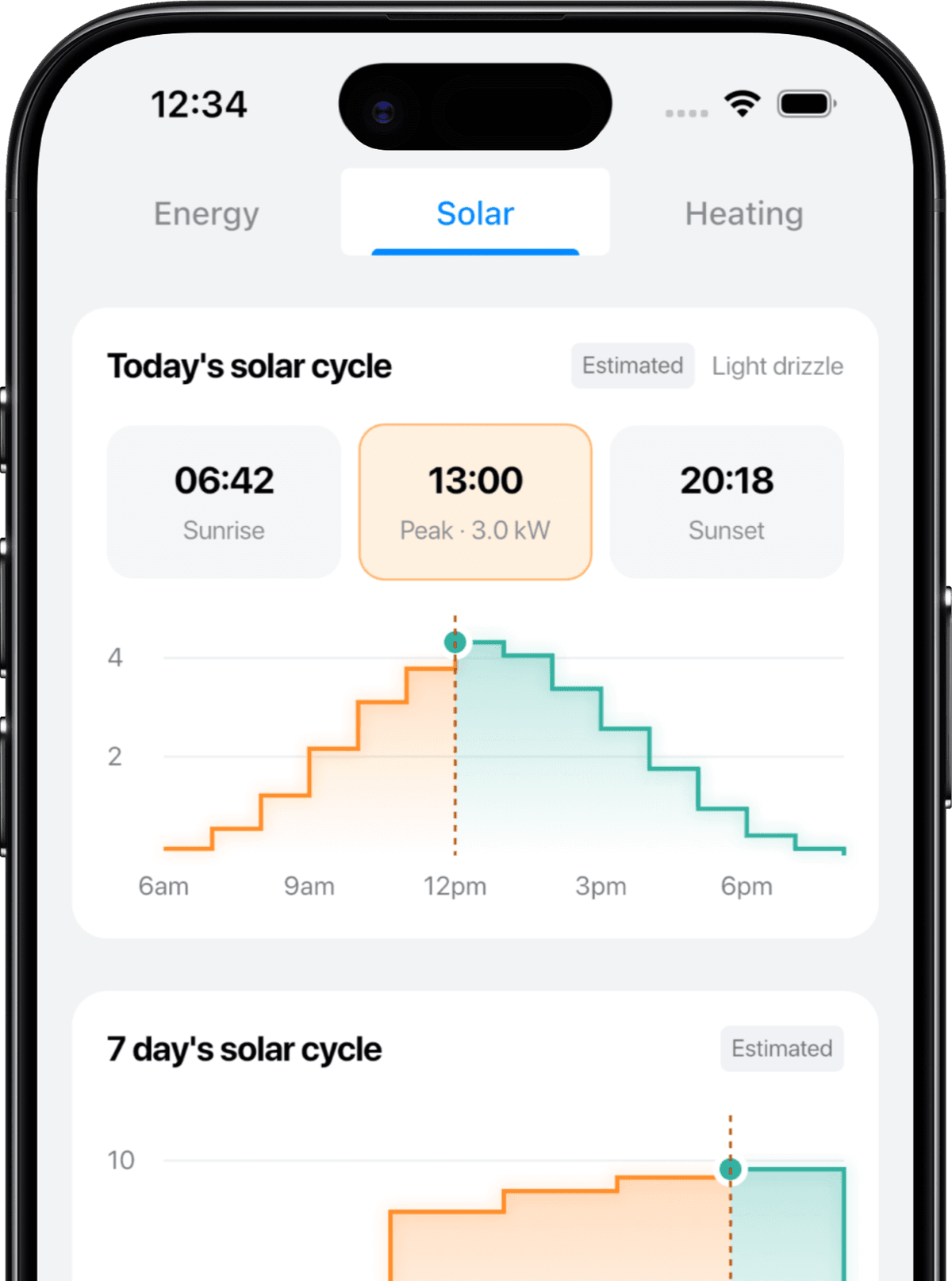
Understand Your Solar Energy Use
Track your energy habits with EnergieBee before and after solar installation.
Try EnergieBee for free and start making smarter energy decisions with your own data.
Frequently Asked Questions
Are plug-in solar panels legal in the UK?
Yes. Approved plug-in solar systems became legal in Great Britain on 27 August 2026, with a maximum AC output of 800W. Different rules may apply in Northern Ireland.
Do I need an electrician to install plug-in solar panels?
Not usually. Approved kits are designed for self-installation, provided your electrical connection is suitable. Consult a qualified electrician if you're unsure.
How much money can plug-in solar panels save per year?
According to the UK government, plug-in solar panels could save up to £110 annually. Actual savings depend on sunlight, electricity usage and your tariff.
Can I get paid for exporting unused electricity?
Most plug-in kits won't qualify automatically for export payments. The Smart Export Guarantee requires eligible equipment, certification and export metering.
Can renters use plug-in solar panels?
Yes, with the necessary permissions. Check with your landlord or building manager before installation, especially for balcony-mounted panels.
Do plug-in solar panels work on cloudy days and in winter?
Yes. They still generate electricity in cloudy weather and winter, but output is lower because sunlight is weaker and daylight hours are shorter.