
There are three main types of solar panels you’ll come across in the UK: monocrystalline, polycrystalline and thin-film.
For most UK homes, monocrystalline panels are the best starting point because they produce more electricity from limited roof space. Polycrystalline panels are now less common, while thin-film panels are mainly useful when low weight or flexibility matters.
If you're comparing solar quotes in 2026, you'll also see terms such as TOPCon, PERC, HJT and bifacial. These are newer solar-cell or panel technologies rather than completely separate categories, and we'll explain those too.
This guide will help you find the best fit for your home.
3 Types of Solar Panel: Which Is Best for Your Home?
There are three main types of PV panels available to UK homeowners.
Monocrystalline solar panels
Polycrystalline solar panels
Thin-film solar panels
PV stands for photovoltaic, a term you will often see when researching solar panels.
It may sound technical, but it simply refers to the solar cells inside the panel. In everyday use, PV cells and solar cells mean the same thing.
Monocrystalline solar panels
Monocrystalline panels are the most common choice for UK homes, and for good reason.
They are made from single silicon crystals, which allows electricity to move through the cells efficiently. Modern models can reach efficiency ratings of around 23%, producing more power from a smaller roof area than many polycrystalline panels.
That makes them especially useful for homes with limited roof space. They also perform well in lower-light conditions, which is helpful in the UK’s often cloudy weather.
Polycrystalline solar panels
Polycrystalline panels are made by melting and combining many small silicon crystals into each cell.
This manufacturing process is simpler and cheaper. However, the panels are usually less efficient and need more roof space to produce the same amount of electricity.
You can often recognise them by their blue-tinted appearance. Their efficiency typically sits between 15% and 18%, which is lower than most modern monocrystalline panels.
Thin-film solar panels
Instead of using rigid silicon crystals, Thin-film solar panels use thin layers of materials such as amorphous silicon, cadmium telluride or CIGS.
Their biggest advantage is flexibility. They are lightweight and can fit curved surfaces or structures that cannot support heavier panels. That is why you are more likely to see them on motorhomes, caravans, narrowboats and other unusual installations.
For most UK homes, thin-film panels are not the first choice. Most thin-film panels sit at around 8% to 15%. But they can be a practical option when weight, flexibility or roof shape makes standard panels difficult to install.
Comparison of Solar Panel Costs, Efficiency and Lifespan in the UK
The cheapest panel does not always lead to the cheapest solar system.
A less efficient panel may cost less upfront, but you could need more panels and more roof space to generate the same amount of electricity.
According to the Energy Saving Trust, a typical 4.5kWp home solar system costs around £7,600. Your final price will depend on the system size, roof condition, scaffolding, access and installation work.
Solar panel type | Indicative cost | Typical efficiency | Expected lifespan |
Monocrystalline | £250–450 per m² | 18%–23% | 25–40 years |
Polycrystalline | £150–200 per m² | 15%–18% | 25–30 years |
Thin-film | £50–110 per m² | 8%–15% | 10–20 years |
These are indicative figures rather than fixed prices. Panel brand, wattage, installation difficulty and warranty can all affect what you pay.
Which Is the Best Type of Solar Panel for a UK Home?
Every home has a different roof, budget and energy need, so the best solar panel is not the same for everyone. This quick table shows which type fits each situation best.
Solar panel type | Choose it when | Keep in mind |
Monocrystalline | You want the best output from limited roof space. | Best all-round option for most UK homes, but usually costs more. |
Polycrystalline | You have more roof space and find a cheaper system. | Lower efficiency and less common in new installations. |
Thin-film | You need lightweight or flexible panels for an unusual surface. | Needs more space and is rarely suitable for a standard home roof. |
PERC, TOPCon, HJT and Bifacial Solar Panels Explained
You may also come across terms like PERC, TOPCon, HJT and bifacial when comparing solar panels. These are not separate main panel types like monocrystalline or thin-film. Instead, they describe different cell technologies and panel designs that can affect efficiency and energy production.
PERC Solar Panels
PERC stands for Passivated Emitter and Rear Cell. It adds a passivation layer to the back of the solar cell, helping it capture more sunlight and improve efficiency.
PERC has been widely used in modern solar panels and is still a common technology, although newer designs are becoming more popular.
TOPCon Solar Panels
TOPCon stands for Tunnel Oxide Passivated Contact. It improves the way electrical charges are collected inside the solar cell, helping reduce energy losses.
TOPCon panels can offer higher efficiency and better performance in some conditions than conventional PERC panels. They are now widely available in the residential market.
HJT Solar Panels
HJT, or Heterojunction Technology, combines different semiconductor materials within the same solar cell. This helps reduce energy losses and can deliver high efficiency.
HJT panels also tend to perform well at higher temperatures, making them an option for homeowners looking for high-performance panels.
Bifacial Solar Panels
Bifacial panels can generate electricity from both sides of the panel. The front captures direct sunlight, while the rear can capture reflected light.
They can be useful where there is enough light reaching the back of the panels. Their real-world benefit depends heavily on the installation, mounting height and surface underneath.
How Do Solar Panels Work on a House: Things You Need to Know
You do not need to understand every engineering detail behind solar panels. The basic process is enough to see how electricity moves from your roof into your home, battery or the grid.
Different types of solar panels may look and perform differently, but fortunately they all generate electricity in the same way.
Here’s the 6 simple steps explained on how electricity is generated:
Step - 1: Solar panels are made up of silicon cells with two different layers, called the N-type and P-type layers.
Step - 2: N-type layer has extra electrons, while the P-type has space for those electrons to move into.
Step - 3: When sunlight hits the panel, electrons move from N-type and start to flow in the P-type layer.
Step - 4: That movement of electrons creates Direct Current, or DC electricity. So at this point, your panels are already producing power.
Step - 5: Your home cannot use DC electricity as it is, so the inverter steps in. It converts DC into Alternating Current, or AC.
Step - 6: That AC electricity is what powers your lights, appliances and other devices around the home.
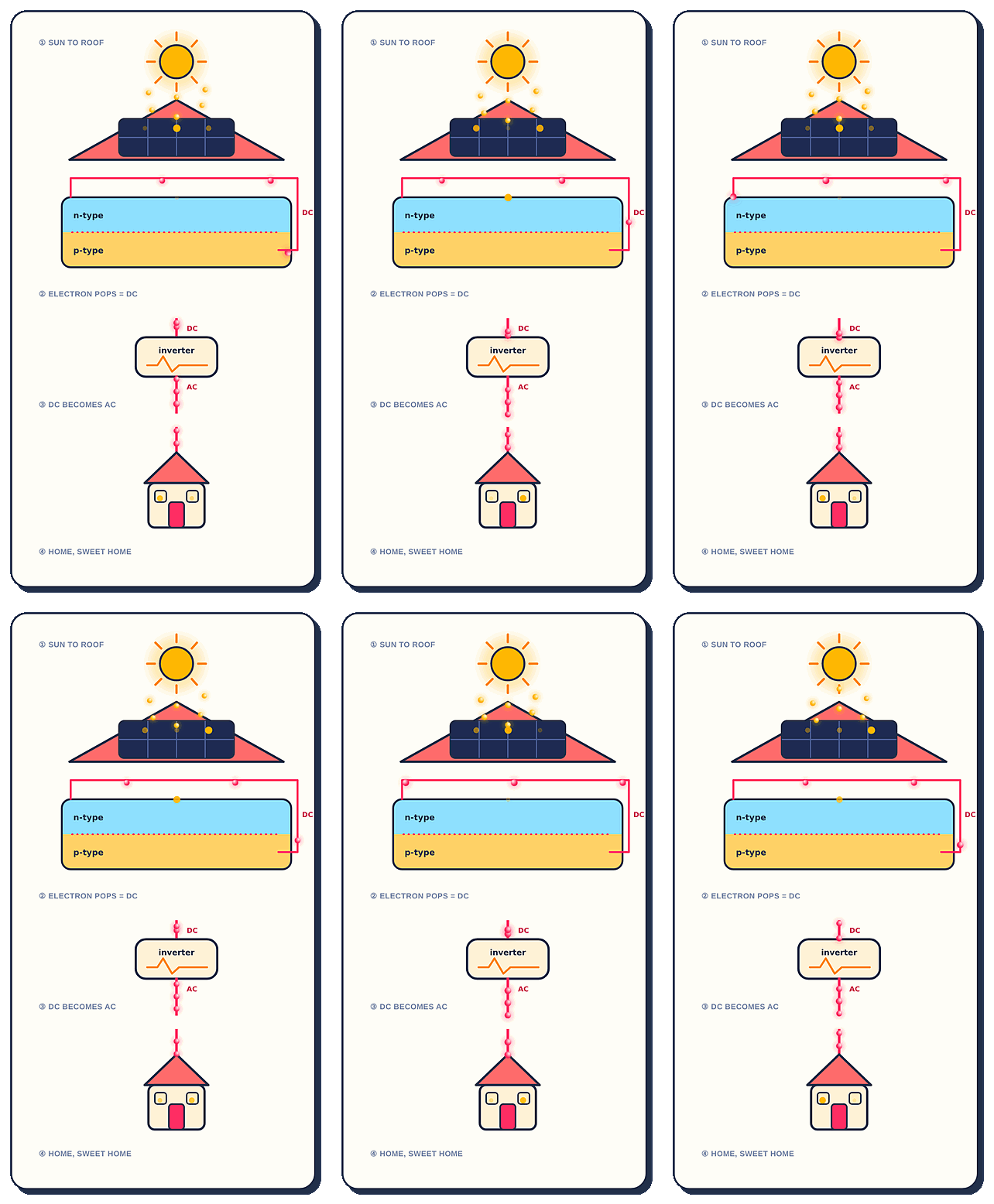
As soon as your solar panels start generating electricity, your home gets first priority. If your panels produce more than your home needs, the extra energy moves into your battery. Once the battery is full, anything left over is sent back to the grid.
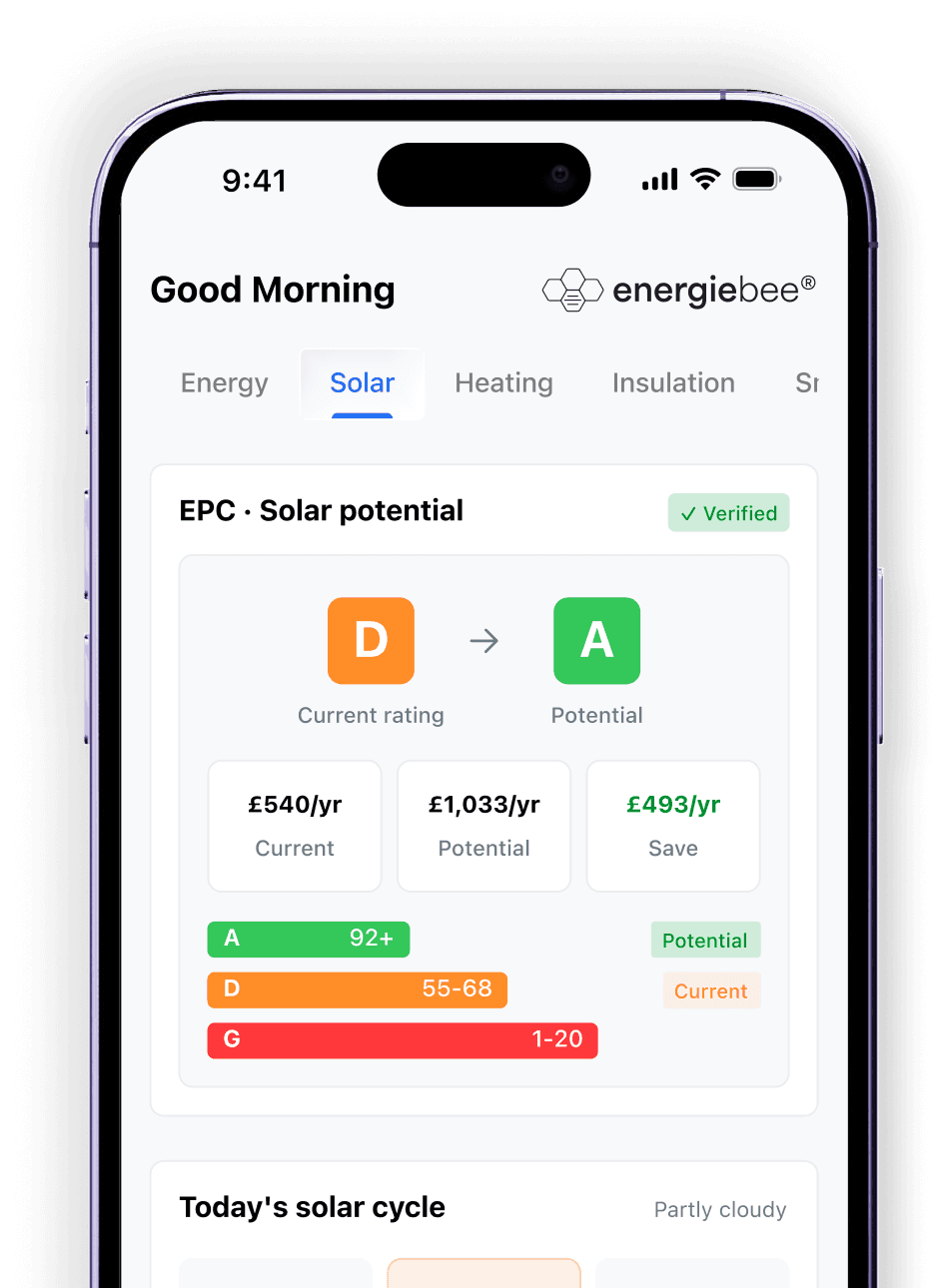
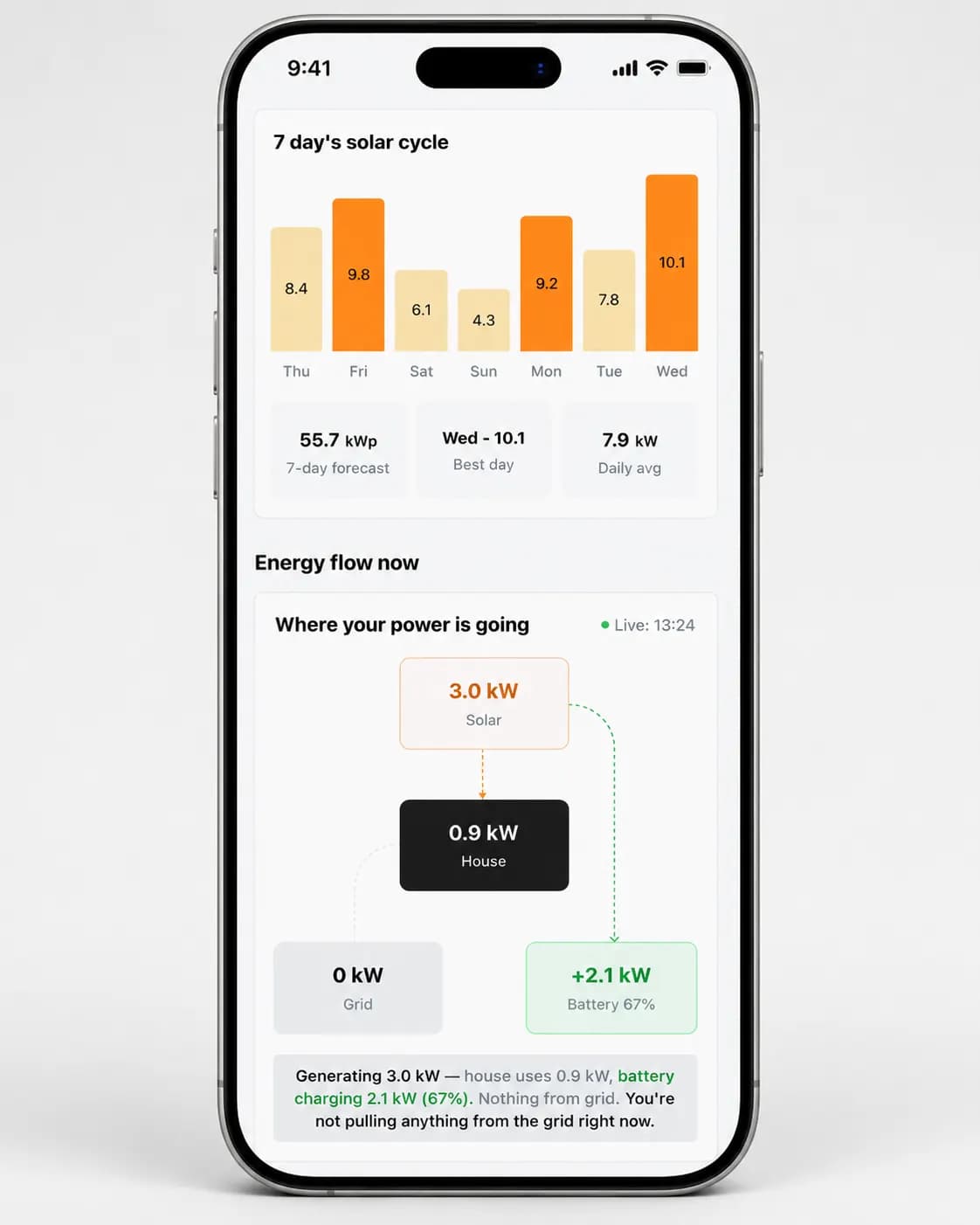
See where your solar energy goes
Track how much solar energy your home produces and see how much you use, save or send to the grid — all in one place with EnergieBee.
What About Solar Tiles and Plug-In Solar Panels?
Solar panels are not your only option. Solar tiles and plug-in solar panels can make sense in certain homes, but they work quite differently from a standard rooftop system.
Solar Tiles
Solar tiles are designed to generate electricity while blending into the roof. They can be a good option if appearance is a priority, but they tend to cost more than conventional solar panels.
Plug-In Solar Panels
Plug-in solar panels are a smaller-scale option that connects to a household socket. They can suit homes where a full rooftop system is difficult, but their generation capacity is much lower than a typical rooftop installation.
Don’t Hire a Solar Installer Before Asking These Questions
A solar quote can look complete until scaffolding, bird protection or paperwork appears as an extra cost. Before you sign, ask these questions and get the answers written into your quote.
Are you MCS certified for solar PV, and will I receive an MCS certificate?
Why that matters: Without a Microgeneration Certification Scheme (MCS) certificate, UK energy suppliers will refuse to pay you for the excess electricity you export back to the grid.
Will this system qualify for the Smart Export Guarantee?
Why that matters: The SEG allows you to sell your leftover power to suppliers. You need an MCS certificate and a half-hourly smart meter to apply.
Does this quote correctly apply 0% VAT?
Why that matters: The UK has a 0% VAT rate on home solar and battery installations. Ensure they have not accidentally added standard 20% VAT to your bill.
Is bird or pigeon proofing included?
Why that matters: Birds can nest underneath rooftop panels, so ask whether protective mesh is included or available as an optional extra. Check what material will be used, how it will be attached and whether the work affects your panel or installation warranty.
How to Check If Your Solar Panels Are Performing Properly?
Your solar panels may look perfectly fine from the ground, but the real story is in the numbers. A cloudy day will naturally reduce output, but a sudden drop that lasts for days may point to a problem.
Here is what to check:
Compare actual output with the installer’s estimate: Use the expected annual generation as your starting point.
Check your inverter or monitoring app: Look at daily, monthly and yearly production rather than judging performance from one day.
Watch for sudden changes: A sharp drop may be caused by new shade, dirt, bird droppings or a system fault.
Check for inverter warnings: Error messages or warning lights can signal that something is not working properly.
Review where your solar energy goes: See how much powers your home, charges the battery or gets exported to the grid.
Contact your installer if output stays low: Do not try to repair panels, wiring or the inverter yourself.
Tracking your solar panel performance can sound technical. But with a simple dashboard that shows everything clearly, it becomes much easier to understand.
With the EnergieBee app, you can track solar energy performance for free.
Bottom line: Which Type of Solar Panel Should You Choose?
By this point, one thing should be clear: there is no single solar panel that suits every home.
For most UK homeowners, monocrystalline panels are the best place to start. They use roof space well, offer strong efficiency and usually provide better long-term value.
Polycrystalline panels may still work if you have more space and want to keep the upfront cost lower. Thin-film panels are better left for unusual roofs, lightweight structures or curved surfaces.
The final choice should not come down to efficiency alone. Look at your roof, energy use, budget, installer, warranty and expected output. The best system is the one that fits your home and keeps delivering value for years.