
Solar panels in the UK typically cost around £6,100 for an average 3.5kWp home system. Your final price may be higher or lower depending on the system size, roof access, panel choice and any extra installation work. The Energy Saving Trust’s solar panel guide provides the current cost estimate.
Cost alone does not show whether a system offers good value. Your roof, electricity use, solar generation, export tariff and how much power you use at home will affect your savings and payback time. Start by checking whether solar is right for your home.
How Much Do Solar Panels Cost in the UK?
A standard domestic solar installation often costs around £5,500 to £8,000. Official 2025/26 data shows a median installed cost of about £1,595 per kWp for systems up to 4kWp, putting a typical 4kWp system at roughly £6,400. See the latest UK solar PV cost data.
Cost per kWp helps you compare quotes of different sizes:
Total quote ÷ system size = cost per kWp
Example: £7,000 ÷ 4kWp = £1,750 per kWp
A higher price is not always unreasonable. Roof access, scaffolding, panel quality, inverter choice, electrical upgrades and battery storage can all increase the final cost. Compare the system size, equipment, warranties and included work, not only the total price.
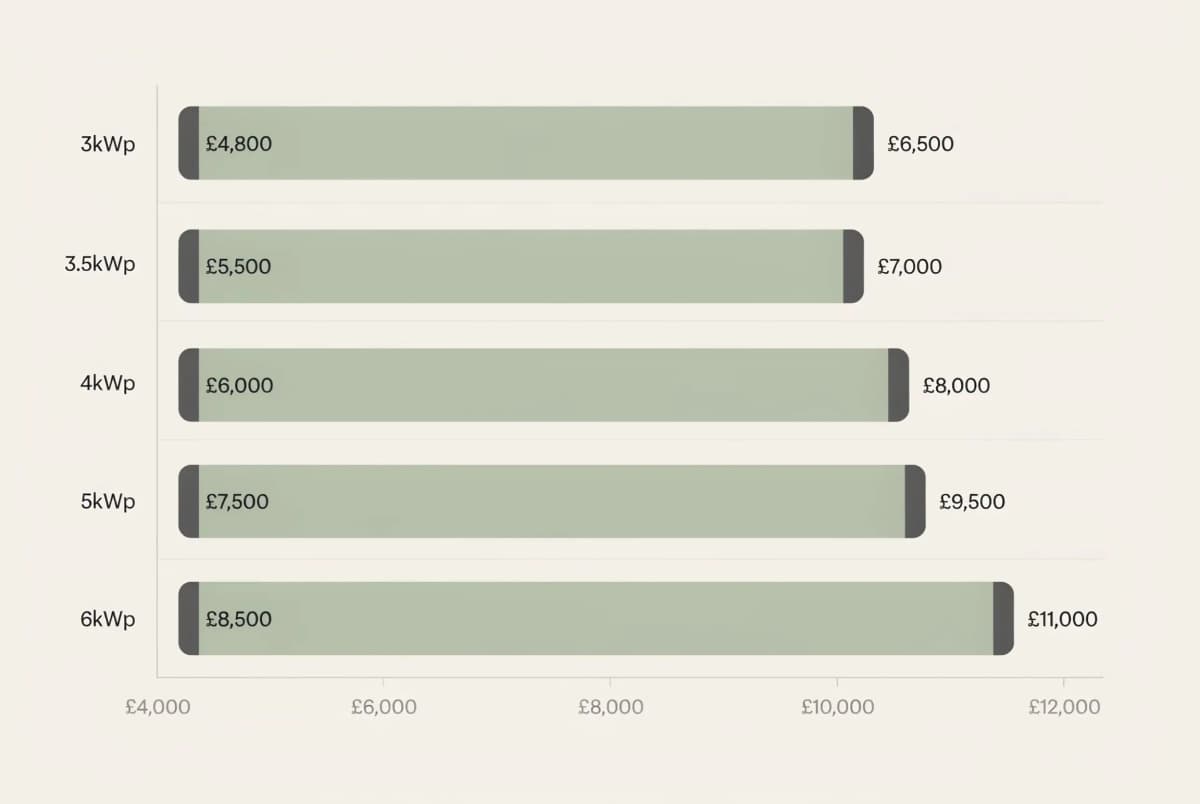
Solar Panel Cost by System Size
Larger solar systems usually cost more, but the right size depends on your annual electricity use and available roof space, not only the number of bedrooms. Homes with an EV, heat pump or high daytime use may benefit from a larger system.
System size | Typical cost | Illustrative annual generation |
3kWp | £4,800–£6,500 | Around 2,550kWh |
3.5kWp | £5,500–£7,000 | Around 2,975kWh |
4kWp | £6,000–£8,000 | Around 3,400kWh |
5kWp | £7,500–£9,500 | Around 4,250kWh |
6kWp | £8,500–£11,000 | Around 5,100kWh |
These figures are planning estimates rather than guaranteed quotes. Actual generation depends on your location, roof direction, pitch and shading. East- or west-facing panels can still work, but may generate less than an unshaded south-facing system.
What’s Included in a Solar Panel Installation Cost?
A complete quote should cover more than the panels. Check that it includes the inverter, mounting equipment, scaffolding, electrical work, testing and certification.
Part of the quote | Illustrative cost |
Solar panels | £2,300 |
Inverter | £900 |
Mounting equipment | £600 |
Labour and electrical work | £1,500 |
Scaffolding and roof access | £900 |
Design, certification and administration | £800 |
Example total | £7,000 |
Before accepting a quote, confirm that VAT, MCS certification, DNO work, warranties and system monitoring are included. Ask separately about possible extras such as roof repairs, bird protection, long cable routes or consumer-unit upgrades.
The Renewable Energy Consumer Code recommends comparing at least three quotes.
What Makes Solar Panels More Expensive?
Solar panel prices rise when the installation is harder or needs extra equipment. The main cost factors are:
Complex, flat or slate roofs
Difficult access or extra scaffolding
Shading that needs optimisers or microinverters
Premium panels, inverters or longer warranties
Electrical upgrades or roof repairs
Long cable routes or work across several roof sections
Higher local labour costs
This is why two homes with the same system size can receive very different quotes.
How Much Could Solar Panels Save Me?
Solar panels save money in two ways: by replacing electricity bought from the grid and by earning export payments through the Smart Export Guarantee. Ofgem confirms that suppliers set their own SEG rates and terms, so export income varies. Learn how the Smart Export Guarantee works.
Using more solar electricity at home can improve the return because each unit replaces electricity bought at a higher price.
Example: 4kWp Solar System
This worked example uses:
£7,000 installation cost
3,700kWh annual generation, based on an Energy Saving Trust 4kW case study
26.11p/kWh electricity price, based on Ofgem’s July–September 2026 average rate
40% used at home
12p/kWh example export rate
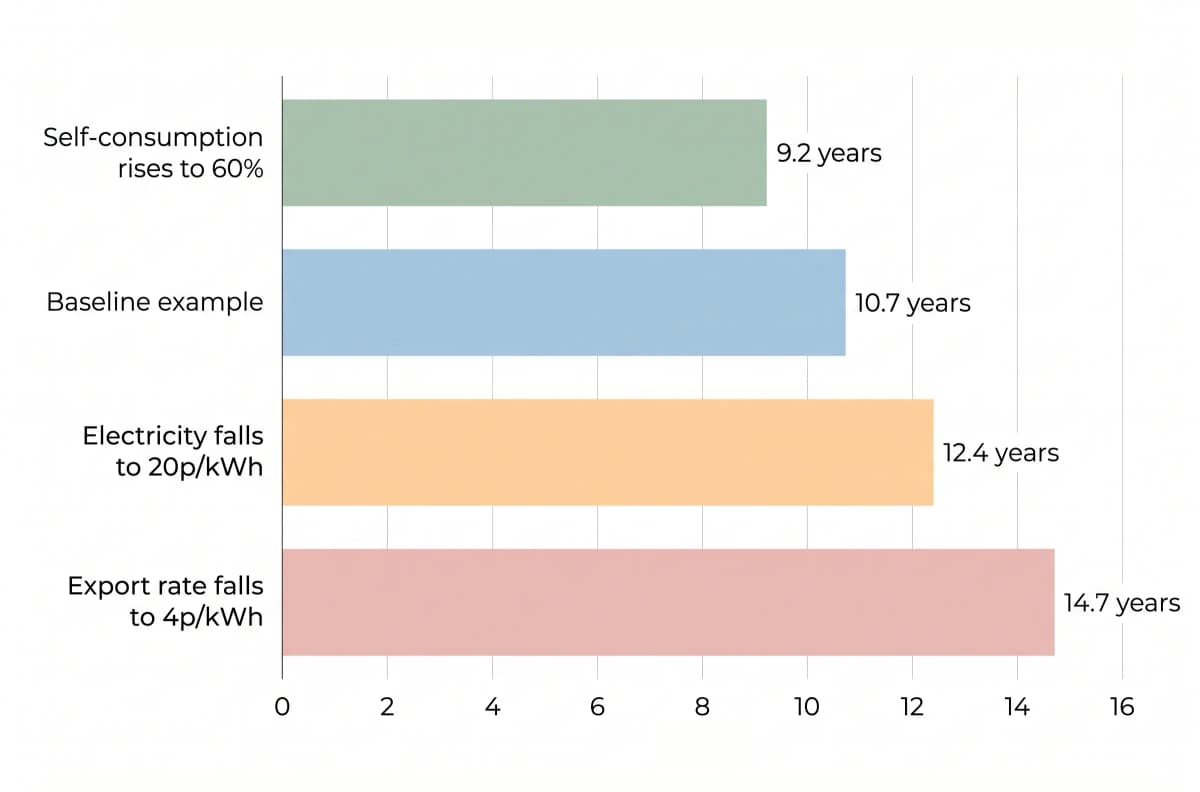
This gives around £653 a year in combined bill savings and export income, with a simple payback of about 10.7 years.
Scenario | Estimated yearly value | Simple payback |
Baseline example | £653 | 10.7 years |
Electricity falls to 20p/kWh | £562 | 12.4 years |
Self-consumption rises to 60% | £757 | 9.2 years |
Export rate falls to 4p/kWh | £475 | 14.7 years |
These are illustrative calculations, not guaranteed returns. Roof conditions, system performance, tariffs, maintenance and finance costs will change the result.
See Your Real Solar Performance
The EnergieBee app can help you compare solar generation with household electricity use after installation.

How Much Do Solar Batteries Cost?
A home solar battery can cost from £1,500 to £10,000, depending on its capacity and features. A typical 5kWh battery costs around £4,600. Installing it at the same time as solar panels may reduce labour and setup costs. See the Energy Saving Trust’s battery storage guidance.
A battery is more likely to be worthwhile if you:
Generate more solar electricity than you can use during the day
Use most of your electricity in the evening
Have a time-of-use tariff
Want backup power or better control of grid use
Plan to stay in the home long enough to recover the extra cost
It may be less worthwhile if you already use most of your solar power as it is generated or receive a strong export rate. A battery can increase self-consumption, but it does not always shorten payback because its purchase cost must also be recovered.
Solar Grants, VAT, SEG and Finance
Several options can reduce the upfront cost or help recover part of your investment.
Option | What to know |
0% VAT | Qualifying installed solar panels and batteries are zero-rated until 31 March 2027. |
Warm Homes: Local Grant | Eligible lower-income households in England may receive council-funded improvements, including solar panels. |
Local schemes | Council and group-buying offers vary by area. |
Smart Export Guarantee | Pays you for eligible electricity exported to the grid. |
Finance | Compare the APR, fees and total repayment, not only the monthly cost. |
Check the official VAT guidance for energy-saving materials and Warm Homes: Local Grant eligibility before budgeting. SEG rates and terms vary between suppliers.
Are Solar Panels Worth the Cost for My Home?
Solar panels are more likely to offer good value if your roof has enough unshaded space, your expected generation is realistic and you can use a useful share of the electricity at home. Your annual electricity use, export tariff and likely payback period also matter.
Before accepting a quote, check:
System size and expected annual generation
Total price and cost per kWp
Roof direction, pitch and shading
Equipment, warranties and included work
Estimated self-consumption and export income
Simple payback period
Whether the assumptions match your household use
Compare several quotes using the same system size and assumptions. You can also check whether solar is right for your home before committing.
Understand Your Solar Energy With EnergieBee
Your installer can estimate how much electricity your solar system may generate, but real performance depends on weather, household use and when you use power.
The EnergieBee app helps you see your actual solar generation, household electricity use, grid imports and battery activity in one place. This makes it easier to understand how much of your solar energy you are using yourself and how your system is performing over time.
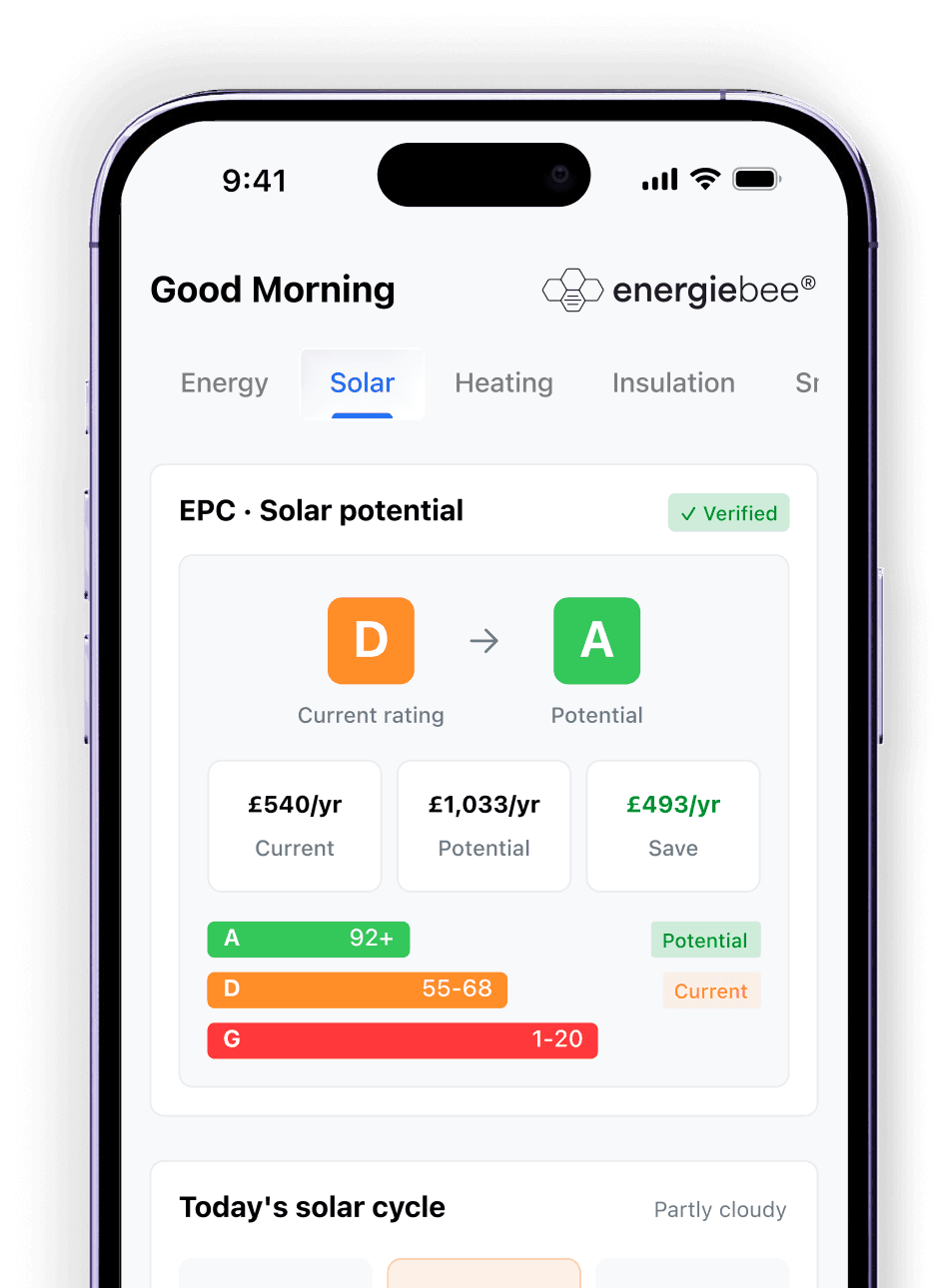
See where your solar energy really goes
EnergieBee helps you understand how much energy you generate, use, store and take from the grid.
Frequently Asked Questions
How Long Do Solar Panels Last?
Solar panels typically last 25 years or more, although their output gradually reduces over time. Inverters may need replacing sooner, often within 10–15 years. See the Energy Saving Trust’s solar maintenance guidance.
Do Solar Panels Need Maintenance?
Usually very little. Rain helps keep tilted panels clean, but occasional cleaning and checks may be useful where dirt, leaves or shading build up. Keep warranties and maintenance records after installation.
Do I Need Planning Permission for Solar Panels?
In England, most domestic rooftop solar installations are covered by permitted development rights, provided they meet the required limits and conditions. Listed buildings, conservation areas and some unusual installations may need additional checks, so review the current Planning Portal solar guidance.
What Happens If I Move House After Installing Solar Panels?
If you sell, make sure your solicitor knows about the solar system and provide warranties, installation certificates and details of any finance or ownership agreement. The sale contract should make clear which fixtures and fittings are included with the property.