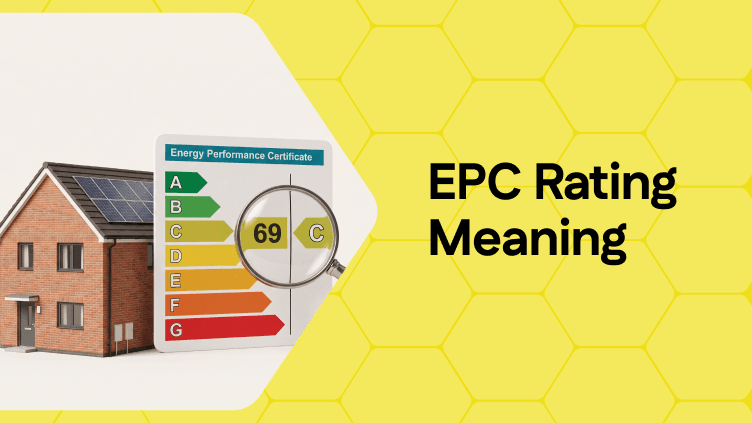
An EPC rating shows how energy efficient your home is, using a score that places it in a band from A to G. A is the most efficient, while G shows the most room for improvement. The rating looks at the property itself, including insulation, heating, hot water, windows and other fixed energy features, rather than how you personally use energy day to day.
Your certificate also shows a current rating and a potential rating, which helps you see where the home sits now and how far suitable improvements could move it. That makes the EPC more useful than a simple letter grade, especially when you are comparing homes or planning upgrades.
This guide mainly covers domestic EPCs in England and Wales. Assessment methods and requirements can differ in Scotland and Northern Ireland.
What Does an EPC Rating Mean?
Think of your EPC rating as a quick health check for your home’s energy efficiency. It looks at things built into the property, such as insulation, heating, hot water, windows and fixed energy systems, then turns all of that into one simple score.
The important bit is that it rates your home, not your lifestyle. Keeping the heating on all evening will affect your real energy use, but it does not directly change the EPC rating. That is why two households living in similar homes can have the same EPC band but very different energy bills.
On the certificate, you will see a letter from A to G alongside a numerical score. The letter gives you the quick answer. The number tells you where you sit inside that band, which becomes useful when you are only a point or two away from the next one.
EPC Ratings A to G Explained
The EPC rating scale runs from A to G. A higher score moves your home towards A, while a lower score moves it towards G. The number matters just as much as the letter because it shows exactly where your property sits within its EPC band.
EPC band | Score | Simple meaning |
A | 92+ | Highest efficiency band |
B | 81–91 | Very energy efficient |
C | 69–80 | Good energy efficiency |
D | 55–68 | Mid-range efficiency |
E | 39–54 | Lower efficiency |
F | 21–38 | Poor efficiency |
G | 1–20 | Lowest efficiency band |
One point can make a difference. A home scoring 68 is still Band D, but at 69 it moves into Band C. So when you read an EPC, look beyond the big letter and check the score beside it too.
See How Your Home Uses Energy Every Day
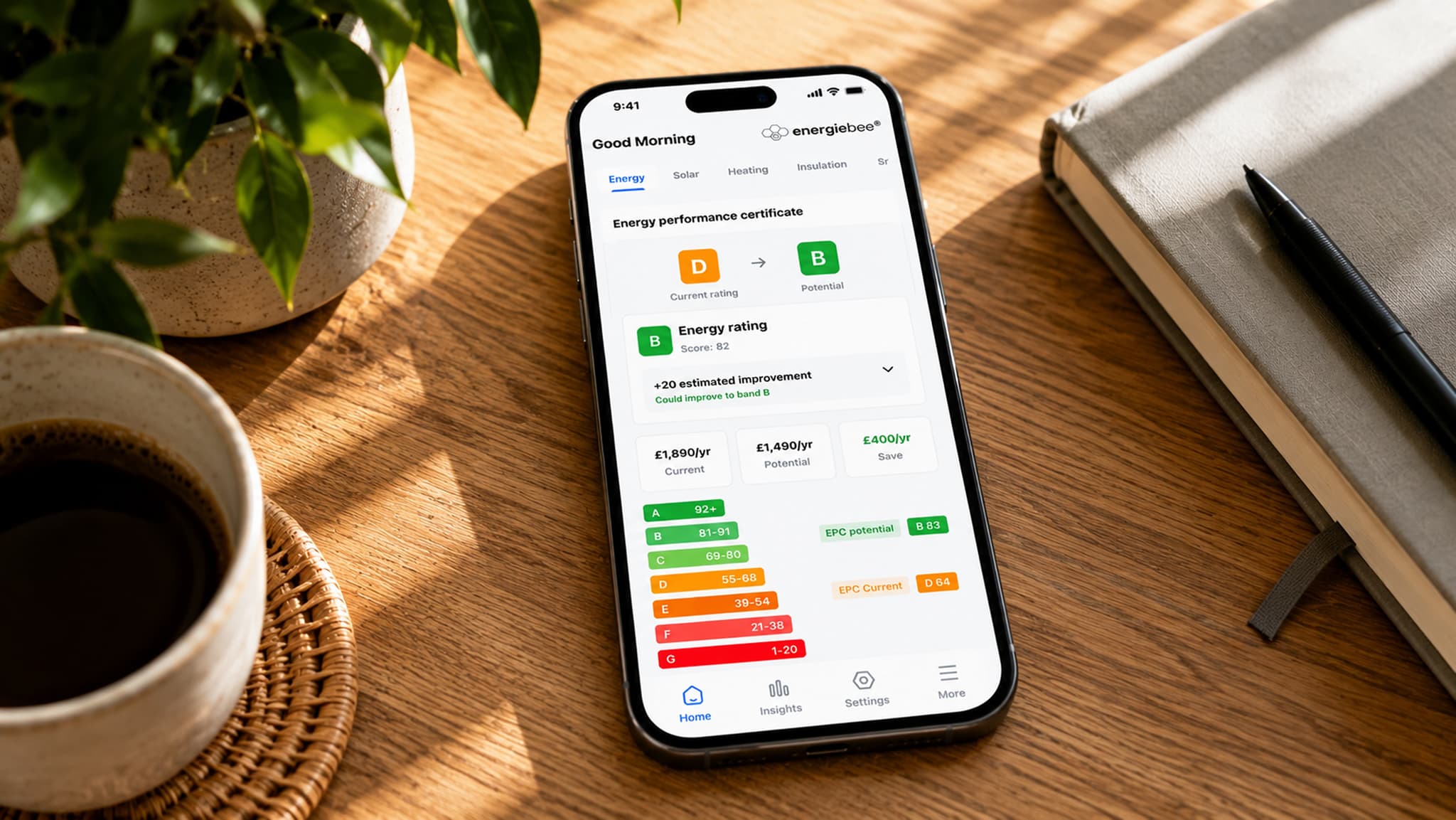
An EPC tells you how energy efficient your home is based on its fixed features. But it does not show what is happening day to day. The EnergieBee app helps you see your electricity, heating and solar use in one place, making it easier to spot changes and understand your home’s energy patterns.
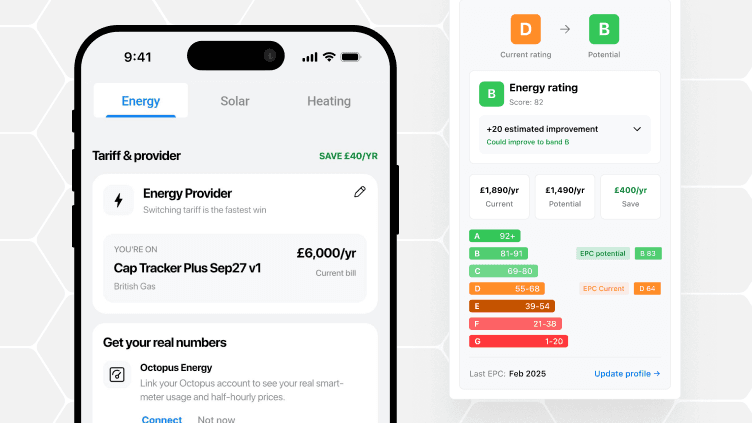
EPC Rating A and B
A and B sit at the top of the scale. Homes here score 81 or above and perform strongly under the EPC assessment.
EPC Rating C Meaning
An EPC rating C covers scores from 69 to 80. It sits just above the middle of the rating scale and is a common point of comparison for UK homeowners.
EPC Rating D Meaning
An EPC rating D runs from 55 to 68. The top end is worth noticing, as a property scoring 68 is only one point away from Band C.
EPC Rating E, F and G
These are the lower EPC bands, covering scores from 1 to 54. A certificate in this range will usually give you recommendations showing where the property could improve.
Want a broader view of your home’s energy? Explore EnergieBee Energy to see how your electricity, heating and solar use can be tracked in one place.
What Is a Good EPC Rating?
For most homeowners, EPC rating C or above is a useful benchmark. It generally suggests the home is performing reasonably well, although there may still be room to improve insulation, heating or other fixed energy features.
For context, ONS data covering EPC records from the ten years to March 2025 shows a median score of 69 in England, which is Band C, and 68 in Wales, which is Band D.
That one-point gap is a good example of why the number matters. 68 is still D, while 69 moves into C, even though the two homes may be very similar in overall efficiency.
So, when judging whether your EPC rating is good, look at both the band and the score, then check the recommendations on the certificate to see how much room there is to improve.
Current EPC Rating vs Potential Rating
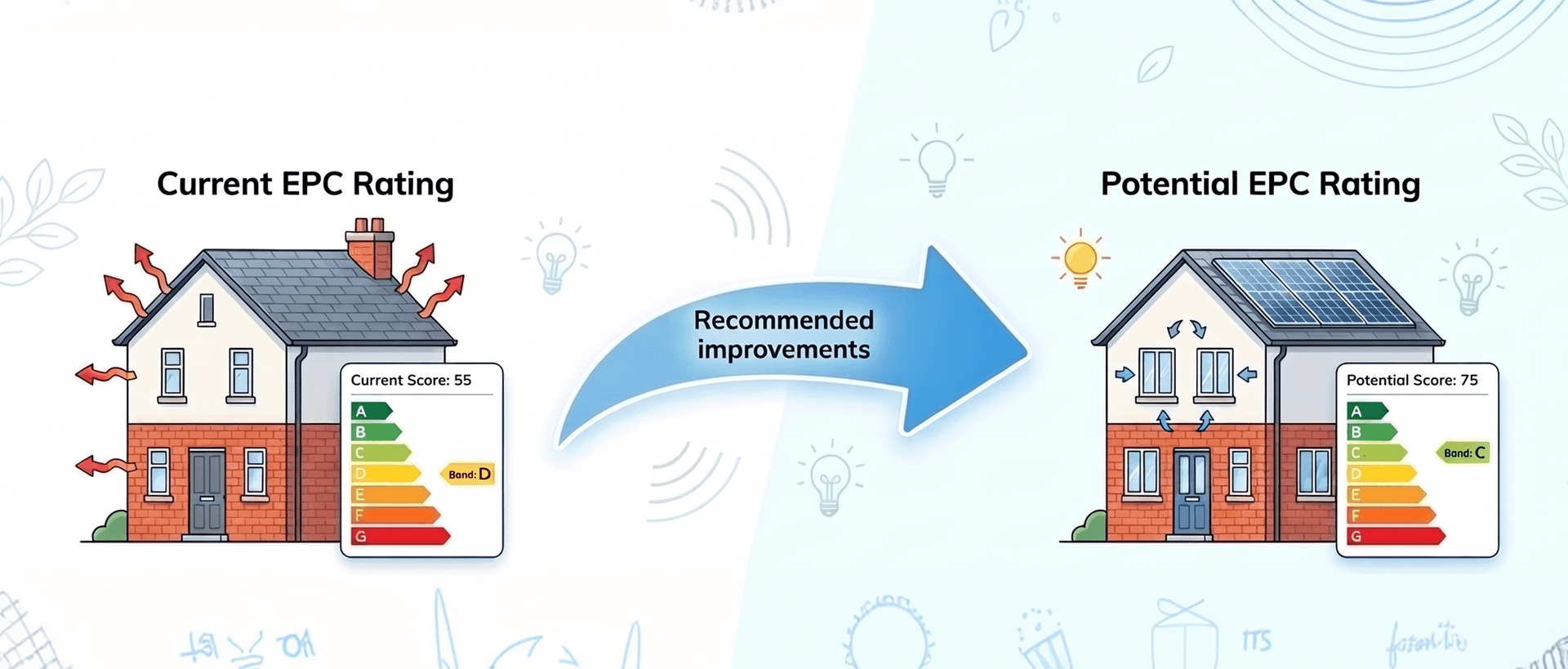
Your EPC shows two scores because they tell you two different things: where your home is now and where it could get to after suitable improvements.
Rating | What it means |
Current rating | Your home’s energy-efficiency score based on its existing features |
Potential rating | An estimate of the score it could reach after the recommended improvements |
The potential rating is useful for planning, but it is not a promise. The final result can vary depending on the work completed, the products installed and the evidence available when the home is assessed again. (GOV.UK)
Think of it as a guide to what may be possible, rather than a guaranteed finishing score.
How Is an EPC Rating Calculated?
An EPC rating looks at the parts of your home that affect energy efficiency. It focuses on the property itself, not your personal energy habits, so homes with similar EPC scores can still have very different bills.
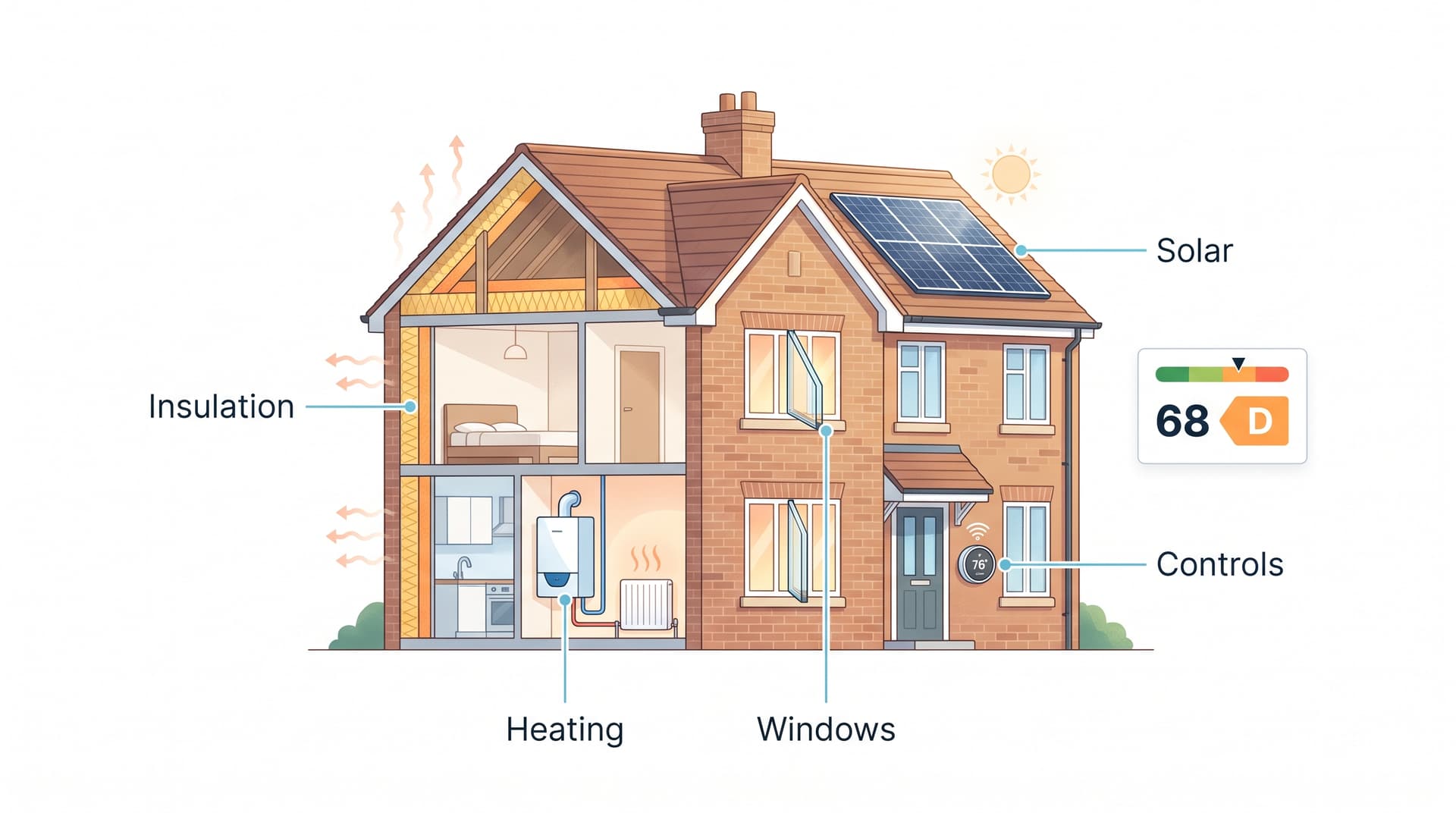
How the calculation works
The model estimates the home’s annual energy costs using standard fuel-price assumptions. That cost is adjusted for the size of the property to create an Energy Cost Factor (ECF):
ECF = 0.42 × modelled annual energy cost ÷ (total floor area + 45)
The ECF is then converted into the final EPC score using the RdSAP formula. A lower modelled energy cost relative to the home’s size produces a higher score.
Once rounded to a whole number, the score becomes your EPC band:
EPC score | Rating | What it means |
92+ | A | Most energy efficient |
81–91 | B | Very energy efficient |
69–80 | C | Good energy efficiency |
55–68 | D | Mid-range efficiency |
39–54 | E | Lower efficiency |
21–38 | F | Poor efficiency |
1–20 | G | Least energy efficient |
So, for example, a calculated score of 68 becomes Band D, while 69 becomes Band C.
Insulation and heat loss
The assessment considers how well the roof, walls, floors and windows keep heat inside. Better insulation usually means less heat loss and a stronger EPC score.
Heating and hot water
Your heating system, boiler, hot-water setup and controls all matter. A newer system does not automatically mean a better rating because the EPC looks at how efficiently it works within the home.
Windows, doors and ventilation
Glazing, draught protection and ventilation can affect heat loss. But one improvement on its own may not change the rating much, as the property is assessed as a whole.
Solar and other fixed energy systems
Solar panels, heat pumps and other fixed technologies can support a higher score when they are suitable and correctly recorded.
Evidence of completed improvements
Keep installation certificates, product details and photos of hidden work. Good evidence can help make sure completed upgrades are properly recognised during the assessment.
The final score comes from all these factors together, so the best improvement depends on where your home is currently losing the most energy.
Explore More EPC Guides
What Your EPC Rating Does Not Tell You
An EPC is useful, but it is still a modelled assessment of the property. It should not be treated as a prediction of exactly how your home will perform day to day.
Your exact energy bill
The rating cannot tell you what your bills will be. Tariffs, weather, occupancy and how much energy you use can all change the amount you actually pay.
Your actual energy use and comfort
An EPC does not know how long you run the heating, what temperature you prefer or whether certain rooms feel cold. Two households with the same EPC rating can therefore have very different experiences.
Real-world solar and battery performance
Solar panels may influence the EPC assessment, but the rating does not show how much solar you actually generate, store, export or use yourself. A home energy monitoring system can give you that real-world picture.
So, think of your EPC as a building-efficiency guide, not a live report of how your household uses energy.
Take Control of Your Home Energy
EnergieBee turns complex energy data into clear, useful insights, helping you understand your home
Why Your EPC Rating Matters
Your EPC gives you a quick idea of where your home may be wasting energy. A lower score can point towards areas such as insulation, heating or windows, while the recommendations help show where improvements could make the biggest difference.
It is also useful when buying, selling or renting. Buyers and tenants can compare the energy efficiency of different homes, while sellers and landlords generally need a valid EPC before marketing a property in England and Wales.
For homeowners planning upgrades, the EPC can be a useful starting point. Rather than choosing improvements at random, you can use the recommended measures and potential rating to see which areas are worth investigating first.
Already have an EPC? You can find and download your existing certificate for free using your postcode, street or certificate number. Check the current score, potential rating and recommendations rather than looking only at the letter.
What to Do If Your EPC Rating Is Low
A low EPC rating does not mean you need to upgrade everything at once. Start with the recommendations on your certificate, as these are tailored to the property and usually show which improvements could raise the score.
Focus first on the areas that are likely to make the biggest difference, such as insulation, heating controls, glazing or the heating system itself. It is usually better to follow the property’s weak points than to jump straight to the most expensive technology.
For a broader step-by-step guide, see how to improve your EPC rating. If your home is currently in Band E, our guide on how to improve an EPC rating from E to C explains the most practical routes in more detail.
The main goal is to use your EPC as a starting point, then choose improvements that make sense for your home, budget and current score.
Frequently Asked Questions
What does EPC rating C mean?
An EPC rating C means your home has an energy-efficiency score between 69 and 80. It is generally considered a good rating and sits above Bands D to G on the EPC scale.
A score of 69 is just inside Band C, while 80 is close to Band B, so the numerical score gives useful extra context.
Is EPC rating D good or bad?
An EPC rating D is not necessarily bad, but it shows more room for improvement than Band C or above. Band D covers scores from 55 to 68.
A home scoring 68, for example, is only one point away from Band C. Check the certificate recommendations before judging the property by the letter alone.
What does the potential EPC rating mean?
The potential EPC rating is the estimated score your home could reach if the recommended energy-efficiency improvements were completed.
It is a useful target, but not a guaranteed future rating. The result can depend on the upgrades actually installed and how they are recorded in a later assessment.
What is the average EPC rating in the UK?
There is no single UK-wide average calculated on exactly the same basis because EPC systems differ across the nations.
For homes with EPC records in the ten years to March 2025, the ONS reported a median score of:
England: 69, Band C
Wales: 68, Band D
These figures cover homes with EPC records, not every property.
Does an EPC rating affect energy bills?
Your EPC rating does not directly determine your energy bill. It reflects the energy efficiency of the property under standard assumptions.
Your actual bill also depends on factors such as:
how much energy your household uses
heating temperature and hours
energy tariffs
weather
solar generation and battery use
So a better EPC can indicate a more efficient home, but it cannot predict your exact bill.
How long does an EPC last?
In England and Wales, an EPC is valid for 10 years. You can check whether your home already has a valid certificate through the GOV.UK energy certificate service. Explore more about how long does and EPC last for deatailed view.
If you make major energy-efficiency improvements during those 10 years, you can choose to get a new EPC sooner so the certificate reflects the updated property.