An EPC Rating C Monthly Cost is typically around £104–£201 per month for energy bills in the UK, depending on your property type, size and energy use. Smaller homes such as flats usually cost less to run, while larger detached homes generally have higher monthly energy costs.
However, your actual bills may be different from EPC estimates. Energy prices, heating systems, insulation, household habits and the way you use energy all affect what you pay. This guide explains typical EPC C monthly costs, how they compare across different homes and what can influence your energy spending.
This guide mainly covers domestic EPCs in England and Wales. Assessment methods and requirements can differ in Scotland and Northern Ireland.
EPC Rating C Monthly Cost by Property Type
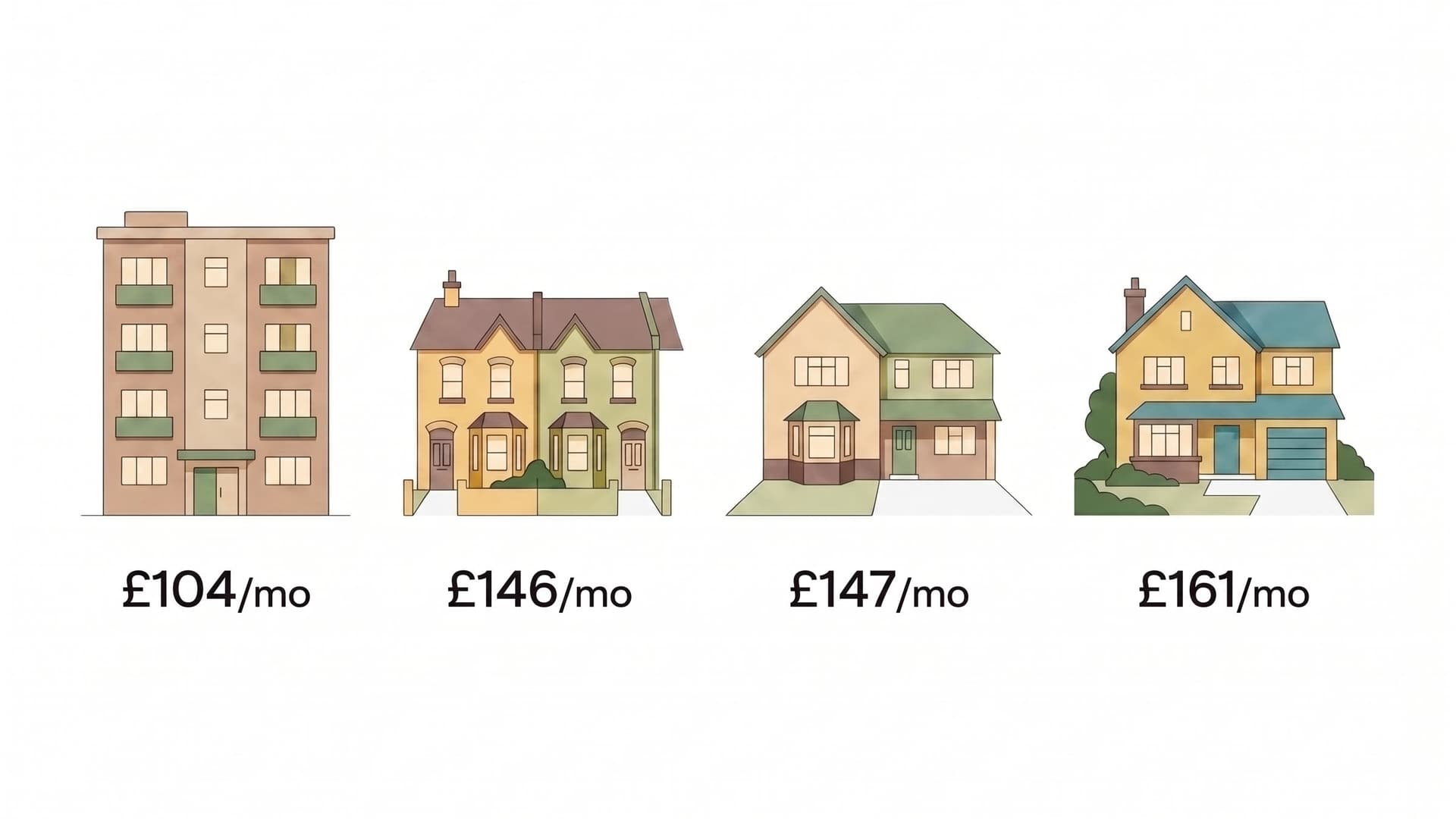
The EPC rating C monthly cost varies by property size and type. Rightmove’s July 2026 energy-bill tracker provides these estimated costs for C-rated homes.
Property type | Annual cost | Monthly cost |
1-bed flat | £1,245 | ~£104 |
2-bed flat | £1,423 | ~£119 |
3-bed terraced house | £1,747 | ~£146 |
3-bed semi-detached house | £1,766 | ~£147 |
3-bed detached house | £1,929 | ~£161 |
4-bed detached house | £2,415 | ~£201 |
EPC Rating B homes usually have lower estimated energy costs than EPC Rating C homes because they are more energy efficient. However, the difference depends on the property's size, heating system and energy use.
How these figures were calculated: Rightmove’s July 2026 estimates combine EPC energy-consumption data from recently listed homes with energy-price data. The monthly figures shown here are the annual estimates divided by 12 and rounded for easier comparison.
These figures are useful for comparison, but your actual cost will depend on your energy use, heating system and tariff.
1-2 Bedroom Flats
C-rated flats are the cheapest in this comparison, at around £104–£119 a month, mainly because there is less space to heat.
Terraced and Semi-Detached Homes
A three-bed terrace or semi is around £146–£147 a month. Shared walls can help reduce heat loss compared with detached homes.
Detached Homes
Detached homes cost more, at around £161 a month for three beds and £201 for four beds, because more of the property is exposed to outside temperatures.
EPC C vs EPC D: How Much Could You Actually Save?
For a three-bed semi-detached home, Rightmove’s July 2026 energy-bill figures puts average energy costs at around £1,766 a year for EPC C versus £2,429 for EPC D. That is a difference of about £663 a year, or £55 a month.
Rating | Annual cost | Monthly cost |
EPC C | £1,766 | ~£147 |
EPC D | £2,429 | ~£202 |
Difference | £663 | ~£55 |
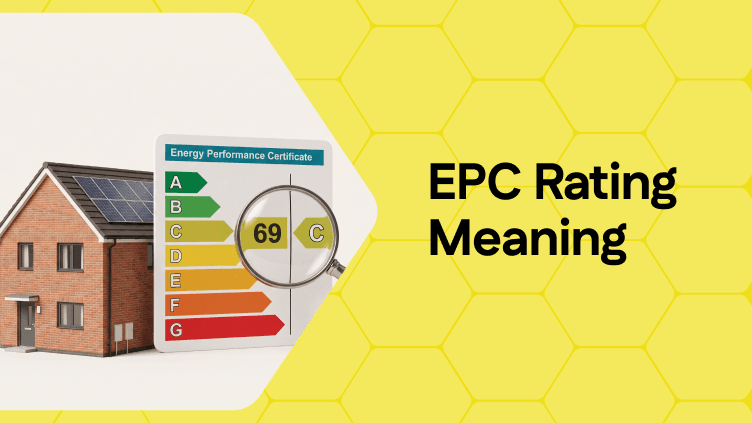
The £55 difference is an average comparison. Homes close to the C and D boundary may have much smaller differences in real running costs. ONS EPC data shows Band D covers scores from 55–68 and Band C from 69–80, so each band includes homes with quite different levels of efficiency. For a fuller explanation of the bands and numerical scores, see our guide to what your EPC rating means.
A D68 and C69 home are only one EPC point apart. Their real running costs may be very similar, even though the letter changes. Bigger savings are more likely when you compare homes further apart on the EPC scale.
Practical Ways to Lower Energy Costs in an EPC C Home
Even at Band C, there may still be easy ways to cut what you actually pay. Start by checking your heating schedule and thermostat settings, fixing obvious draughts, using room controls properly and making sure you are on a tariff that suits when you use energy. Explore practical ways to improve your EPC rating and make your home more energy efficient.
If your EPC already highlights insulation, heating or hot-water improvements, use those recommendations as a starting point rather than upgrading at random.
Why Two EPC C Homes Can Have Very Different Energy Bills
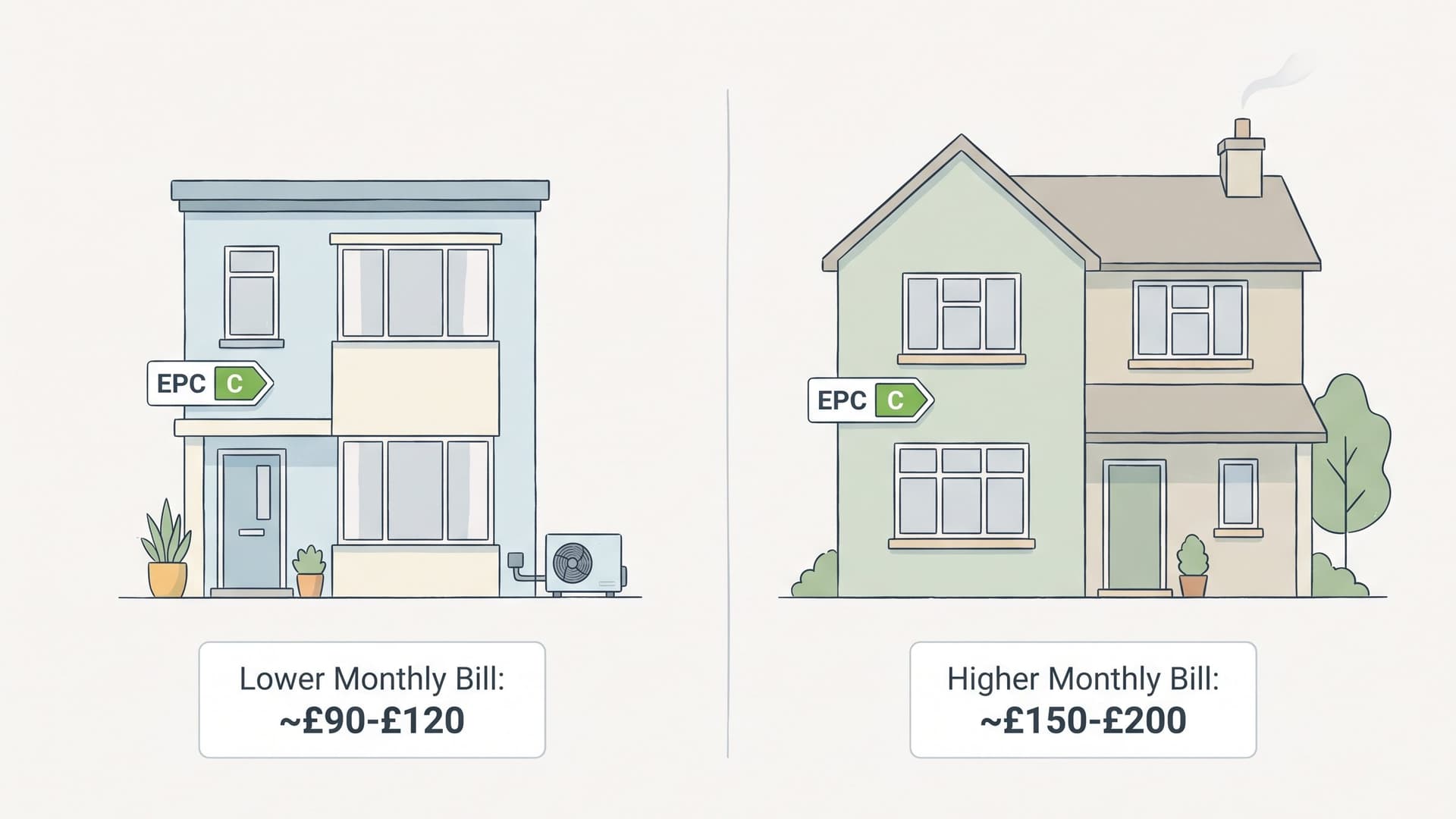
Two homes can both be EPC C and still have very different energy bills. The rating measures the property under standard assumptions, while your real bill depends on how the home is actually used.
Property type and heat loss: flats and mid-terraces often lose less heat than detached homes because they have fewer exposed walls.
Heating system: gas boilers, electric heating and heat pumps can create very different running costs.
Household size and habits: more people, longer heating hours and higher thermostat settings usually mean higher usage.
Location and weather: colder areas and longer heating seasons can push costs up even for the same EPC band.
Tariff and energy prices: unit rates, standing charges and time-of-use tariffs can change what you pay for the same amount of energy.
So, an EPC C rating describes the property’s efficiency, not exactly what your household will pay each month.
Why Your Actual Bill Can Be Higher Than the EPC Estimate
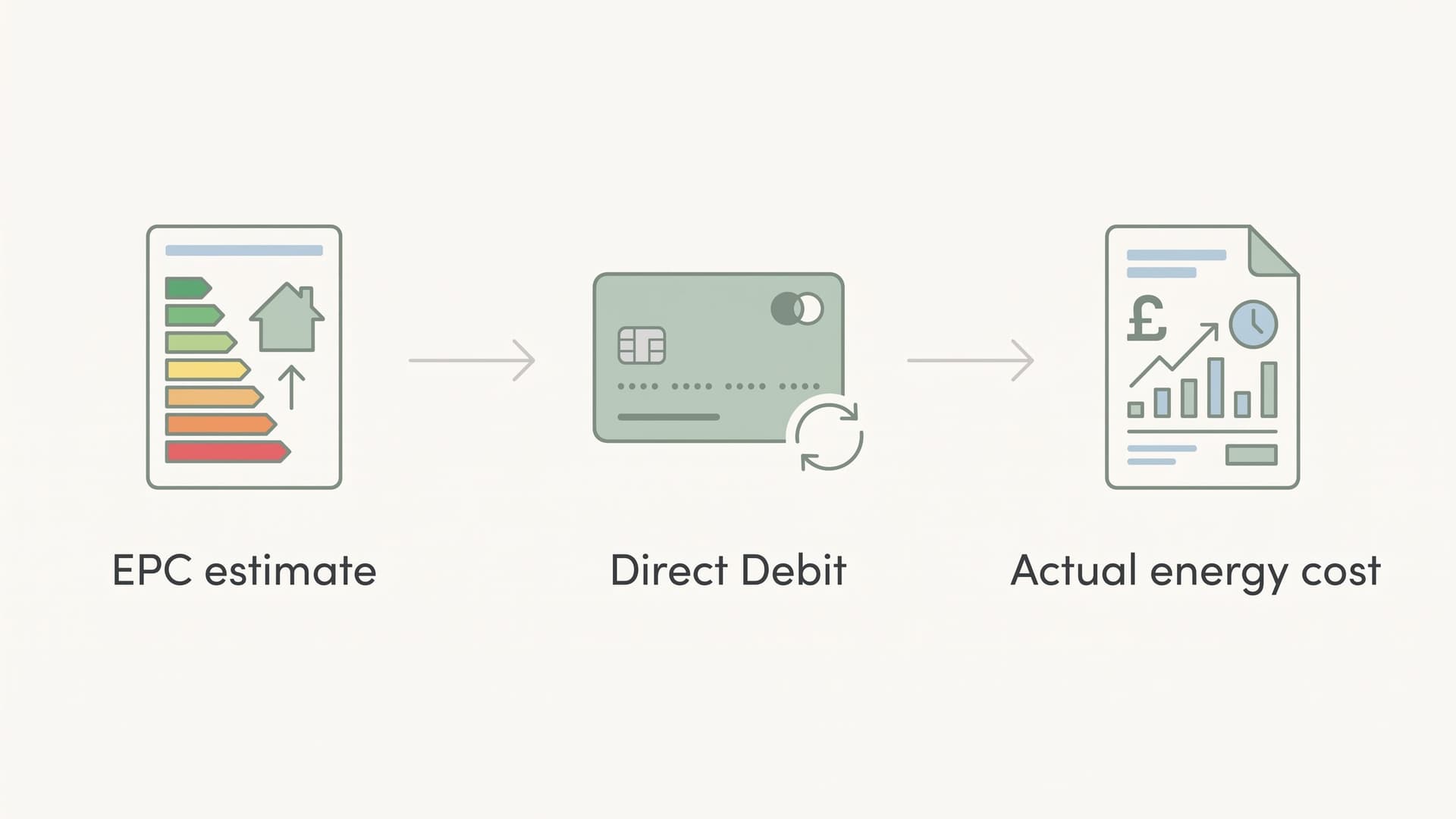
Your EPC gives a modelled energy-cost estimate, based on standard assumptions about the home. Your monthly Direct Debit is different again, as your supplier may spread higher winter costs across the year. Neither is the same as the cost of the energy you actually use.
Your real bill also includes how you heat the home, how many people live there and everyday electricity from things like cooking, appliances, home working or EV charging. That is why a C-rated home can still cost more each month than its EPC estimate suggests.
Understand Your Real Energy Costs With EnergieBee
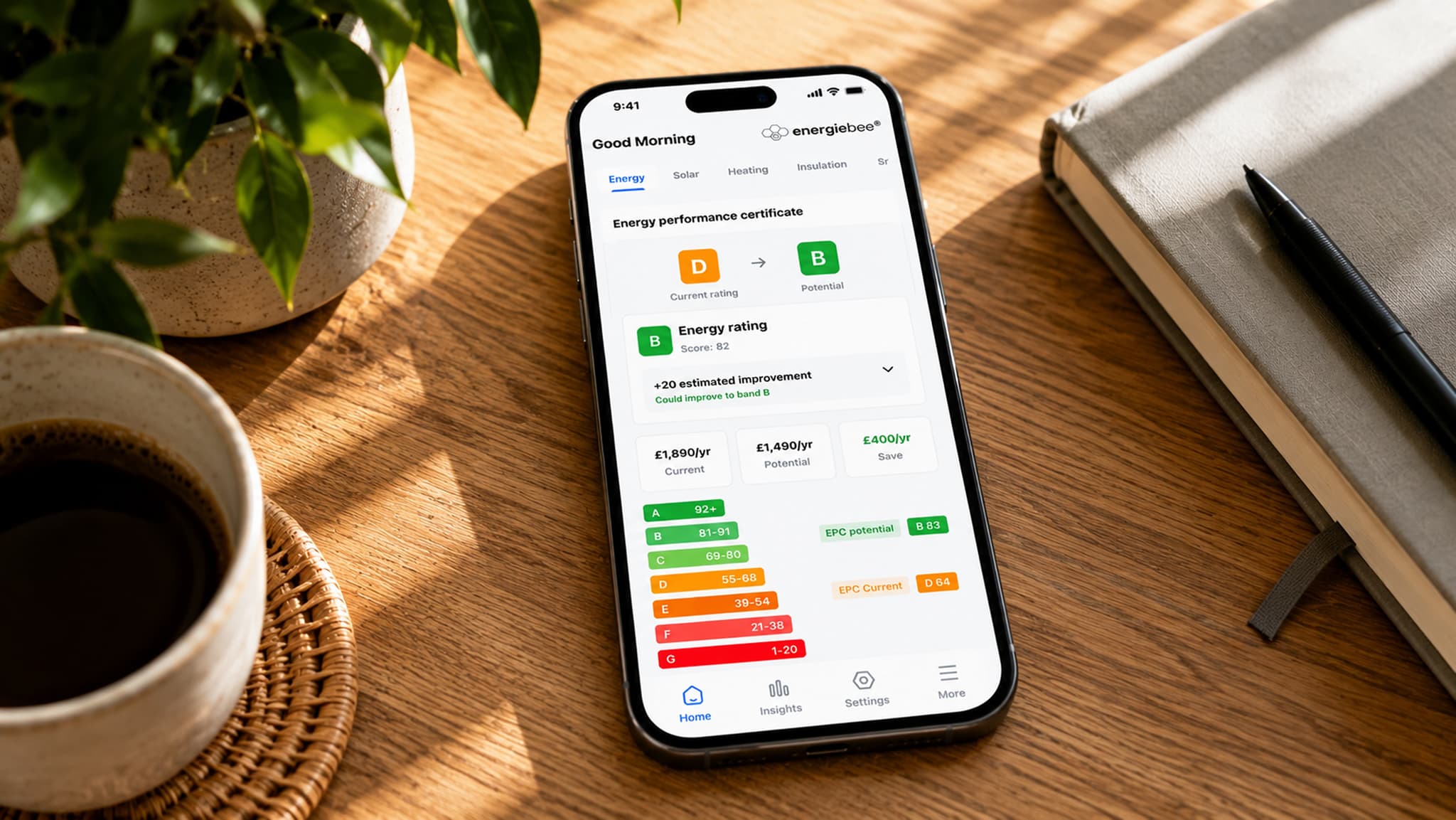
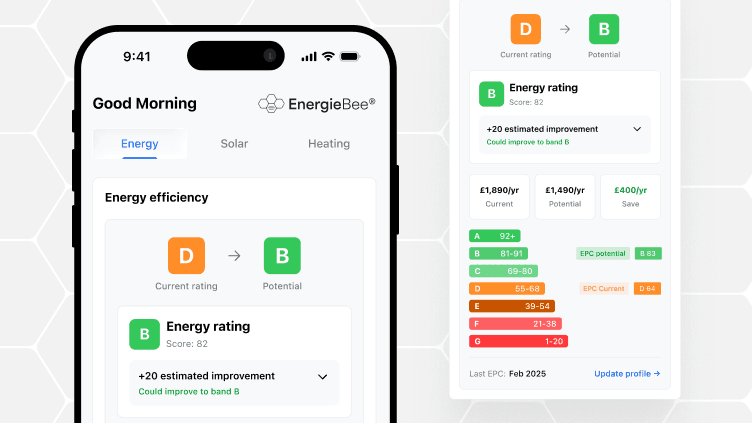
EPC ratings provide an estimate of your home's energy performance, but your real energy costs depend on how you use energy every day. EnergieBee helps you understand your actual energy patterns by showing your electricity usage, consumption trends and home energy insights in one place.
With the EnergieBee app, you can see how your home uses energy and make better decisions about improving efficiency. Download EnergieBee from the App Store to start understanding your home's energy behaviour.
The simplest way to think about it is: the EPC helps compare homes, while your meter and bills show what your household really costs to run.
To understand your real energy habits, you can track your home's actual energy use and see where your energy is being used.
How to Calculate Your Own EPC C Monthly Cost
The best way to estimate your EPC C monthly cost is to use your own annual energy use and tariff, rather than relying only on national averages.
Use this simple calculation:
Electricity: annual kWh × electricity unit rate
Gas: annual kWh × gas unit rate
Add standing charges for both fuels
Divide the annual total by 12
For example, using Ofgem’s July to September 2026 average Direct Debit rates of 26.11p/kWh for electricity and 7.33p/kWh for gas, with standing charges of 57.19p and 29.04p per day:
Electricity: 2,200 kWh = £574
Gas: 8,500 kWh = £623
Standing charges = about £315/year
Total = about £1,512/year, or £126/month
This is only an example. For a useful personal estimate, take the annual kWh and unit rates from your latest bill or energy account. Ofgem rates are averages and can vary by region and payment method.
Which Tariffs, Smart Controls and Energy Tech Can Change Your Real Cost?
An EPC C rating is only part of the picture. What you pay can also depend on when you use energy and how your home systems work together.
Smart and time-of-use tariffs: cheaper off-peak periods can reduce costs if you can shift electricity use. Energy Saving Trust says these tariffs can be particularly useful with batteries, heat pumps and solar.
Heating controls: better scheduling and room-by-room control can reduce wasted heating. Some recognised heating controls can also influence an EPC assessment.
Solar panels: reduce the electricity you need to buy from the grid and can improve the EPC score.
Battery storage: can store solar or cheaper off-peak electricity for later. Battery storage is now included within RdSAP 10.
EV charging: can noticeably increase your real electricity bill, but charging your car is not the same as the home’s modelled energy performance.
Heat pumps: can affect both the EPC and your running costs, but the real saving depends on system efficiency, heat demand and electricity tariff.
The key difference is that your EPC models the property using standard assumptions, while your real bill also reflects tariffs, timing and how you operate these technologies. GOV.UK’s EPC methodology guidance explains why those two numbers do not always move together.
See Your EPC C Cost and Savings Potential for Free
Averages are useful, but they are only a starting point. What really matters is what your home costs to run, with your heating, habits and tariff.
That is where EnergieBee can help. The free app shows how your home uses energy day by day, so you can see your real costs, spot where energy is going and understand where savings may be possible.
Is It Worth Improving an EPC C Home Further?
It can be, but moving from EPC C to B is not automatically the best use of your money. GOV.UK EPC guidance distinguishes between cost-effective recommendations and further improvements that may increase the rating but are not necessarily cost-effective.
Current typical costs from Energy Saving Trust include:
Improvement | Typical cost |
Loft insulation, from 0 to 270mm | ~£900 |
Cavity wall insulation | ~£2,700 |
A-rated double glazing for a semi-detached home | ~£12,000 |
Air source heat pump | ~£11,000 |
These are typical figures rather than quotes for your home. Costs can vary with the property, installation and amount of work required.
Insulation, better glazing or heating upgrades can still be worthwhile if they reduce heat loss, improve comfort or lower running costs.
If your C-rated home is already warm and reasonably cheap to run, spending heavily just to reach Band B may offer limited value. But if you still have cold rooms, draughts or inefficient heating, targeted improvements can make sense. See our guide on how to improve your EPC rating for the practical options.
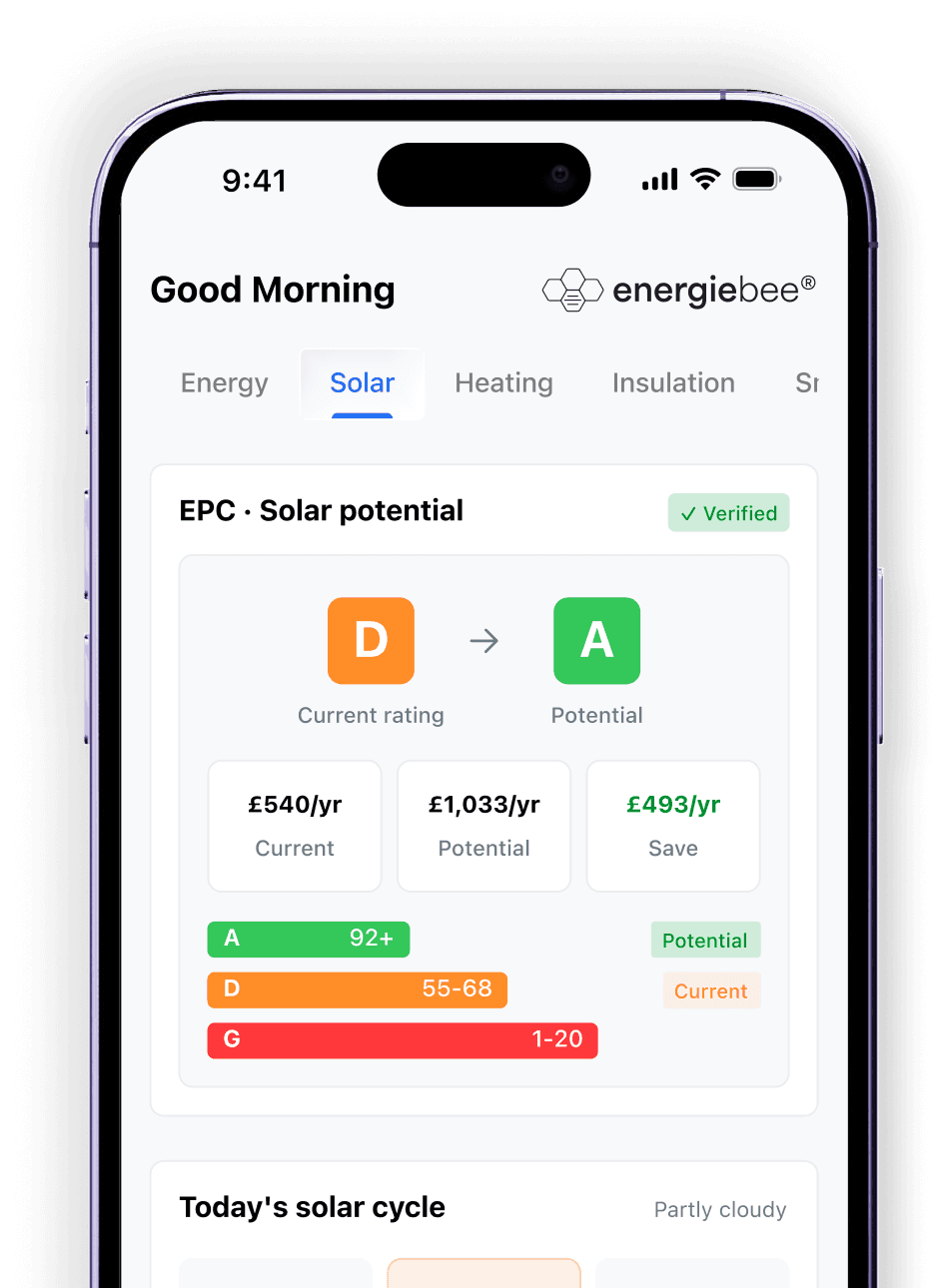
Take control of your home energy
EnergieBee turns complex energy data into clear, useful insights, helping you understand your home
Why EPC C Matters for Buyers, Sellers, Landlords and Renters
An EPC C can be useful when a property changes hands because it gives everyone a quick way to compare energy efficiency and likely running costs, even though it cannot predict the exact bill.
Buyers can use the EPC alongside property size, heating and other costs to compare homes before making a decision. Rightmove recommends checking the EPC when searching for a home.
Sellers and landlords must normally have an EPC available before marketing a property for sale or rent. GOV.UK explains the current EPC requirements.
Renters can use it to get an idea of the home's efficiency and typical energy costs before moving in.
Landlords are paying particular attention to Band C because the current minimum for covered private rentals in England and Wales is E. The government’s 2026 private-rental policy response sets 1 October 2030 as the intended date for a higher standard broadly equivalent to EPC C, subject to the necessary legislation and Parliamentary approval.
That is why Band C is often used as a practical reference point when comparing homes.
Frequently Asked Questions
What is the average monthly energy bill for an EPC C property?
There is no single average bill for every EPC C home because property size and type make a big difference. In Rightmove’s July 2026 figures, C-rated homes range from about £104 a month for a one-bed flat to £201 for a four-bed detached house.
How much does an EPC C one-bedroom flat cost per month?
A C-rated one-bedroom flat costs around £104 a month, based on Rightmove’s 2026 figure of £1,245 a year.
How much does an EPC C two-bedroom flat cost per month?
A C-rated two-bedroom flat is around £119 a month, based on Rightmove’s annual estimate of £1,423. Heating type and household usage can move the real cost up or down.
Can an EPC C-rated home still have high energy bills?
Yes. An EPC uses standard occupancy assumptions, which may be different from how you actually use your home. Longer heating hours, higher energy use, EV charging or a more expensive tariff can all make your real bill higher than the EPC suggests.
Is EPC C cheaper to run than EPC D?
Generally, yes. Higher EPC ratings are associated with lower likely fuel costs, although two individual homes can still have different bills. For example, Rightmove estimates a three-bed semi at about £147 a month for EPC C versus £202 for EPC D. And because Band C covers scores 69–80 while D covers 55–68, homes close to the boundary may have much smaller differences.