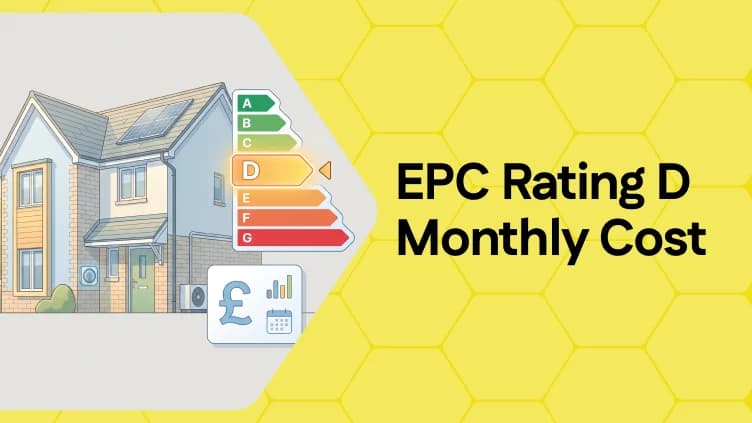
On 26 August 2026, Ofgem announced a 4% increase to the energy price cap. The new rates will apply from 1 October to 31 December 2026.
The latest Ofgem average Direct Debit rates are for 1 October to 31 December 2026:
Electricity: 26.32p/kWh
Gas: 7.97p/kWh
Electricity standing charge: 54.83p/day
Gas standing charge: 29.68p/day
So, an EPC D home will typically cost around £145–£284 per month to run, depending on the size and type of property.
In this guide, we’ll break down what EPC D homes typically cost to run, why your bill may not match the estimate, and what you can do to bring it down. We’ll also look at how solar, batteries, EVs and heat pumps change the picture.
EPC Rating D Energy Costs by Property Size
The EPC rating D cost per month is not the same for every home. A small flat and a larger detached house can have very different energy costs, which is why property size matters. Rightmove’s July 2026 energy-bill tracker provides useful benchmarks for typical D-rated homes.
Taking into account Ofgem’s latest 4% energy price cap increase from October 2026, these are the updated estimated annual and monthly costs for EPC D rated home:
Property type | Approx. annual cost | Approx. monthly cost |
1-bed flat | £1,791 | ~£149 |
2-bed flat | £2,143 | ~£179 |
3-bed terraced house | £2,543 | ~£212 |
3-bed semi-detached house | £2,526 | ~£211 |
3-bed detached house | £2,783 | ~£232 |
4-bed detached house | £3,511 | ~£293 |
📌Note
These are updated benchmark figures after applying the 4% increase, not guaranteed bills. Your actual EPC D cost per month will still depend on your energy use, heating system, tariff and household habits.
Check your last 12 months of actual meter data:
Electricity kWh × electricity rate + gas kWh × gas rate + standing charges / 12
Use consumption rather than your Direct Debit amount. Your Direct Debit can include supplier estimates, accumulated credit or an outstanding balance.
According to the BBC, a typical household using an average amount of gas and electricity will pay around £60 more per year following the price cap change. However, more than a third of households are on fixed tariffs, meaning their energy prices will not be affected by this increase.
How Much Could You Save by Improving an EPC D Home?
The best savings usually come from finding what is pushing your bill up first, then improving that part of the home.
According to the Energy Saving Trust, here’s how much different upgrades could save you each year:
Upgrade | Estimated annual saving (GB) |
Upgrade boiler with full heating controls | ~£420/year |
Solid wall insulation | ~£280/year |
Solar panels | ~£260/year |
Cavity wall insulation | ~£200/year |
Heating controls | ~£100/year |
A-rated double glazing | ~£85/year |
Floor insulation | ~£55/year |
If your rooms lose heat quickly, investigate insulation. If your heating runs longer than it needs to, check the controls. If an EV, battery or heat pump is pushing up electricity costs, check when you're using and buying that electricity before paying for building work.
The aim isn't simply to move from D to C. It's to fix what's actually costing you money.
Read our guide on how to improve your EPC rating to see which upgrades can make the biggest difference.
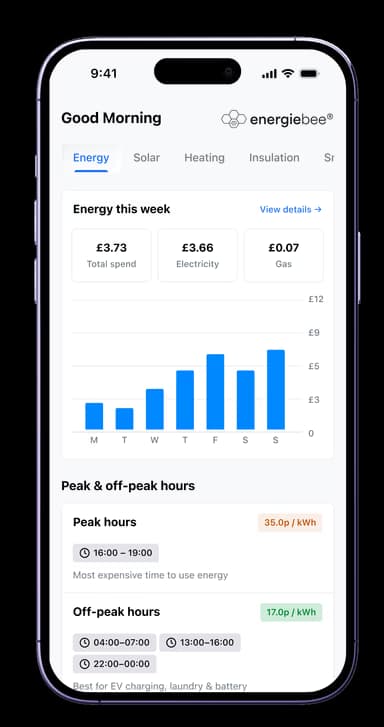
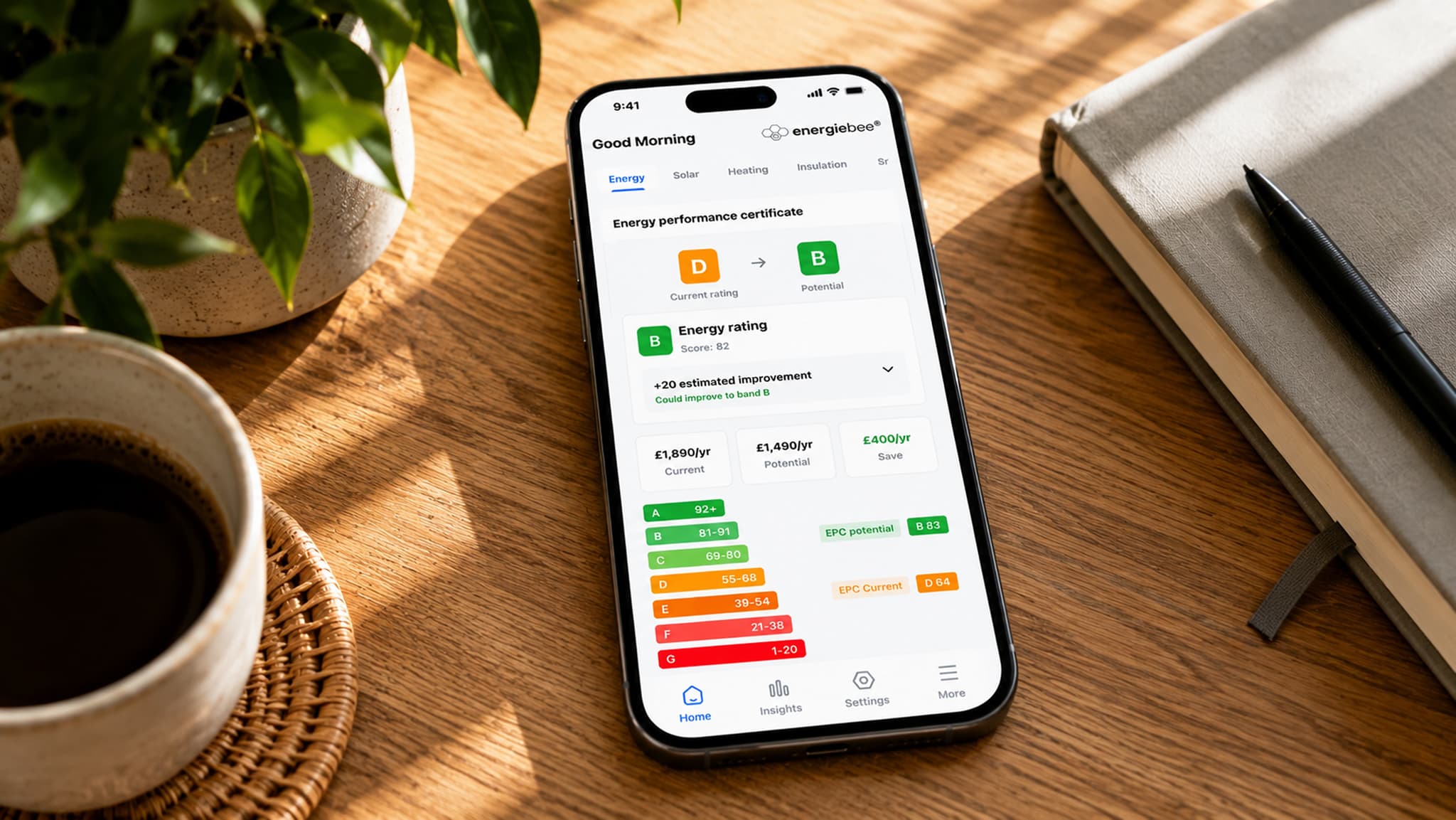
Energiebee mobile app
Track your home's overall energy saving
See the real impact of your upgrades and energy choices, instead of guessing whether they’re saving you money.
Which Energy Tariff Is Best for an EPC Band D?
There isn’t a single “best” tariff for an EPC D home. The right choice depends on how your home uses energy, especially if you have solar, a battery, an EV or a heat pump.
One thing is clear: tariff choice can significantly affect the savings you get from these technologies.
So how do you know which tariff actually suits your home?
Compare your options against two things:
Your actual setup and energy usage - when you generate, store and use energy
The real annual cost difference - what each tariff could mean for your bills over a year
Doing this manually across multiple suppliers and systems can quickly become confusing.
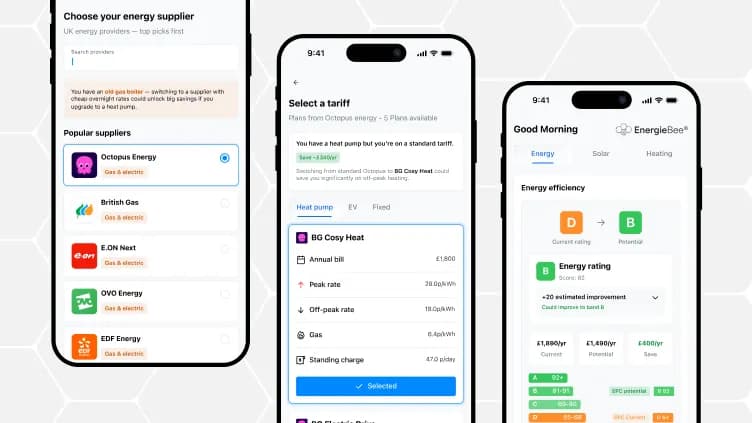
With the EnergieBee app, you can compare tariff options free against your actual setup and usage, helping you understand which plans fit your home and what the yearly cost could look like.
Why Two Identical EPC D Homes Can Have Very Different Bills
Picture two similar three-bed semis on the same street. Both are EPC D. One household pays £140 a month; the other regularly pays over £200.
Before assuming the second home needs another expensive upgrade, compare five things:
Heat loss: Does one home cool much faster?
Heating hours: Is somebody heating the property all day?
Temperature: Are the thermostat settings different?
Tariff: What does each household pay when most electricity is used?
Flexible loads: When are the EV, battery, immersion heater and heat pump running?
An energy efficiency rating D is based on standardised assumptions about heating and energy use, so it cannot capture all of that day-to-day household behaviour.
If you want to understand what actually goes into the score, see our guide on how an EPC rating is calculated.
So if your bill looks high against the benchmark, you have to find the difference first. It may be the building, but it could just as easily be your heating schedule, tariff or when your bigger devices are using power.
How Do Solar Panels, Batteries, EVs and Heat Pumps Affect EPC D Energy Costs?
If you have added solar, a battery, an EV or a heat pump, your EPC D rating no longer tells the full story. Two homes with the same EPC score can have very different bills depending on when they generate, buy, store and use energy.
Solar panels: Generating your own electricity can reduce bills, but the saving depends on when you use that energy. Exporting most of your solar during the day and buying electricity back in the evening may limit the benefit.
Battery storage: A battery can help you use more of your own solar or take advantage of cheaper electricity periods. But the savings depend on your tariff, charging schedule and how often the battery is actually used.
Electric vehicles: An EV will naturally increase your household electricity use. That does not mean your home became less efficient — some of your transport costs have simply moved from petrol or diesel to electricity. Charging at cheaper times can make a big difference.
Heat pumps: A heat pump’s running cost depends on your home's heat demand, system efficiency and electricity tariff. The same heat pump can have very different running costs depending on how it is configured and when it uses electricity.
For homes with these technologies, the better question is not just “How much energy am I using?” It is: “Am I using the right energy at the right time and at the right cost?”
Is It Worth Upgrading an EPC D Home?
Yes, if the upgrade fixes a problem that is actually costing you money or affecting comfort. Don't spend thousands just because a recommendation adds EPC points.
Start with what you're seeing at home:
What you're seeing | Investigate first |
Rooms cool quickly after heating switches off | Insulation and draughts |
Heating runs when it isn't needed | Controls and schedules |
High peak-time electricity imports | Tariff and load shifting |
High solar export but high evening imports | Self-consumption or battery timing |
Heat pump electricity use looks high | Setup, heat loss and tariff |
Windows are draughty or failing | Glazing |
Then look at the cost. Current indicative retrofit costs are around £750 for full loft insulation, £2,200 for cavity-wall insulation, £4,800 for A-rated double glazing, £7,600 for solar panels and £12,000 for an air-source heat pump.
That makes the reason for upgrading important. Replacing single glazing with A-rated double glazing, for example, could save around £85 a year in the example semi-detached home. But it may also solve draughts, cold spots and noise.
An upgrade can still be worth doing without a quick bill payback, just be clear about what you're paying to improve.
Grants and Support: Check Before You Pay
If a bigger upgrade makes sense, check what support applies before signing the installer’s quote.
Heat pump grant: The Boiler Upgrade Scheme offers £7,500 towards eligible air-to-water or ground-source heat pumps. If your home is off the gas grid and currently heated by oil or LPG, this can rise to £9,000 until March 2027.
0% VAT: Qualifying installed energy-saving measures, including heat pumps, solar panels and battery storage, currently receive 0% VAT until 31 March 2027.
Low-cost finance: The Warm Homes Plan includes new low- and zero-interest loans for upgrades such as solar, batteries and heat pumps, but the consumer scheme is still being developed. Don’t build it into your budget until the offer is actually available to you.
The key is simple: check the grant, VAT treatment and available finance before deciding what the upgrade will really cost you.
Frequently Asked Questions
How much should an EPC D home cost per month?
An EPC D home typically costs around £145–£284 per month, depending on property size and energy use. Smaller flats usually cost less, while larger detached homes can cost significantly more.
Why is my EPC D energy bill higher than the average?
Your EPC D bill may be higher because of your energy usage, heating habits, tariff or devices like EVs and heat pumps. Check your actual kWh usage rather than your Direct Debit amount to find what is driving the cost.
Which energy tariffs work best for an EPC D home?
The best tariff depends on how your home uses energy and the systems you have. EVs often suit overnight tariffs, batteries suit off-peak options, solar owners should compare export rates, and heat pumps may benefit from specialist tariffs.
How much does it cost to get an EPC assessment in the UK?
An EPC assessment has no fixed government price and usually depends on your property and assessor. You can find accredited assessors through the official GOV.UK assessor service.
How does an EPC D rating affect mortgage eligibility?
An EPC D rating usually does not stop you getting a standard mortgage. Some green mortgage offers require higher EPC bands, so check each lender’s requirements before applying.