A new National Geographic campaign encourages people to create small habitats for pollinators. The organisation is giving away packets of native seeds to people who sign its Pollinator Pledge, turning an act of conservation into something that can begin at home.
What if a packet of seeds could become a small wildlife habitat
The initiative comes from the National Geographic Society's Photo Ark, the conservation project founded by National Geographic Explorer Joel Sartore.
For 20 years, the Photo Ark has used photography to document species and encourage people to care about biodiversity. Its pollinator campaign takes that idea into people's own outdoor spaces. National Geographic describes habitat degradation and fragmentation as important threats to pollinators and asks people to make a commitment to help them.
The action is deliberately straightforward.
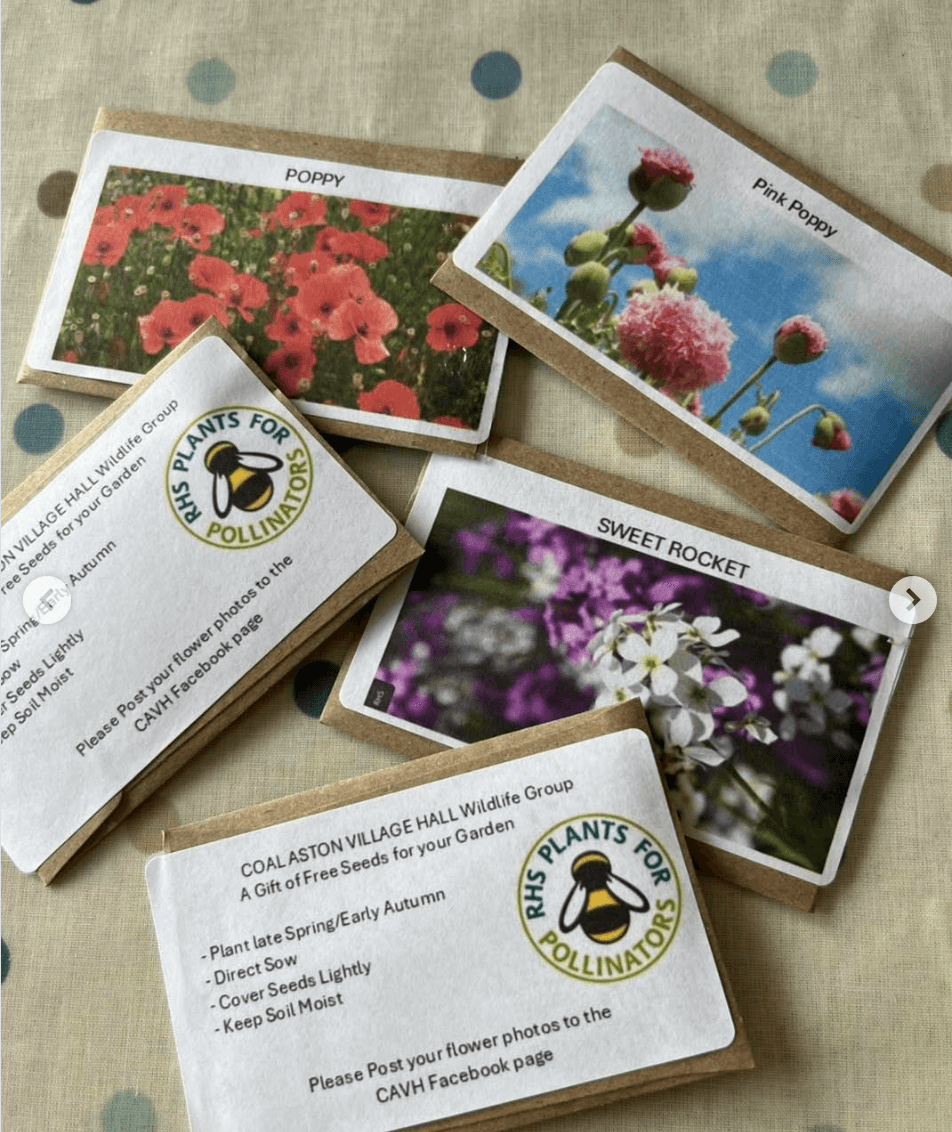
Sign the Pollinator Pledge, and National Geographic will send a packet of native pollinator seeds. Depending on the recipient's region, the packet contains either Black-Eyed Susan (Rudbeckia hirta) or Rocky Mountain Beeplant (Cleome serrulata). The organisation says the seeds are distributed while supplies last, on a first-come, first-served basis.
The campaign is connected to the Photo Ark's 20th anniversary and its wider work to encourage conservation action.
There is an important geographical limitation, though.
Only US mailing addresses are eligible. Someone living in England, Spain or elsewhere in Europe cannot currently request the National Geographic seed packet through this offer.
That makes sense from an ecological perspective, too. The campaign is distributing plants native to particular parts of North America. A seed packet designed for a different ecosystem is not automatically appropriate simply because it feeds bees.
England has its own projects.
What can people do in England?
A collection of organisations and local authorities are encouraging people to create more habitat for insects.
Some programmes distribute seeds. Others provide advice, community growing projects or opportunities to monitor pollinators.
1- Free wildflower seeds in North Devon
One of the most timely examples is the Big Autumn Sow 2026, organised by Devon Wildlife Trust.
This year, the organisation is giving away free wildflower seed to communities across North Devon to create what it calls mini meadows.
The project is aimed at shared spaces rather than individual private gardens. A community can use the seeds in a planter, communal garden, school grounds or another space accessible to a large number of people.
The timing is particularly useful because participants are encouraged to plant during September or October. Devon Wildlife Trust provides the seeds, planting guidance and posters, while communities organise the sowing themselves.
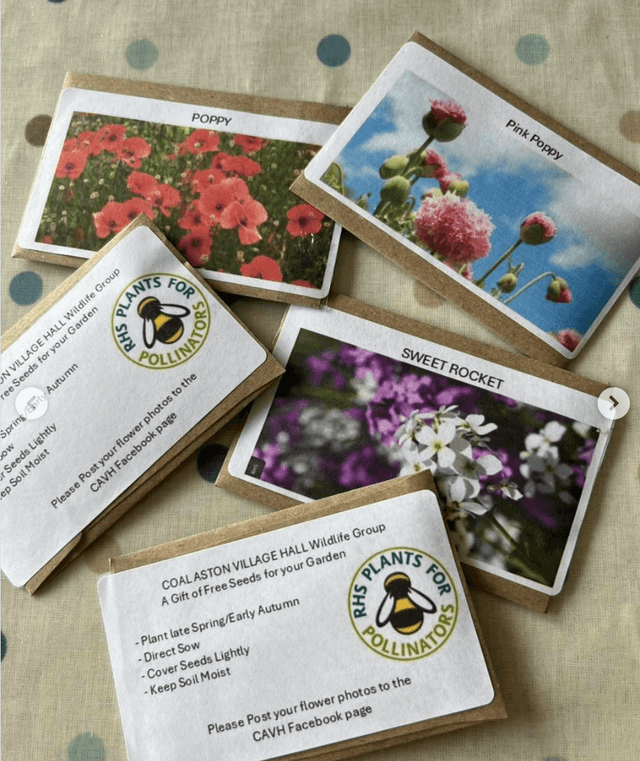
More info here @coalastonvillagehall
So if someone in North Devon has been looking for a way to turn an empty planter or neglected communal corner into a small flowering space, this is one of the programmes currently open.
2- The RHS and small spaces
The Royal Horticultural Society has also spent years encouraging people to grow for wildlife through its gardening programmes and advice.
Its Grow With It initiative previously provided seeds and encouraged people to grow in gardens, containers, window boxes and other small spaces. The programme itself is currently taking a break, so it should not be presented as a new 2026 seed giveaway.
The RHS continues to publish practical guidance for supporting pollinators.
Its advice for September includes allowing parts of lawns to flower, keeping nectar sources available into autumn and resisting the temptation to cut everything back. Flowers such as clover, selfheal and daisies can continue providing nectar at this time of year, while stems, seedheads and leaf litter can provide shelter for insects.
Helping pollinators sometimes means leaving something where it is.
3- Local seed giveaways can be even more useful
Some of the most interesting projects happen on a much smaller scale.
In February 2026, Deal Town Council in Kent offered free packets of native flower seeds. The packets were designed to cover approximately one square metre and contained a mixture of perennial wildflowers and annuals.
The response was quick. By the time the council updated its page, all the packets had been claimed and the 2026 scheme was closed.
That pattern is common with local environmental projects. Seed giveaways can be limited by funding, availability or the number of packets an organisation has prepared.
For that reason, local councils, wildlife trusts, community gardens and seed libraries can be worth checking regularly, particularly at the beginning of spring and autumn.
Why September matters
For anyone in England thinking about creating a small pollinator space, September is an interesting moment.
The end of summer can make a garden look as though its most productive period is over. Many flowers are fading, the days are becoming shorter and the instinct to tidy everything before winter becomes stronger.
Ecologically, however, the garden is still busy.
The RHS recommends maintaining flowering plants into October where possible and leaving some seedheads and plant material standing. These provide food and shelter for different species as the season changes.
Autumn is also a useful sowing period for some wildflower mixes.
In North Devon, for example, the Big Autumn Sow specifically asks communities to plant in September or October.
A garden is part of a bigger landscape
The idea behind these initiatives goes beyond giving people something nice to grow.
Pollinators move through landscapes. A bee does not know where one garden ends and another begins. A hoverfly can move between a garden, a park and a roadside verge. A butterfly may feed in several different places during its lifetime.
That means a collection of small spaces can become more interesting than any one space on its own.
A balcony. A window box. A garden border. A school planter. A patch of grass that is allowed to flower.
Individually, they may seem insignificant. Together, they can create a series of places where insects can find food and shelter.
There is even a national project in the UK dedicated to understanding what happens to these populations. The UK Pollinator Monitoring Scheme invites members of the public to record pollinating insects through ten-minute counts and other surveys. Its 2026 survey season runs until 30 September.
The seed packet and the survey may seem like completely different activities. One grows flowers. The other collects data.
They share an underlying idea: paying attention to the living world around us.
The small scale of conservation
No large piece of land is required. No specialised equipment. Sometimes not even a garden.
A handful of suitable seeds can become flowers. The flowers can become food. The food can bring insects. And those insects become part of a much larger ecological system.
The important thing is to use seeds that are appropriate to the place where they will grow and to give them the conditions they need.
After that, there is very little to do.
Plant them.
Then wait and see who arrives.
Conservation acts begin at home. With education, with practice, loving our homes and nature around us.

 David Price