
What Happened to the Warm House?
From 1 October 2026, Ofgem's energy price cap for a typical household paying by Direct Debit will be £1,723 a year. The figure applies to households on default tariffs in England, Scotland and Wales, and the actual bill depends on how much energy a household uses. The cap itself limits unit rates and standing charges rather than the total amount a household can spend.
For households with very little room in the budget, energy takes up a much larger share of what comes in. Government figures put required energy costs at 6.8% of household income after housing costs in 2025. For low-income households, the figure was 14.9%.
In August, Citizens Advice reported that 3.5 million households were in energy debt. Its research also found that more than 10 million households were worried about how they would afford their energy bills over the coming winter.
Was it always this much expensive?
For generations, people simply lived with cold. There were coal fires in the living room and heavy curtains drawn as soon as the afternoon disappeared. There were hot water bottles under the blankets and mugs of Horlicks or Ovaltine before bed. Ready Brek eventually arrived with its famous promise of “central heating for kids”, turning warmth into something that could be poured into a bowl.
The spread of central heating changed the experience of the British home: the arrival of North Sea gas in the late 1960s and 1970s helped accelerate a transition that would eventually make whole-house heating ordinary. Warmth was no longer concentrated around a fire in one room. Bedrooms could be warm. Bathrooms could be warm. Children could play on the floor in winter.
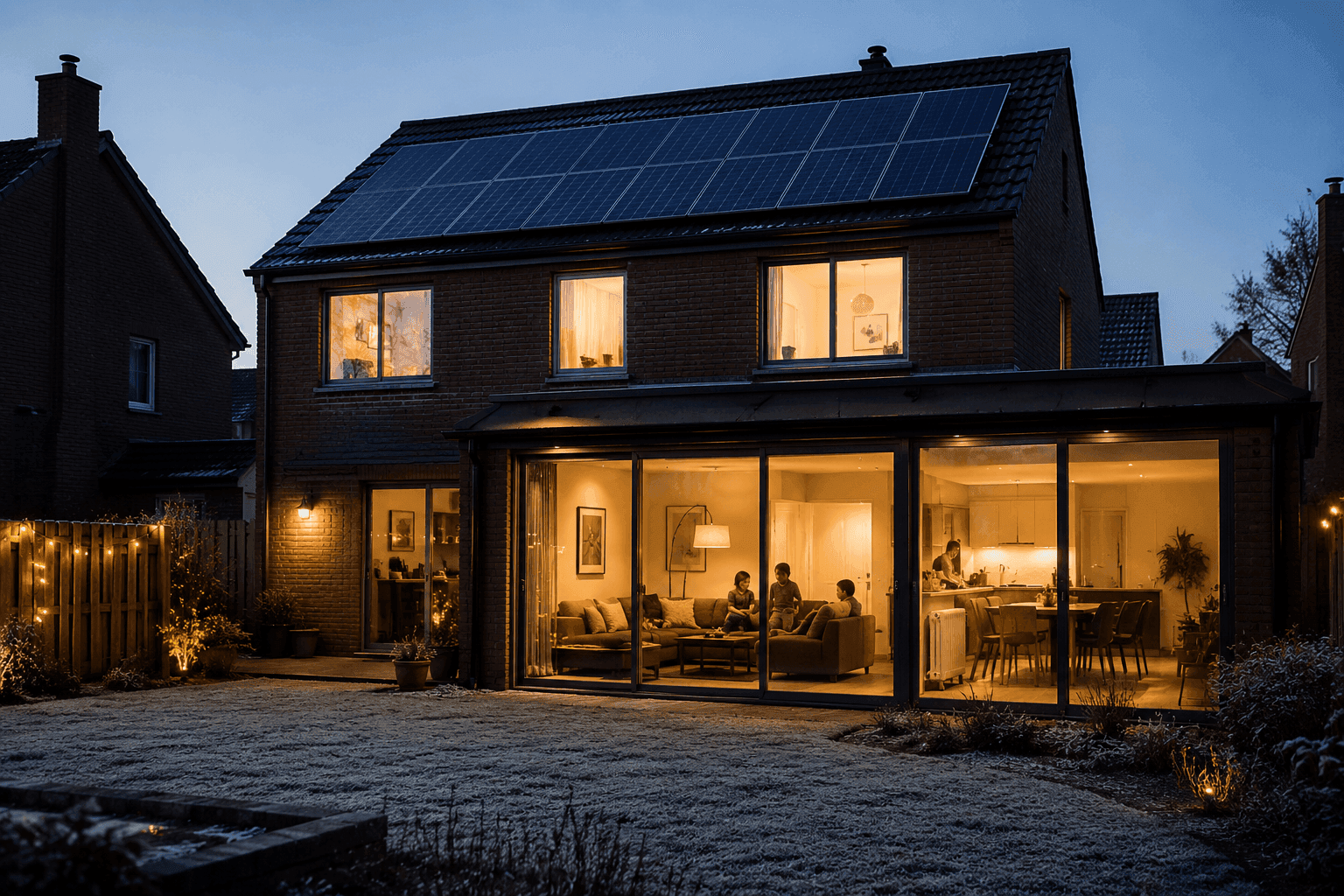
A warm house became part of everyday life.
The small things around the house
There are still simple ways to reduce the amount of energy a home needs.
Curtains are one of them. Closing heavy, lined curtains once it gets dark can help reduce heat loss through windows. It is an old habit, which is perhaps why it is easy to overlook.
The boiler deserves a look too: for homes with a condensing combi boiler, the flow temperature controls how hot the water becomes before it travels to the radiators. Many boilers are set higher than they need to be. Research from Nesta found that reducing the flow temperature from 80°C to 60°C could cut gas consumption by around 9%, although the saving depends on the boiler, the house and the way the heating system is used.
These adjustments do not require a new heating system or a major renovation. Just paying attention to what is already there.
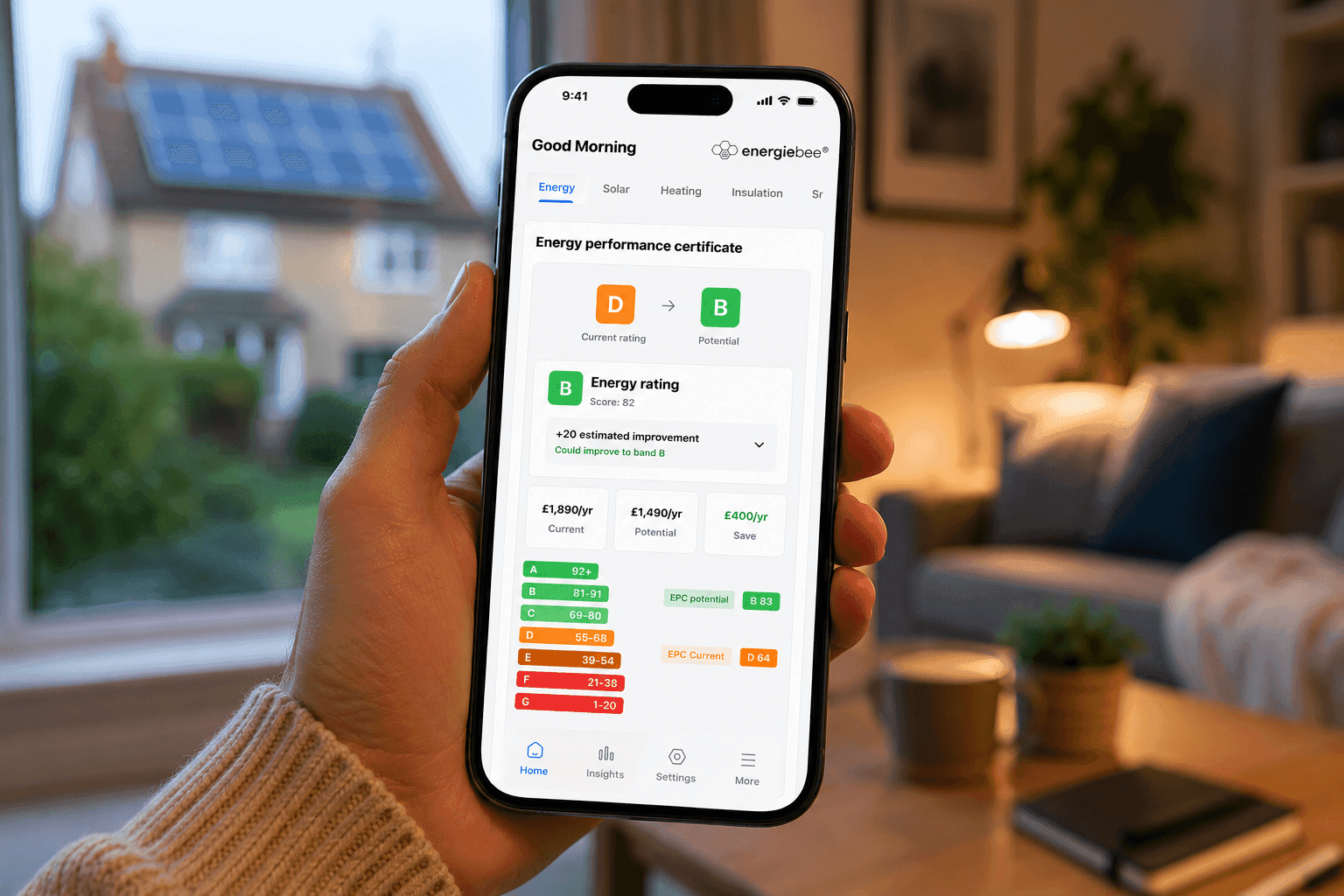
But most of us know roughly how much we pay for energy. Fewer of us know exactly what our home is doing with it.
When is electricity being used? Which appliances are responsible for the largest share? How does the household's consumption change during the day? Is the tariff suited to those habits? Are there cheaper periods that could actually be used?
The history of heating
The history of heating is full of moments when something that once seemed remarkable became ordinary.
Gas replacing coal. A boiler quietly heating every room. A child growing up without ever seeing ice on the inside of a bedroom window.
Perhaps the next stage of that story is less visible.
It may be about learning to understand our homes in much greater detail, using the energy we need and knowing where the rest is going.
While the old British winter has not disappeared, we now have far more information about how to live with it.
And perhaps that is worth paying attention to before we reach for another hot water bottle.