Most of us ignore our boiler until something goes wrong, and then it's hard to know what's happening inside it.
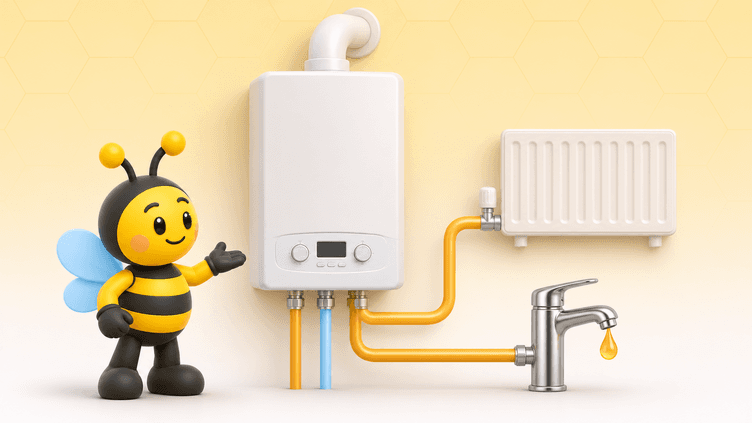
A boiler heats water, usually by burning gas. A pump sends that water round your radiators and back again. The boiler heats your tap water too, but separately, so in a typical home the two never mix.
This guide explains how boilers work step by step along with everything about how does a boiler works in your home.
Quick Answer: How a Boiler Works
What boilers do is heat water and send it where it's needed. A gas boiler works by burning gas to heat water inside a heat exchanger. A pump then moves this hot water through your radiators, warming your rooms. Once the water cools, it returns to the boiler to be heated again, so the radiator water stays in a loop of its own.
Your thermostat controls when the heating turns on and off.
For hot water, the process depends on your boiler type. A combi boiler heats water directly when you open a tap, while system and regular boilers usually store hot water in a separate cylinder.
How a Gas Boiler Works Step-by-Step
If you're wondering what happens inside your gas boiler when you turn on the heating, here's how gas boilers work, using a typical modern boiler. The exact start-up order varies by model.
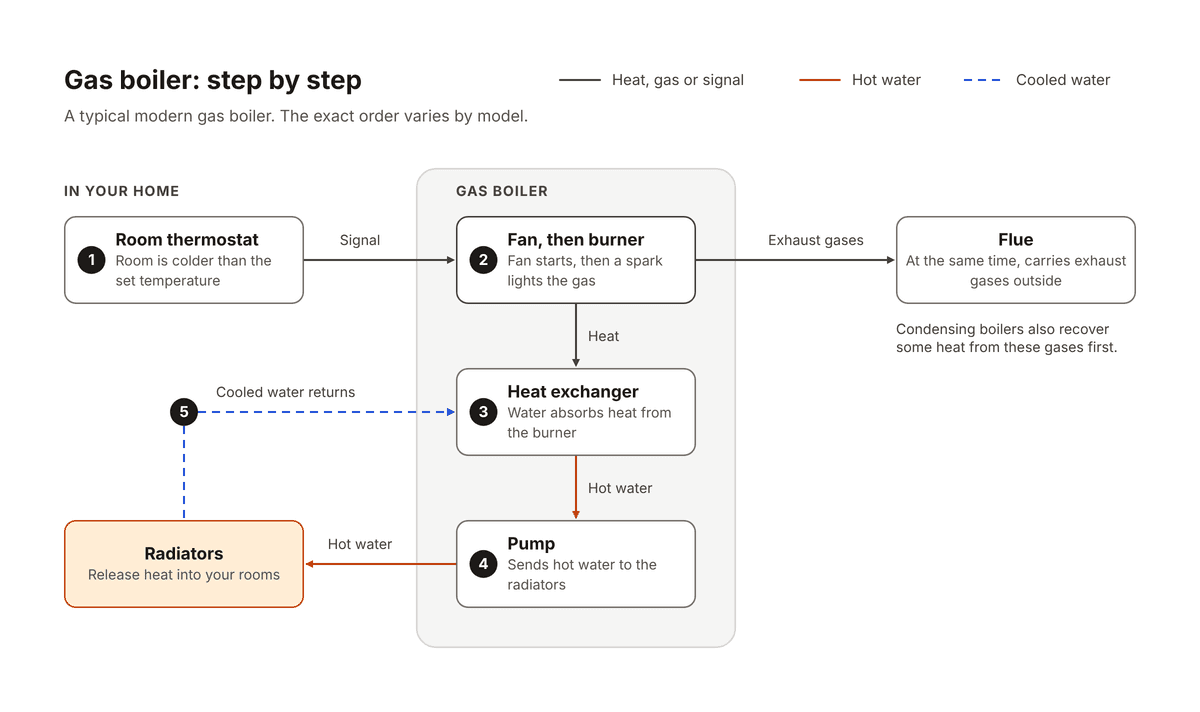
Step 1: The Thermostat Calls for Heat
When your room gets colder than your chosen temperature, the room thermostat sends a signal to your boiler to start heating.
For example, if you've set it to 20°C and the room temperature drops below that, your central heating system starts working to warm the room again.
Step 2: The Fan Starts and the Burner Lights
Inside a modern gas boiler, a fan starts first and supplies the air needed to burn the gas safely.
Once the boiler completes its safety checks, an electric spark lights the gas burner. The flame produces the heat needed to warm your home.
Step 3: The Heat Exchanger Warms the Water
The burner heats a metal component called the heat exchanger.
Water passes through the heat exchanger and absorbs the heat without touching the flame directly. This is how your gas boiler heats water for your central heating system.
Step 4: The Pump Sends Hot Water to the Radiators
A circulating pump moves the heated water through pipes to your radiators.
As the hot water flows through the radiators, they release heat into your rooms, gradually warming your home.
Step 5: Cooled Water Returns to the Boiler
After passing through your radiators, the water loses some of its heat and flows back to the boiler.
The boiler heats it again, and the cycle continues until your home reaches the temperature set on your thermostat.
At the Same Time: The Flue Carries Exhaust Gases Outside
While the burner is running, it produces exhaust gases. A boiler flue carries these gases outside your home, usually through an external wall or roof.
Modern condensing boilers also recover some of the heat from these gases before releasing them outside. This helps the boiler use fuel more efficiently.
A blocked flue can let carbon monoxide build up. You can't see, smell or taste it, so don't rely on spotting the warning signs: dark marks or staining around an appliance, floppy yellow flames and more condensation than usual. Gas Safe calls an audible CO alarm a back-up, not your only protection, so get your boiler serviced every year too. If you suspect poisoning, follow the carbon monoxide steps in the safety box at the top of this page.
Two Separate Water Circuits: Heating and Hot Water
You might think the hot water flowing through your radiators is the same water that comes out of your taps. But that's not how a boiler system works.
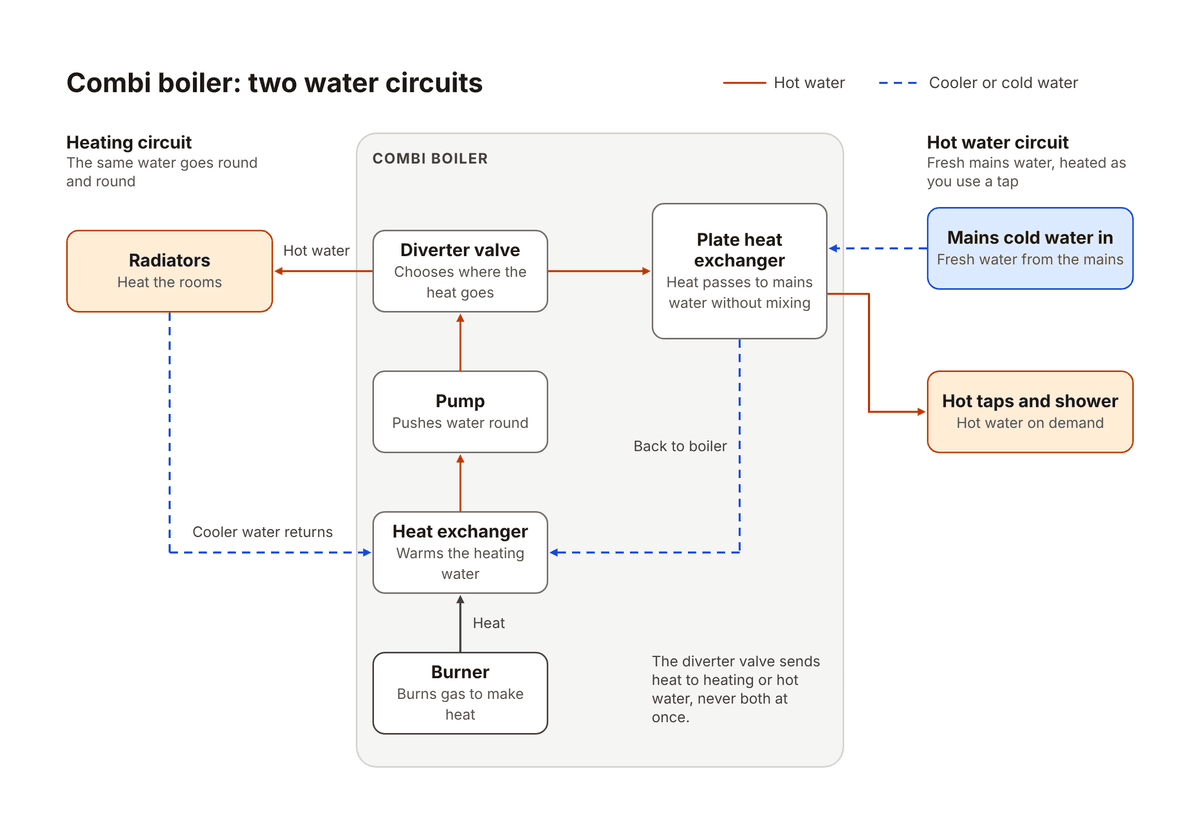
In a typical home, your central heating and household hot water use two separate water circuits. They both get heat from the boiler, but the water doesn't mix.
The Heating Circuit: Water That Goes Round Your Radiators
Your central heating system uses a continuous loop of water to warm your home. The boiler heats the water, a pump sends it through your radiators, and the cooler water returns to the boiler to be heated again.
This water keeps circulating around the system. It doesn't normally need replacing each time you use your heating.
The Hot Water Circuit: Water for Taps and Showers
Here's how a combi boiler heats water for your shower or kitchen tap. Unlike the radiator circuit, this water comes fresh from your mains supply.
You open a hot tap: Cold mains water enters the boiler.
The water gets heated: In most combis, a second heat exchanger (a plate heat exchanger) transfers heat to the incoming water without mixing it with radiator water.
Hot water reaches your tap: The heated water flows to your shower or sink.
Most combi boilers use a diverter valve to prioritise hot water when you open a tap. Your radiator heating may pause briefly and resume when you finish.
System and regular boilers usually heat water in a separate hot water cylinder instead of heating it as you open a tap. The boiler's water passes through a coil inside the cylinder, so your tap water still doesn't mix with your radiator water.
How a Boiler Fits Into Your Central Heating System
Your boiler doesn't work alone. How a central heating system works depends on the pipes, radiators, pump and heating controls connected to the boiler, which work together to keep your home warm. The controls are covered further down.
How central heating works, and where your boiler fits in, also depends on whether you have a sealed or open-vented heating system.
Sealed and Open Vented Heating Systems
Most UK homes use one of two central heating system arrangements: sealed heating systems or open-vented heating systems.
Both circulate heated water through radiators, but they manage water pressure and expansion differently.
Feature | Sealed Heating System | Open-Vented Heating System |
How it works | Water circulates in a closed, pressurised loop | Water circulates through a system connected to a feed-and-expansion tank |
Expansion | Uses an expansion vessel | Uses a feed-and-expansion tank, usually in the loft |
Commonly found with | Combi and system boilers | Older regular boiler installations |
If you're wondering which central heating system you have, check whether there's a small feed-and-expansion tank in your loft or a pressure gauge on your boiler.
Do Boilers Need Running Water?
No, a boiler doesn't need a constant supply of fresh water to heat your home. Your central heating system normally circulates the same water through the radiators and back to the boiler.
The water supply matters differently for each boiler type:
Combi boiler: Needs mains water to provide hot water for taps and showers.
System boiler: Uses a separate hot water cylinder, which is fed either directly from the mains (unvented) or from a loft tank (vented).
Regular boiler: Often uses a cold-water storage tank to supply its hot water cylinder.
If your water supply is turned off, a sealed central heating system can usually keep heating your radiators, provided it has enough water and the correct pressure. A combi boiler won't give you hot water at the taps without mains water.
How a Boiler Heats Your Hot Water
All boilers heat water for your central heating, but they don't all provide hot water for taps and showers in the same way. Some heat water as you need it, while others store hot water in a separate cylinder. That difference is what sets the three boiler types apart.
How Does a Combi Boiler Work?
A combi boiler, short for combination boiler, provides both central heating and hot water from one compact unit.
When you turn on a hot tap, cold mains water enters the boiler. A heat exchanger transfers heat to this water before sending it directly to your shower or sink, while a diverter valve switches the boiler's heat from the radiators to your hot water.
Here's what makes a combi boiler different:
Hot water on demand: It heats water when you need it rather than storing a large supply.
No separate water tank: A standard combi boiler doesn't need a hot water cylinder or cold-water storage tank.
Combi boilers work well in smaller homes with one bathroom. However, their hot water flow can drop when several taps or showers are running together, and low mains pressure gives a weak flow.
How Does a System Boiler Work?
A system boiler heats water for your radiators and stores hot water in a separate cylinder, ready for when you need it.
Unlike a combi boiler, it doesn't heat your tap water directly as you use it.
Here's how a system boiler works:
The boiler heats water and circulates it through a coil inside the hot water cylinder.
The coil transfers heat to the stored water without mixing the two.
Hot water reaches your taps when you open them, using water already heated in the cylinder.
A system boiler is often suitable for larger households that need hot water in several bathrooms.
It has the pump and expansion vessel built in. With a mains-fed (unvented) cylinder you don't need any tanks in the loft, but a vented cylinder still needs a cold-water storage tank there.
However, once the stored hot water runs out, you'll need to wait for the cylinder to heat up again.
How Does a Regular Boiler Work?
A regular boiler, also called a conventional or heat-only boiler, works much like a system boiler. It heats your radiators and stores hot water in a separate cylinder.
However, a traditional regular boiler system usually needs additional tanks and heating components.
A typical conventional system includes:
Boiler: Heats water for central heating and the hot water cylinder.
Hot water cylinder: Stores heated water for taps and showers.
Cold-water storage tank: Usually sits in the loft and supplies the hot water cylinder.
Feed-and-expansion tank: Maintains the heating system's water level and allows heated water to expand.
Regular boilers are commonly found in older UK homes. They can supply hot water to several bathrooms, provided the cylinder and water supply are suitable.
The downside is that the extra tanks take up more space.
What Is a Condensing Boiler and How Does It Work?
A condensing boiler is a modern, energy-efficient boiler that captures heat which older boilers would lose through the flue.
Here's how a condensing boiler works. When gas burns, it produces hot exhaust gases. Instead of letting all that heat escape, a condensing boiler cools the gases and transfers more heat back into the heating system.
As the gases cool, water vapour turns into liquid, called condensate, which drains away through a pipe.
This process helps condensing boilers use less fuel to produce the same amount of heat, potentially reducing your heating bills.
Condensing Is Not a Boiler Type
You might have heard people comparing a combi boiler with a condensing boiler. But they're not two competing options.
Condensing describes how a boiler recovers heat from its exhaust gases, while combi, system and regular describe how it supplies heating and hot water.
That means all three types can use condensing technology.
Gas boilers fitted since about 2005 are likely to be condensing, as are oil boilers fitted since about 2007, according to the Energy Saving Trust.
Flow Temperature and Return Temperature
Two temperatures play an important role in how efficiently your boiler works:
Flow temperature: The temperature of the water leaving your boiler and travelling to your radiators.
Return temperature: The temperature of the cooler water coming back from your radiators.
When the return water is cool enough, your condensing boiler can recover more heat from its exhaust gases. This means it needs less gas to heat the water again. A lower flow temperature means a lower return temperature, which helps your boiler work more efficiently. The savings section below shows how to use this safely.
Do Boilers Need Electricity?
Most gas boilers need electricity to work, as Viessmann explains. Gas provides the heat, but electricity powers the components that keep your central heating system running.
Here's what electricity does inside a typical modern boiler:
Ignition system: Lights the gas burner when heating is needed.
Circulating pump: Moves hot water through your radiators.
Fan: Supplies air for combustion and helps remove exhaust gases.
Heating controls: Power the boiler's electronics, temperature sensors and controls.
During a power cut, most modern gas boilers won't work, even if the gas supply is still connected.
This means your central heating will stop, and a combi boiler won't be able to heat fresh water for taps and showers. If you have a hot water cylinder, you may still have some stored hot water available.
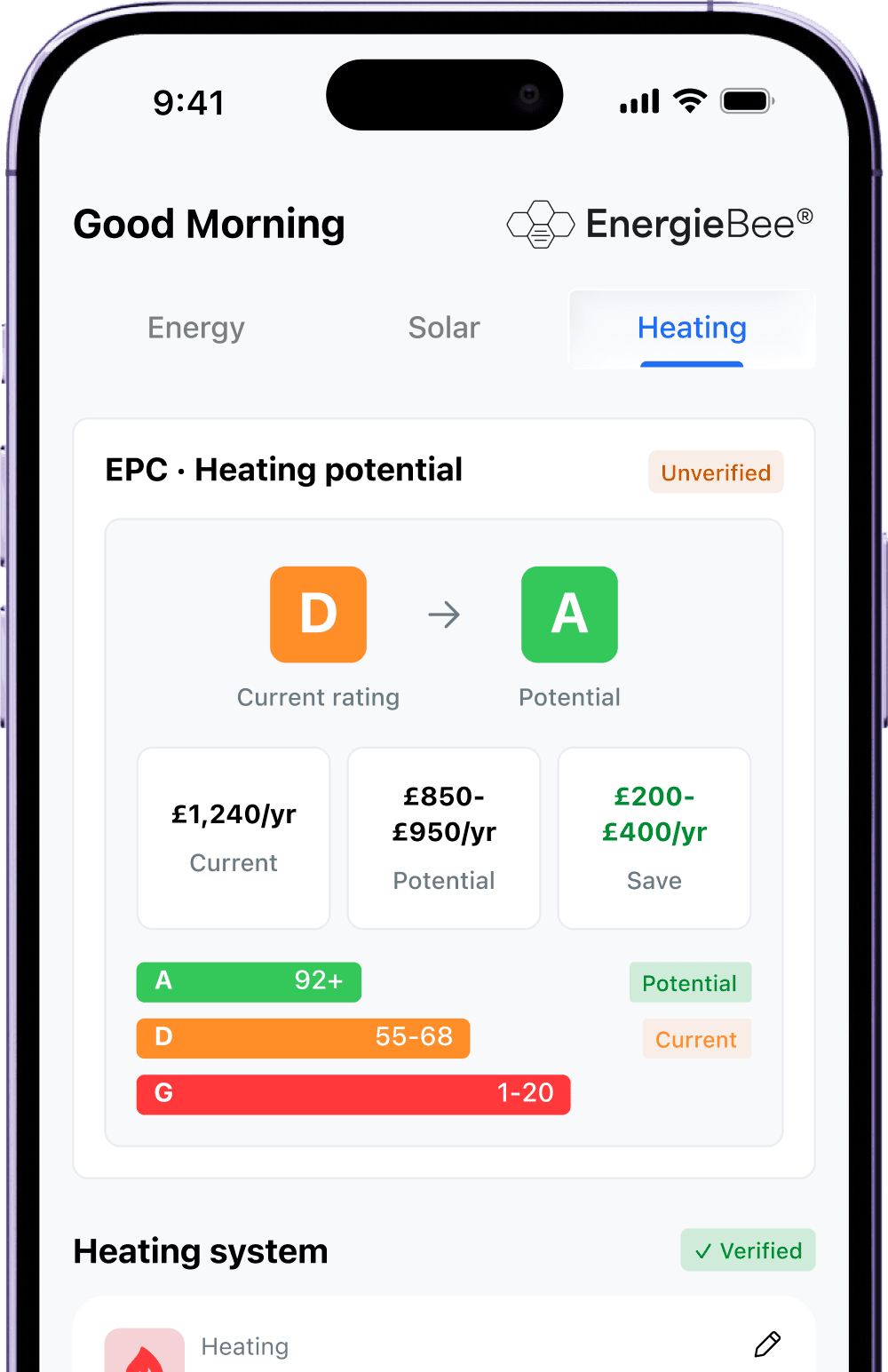
Take control of your energy bills
Track your heating, electricity, solar and tariffs in one place with EnergieBee. Spot energy waste and find ways to save.


Download EnergieBee
Scan with your phone's camera to get the app.
Boiler Fuels: Are Boilers Gas or Electric?
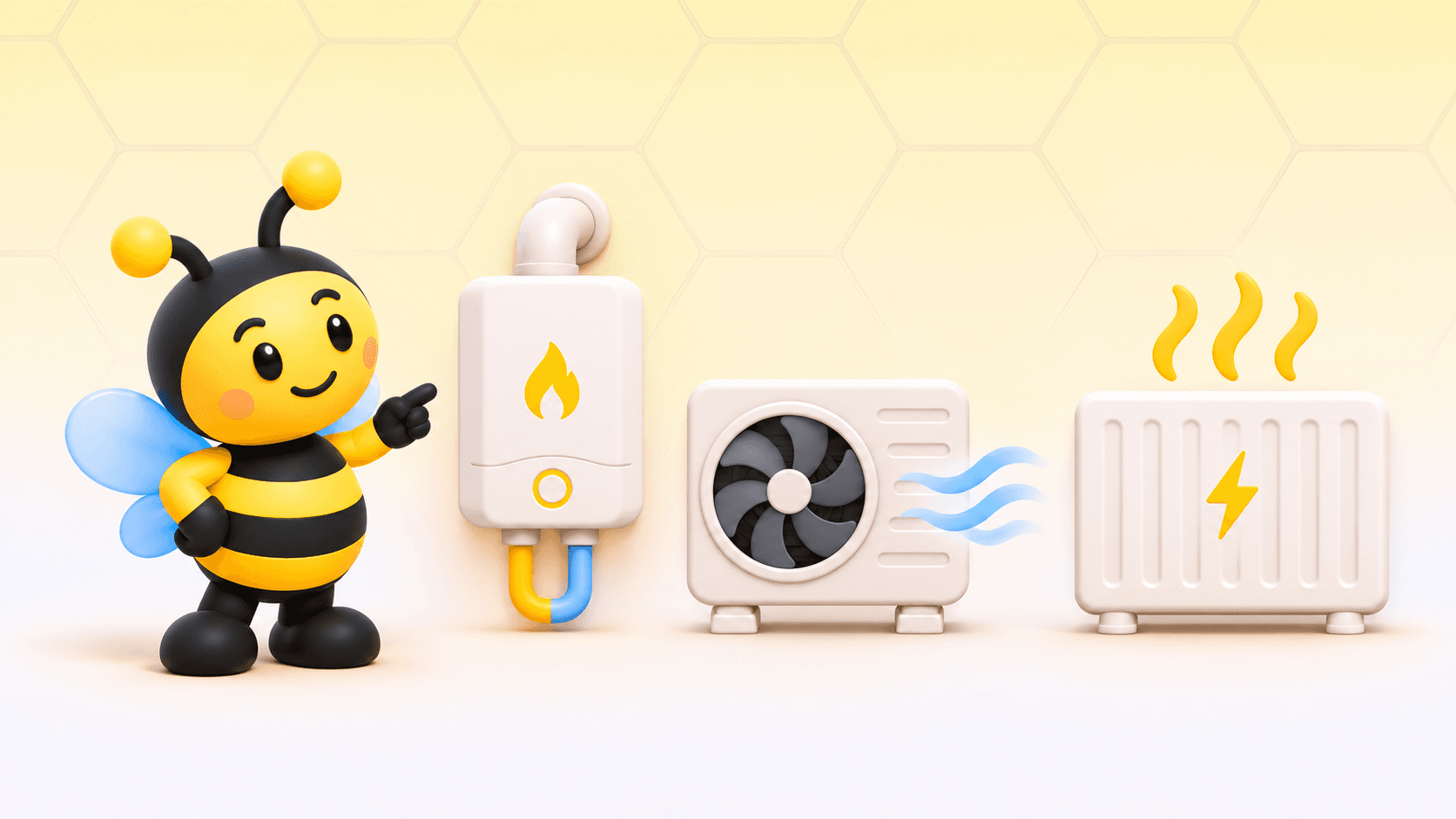
Boilers can run on gas, oil, LPG or electricity. They all heat water for your central heating system, but the fuel they use affects efficiency, running costs and maintenance.
Gas Boilers
Gas boilers burn natural gas to heat water for radiators and hot taps. Most modern models use condensing technology to recover heat and reduce wasted energy.
They're generally cheaper to run than electric boilers on standard UK tariffs.
Oil and LPG Boilers
Homes without mains gas often use oil or LPG boilers.
Oil boilers: Use heating oil stored in a tank. Use an OFTEC registered technician for installation and servicing, and check they're on the OFTEC register.
LPG boilers: Use liquefied petroleum gas stored in a tank or cylinders. Like mains gas boilers, they need a Gas Safe registered engineer.
Both require fuel deliveries, and running costs depend on fuel prices.
Electric Boilers
Here's how electric boilers work: they use heating elements to warm water without burning fuel.
Electric boilers don't need a combustion flue or gas supply. However, Which? says a unit of electricity costs three to four times more than a unit of gas, so electric boilers are usually more expensive to run.
What Controls a Boiler?
Boiler controls explained in short: a timer or programmer sets when the heating runs, a room thermostat tells the boiler when to start and stop, and thermostatic radiator valves (TRVs) control the heat in each room. The Energy Saving Trust says a central heating system should have at least a programmer, a room thermostat and TRVs, plus a cylinder thermostat if you have a hot water cylinder.
Programmer or timer: Switches the heating on and off at set times. On a combi it controls heating only, because hot water comes on demand.
Room thermostat: Stops the boiler and pump once the room reaches your chosen temperature, and restarts them when it cools. Turning it up higher won't heat your home any faster.
TRVs: Sense the air temperature around them and reduce the hot water flowing through that radiator once the room is warm enough.
Cylinder thermostat: Stops stored water getting hotter than it needs to be. The Energy Saving Trust suggests setting it to 60°C.
In England, Boiler Plus rules have required time and temperature controls with every gas or oil boiler installation since 6 April 2018.
How Does a Boiler Thermostat Work?
A boiler thermostat sets the temperature of the water the boiler sends to your radiators, known as the flow temperature. It's separate from your room thermostat: the room thermostat and other heating controls turn your heating on and off, while the boiler thermostat changes the temperature of the water in the system.
Set it as the manufacturer's instructions say. A combi boiler has two, one for heating and one for hot water.
Frequently Asked Questions
Is a Combi Boiler Gas or Electric?
Most combi boilers in the UK run on natural gas, but electric and LPG models are also available. Most gas combi boilers also need electricity to power their pumps, fans and controls.
Does a Combi Boiler Need a Water Tank?
No. Standard combi boilers don't have a water tank. They heat water directly from the mains when you open a hot tap, so there's no hot water cylinder or cold-water storage tank.
What Happens if a Boiler Runs Out of Water?
If a sealed boiler loses too much water, its pressure drops and it may shut down to protect itself. Most manuals give a cold pressure of about 1 to 1.5 bar, so check your gauge and top up only as your manual describes.
Don't assume regular top-ups are normal. Repeated pressure loss may indicate a fault. Worcester Bosch lists leaks and a faulty pressure relief valve among the causes of a system that constantly loses pressure. If the pressure keeps dropping, call a Gas Safe registered engineer.
How Long Do Boilers Usually Last?
A well-maintained boiler typically lasts around 10 to 15 years, although some last longer. Regular servicing, water quality and usage all affect its lifespan.
How Do I Know Which Boiler I Have?
Check your heating setup:
Combi: No separate hot water cylinder or loft water tanks.
System: Has a hot water cylinder, and loft tanks only if the cylinder is vented.
Regular: Usually has a hot water cylinder and water tanks in the loft.
You can also check your boiler's model number or installation paperwork, or ask a Gas Safe registered engineer.
 Sharieaz Kavier