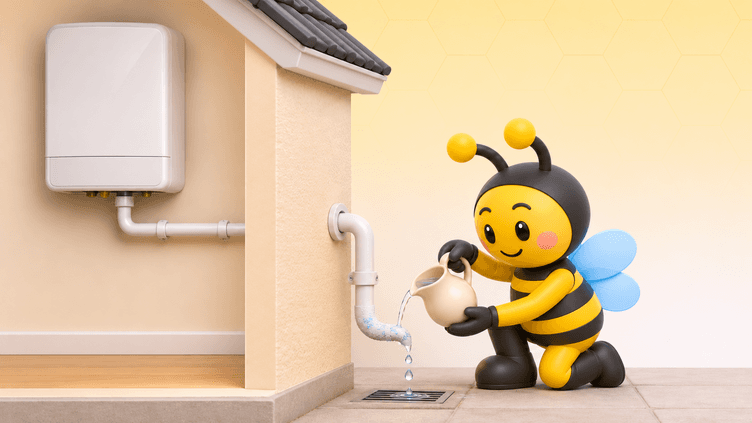
Your boiler's condensate pipe carries wastewater away from the boiler. During freezing weather, ice can block this pipe and cause your boiler to shut down, leaving you without heating or hot water.
Luckily, a frozen condensate pipe is often something you can fix yourself, as long as the pipe is safely accessible.
Here's how to get your boiler working again: Locate the frozen section, gently thaw it using warm water and reset your boiler once the blockage has cleared.
Let's walk through the full process so you can get your heating back on safely.
Only attempt to thaw a condensate pipe if you can safely reach it from the ground. Never use boiling water, naked flames or attempt to open or repair the boiler yourself. If the problem continues, contact a qualified heating engineer
Before You Start: Understanding Your Boiler Condensate Pipe
Before you start thawing your frozen boiler condensate pipe, let's get familiar with it first. Knowing where to find it and what signs to look for will make it easier to figure out what's wrong and fix it safely.
What Is a Boiler Condensate Pipe?
A boiler condensate pipe is usually a white PVC-U pipe that carries wastewater from your boiler to a drain. Modern condensing boilers produce this water as they recover extra heat from the gases used during heating. It's a normal part of how a boiler works.
The pipe helps drain this wastewater safely away from your boiler. If it becomes blocked by ice, the water cannot escape properly, and your boiler may shut down.
Where to Find Your Boiler Condensate Pipe?
The condensate pipe usually comes from the bottom of your boiler. It's typically made of white, grey or black plastic.
Depending on your home's plumbing, it may:
Connect to an internal waste pipe, often beneath the kitchen sink.
Run through an outside wall and down towards a drain.
Follow a longer route before reaching the drainage system.
If your boiler condensate pipe runs outside, the exposed section is particularly vulnerable to freezing during winter.
How Do You Know If Your Boiler Condensate Pipe Is Frozen?
Here are the most common signs:
No heating or hot water: Your boiler suddenly stops working during freezing weather.
Gurgling noises: You hear unusual bubbling or gurgling sounds coming from the boiler.
Boiler error codes: A warning light or fault code appears on the display.
Freezing conditions: Your boiler has stopped working while outside temperatures are below freezing.
These are strong clues, but they don't always mean the condensate pipe is frozen. A boiler fault code can have several possible causes,
Fault codes differ by brand, and sometimes by model. These are the codes commonly reported for a frozen condensate pipe
Brand | Codes reported |
Worcester Bosch | EA (also seen as EA229), D5. 6A on Buderus |
Vaillant | F28, F29 |
Glow-worm | F1, F4, F28, F29 |
Ideal | L2, F2, LF |
Baxi | E133, E28 |
Potterton | E133, E28 |
Viessmann | F4 |
Vokera | 92, 93, 95 |
12 Simple Steps to Thaw a Frozen Condensate Pipe Safely
A frozen condensate pipe can often be thawed at home. Just make sure the pipe is safely accessible from ground level before you begin.
Step 1: Switch Off Your Boiler
Start by switching off your boiler using its normal controls. Leave it off while you thaw the frozen pipe.
Step 2: Find Your Boiler Condensate Pipe
Look for the plastic pipe that carries wastewater from your boiler to a drain. It may run through an outside wall and down the exterior of your home.
Step 3: Check the Pipe Outlet
Start where the condensate pipe empties into the drain. The exposed end of the pipe is a common freezing point, especially during prolonged cold weather.
Step 4: Check Bends and Low Points
Follow the accessible pipe and look for bends, elbows or dips where wastewater might collect. Ice can form inside these sections even when nothing looks frozen outside.
Step 5: Prepare Some Warm Water
Fill a jug or watering can with lukewarm water. Never use boiling water, as the sudden heat could crack the plastic condensate pipe.
Step 6: Slowly Pour Water Over the Frozen Section
Gently pour warm water over the outside of the frozen pipe. Focus on the suspected blockage and allow the warmth to melt the ice gradually.
Step 7: Repeat Until the Ice Melts
If the pipe is still frozen, apply more warm water. You can also hold a hot water bottle or warm heat pack against the pipe.
Step 8: Check Whether the Blockage Has Cleared
Look for melting ice or trapped water beginning to drain away. You won't always see water flowing, so don't assume the blockage has cleared just because the outside looks normal.
Step 9: Check Your Boiler's Reset Instructions
Before restarting, check your boiler's manual for the correct reset procedure. The process can vary between models, and some boilers may restart automatically.
Step 10: Turn Your Boiler Back On
Once the blockage appears to have cleared, switch your boiler back on using its normal controls.
Step 11: Reset Your Boiler If Needed
If your boiler still shows a fault, follow the reset instructions in the manual. Don't repeatedly press the reset button if the same fault returns.
Step 12: Check Your Heating and Hot Water
Turn on your heating or run a hot tap to check whether everything is working normally again.
If your gas boiler still won't start, arrange for a Gas Safe registered engineer to inspect it.
Never use boiling water or naked flames to thaw a condensate pipe. Don't climb ladders, disconnect pipework or open the boiler casing. Watch out for spilled water freezing on the ground, as it can create a slipping hazard
Keep your home warm without wasting energy and money
EnergieBee brings your heating, solar and household energy use into one simple dashboard, helping you spot unnecessary usage and make smarter decisions to save money.


Download EnergieBee
Scan with your phone's camera to get the app.
What to Do If Your Boiler Still Isn't Working After Thawing
If your boiler still isn't working after thawing the frozen condensate pipe, don't assume the pipe is the only problem. Here are a few things to check, depending on what's happening.
If there's still ice around the pipe: Check the accessible outside bends and drain outlet. If you spot any remaining ice, gently apply warm water again until it clears.
If your boiler shows an error code: Note the code and check your boiler's manual. Some boiler fault codes have several possible causes, so a frozen pipe might not be the only issue.
If your boiler won't turn on at all: Check that the power supply is on and that the circuit breaker hasn't tripped. Don't open the boiler casing to investigate.
If your boiler is on but there's no heating: Check your thermostat temperature and heating timer. Try setting the thermostat above the current room temperature to see if the heating starts.
If your boiler pressure is too low: Check the pressure gauge against the recommended range in your boiler's manual. If it needs topping up, follow the manufacturer's instructions only if you're confident doing so.
If these checks don't help, avoid repeatedly resetting the boiler. There may be an internal fault that needs professional attention.
Could It Be a Blocked Condensate Trap or Another Boiler Fault?
Yes. Sometimes the problem isn't the frozen pipe outside, but a blocked condensate trap inside the boiler.
The trap helps wastewater drain away safely. If dirt or debris builds up inside it, the water may stop flowing even after the outside pipe has thawed.
Other possible causes include:
Ignition failure: The boiler struggles to light.
Gas supply issues: The boiler isn't receiving enough gas.
Low boiler pressure: Some boilers stop working when system pressure drops too low.
Don't open the boiler or try to clean the condensate trap yourself. If the problem continues, have it checked by a Gas Safe registered engineer for a gas boiler.
When Should You Call a Gas Safe Registered Engineer?
You can often thaw a frozen condensate pipe yourself. But some problems are best left to a professional.
Call a Gas Safe registered engineer if:
Your boiler still won't start after thawing the pipe and following the reset instructions.
The pipe is hard to reach, especially if it's high above the ground.
The pipe keeps freezing, even after you've added insulation.
You notice leaks or damage around the boiler or condensate pipe.
You suspect an internal fault, such as a blocked condensate trap or ignition problem.
If you smell gas, stop using the boiler, move somewhere safe and call the National Gas Emergency Service on 0800 111 999.
Why Does Your Condensate Pipe Keep Freezing?
If your boiler condensate pipe freezes every winter, the problem may be more than just cold weather.
According to industry guidance on condensate pipe installation, freezing is particularly common when outside pipework isn't properly insulated or installed.
Here are some common reasons:
Poor insulation: Exposed pipes lose heat quickly in freezing temperatures.
Long external pipe runs: The longer the pipe stays outside, the more time the wastewater has to cool.
Incorrect pipe slope: Water collects in low points instead of draining away.
Narrow pipework: Smaller pipes can become blocked by ice more easily.
Exposed drain outlets: Ice can form where the pipe ends, blocking the flow.
Even an insulated condensate pipe can freeze during prolonged periods of very cold weather.
How to Stop Your Condensate Pipe From Freezing Again
The best way to prevent a frozen boiler condensate pipe is to make sure wastewater drains away quickly without getting too cold.
Here's what you can do:
Insulate exposed pipes: Use suitable waterproof, UV-resistant condensate pipe insulation, also called pipe lagging.
Check the insulation: Look for exposed sections, loose joints or damaged lagging, especially around bends.
Keep the drain outlet clear: Check for visible ice, leaves or debris without dismantling the pipework.
Consider rerouting the pipe: Ask an engineer whether it can connect to an internal drain instead of running outside.
Fix recurring drainage problems: An engineer can check the pipe size, slope and whether additional frost protection is needed.
It's also worth asking your engineer to inspect the condensate pipe during your annual boiler service. You can check how much a boiler service costs before booking.
Remember: Insulation reduces the risk of freezing, but it isn't a guaranteed fix. If your condensate pipe keeps freezing, have an engineer check how it's installed.
Frequently Asked Questions
How Long Does a Frozen Condensate Pipe Take to Thaw?
It can take a few minutes or longer, depending on how much ice has built up and how cold it is outside. Keep applying warm water gently until the blockage clears.
Will a Frozen Condensate Pipe Thaw on Its Own?
Yes, a frozen condensate pipe can thaw naturally when temperatures rise above freezing. However, your boiler may still need resetting before the heating and hot water start working again.
Can a Condensate Pipe Freeze Even When Insulated?
Yes. Even with proper condensate pipe insulation, prolonged freezing weather can cause ice blockages. Poor drainage, exposed sections or damaged insulation can increase the risk.
Can an Oil Boiler Condensate Pipe Freeze?
Yes. Modern condensing oil boilers also produce wastewater that drains through a condensate pipe. If the outside section freezes, the boiler may shut down, just like a gas condensing boiler.
 Sharieaz Kavier