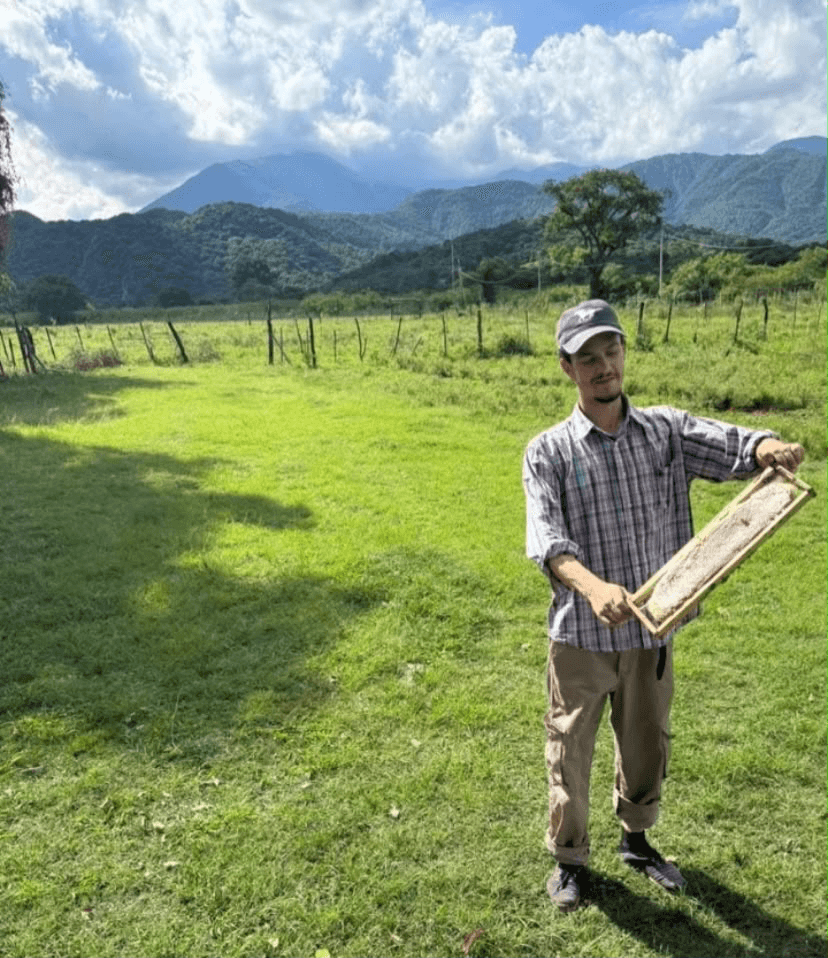
Talking with beekeepers is a pleasure that few of us get to experience. First, you need to find yourself close to one. But more importantly, you need to be willing to listen, because conversations with beekeepers often reveal much more than how to care for a hive.
People who work with bees spend years observing balance, change and the quiet intelligence of nature. They learn to read small signals, to pay attention to cycles and to understand that every intervention has a consequence.
After spending so much time alongside colonies, many beekeepers develop a particular way of seeing the world. Talking with them can feel like having a conversation with nature itself, because much of what they know comes from observing, waiting and learning from the bees.
Some people become beekeepers because they grew up around hives. Others discover bees later in life, through a moment that changes the way they see the natural world.
For Martín Faraldo Paz, that moment came during a journey through Patagonia, Argentina, when a friend introduced him to his first beehives. What began as curiosity soon became a desire to spend more time with these fascinating creatures and understand the life of the colony.
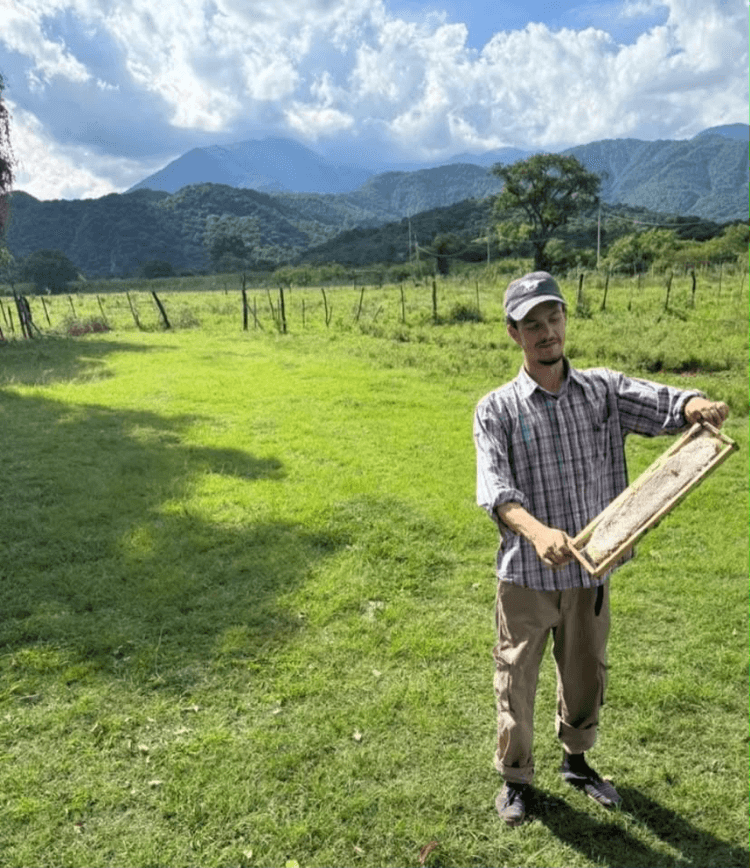
Today, Martín manages hives in La Caldera, Salta, in north-west Argentina, surrounded by the biodiversity of the Yungas forest. His approach to beekeeping is based on observation, respect and the understanding that bees have been adapting to their environment for millions of years... while humans are still learning how to understand them.
About your beginnings in beekeeping
How did you start in beekeeping?
I started beekeeping because I was inspired by someone else.
During a trip through Patagonia, Argentina, I spent several months visiting a friend who was studying for a degree in Agroecology. He had received some beehives and had been raising and studying them for several years.
I was fascinated by the relationship he had with the colonies and by the enthusiasm he showed when talking about them. Without hesitation, I asked him to teach me and show me how they worked.
He kindly introduced me to the basics of beekeeping. I learned about the structure of the colonies, took part in honey harvesting and helped with some of the seasonal management tasks.
Something was awakened in me during that experience. From that moment onwards, I felt a strong desire to stay close to bees.
How old were you when you created your first apiary, and what surprised you the most?
I was 26 when I designed my first apiary.
What surprised me the most was being able to interact so closely with these beings and begin to understand how intelligent and subtle they are.
Bees have spent millions of years perfecting their way of living and surviving. We have only spent a few centuries trying to understand them. That idea made me question many things. Perhaps true beekeeping is not about dominating the colony, nor about completely abandoning it to its own devices. Perhaps it is about learning how to listen.
Maybe the balance lies somewhere else: intervening when it is truly necessary, and having the wisdom not to intervene when nature already knows what to do.
“Perhaps true beekeeping is not about dominating the colony. It is about learning how to listen.”
Continue reading: Martín explains how he manages his hives throughout the seasons, why he chose Langstroth hives, and the mistakes that shaped his approach to beekeeping.
Working with bees: hive management and techniques
What type of hives do you use?
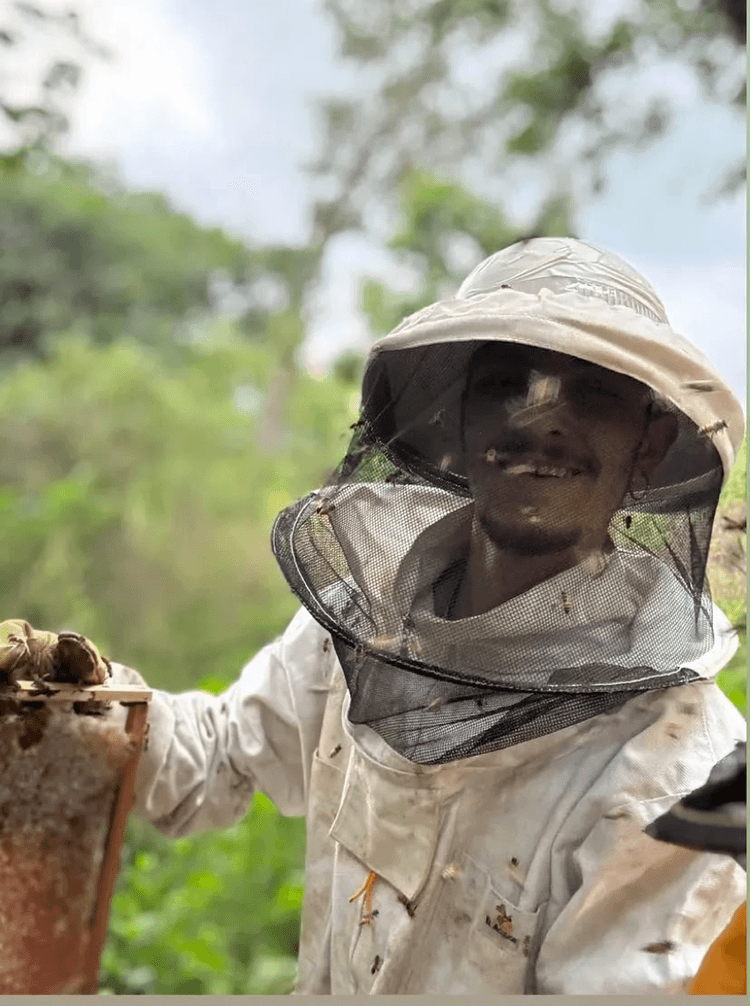
The hives I chose for my apiary are Langstroth hives. I chose this system because I took part in a beekeeping course organised by INTA (the National Institute of Agricultural Technology in Argentina), where this type of hive was recommended and is widely used throughout the country.
At the time, it was the only system I knew. I had also learned about it from a friend and fellow beekeeper who taught me a great deal and who happens to manufacture this type of hive.
How does your management of the colonies change throughout the seasons?
Hive management always changes from season to season.
Here in La Caldera, Salta, the busiest period begins with flowering, during spring and summer. At this time, we need to have strong, healthy colonies ready to collect and store large amounts of honey.
During summer, which is also the rainy season in this region, hive management remains very active. It is still possible to harvest honey, but we need to pay close attention to problems that become more common at this time of year, such as ants, fungi, rodents and other small animals that can affect the colonies.
During autumn and winter, we prepare the colonies for their seasonal rest. We focus on ensuring good health, checking their condition and making sure they have adequate food reserves to survive the colder months.
In simple terms, we design our annual management around the flowering cycles of the plants in the area.
I try to intervene as little as possible and always with the greatest respect. I try not to kill, crush or harm the bees or damage the colony.
For Varroa management, we use thymol, which is extracted from plants such as thyme and oregano. It works through evaporation, using gels that are placed inside the hives.
What was the biggest mistake you made when you started beekeeping? What did you learn from it?
My biggest mistake was believing during my first year that it was not necessary to treat the colonies with thymol or oxalic acid.
This led to several of my colonies becoming sick. However, I was able to solve the problem, and most importantly, I learned from the experience.
I learned that it is always valuable to have someone accompany you on this journey whenever possible: to read, to ask questions and to talk with people who have experience in the field.
It is important not to jump to conclusions, especially when those conclusions come from a lack of knowledge.
How do you recognise if a colony is sick or facing a problem?
With the limited experience I have today, I feel that you gradually develop knowledge and also develop your senses when working with bees.
Nowadays, I find it relatively easy to recognise when a colony has a health problem simply by looking at it and, above all, by smelling it.
However, from an academic point of view, there are many different factors that need to be considered.
These include the colour and condition of the eggs and larvae, the state of the queen, the number of bees in the colony, food reserves, Varroa levels and the behaviour of the bees, among other indicators.
“You develop your senses when working with bees. Sometimes you can recognise what is happening simply by looking and smelling.”
Continue reading: In the next section, Martín discusses how climate change is affecting flowering cycles in Argentina, the impact of pesticides and why biodiversity is essential for healthy ecosystems.
Beekeeping, biodiversity and climate change
How is climate change affecting bees in your area?
I am really glad that people are talking about this subject, because it is something that many beekeepers in the area have noticed.
From what I have seen, and from conversations with other local beekeepers, we agree that the main flowering period has become shorter over the last few years.
Warmer winters, earlier springs, intense rainfall and the loss of biodiversity: all of these factors come together in what several institutions are now calling a “mismatch between plants and bees”.
This is a topic that is currently being studied extensively. If a plant brings forward its flowering by ten days because of a warmer winter, but the colony has not yet reached its peak population, part of the honey flow can be lost.
This timing mismatch is a major concern for beekeepers and researchers.
Today, it is becoming increasingly clear that flowering patterns also reflect the health of an ecosystem.
When a landscape, forest, wetland or natural environment loses biodiversity, water availability and climate stability, it does not only affect plants and animals. It also changes the food calendar available to bees.
What is your opinion on the use of pesticides?How do you protect your colonies?
I am completely against the use of pesticides, especially highly toxic products and those used without proper regulation.
Unfortunately, this is something that happens in Argentina. For example, products such as Roundup have been approved for use, despite the concerns surrounding their impact.
Many beekeepers have reported losing entire apiaries because of pesticide use, especially when these products are applied without any awareness of the consequences.
These chemicals do not only affect bees. They can also reach schools, parks, neighbourhoods and hospitals. The same people applying these substances are often living in those same environments.
For me, the only way to protect an apiary from this type of risk is by creating a diverse natural barrier around it.
This means planting trees of different heights and layers, creating wind protection with large trees and dense foliage, as well as including shrubs and other plants around the apiary.
Whenever possible, I also try to raise awareness: whether it is with a neighbour, a friend or someone in the local community.
Do you see differences between “traditional” beekeeping and the way young beekeepers work today?
Yes, I definitely see differences, and it is impressive how much things have changed.
One of the biggest changes I have noticed is the way people interact with and manage colonies. There has also been enormous global growth in the commercialisation of honey production, which in many cases requires large-scale production.
From my perspective, both approaches have their advantages and disadvantages. We need to study, weigh up the different options and choose what feels most coherent with our own objectives.
Personally, I have a more holistic vision. I try to integrate different forms of knowledge, including biodynamic practices and observations connected with lunar cycles, while always keeping the care of the land and people as a priority.
I believe we need to learn from nature: to observe, to listen and to trust the living system that supports us.
If something does not work, the system is teaching you something.
We should not fight against nature.
We should learn from it.
“If something does not work, the system is teaching you something. We should not fight against nature. We should learn from it.”
Continue reading: Martín shares what makes Yungas honey unique, how honey travels from the hive to the jar, and why recognising quality honey requires both science and experience.
From hive to honey jar
What makes your honey unique?
That is a difficult question.
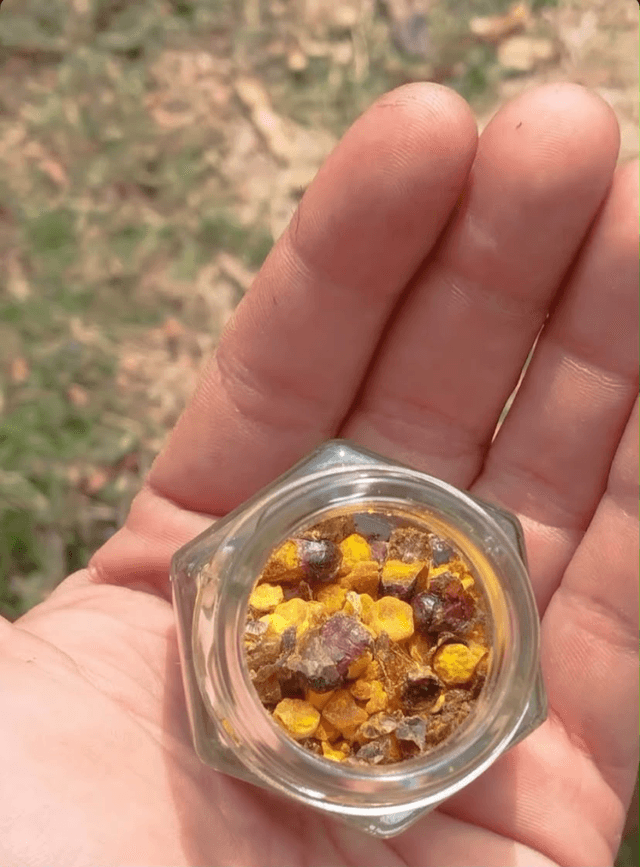
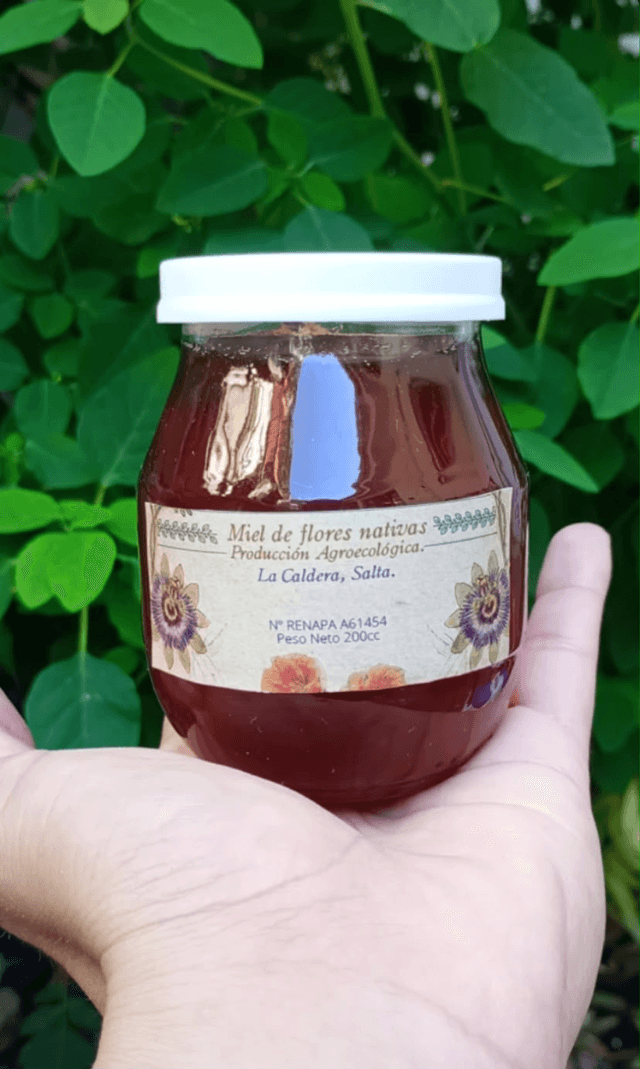
What makes the honey produced by the bees I care for unique is the environment where they live.
The colonies are located in a very well-preserved area of the Yungas forest, producing a multifloral Yungas honey that reflects the incredible biodiversity of this ecosystem.
The flavour, aroma and characteristics of the honey come directly from the landscape where the bees collect their nectar.
What is the process from the hive to the jar?
We try to make the process as quick as possible and with the least intervention necessary.
The process is quite simple, homemade and artisanal.
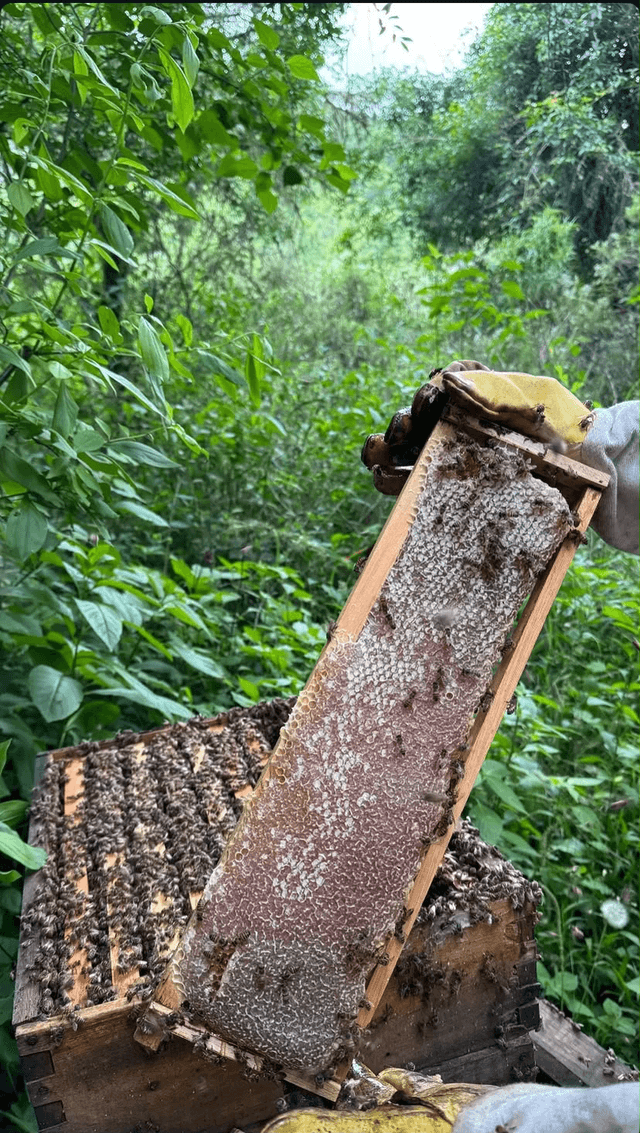
It is worth mentioning that we also offer honeycomb frames freshly removed from the hives, exactly as they are. There is a growing interest from people who appreciate honey in this more natural form.
To summarise the process: first, we remove the wax cappings from the honeycomb so that the honey can be extracted. Then, we place the frames inside a manual extractor, fill it and spin it.
We repeat this process with all the frames that have been harvested. The honey collects at the bottom of the extractor, ready to be poured into the chosen containers.
What advice would you give someone who wants to recognise high-quality honey?
If you ask a laboratory, they will talk about factors such as moisture content, HMF levels and diastase activity.
But if you ask an experienced beekeeper, the answer usually combines science, observation and years of experience in the field.
There are many things to consider.
First of all, quality honey comes from a proper harvest. The honey should only be collected when the bees have finished preparing it. One important indicator is that the comb should be around 80–90% sealed with wax cappings.
Something I always like to emphasise is the importance of using our senses.
In this case, aroma is a key indicator of honey quality. Good honey should naturally carry floral aromas, such as flowers or eucalyptus, depending on where it comes from. The taste is equally important.
For me, quality honey is mature, pure and unadulterated. It comes from properly capped honeycombs, is extracted hygienically, is not excessively heated or over-filtered, and keeps its original aroma and flavour.
Above all, it should reflect the landscape it comes from.
The connection between people and bees
What do you love most about this craft?
I had never really been asked this question before. I had to stop and think for a moment. I feel that it is a combination of many things.
First of all, since the very first time I entered an apiary, I wanted to return again and again. I do not really know why... something about it simply called me.
Another thing I love is the sensations that come from being close to a hive: the aromas that emerge from the colony, the sound of the swarm, even the occasional sting.
I love sharing that experience with others, trying to understand bees and learning from them.
I love having them close to my life, studying them and observing them. They create so many emotions.
Over the last few years, I have also been rescuing swarms in the city and surrounding areas, with great success and a very positive response from people.
I love being able to remove a colony from someone's home and take it somewhere where it can truly feel comfortable and continue its life.
If you could change one thing about how people perceive beekeeping, what would it be?
I would like to change the way people see bees as “bad” or “aggressive” creatures.
Bees are intelligent beings. They are focused on their work and on the progress and survival of their colony.
When they sting us, most of the time, we have done something that caused that reaction.
They are not looking to attack. They are simply protecting their home.
“Bees are intelligent beings focused on their work and the survival of their colony.”
About Martín Faraldo Paz
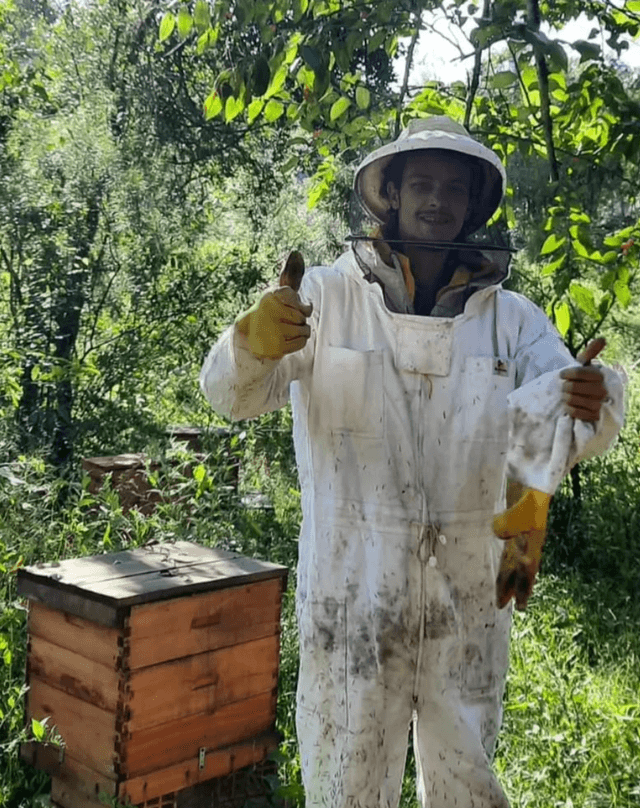
Martín Faraldo Paz is a beekeeper from Salta, Argentina, based in La Caldera, in the Yungas region. He works with Langstroth hives, produces multifloral honey and carries out swarm rescues, promoting a respectful approach to beekeeping that prioritises biodiversity, observation and coexistence with nature.