
An eclipse is always a fascinating event to witness. It's a visual spectacle and a reminder of the powerful forces of nature.
The 12 August 2026 eclipse was the second solar eclipse of the year.
As the Moon moved across the Sun, photovoltaic panels received less sunlight and solar generation fell. In Great Britain, the eclipse coincided with a period of tight electricity margins during a summer heatwave, prompting the National Energy System Operator (NESO) to ask the market for additional capacity.
So we couldn't help but wonder: how do you keep electricity supply and demand balanced when renewable generation can change quickly?
"An eclipse provides an unusually clear example because the change in sunlight follows a known pattern. Weather conditions still determine how that pattern translates into actual electricity generation."
Does a solar eclipse affect solar panels?
Yes. Solar photovoltaic panels convert sunlight into electricity, so when the amount of sunlight reaching them decreases, their output falls.
The effect depends on the type of eclipse and the location of the solar panels.
During a total solar eclipse, the Moon completely covers the Sun for observers within the path of totality. Solar generation can fall sharply during the period of maximum coverage before recovering as sunlight returns.
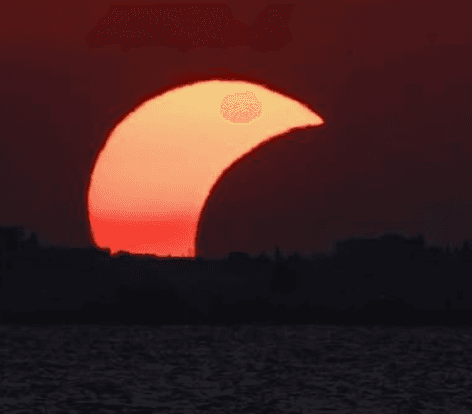
A partial solar eclipse covers only part of the Sun. PV systems continue producing electricity, although output can still fall significantly if a large proportion of the Sun is obscured.
During an annular solar eclipse, the Moon passes in front of the Sun while appearing too small to cover it completely. A bright ring of sunlight remains visible, so solar panels continue receiving direct sunlight throughout the event.
The impact on an electricity system depends on more than the type of eclipse. The amount of solar capacity in the affected area, the time of day, the position of the Sun and local weather all matter.
How much does solar power drop during an eclipse
There is no single figure that applies to every solar eclipse.
Under clear skies, the reduction can be substantial. Across Europe, transmission system operators estimated that photovoltaic output could fall by as much as 9.7 GW during the 12 August 2026 eclipse. ENTSO-E described the event as a rapid but predictable change in generation between approximately 19:15 and 21:30 CEST.
Great Britain experienced a smaller effect because of the timing and geometry of the eclipse. Estimates before the event suggested that British solar generation could fall by roughly 300 MW to 1.1 GW.
Weather can change the picture considerably.
If clouds are already blocking sunlight, the additional effect of an eclipse may be smaller. Clear skies allow the reduction in solar irradiance to become much more visible in PV output.
This is one reason solar forecasting matters. Knowing that an eclipse is coming gives grid operators an excellent prediction of the astronomical event. Forecasting the resulting electricity generation still requires information about weather, solar capacity and conditions across the affected region.
What happened to Britain's electricity grid during the 2026 eclipse?
The 12 August eclipse created a particularly interesting situation in Great Britain.
The eclipse was expected to cover around 90–95% of the Sun across much of the country, with the event taking place between roughly 6pm and 8pm.
At the same time, Britain was experiencing a summer heatwave. Higher temperatures can increase electricity demand as households and businesses use more cooling and refrigeration.
That combination mattered.
Solar generation was expected to decline just as electricity demand remained relatively high. NESO therefore issued an Electricity Margin Notice (EMN), asking the electricity market to make additional generation capacity available.
The notice initially indicated a potential margin shortfall of around 1.76 GW for the evening period. On the morning of 12 August, the forecast shortfall was revised to 1.2 GW, with a contingency requirement of 676 MW. The notice was cancelled at 12:57 that day after the system position improved.
Importantly, an EMN does not mean that electricity supplies are about to fail. NESO describes it as a way of asking the market for a larger safety cushion between expected supply and demand.
The episode shows why grid balancing becomes more complex as the electricity mix changes.
The eclipse was predictable. The electricity system was more complicated.
The astronomical event is extremely predictable: operators know when it will happen, where the Moon's shadow will pass and how much of the Sun will be obscured.
But the electricity system has many more moving parts.
Solar generation depends on weather. Electricity demand changes throughout the day. Generators can be unavailable. Interconnectors may be importing or exporting power. Consumers can also change how much electricity they use.
NESO continuously forecasts supply and demand and maintains an operating margin to deal with unexpected changes. Its control room can call on a range of tools to restore that cushion when conditions become tighter.
During the eclipse, the Moon's movement was one of the easiest variables to predict.
Everything around it required much more careful balancing.
What role does solar forecasting play?
Solar forecasting is becoming increasingly important as photovoltaic generation takes up a larger share of the electricity mix.
A useful forecast needs to answer more than one question:
How much solar electricity will be produced?
Where will it be produced?
When will output start to fall?
How quickly will it recover?
And how does that generation compare with expected electricity demand?
An eclipse provides an unusually clear example because the change in sunlight follows a known pattern. Weather conditions still determine how that pattern translates into actual electricity generation.
The same principle applies on an ordinary afternoon when clouds move across a large solar-producing region. The cause may be less spectacular, but the grid still needs to respond to changes in generation.
Why grid flexibility matters
When solar generation falls, another part of the electricity system has to respond if demand remains unchanged.
That response can come from several places.
Battery storage can charge when electricity is plentiful and discharge when supply becomes tighter.
Flexible generation can increase output when required.
Interconnectors can allow electricity to move between neighbouring markets.
And demand response can help shift or reduce electricity consumption when the grid needs additional flexibility.
These resources give system operators more options when conditions change.
NESO already uses demand flexibility as part of its wider approach to balancing the electricity system. Its summer planning has highlighted flexibility services as a way to help manage changing patterns of electricity generation and demand.
Demand response: the other side of the equation
Most discussions about solar generation focus on the supply side.
There is another possibility: changing demand.
If a household has a battery, for example, it can store electricity when solar generation is high and use that stored energy later.
A smart heating system can also adjust when it consumes electricity. Electric vehicle charging can be shifted to a different time when the user has flexibility.
Individually, these changes may be small. Across thousands or millions of homes and businesses, they can become a useful source of flexibility for the electricity system.
This becomes particularly interesting during events such as an eclipse, when operators have advance warning that solar generation will change.
The same flexibility can also help with everyday fluctuations caused by weather, renewable generation and changing demand.
The eclipse was a European grid event, too
Great Britain's experience formed part of a much larger European operation.
ENTSO-E and Europe's transmission system operators had been preparing for the 12 August eclipse in advance. Under clear-sky conditions, they estimated that European PV output could fall by up to 9.7 GW.
The organisation described the change as rapid but predictable and said that coordination between transmission system operators would help maintain secure system operation.
That distinction matters.
A large change in renewable generation does not automatically make a grid unstable. The system can prepare for foreseeable changes and use different resources to maintain the balance.
The more renewable generation is connected to the grid, however, the more valuable accurate forecasting and flexible resources become.
What eclipses can teach us about renewable energy
The 2026 solar eclipse lasted only a few hours.
The challenge it illustrated is becoming part of everyday electricity system operation.
Solar generation changes whenever clouds move, weather conditions shift or the Sun rises and sets. Electricity demand changes at the same time. The grid has to keep the two sides in balance continuously.
An eclipse simply makes that process easier to see.
The Moon moves across the Sun. Solar generation changes. Operators adjust their forecasts. Other sources of electricity and flexibility become more important. Demand can also become part of the solution.
The event in Great Britain showed how these pieces can come together in practice.
It also offered a useful reminder that predictability and flexibility work best together. Knowing that solar generation will change gives the electricity system time to prepare. Having enough flexible capacity gives it the means to respond.
What comes next?
The next total solar eclipse visible from parts of Europe will take place on 2 August 2027, with the path of totality crossing Spain and continuing across the Mediterranean region.
An annular solar eclipse will follow on 26 January 2028.
By then, European electricity systems will have even more solar generation connected to their grids.
For people watching the sky, the next eclipse will be another extraordinary astronomical event.
For the energy sector, it will be another opportunity to observe something increasingly important: how a system built around renewable generation responds when the availability of sunlight changes.
The Moon will move on.
The need for better solar forecasting, greater grid flexibility and smarter electricity demand will remain.

 David Price
 Danie Latorre