
2026 will be another year we remember as one of the hottest in Europe. Temperatures are now going down. Most fires are over. The flames have disappeared, but the ecosystem has just entered another phase. How do we restore what is now lost?
In Spain, beekeepers and Union members have some ideas:
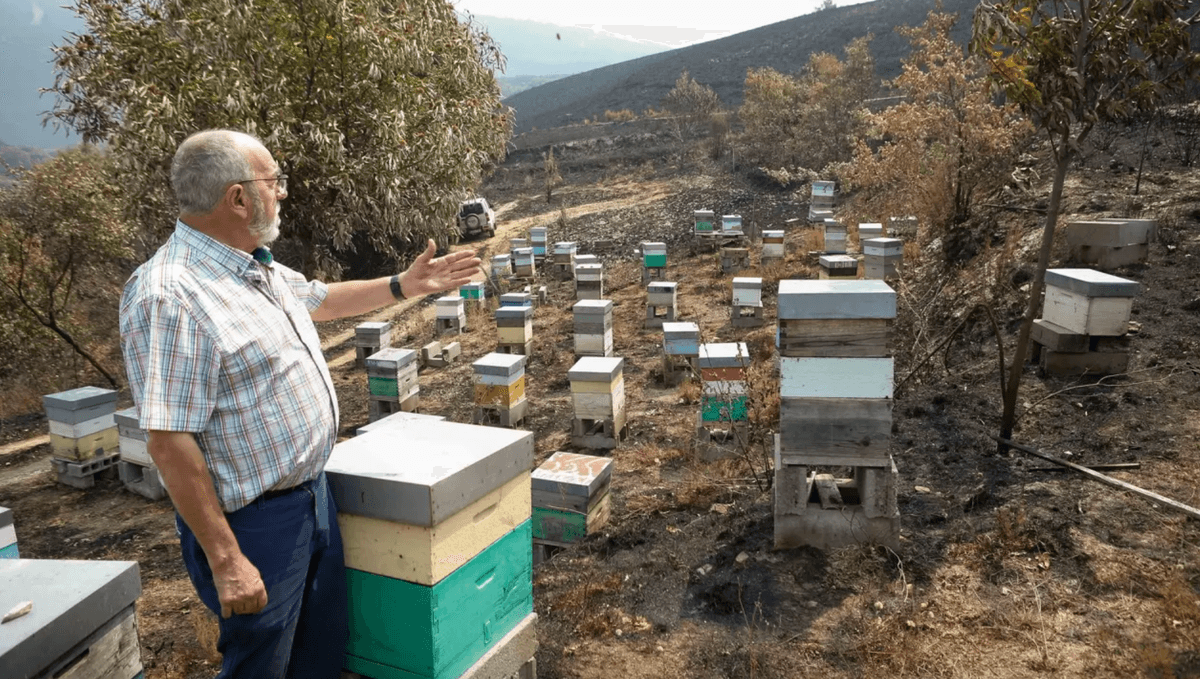
The Unió de Pagesos and Unión de Uniones have proposed this week to the Catalan government (Generalitat de Catalunya) that bees be recruited to help regenerate areas devastated by wildfires.
Wildfires are reshaping landscapes across the Mediterranean, Europe and many other parts of the world, and pollinators could have a role in helping ecosystems recover.
"The idea would be to place the hives in areas bordering unburned zones, and, in the case of large fires, in the middle of the mountains, while providing them with supplemental food," explains Josep María Claria, head of Apiculture for Unión de Uniones and Unió de Pagesos. The bees' activity would be effective starting next spring.
Fire destroy, but does not create one single landscape
Wildfires change everything: some areas lose pollinators, while others temporarily become richer in flowers, nesting opportunities and bee diversity.
The Catalan proposal: bring beehives into areas bordering unburned land when flowering returns.
But honeybees are not a magic restoration tool
Honeybees kept by beekeepers are not the same as the wild pollinators already living in a landscape. A burned area may attract or support wild bees, bumblebees, butterflies and other insects as vegetation returns, but that does not necessarily mean that adding managed honeybee colonies will have the same effect.
In a landscape where flowers are still scarce, large numbers of honeybees could also compete with wild pollinators for limited food.
This is why any plan to bring hives into a burned area would need to begin with the ecosystem itself: What is flowering? Which pollinators are already present? How severely did the fire affect the land? How much forage is available, and how will that change through the seasons?
These questions would help determine whether managed hives could support recovery, and where their presence might do more harm than good.
The first spring matters
The first spring after a wildfire can reveal how the ecosystem is beginning to recover. As flowering plants return, they provide food for pollinators, while pollination helps plants produce the seeds needed for the next generation.
Research suggests that pollinator activity can increase during the first few years after a single fire. But the response depends on the severity of the fire, the plants that survive and the resources available around them.
Making the land more attractive to bees may not be enough to restore the lost balance.
The hidden infrastructure beneath the forest
Recovery also begins beneath our feet. Fire can leave soil exposed to erosion and alter the way water moves through the landscape. Without healthy soil and enough moisture, vegetation cannot return easily.
This puts the role of bees into perspective. They can connect flowering plants through pollination, but their work depends on a much larger system of soil, water, vegetation and other species working together.
Could this work beyond Catalonia?
The idea could extend well beyond Catalonia. Wildfires are reshaping landscapes across the Mediterranean, Europe and many other parts of the world, and pollinators could have a role in helping ecosystems recover.
Every landscape responds to fire differently. Plants, soils, climate, wild pollinators and the intensity of the fire all shape what happens afterwards. A strategy developed for a Mediterranean forest may look very different in California or Australia.
The interesting question is whether managed bees could become part of a wider recovery effort, alongside the plants, soil, water and native pollinators already working to bring the landscape back to life.
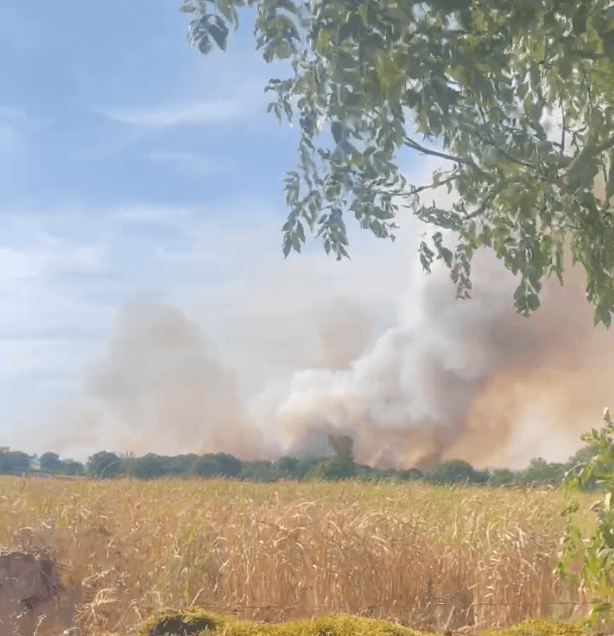
France Under Extreme Heat: What This Summer Reveals About the Future of Energy: Read more.
The bigger EnergieBee question
We cannot help but always come back to the same thinking that guides us: What can we do to be one with nature, learn from it, imitate its behaviours to restore balance without wasting resources?
What if we stopped thinking of wildfire recovery as “planting trees again” and started thinking about rebuilding the relationships that make an ecosystem work?
Sources: Original reporting by Carlos Manso Chicote, La Información, 29 August 2026; Food and Agriculture Organization of the United Nations (FAO); research on post-fire bee communities, pollination and Mediterranean ecosystem recovery cited above.


 David Price
 Danie Latorre