
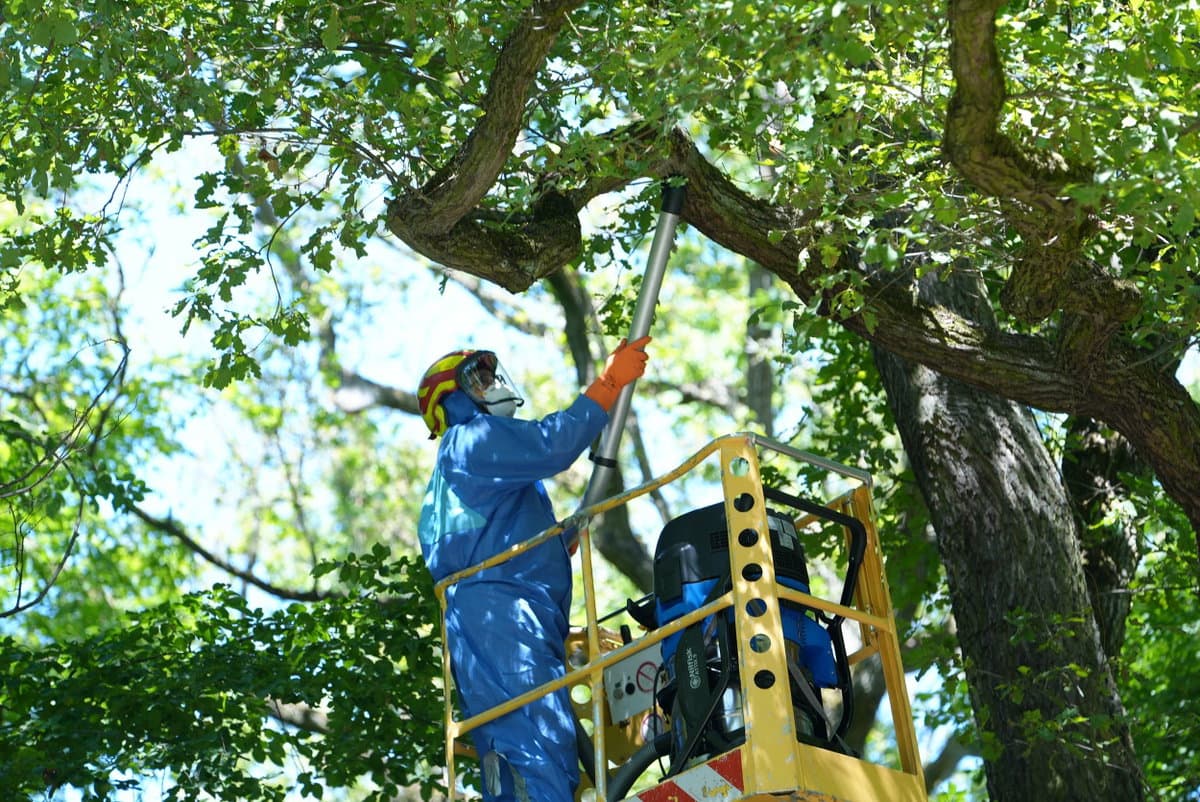
Heat wave in Berlin: workers have been sent out to vacuum them from the trees.
This spring, oak trees became home to thousands of small, grey caterpillars whose bodies are covered in microscopic hairs. The hairs are easily scattered by the wind and can cause painful rashes, eye irritation and breathing problems. They can cling to clothing and remain active on surfaces long after the caterpillars themselves have disappeared. In Berlin, workers have been sent out to vacuum them from the trees.
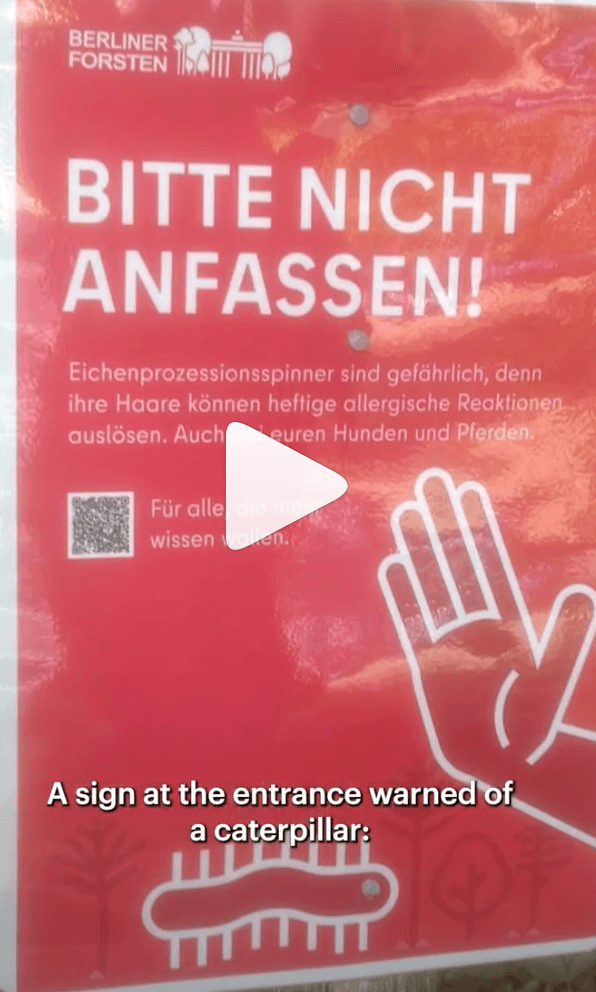
The culprit is the oak processionary caterpillar, known in Germany as the Eichenprozessionsspinner. It is not a new arrival, but it has found Berlin unusually hospitable this year. The spring of 2026 was the sunniest in the city's recorded history, and the caterpillars happen to favour warm, dry and sunny conditions.

For a creature that spends most of its life hidden among leaves, it has acquired an extraordinary talent for becoming a climate story.
We tend to picture climate change in large, recognisable forms: rising temperatures, melting ice, flooded streets.
Yet a changing climate also rearranges the small details of everyday life. Species move. Growing seasons shift. Pests appear in places where they were once uncommon. Heat lasts longer. A spring that feels unusually pleasant can create conditions that become troublesome a few months later.
Eventually, these changes find their way indoors.
Another problem with the caterpillar plague: they are toxic for humans and other species.

The weather inside the house
A house is, in a sense, an agreement with the weather.
Its walls, windows, roof and heating system were all designed around an idea of what the outside world would usually be like. For generations, that idea was reasonably dependable. Winters were cold. Summers were warm. Buildings could be designed accordingly.
Across Europe, those assumptions have produced very different kinds of homes. Thick stone walls made sense in some Mediterranean climates. Small windows and heavy insulation made sense elsewhere. Shutters, courtyards, fireplaces, roof overhangs and ventilation all emerged from long experience with local weather.
Modern homes inherited many of those assumptions, then added increasingly sophisticated ways of controlling the indoor environment.
The trouble is that the environment is changing faster than many buildings can.
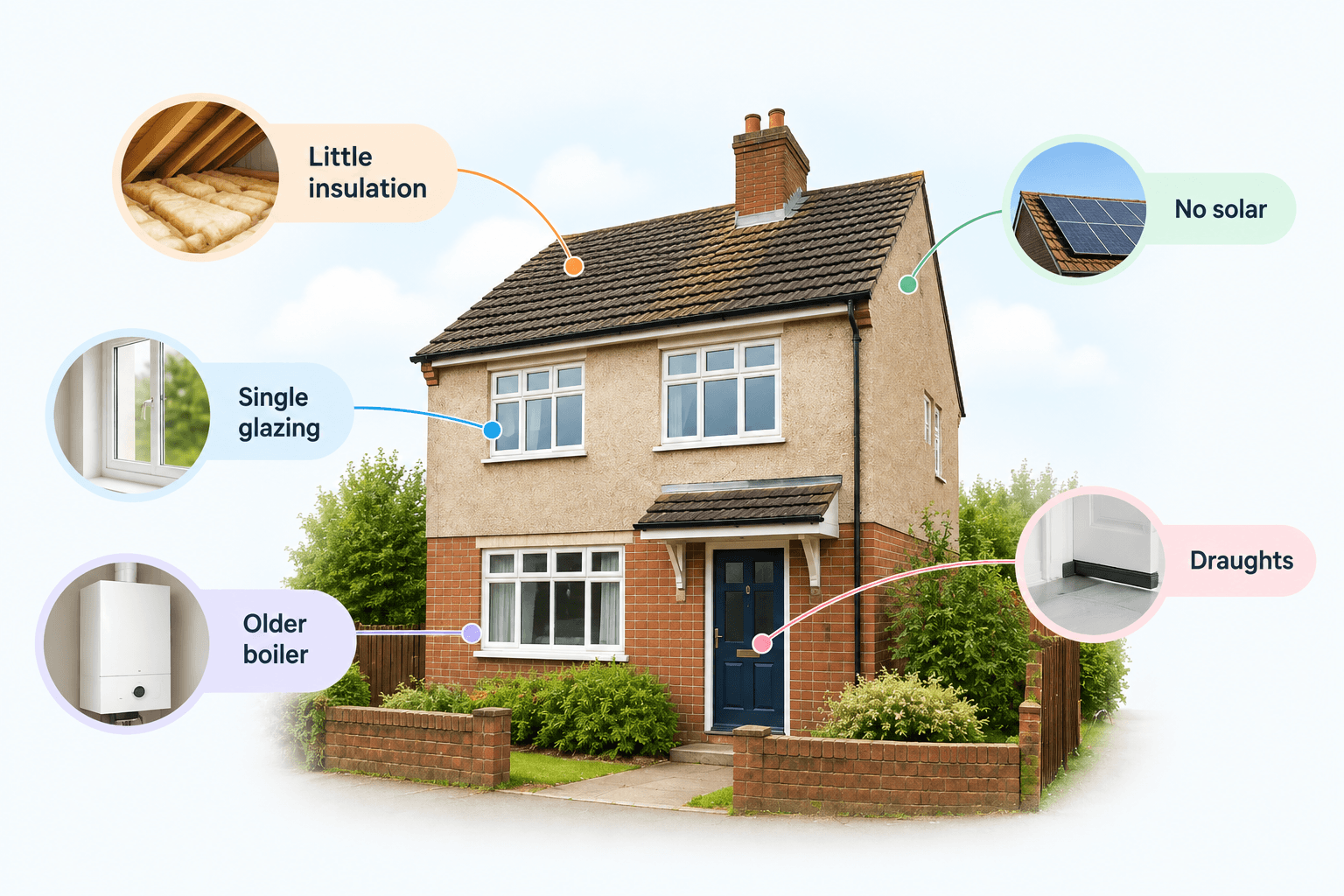
A house built for a moderate summer can become extremely difficult to cool during a prolonged heatwave. A poorly insulated building can demand large amounts of energy in winter while also overheating in summer. Windows designed to let in welcome winter sunshine can become a source of unwanted heat in July.
When summer becomes an energy problem
Imagine a hot afternoon in a European city.
The sun has been beating against the windows since morning. The walls have absorbed the heat. By late afternoon, the bedroom upstairs is warmer than anyone would like it to be.
Someone switches on the air conditioning.
Across the neighbourhood, other households are doing exactly the same thing.
This is where a hot day becomes an energy story.
Electricity demand follows human behaviour, and human behaviour follows the weather. When temperatures climb, cooling systems can begin operating simultaneously across homes, offices and shops. A heatwave can therefore create a sharp increase in electricity demand at precisely the moment when people are most dependent on cooling.
For an energy system already adapting to more renewable generation and increasingly variable demand, these peaks matter.
They also change the way we should think about energy efficiency.
It is easy to reduce the idea to a question of consumption: use less electricity, pay less. The reality inside a building is more interesting. The amount of energy a home needs depends on its design, its insulation, its heating and cooling systems, the weather outside and the habits of the people living there.
Timing matters, too.
A home that knows when it needs energy can behave differently from one that simply reacts when someone notices that the room has become uncomfortable.
The house starts paying attention
This is where smart home energy technology becomes useful.
A smart thermostat can respond to temperature and household routines rather than relying entirely on manual adjustments. Energy monitoring can reveal when electricity is being consumed and which parts of the home are responsible. Forecasting can help households anticipate changes in solar generation or demand.
None of this makes a heatwave disappear.
It can make the response to one considerably more intelligent.
The distinction matters as Europe moves towards a more electrified energy system. Heating is becoming increasingly electric. Cooling demand is growing. Solar panels are putting more generation directly into homes. Heat pumps can provide highly efficient heating and, depending on the system, cooling as well.
The home is gradually becoming a more active participant in the energy system.
That requires information.
A household cannot make much use of flexibility it cannot see.
The curious relationship between sunshine and energy
The sunshine that helped create favourable conditions for the insects is also one of Europe's most valuable energy resources.
A sunny day can mean more solar electricity.
It can also mean a hotter house.
For a household with solar panels, these two things may happen at almost exactly the same time. Solar generation increases during daylight hours while rising temperatures push up the need for cooling.
That creates an opportunity.
The electricity generated on the roof can potentially be used by the household when it is needed. Smart energy management can help coordinate generation and consumption. Storage can shift some energy to another time. Efficient cooling can reduce the amount of electricity required in the first place.
The relationship between weather and energy is becoming increasingly intimate.
The sun affects the temperature of the house.
The temperature affects household demand.
The sun also affects solar generation.
And all of it happens before the homeowner has looked at the electricity meter.
The least glamorous technology may matter most
There is a temptation, when talking about the future of energy, to focus on the impressive things: smart devices, artificial intelligence, batteries, new energy platforms, connected homes...
But some of the most important improvements are remarkably quiet and unsexy. Insulation, for example, rarely makes an exciting headline. Once installed, it simply sits inside the building and does its job.
Good insulation slows the movement of heat through the building envelope. During winter, more of the warmth produced inside stays inside. During hot weather, heat takes longer to enter. The heating or cooling system consequently has less work to do.
Windows and shading can have a similar effect. Ventilation can help remove unwanted heat under the right conditions.
These measures change the relationship between the house and the weather before technology has to intervene.
The most efficient unit of energy is still the one the house never needed.
From energy efficiency to climate resilience
Once you start understanding and looking at the world and its changes through sustainability lenses, you can not go back. It's very uncomfortable. Any news about summer, funny or ironic, makes you think about what can you be doing to not be a part of the problem and bring a solution.
The arrival of a species in a new environment is one small example of a much larger process. Climate change alters the conditions under which systems operate, and systems have to respond.
Climate adaptation is often discussed at the scale of governments and cities. We hear about flood barriers, drought management, emergency plans and urban cooling. Those measures are essential, but there is another layer of adaptation that happens much closer to home.
This makes energy efficiency part of climate adaptation.
A small creature, a much larger change
The oak processionary caterpillar will eventually disappear from the headlines.
The trees will be treated. The hairs will disperse. Berlin will move on to the next problem.
But the conditions that allowed the caterpillars to thrive will remain part of the larger climate story.
Across Europe, the question is increasingly about what happens when familiar systems encounter unfamiliar conditions.
A spring becomes unusually warm.
A summer lasts longer.
A city experiences a new kind of heat.
A household turns on its cooling.
Thousands of households do the same.
The electricity system feels the change.
The chain connecting these events is easy to miss because none of them seems particularly remarkable on its own.
Together, they describe a world in which our homes have to work harder to keep the weather outside.
The answer will involve new energy infrastructure, better grids and more renewable generation. It will also involve millions of individual buildings becoming more efficient, more informed and more responsive.
Perhaps this is one of the less obvious lessons hiding among Berlin's oak trees.
Climate change is already changing the conditions our homes have to deal with.
The question now is whether the homes will change with them.

 Danie Latorre