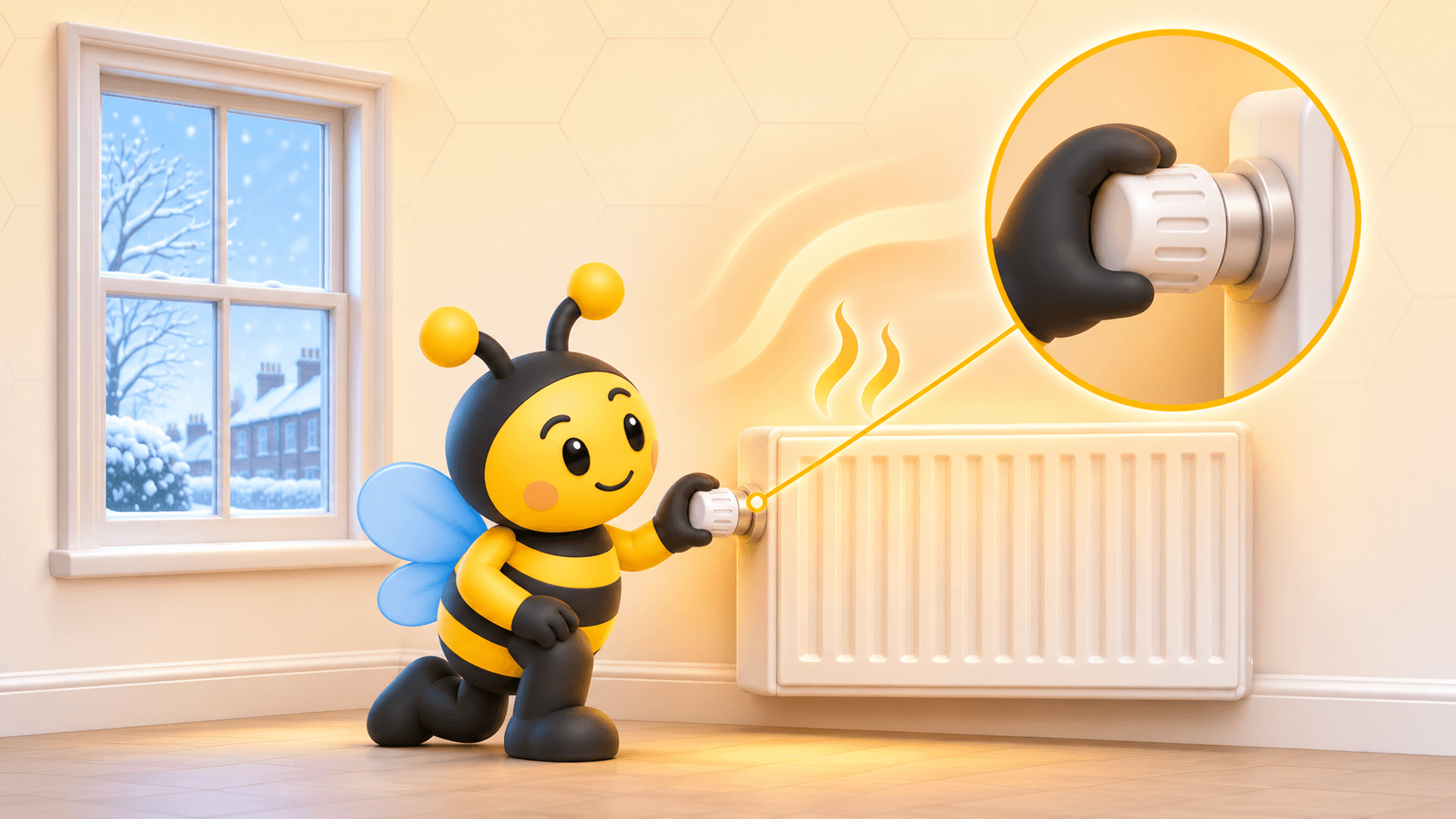
To turn on a hot-water radiator, open the manual valve, usually by turning it anticlockwise, or turn the numbered thermostatic radiator valve (TRV) to a higher setting. Switch the heating on at the timer and set the room thermostat above the current room temperature.
If the radiator stays cold, check whether the others are warming up. That helps you decide whether to check the radiator itself or the central heating controls. For a clearer picture of when your home uses heat, see EnergieBee’s home heating tools.
Quick Answer: The Three Things That Must Be On
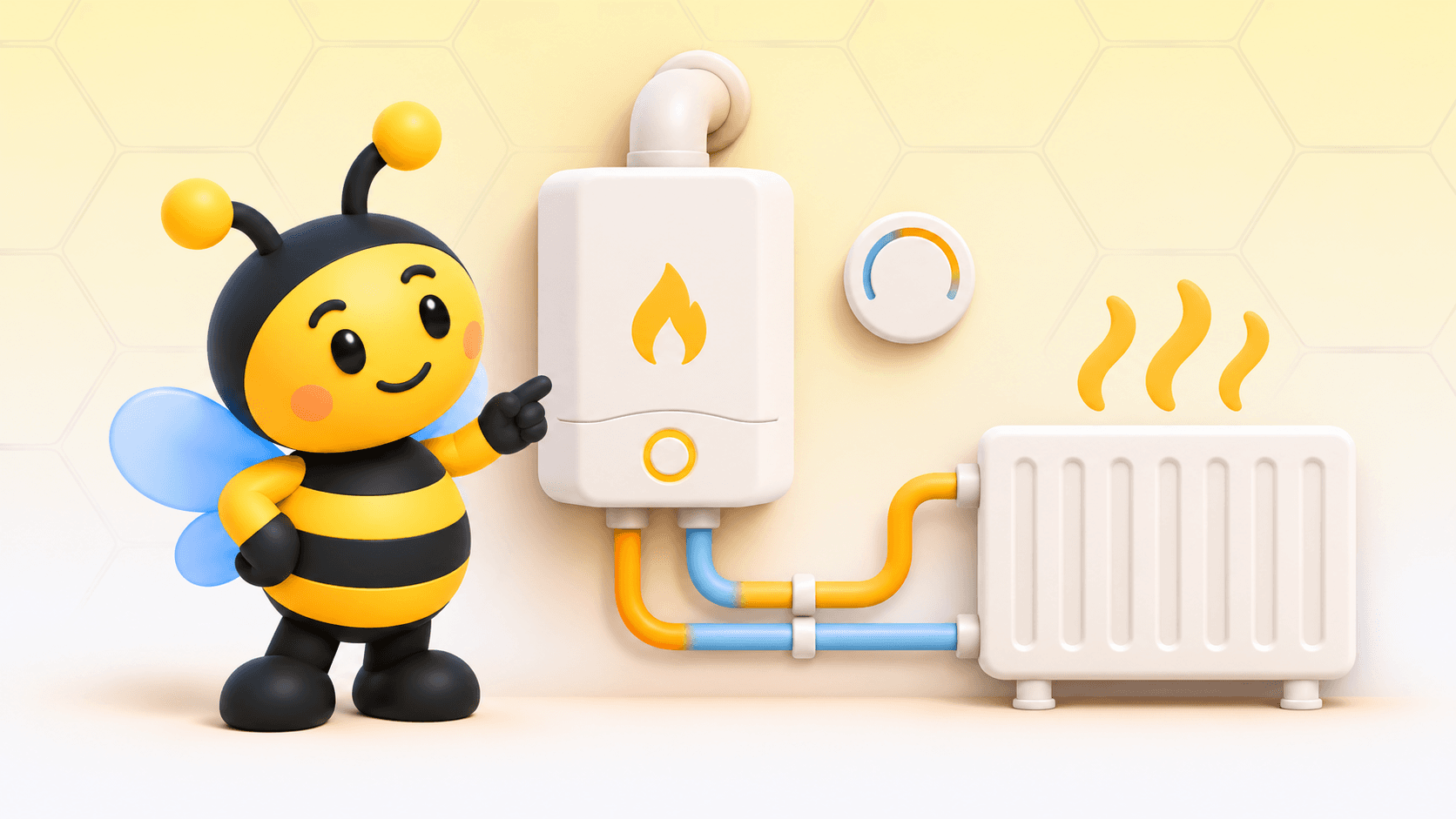
A hot-water radiator warms up when the heating is on, the room thermostat is asking for heat and the radiator’s control valve is open. The timer and thermostat decide when the system runs. The valve controls how much hot water flows through that radiator.
If your timer and thermostat share one screen, check both the schedule and the temperature setting there. Our guide to how your home heating system works explains how the system carries heat to your rooms.
Which Valve Do You Have?
Look for a numbered dial or a manual knob at one end of the radiator. A plain cap on the other end may cover a lockshield valve, so use the valve’s shape and markings to tell them apart.
Valve | How to recognise it | What to do |
Thermostatic radiator valve (TRV) | A numbered dial, often with a snowflake symbol | Choose a higher number if you want the room warmer. The valve adjusts water flow as the room warms up. |
Manual valve | A knob or wheel with no numbered scale | Open it by hand. Check any arrows or markings for the direction. |
Lockshield valve | Usually a small, smooth cap at the other end | Leave it at its existing setting. The lockshield helps balance flow between radiators. |
If you have a smart TRV, check the target temperature and schedule for that room in its app.
How to Turn On a Radiator, Step by Step
Start with the main heating controls, then adjust the valve on the radiator you want to warm up.
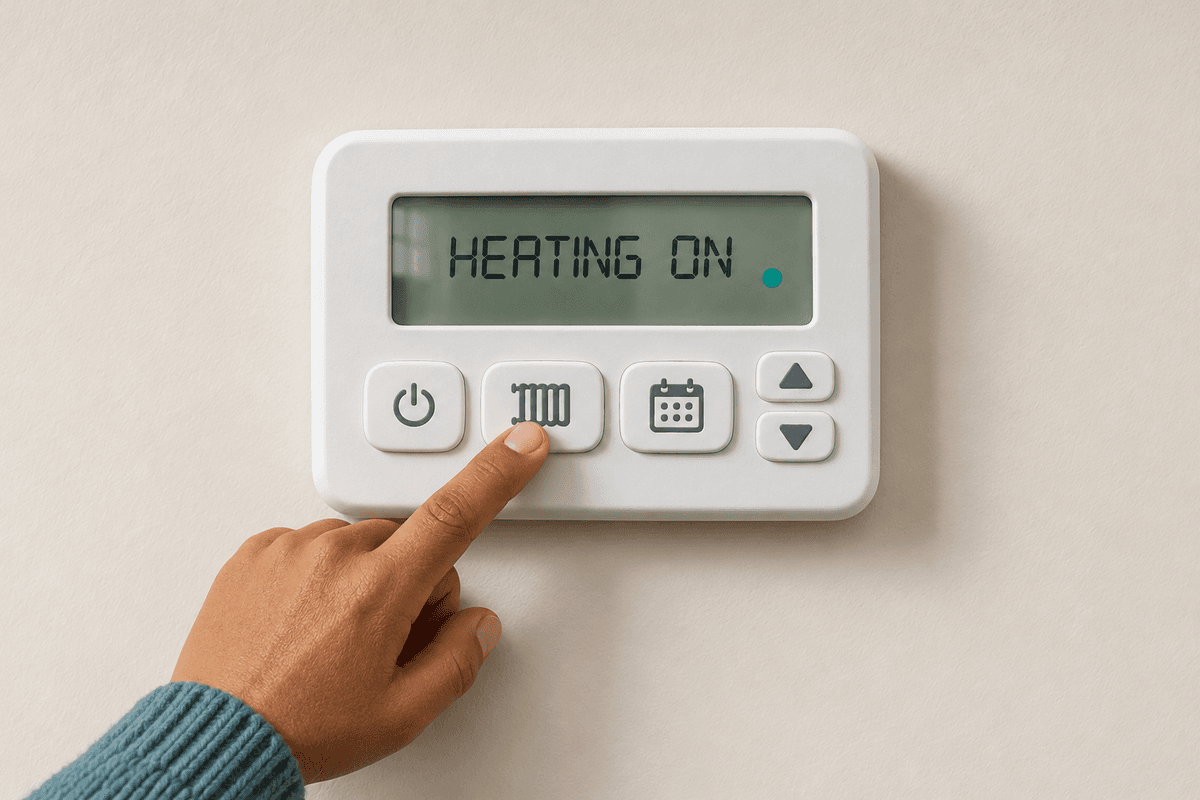
Step-1
Turn on the heating
Check that the heating is scheduled to run now. If it’s outside your usual heating hours, use the temporary boost or override if your controller has one. On a programmer with separate channels, select Heating.
Step-2
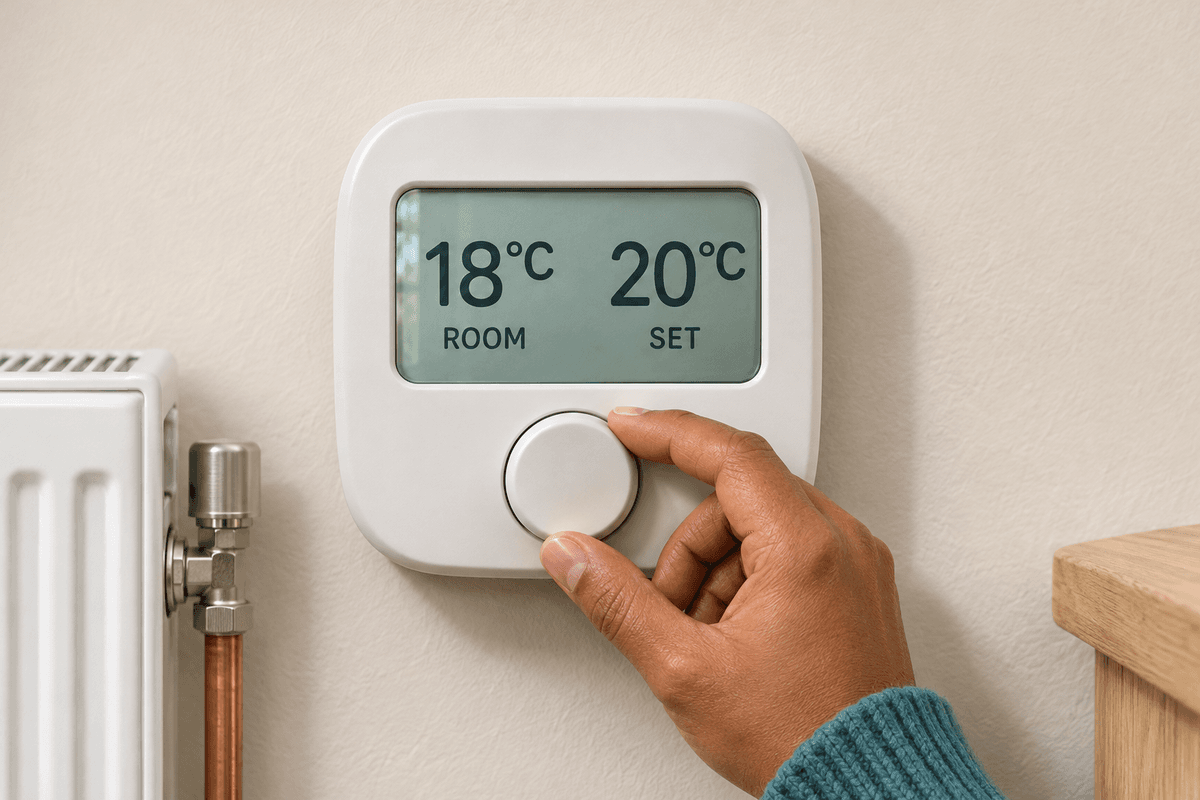
Set the room thermostat
Choose a comfortable target above the room temperature shown on the display. The thermostat asks for heat until the room reaches that target. If the room is already warm enough, the radiator can stay cool until the temperature drops.
Step-3
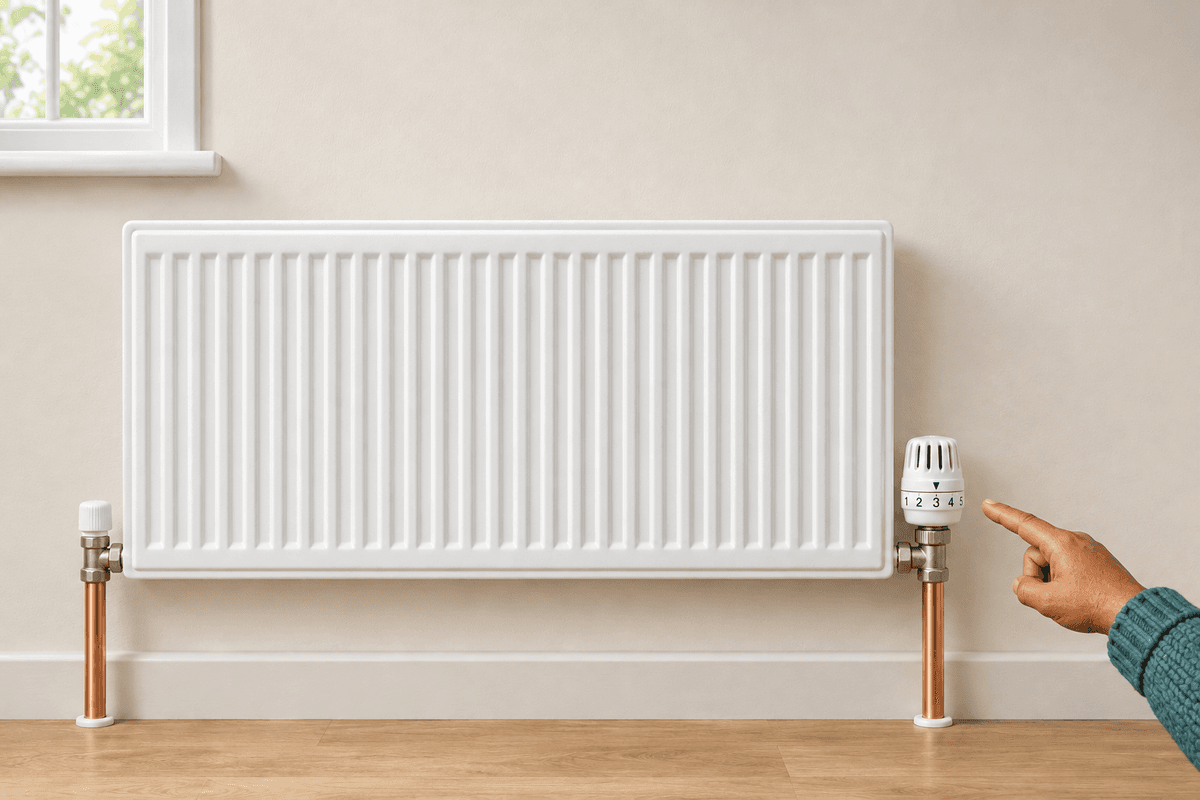
Find the control valve
Look at the pipe connections near the bottom of the radiator and identify the TRV or manual knob. The small bleed screw near the top has a separate job. You only need the control valve to turn the radiator on.
Step-4
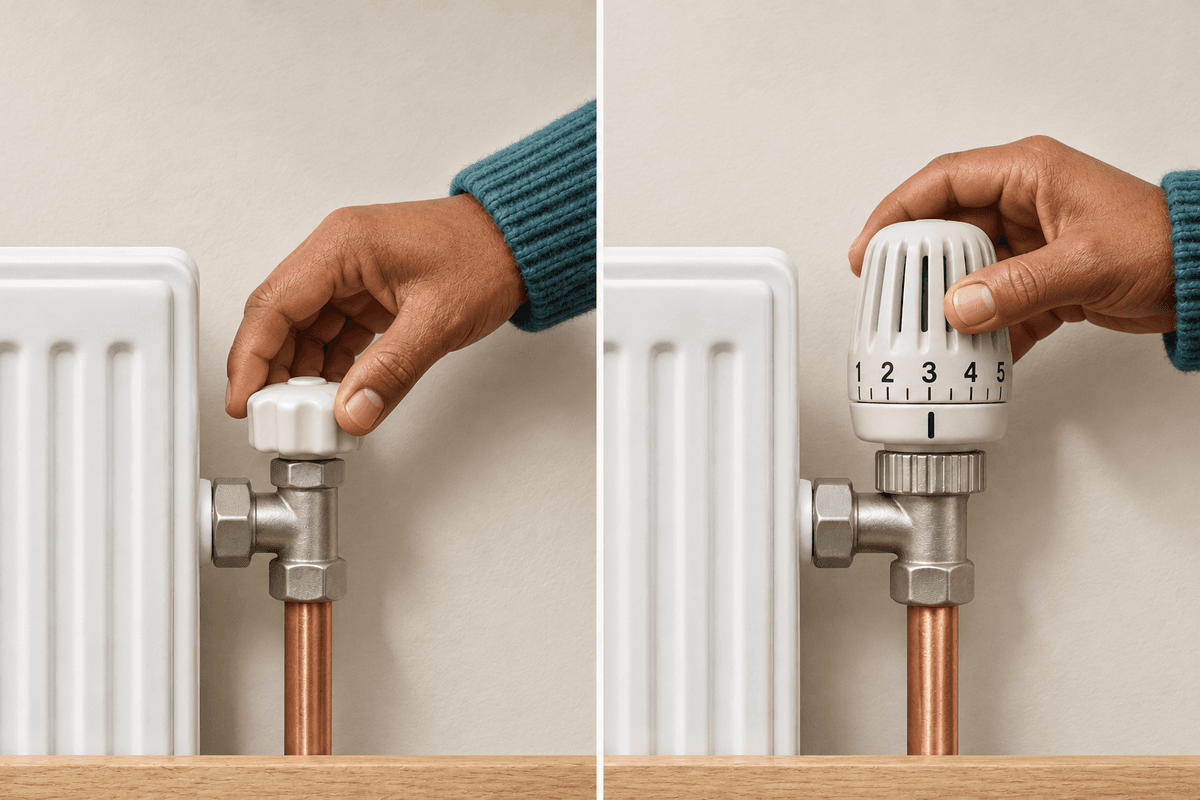
Adjust the valve
Manual valve: Turn the knob by hand. Most valves open anticlockwise. Follow the markings on your model if it shows a different direction.
TRV: Turn the dial to a higher number. The number sets how warm you want the room to be, so choose a setting that feels comfortable.
If the valve knob is missing, damaged or stuck
Leave the valve alone if the knob is missing, cracked or too stiff to turn by hand. Ask a heating engineer to check it, or report it to your landlord or housing provider if you rent.
Step-5
Check for warmth
Give the hot water time to circulate, then hold your hand near the panel to check for warmth. If the radiator stays cold, check whether the other radiators have warmed up. That tells you where to start with the next checks.
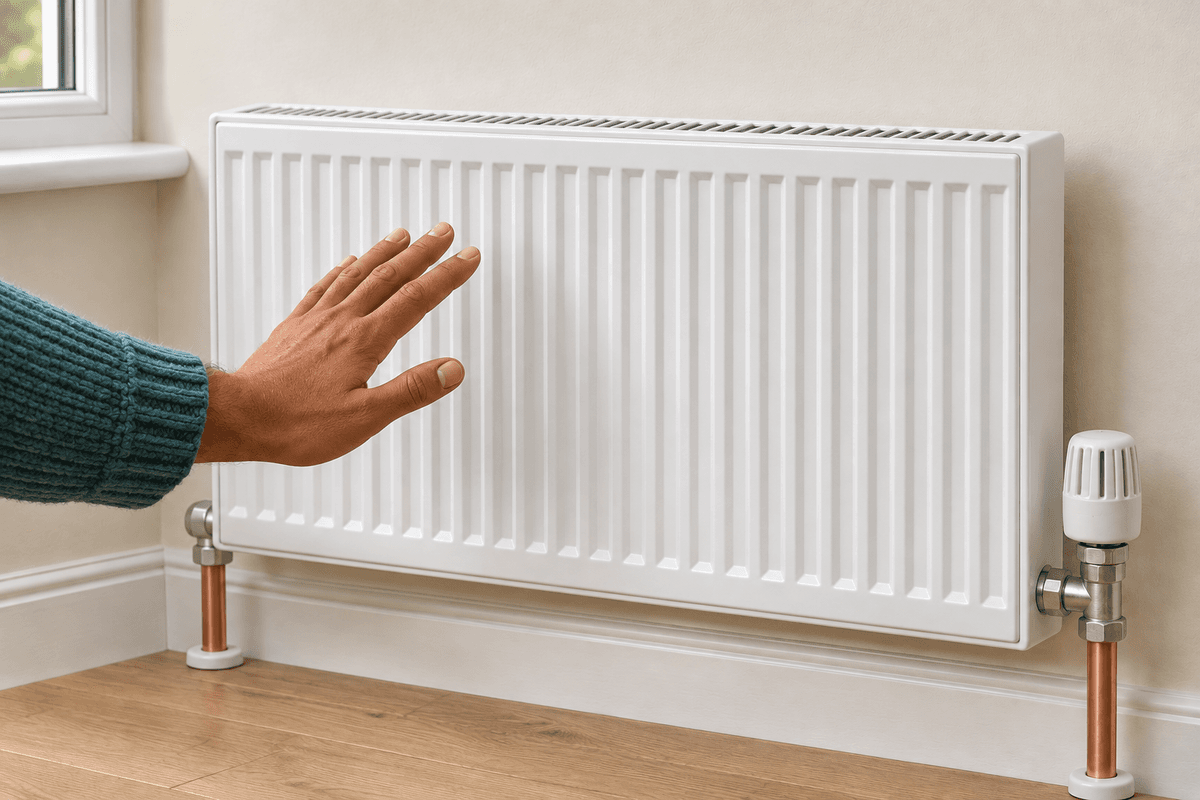
Turned It On and It's Still Cold?
If every radiator is cold, start with the heating controls and boiler. If only one is cold, check its valve and where the cold patch is.
Every radiator is cold. Check that the timer is on and the thermostat is asking for heat. If the boiler shows a fault code, look it up in the manual. If the fault persists, call a heating engineer. Use a Gas Safe registered engineer for work on a gas boiler.
One radiator is cold at the top but warm at the bottom. Trapped air may be stopping hot water from filling it. Switch off the heating and let the radiator cool before bleeding it. Hold a cloth under the bleed valve, open it slightly with a radiator key and close it when water starts to flow steadily. Watch British Gas show how to bleed a radiator.
One radiator is warm at the top but cold across the bottom. Water cools as it passes through the radiator, so look for a distinct cold patch that remains after warm-up. A persistent patch can point to sludge or poor circulation. See how to flush a central heating system if you suspect a build-up.
One radiator is cold all over or only lukewarm. If the room still feels cold, check that the manual valve is open or the TRV is set high enough. If the setting is right and the other radiators are warm, a stuck valve or uneven flow could be the cause.
Balancing and the Lockshield Valve
Balancing adjusts how much hot water flows through each radiator so the rooms can warm up more evenly. The lockshield valve, usually under the plain cap, helps set that flow. Leave it at its existing setting for everyday temperature changes.
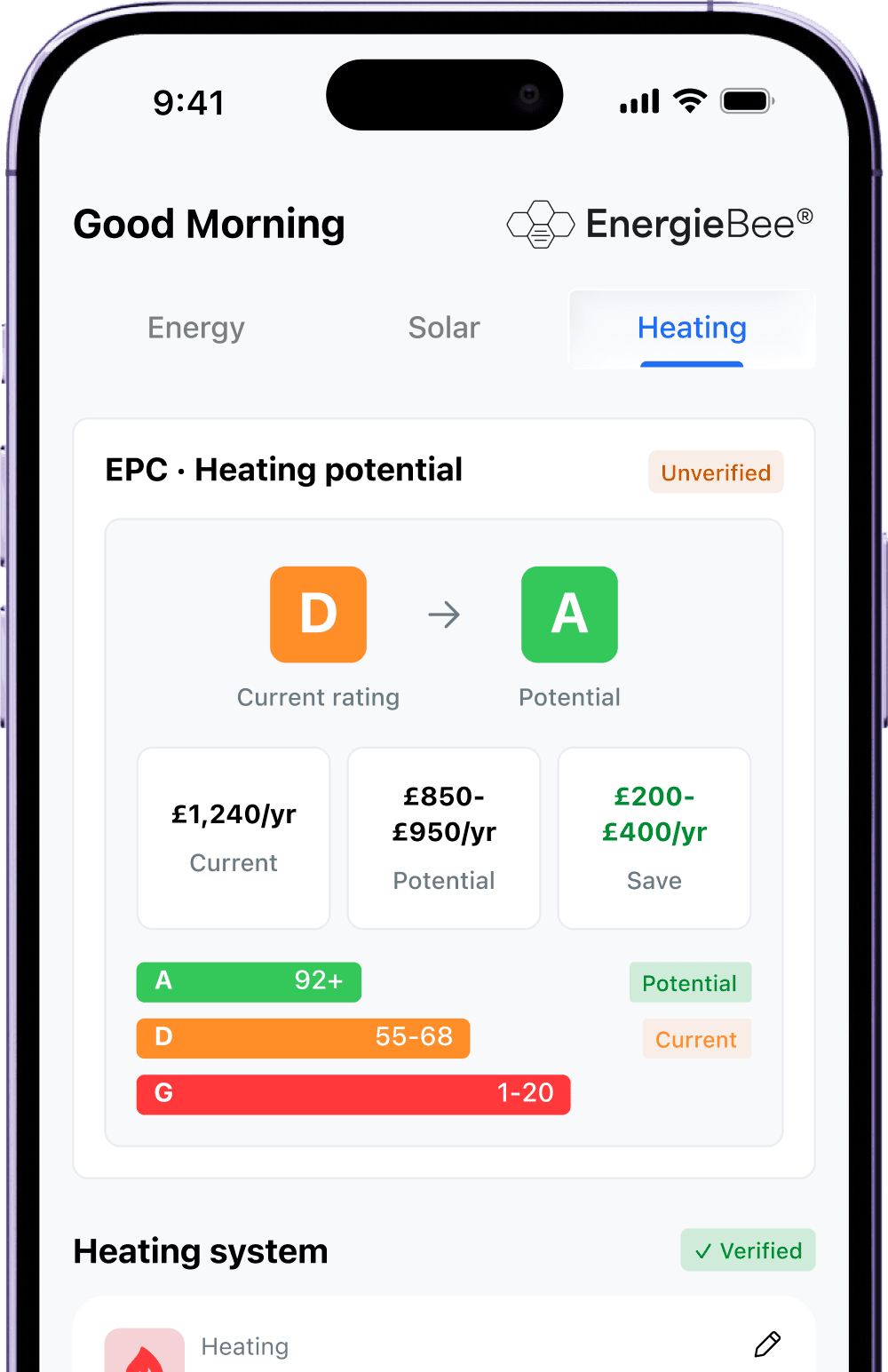
See Your Home’s Energy Use
Compare daily energy use on days with similar weather as you adjust your heating.


Download EnergieBee
Scan with your phone's camera to get the app.
Radiators near the boiler may warm up first. If they get hot while the farthest radiators stay lukewarm well into the heating cycle, the system may need balancing. A heating engineer can measure the temperature difference between each radiator’s inlet and outlet, then make small adjustments and recheck the system.
Using Radiators Without Wasting Money
With a boiler, use the timer to heat your home when you need it. Set the room thermostat to a comfortable temperature and turn the TRVs down in rooms you use less. Keep some background heat in rooms prone to condensation. If you have a heat pump, follow your installer’s schedule, as longer, steadier runs are generally more efficient.
The NHS advises aiming for at least 18°C in rooms you use regularly, if you can, especially if you have a health condition. Radiators and exposed pipes can get hot enough to burn, so keep young children away from hot surfaces.
For more ways to adjust your heating, see our guide to saving money on heating.
How EnergieBee Helps You Manage Your Home Heating
EnergieBee helps you see how your home’s energy use changes as you adjust your heating. The app shows daily usage and weather insights, so you can put higher energy use on colder days in context.
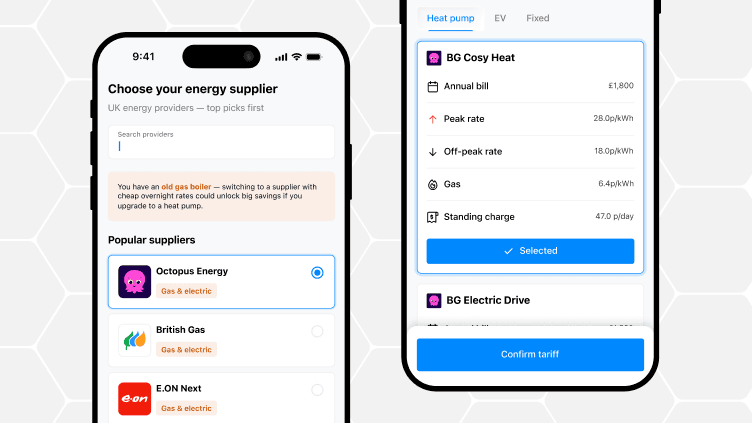
If you change when the heating comes on or turn down the radiator in a spare room, compare a few days with similar weather. Check whether your energy use changes and whether the rooms you use still feel comfortable.
Download the EnergieBee app to see your home’s daily energy use.
Frequently Asked Questions
What is the 4pm rule on heating?
The 4pm rule is a winter tip to close your curtains or blinds at dusk to slow heat loss through windows. Keep them open while sunlight is coming in, then close them as it gets dark. Use dusk as your cue, since sunset times change through the year.
Is 15 degrees cold for a house at night?
Yes. 15°C is below the NHS’s suggested 18°C for rooms you regularly use. A slightly cooler bedroom may feel comfortable for some healthy adults with suitable bedding, but keeping it around 18°C overnight is particularly important for older people and those with health conditions. The NHS recommends 16–20°C for a baby’s room.
How much does it cost to balance radiators?
There’s no fixed UK price for balancing radiators. The quote depends on how many radiators need adjusting and whether any valves need repair. Ask for a written price for balancing the whole system, and check whether the call-out fee, VAT and any repairs are included.
What happens if you bleed a radiator with the heating on?
Hot water can escape from the bleed valve and scald you. On some systems, the running pump can also draw air back in. Switch off the central heating and let the radiator cool before opening the valve.
 Syed Reza