
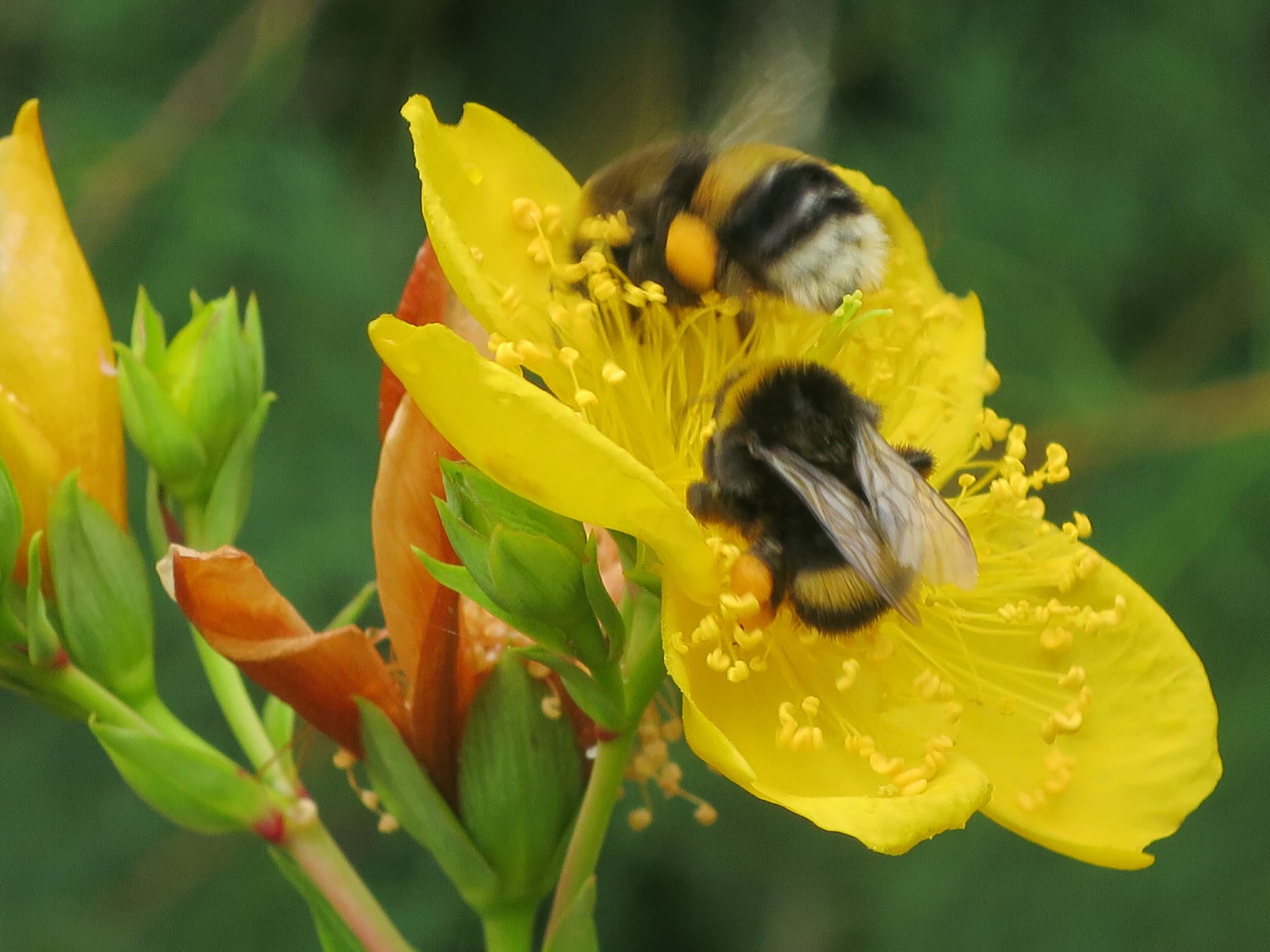
Britain sits under another amber heat-health alert this week, one more heatwave in a summer full of them. While humans struggle with high temperatures and higher electricity bills due AC extreme usage, our fellow bee friends have a battle of their own.
Last July being the driest on record for England and Wales, nature's coping mechanism may not be enough to survive.
Three days of heat, nine months of silence
Researchers at the University of Hull recreated the UK's July 2022 heatwave in the lab, exposing young red mason bee larvae — common garden pollinators of apples and fruit — to daily peaks of 40°C for three days. A control group grew up in a milder, typical July.
Nine months later, every bee from both groups emerged from its cocoon looking identical: same size, same behaviour, same survival rate. The heat appeared to leave every one of them entirely unmarked.
Then the scientists dissected the bees.
Fertility, quietly wrecked
Males from the heatwave group carried sperm counts down 33%, with motility cut by more than half. Females showed smaller, fewer developing eggs, down around 15%. A three-day heat spell during early development left a lasting mark on fertility, invisible until researchers looked inside, months after the heat itself had passed.
That timing is the real discovery. A colony's appearance and behaviour stay entirely ordinary through it all. The consequences only surface the following season, in the form of fewer young bees than expected.
A quiet kind of loss
Through the same summer heat, most of us push through commutes, work, study, and the ordinary shape of a day, with little space left over to register every shift happening in the world around us.
Bees can still fly, forage, and build a nest as normal. The wounds they are carrying become visible only under a microscope, passed down through a season months away.
A beekeeper may notice something went very wrong way too late.
A small habit that helps
Small, direct actions add up during a heatwave. Five worth trying this week:
Set out a bee drinker. A shallow saucer filled with pebbles or marbles and topped up with fresh water gives bees somewhere safe to land and drink, since deep water sources put them at risk of drowning. Check and refill it daily.
Give bee hotels some shade. Solitary bee hotels do best in a semi-shaded spot, especially in a sunny garden or a city plot where surfaces heat up fast. A simple move away from full sun and into dappled shade eases the strain considerably.
Water the flowers, instead of the whole garden. Focus any watering on plants already in bloom or just about to open, keeping nectar production going through the heat. Stored rainwater or grey water works well, and existing hosepipe bans stay worth respecting.
Plant for a long, drought-tolerant season. Lavender, sunflowers, and other deep-rooted, heat-loving flowers keep producing nectar even as grass turns brown, giving bees something reliable to forage on through the hottest stretch of summer.
Leave a wild corner alone. Piles of twigs, leaves, and unused bug hotels near a hedge or fruit tree offer shelter from direct heat. Letting a patch of the garden stay a little untidy does real work for pollinators trying to cool down.
At EnergieBee, this kind of hidden pattern feels familiar: the effects that matter most rarely announce themselves loudly.
Source: Gilbert et al., "Lasting impacts of sublethal prepupal heatwaves on fertility-related traits of the solitary bee Osmia bicornis", Journal of Thermal Biology, 2026, University of Hull.

 David Price