
Every year, the global tourism industry burns through a staggering amount of energy. Transport linked to tourism alone produced around 1.6 billion tonnes of CO2 in 2016, and that figure is expected to reach nearly 2 billion tonnes by 2030, double what it was in 2005. All told, tourism is already responsible for roughly 9% of global emissions, and some studies suggest that share could climb as high as 25% within a few years if nothing changes.
To put it in more human terms: the average trip generates around 662 kg of CO2 equivalent per tourist, and if you add up all the travelling most people do in a year, that annual footprint can creep towards 900 kg.
Soaking up that much carbon naturally isn't quick work either: a mature tree removes roughly 20 kg of CO2 a year, which means it would take dozens of trees working flat out for a full year just to offset one person's holidays.
None of us really wants to dwell on this.
Like a lot of things we do in daily life, our holidays do more damage than we'd like to admit, and changing that can feel deeply inconvenient. Nobody wants to give up travelling, discovering new places, or simply switching off for a week.
The rise of ecotourism
Ecotourism, or sustainable tourism, has picked up so much momentum in recent years. It's a way of travelling that aims to minimise environmental impact, put money directly into local communities, and build genuine understanding of the places being visited.
The trend keeps growing. But the people who pioneered this approach were doing so decades ago. Bhutan was one of the first, introducing a "high value, low impact" model back in the 1970s that deliberately capped visitor numbers.
Costa Rica spent the 1980s and 90s building what's now one of the most admired ecotourism models in the world, protecting more than a quarter of its territory by law and establishing a national parks system that's still held up as a benchmark today. In 1998, it launched its Sustainability Tourism Certification, widely recognised as one of the initiatives that reshaped how the industry thinks about itself.
Namibia became the first country to write environmental conservation into its constitution back in 1990, and New Zealand and Iceland later developed their own versions, with Iceland leaning heavily on geothermal energy.
One good example of what this looks like in practice: in 2003, Cayuga Sustainable Hospitality (now Cayuga Collection Hotels) launched in Costa Rica, running a group of boutique hotels that pair genuine luxury with sustainability. Protecting the ecosystems and communities around their properties sits right at the centre of what they do, proof that a tourism business can turn a profit without wrecking the surroundings that made it appealing in the first place.
Bees haven't been left out either
As with most good ideas, bees have found their way into this story too. In recent years, a niche but growing corner of ecotourism has emerged: apitourism, built entirely around bees and beekeeping, where visitors can get involved and learn directly from the people who work with the hives.
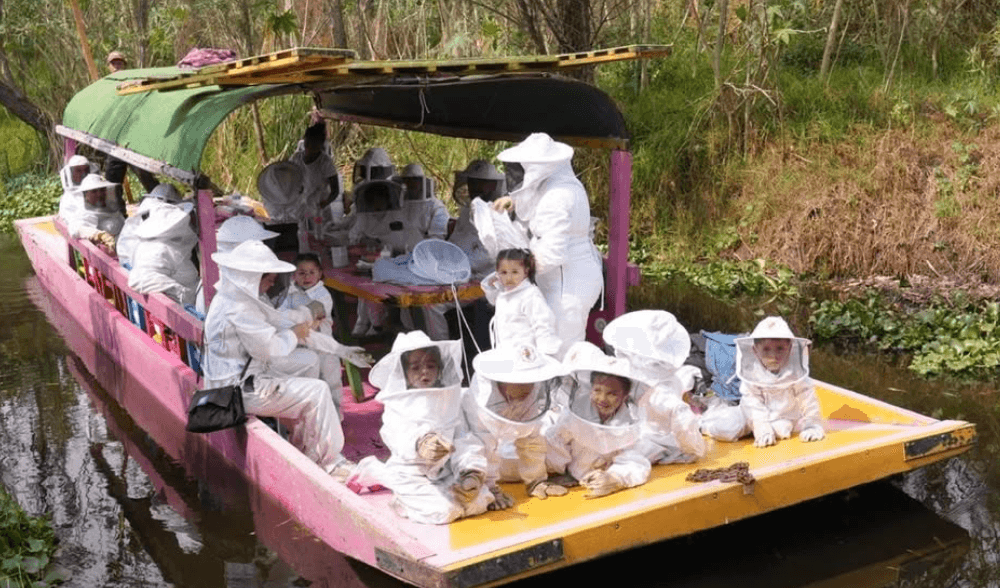
We have found a lovely example in Xochimilco, on the southern edge of Mexico City, a UNESCO World Heritage site best known for its network of canals and floating gardens known as chinampas. Since 2016, a project called Abejas de Barrio has been running apitourism experiences there, founded by beekeeper Sandra Corales.
Its flagship offering, "Beekeeper for a Day", lets visitors get involved and learn from the experience: they take a trajinera boat ride through the canals, visit a working apiary set up on a chinampa, learn directly from the beekeepers, and finish with a honey or mead tasting.
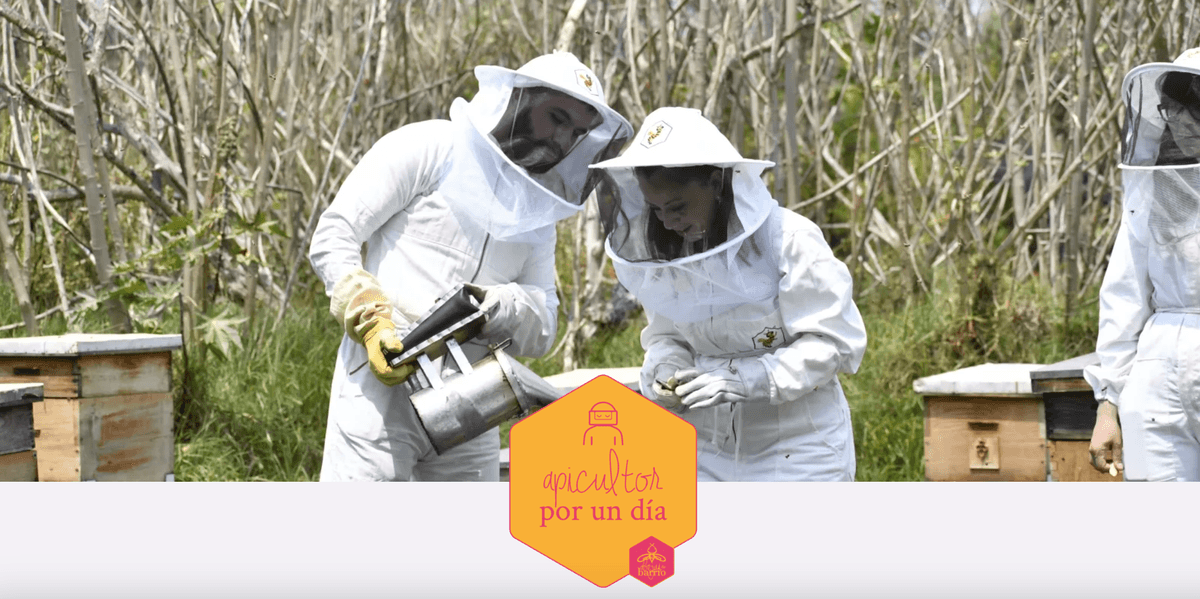
The project works closely with local producers of dairy, eggs, amaranth, vegetables and honey in the chinampa area, and much of what it does is aimed at city dwellers who rarely get the chance to see farming or beekeeping up close, breaking down some of the assumptions people carry about both. It also runs beekeeping courses, seasonal children's activities on the chinampas, and even English classes for local tourism workers.
This sort of tourism also channels income straight into a local circular economy and helps protect bee populations that are increasingly under threat, adding real value to the places it touches.
Bees: our favourite teachers
Once again, we keep finding inspiration in nature. How to run a system that wastes nothing, produces no excess, and leaves no rubbish behind. A hive is circular economics in its purest form: nothing is lost, everything gets put to use, everything serves a purpose. Perhaps that's the clearest sign of where tourism ought to be heading next.
Would you consider an eco-friendly for your next holiday?
We certainly will.