Somewhere in primary school, most of us sat through a lesson on pollination. Maybe you remember labelling a diagram of a flower, carefully printing "stamen" and "pistil" next to arrows pointing at parts you'd never think about again. Maybe there was a worksheet about bees, or a display of paper butterflies stuck to a classroom wall. And then, for most of us, that was it. The lesson stayed exactly where it was left: in a Year 4 classroom, filed under "nice to know," never quite connected to anything as ordinary as what ended up on your plate.
It's a strange gap, when you think about it. Nobody tells you, aged nine, that your packet of crisps, your cup of coffee, your bar of chocolate and quite possibly your evening glass of wine all exist because an insect, bird or bat visited a flower at some point in a field, weeks or months before. Pollination behaves like a piece of infrastructure, the kind that, like the National Grid or a water main, mostly gets noticed once it stops working. Farming communities have leaned on this exchange, mostly unremarked, for as long as crops have been grown.
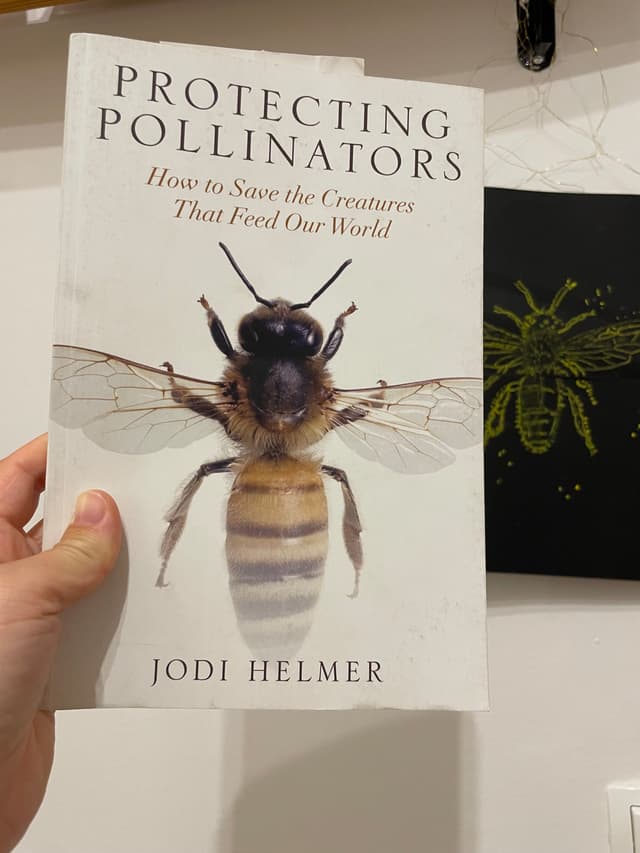
That's the territory covered by Protecting Pollinators: How to Save the Creatures That Feed Our World, a 2019 book by American journalist and beekeeper Jodi Helmer.
She spent years interviewing conservationists, entomologists and farmers, and the resulting book lays out, chapter by chapter, exactly how fragile this "piece of infrastructure" has become, and what's actually being done to shore it up.
The maths behind "thank a pollinator at every meal"
Roughly a third of the food crops we eat depend, at least partly, on animal pollination. Not "benefit from": absolutely depend on. No pollinator, no crop, or a dramatically smaller one.
And the numbers on the pollinators themselves are not encouraging. Bee populations across North America and Europe have fallen by more than a third in recent decades. Butterfly numbers have dropped by around 31%. Of the roughly 200,000 known pollinator species worldwide, around half are now considered under threat.
The causes will sound familiar to anyone who's followed climate and biodiversity coverage over the past decade: habitat loss, pesticide use, the spread of invasive species, and a warming climate that's shifting flowering seasons out of sync with the insects that rely on them. What's less familiar is how solvable a lot of this actually is at a local level. which is where the more hopeful half of the story tends to get lost.
It's not just about bees
Ask most people to name a pollinator and you'll get "bee" almost instantly, maybe "butterfly" if they think for a second longer. Fair enough — honeybees and monarch butterflies are the poster species, and monarchs in particular have one of the more remarkable migration stories in the natural world, travelling up to 100 miles a day between their summer ranges and the oyamel fir forests of central Mexico, where they overwinter by the million.
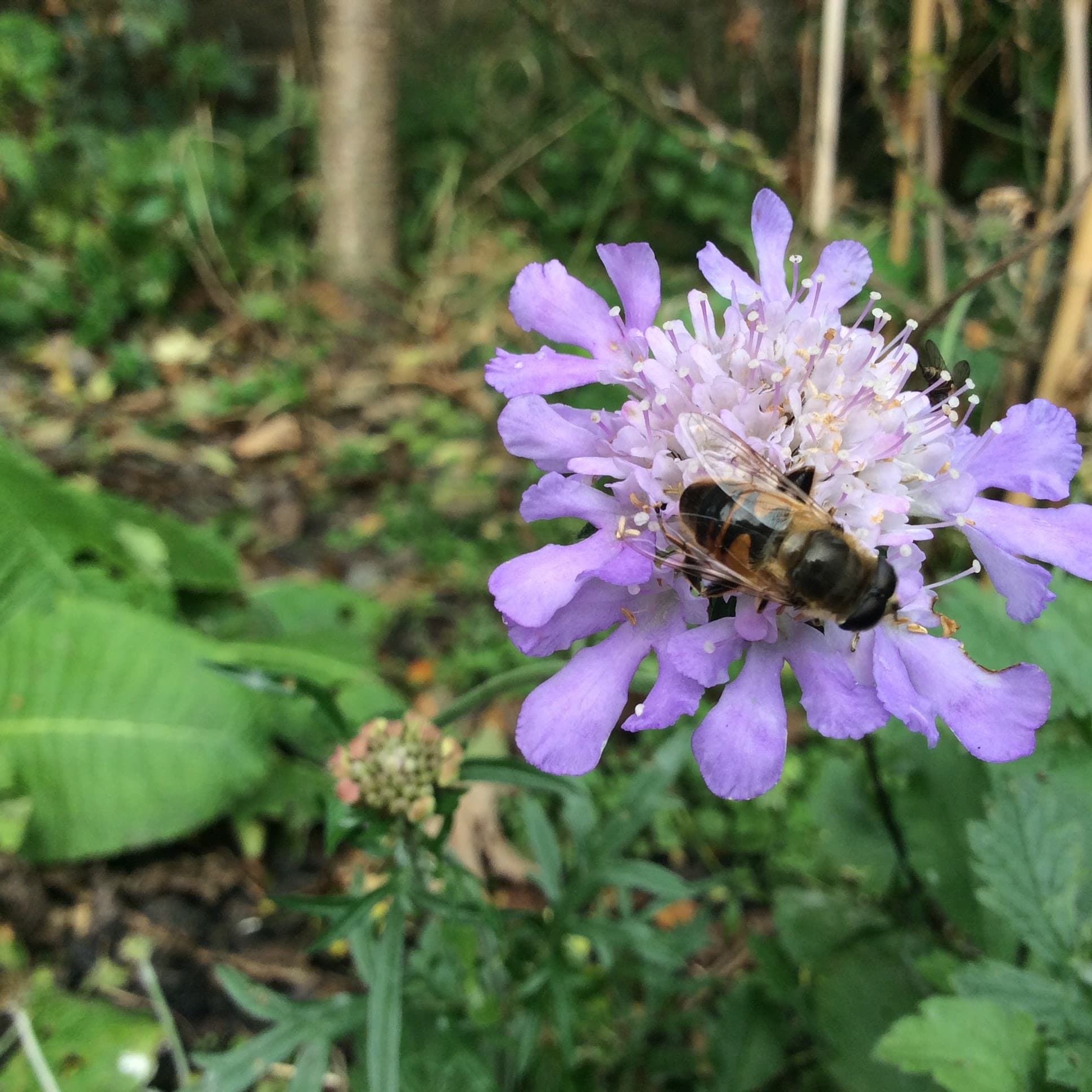
But the pollinator workforce is far bigger and stranger than that. Hoverflies, moths, beetles, wasps, bats and even some birds and small mammals all move pollen between flowers. In New Zealand, on islands where native pollinators had died out, ship rats were found to have unintentionally taken over pollination duties, picking up pollen in their fur as they fed on nectar — a strange but telling example of how much ecosystems depend on something doing this job, even when the usual candidates disappear.
That range matters for anyone thinking about how to help, because a garden, farm or solar site designed only around honeybees will miss most of the actual pollinator community living in it.
What's actually threatening them
Strip it back, and the pollinator crisis comes down to a handful of overlapping pressures:
Habitat loss. The UK has lost an estimated 97% of its wildflower meadows since the 1930s, largely to intensive agriculture and urban development. This is leaving pollinators with far less food and fewer places to nest.
Pesticides, particularly certain classes of insecticide, which can affect pollinators even at doses too low to kill them outright, disrupting navigation and foraging behaviour.
Invasive species, which can outcompete native plants pollinators rely on, or introduce new diseases and parasites.
Climate change, which is shifting the timing of flowering seasons and pollinator activity out of sync with each other.
The unlikely new habitat: solar farms
UK solar farms typically only cover around 2% of the land they sit on with actual panels, leaving the rest available for planting. Since 2024, UK law has required most major developments, including solar farms, to deliver a minimum 10% Biodiversity Net Gain — measured and maintained for at least 30 years — and many projects are going considerably further than that, with some reporting gains well over 100%.
In practice, that means wildflower meadows sown between and around panels, hedgerows planted for nesting birds, and conservation grazing instead of intensive mowing.
Research groups including Lancaster University and the RSPB have recorded up to three times more birds and roughly four times more pollinators on sites managed this way, compared with the intensively farmed arable land they often replace. One set of ecological surveys across UK solar farms logged dozens of pollinator species and thousands of individual insects, including several increasingly rare butterflies and dragonflies, in the meadows and margins around the panels.
The land-use question underneath this is not a simple one. Solar development still competes with farmland in places, and communities have raised fair concerns about the scale and siting of individual projects. What the biodiversity data adds to that debate is more modest than a solution: evidence that the land between panels, managed with some care, needn't sit idle. Helmer's book makes a similar case about farms and gardens; this is the same logic, applied to a part of the system she doesn't really cover.
What you can actually do
Most pollinator advice scales down surprisingly well, from a 2,000-panel solar site to a windowsill. A few of the changes that consistently show up across the research:
Plant native species where possible. Native plants and native pollinators have generally evolved alongside each other, and tend to be a better match for each other's needs than exotic ornamentals.
Aim for continuous bloom. A garden with something flowering from early spring through autumn supports pollinators across their whole active season, not just for a few weeks in June.
Leave some untidiness. Bare soil patches, deadwood, and unmown margins all provide nesting habitat that a tidy, mulched border doesn't.
Provide water. A shallow dish with some stones for insects to land on is enough — pollinators need to drink, just like everything else.
Cut back on pesticides, or at least avoid spraying while plants are in flower and pollinators are actively foraging.
The bigger picture
A crisis this quiet tends to need solutions on the same scale: a wildflower strip here, a hedgerow there, a lawn left slightly untidy. None of it moves the numbers alone. It adds up, plot by plot and site by site, in much the same way a single solar farm's meadow matters less by itself than as one node in a wider patchwork of habitat, stretching across gardens, farms, roadside verges and, now, energy infrastructure.
Helmer's book argues that awareness has run ahead of action in pollinator conservation, that the harder part isn't knowing what to do but doing enough of it. Watching biodiversity net gain move from a legal minimum to something developers plan around suggests that gap is narrowing, at least in one corner of the energy sector.
At EnergieBee, sustainability shapes decisions long before a project is finished, including what gets planted, and left un-mown, around the infrastructure that reaches your home. More on how our energy sites are managed for local biodiversity.
 David Price