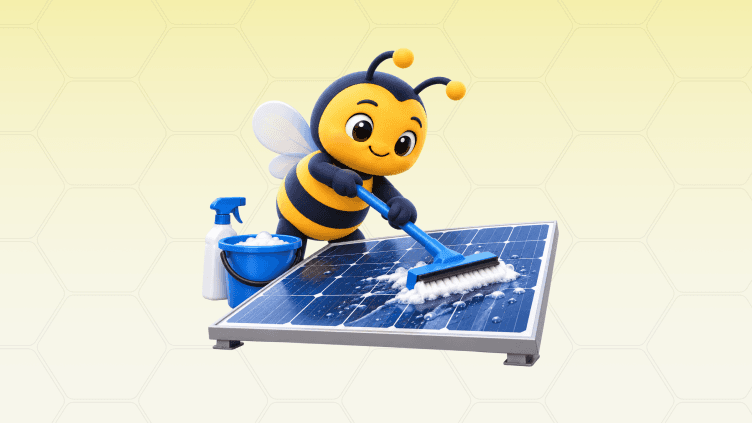
You can clean your solar panels yourself, safely, using a soft brush, water and the system switched off.
UK weather does most of the work for you. Rain clears dust and pollen on its own. But bird droppings, moss and grime from a dry spell don't always shift, and that can quietly cut your panels' output.
So, how do you clean solar panels safely? This guide explains what tools to use, what to avoid, and how to check whether your system is performing better afterwards.
Does Cleaning Solar Panels Actually Improve Efficiency?
Yes, but the impact depends on how dirty your panels are. Solar panels need sunlight to generate electricity, so anything covering the surface, such as dust, pollen, bird droppings or built-up grime, can reduce the amount of light reaching the cells.
A small amount of dirt usually has little effect, but heavier buildup can reduce your solar output over time.
What Happens If You Don't Clean Your Solar Panels?
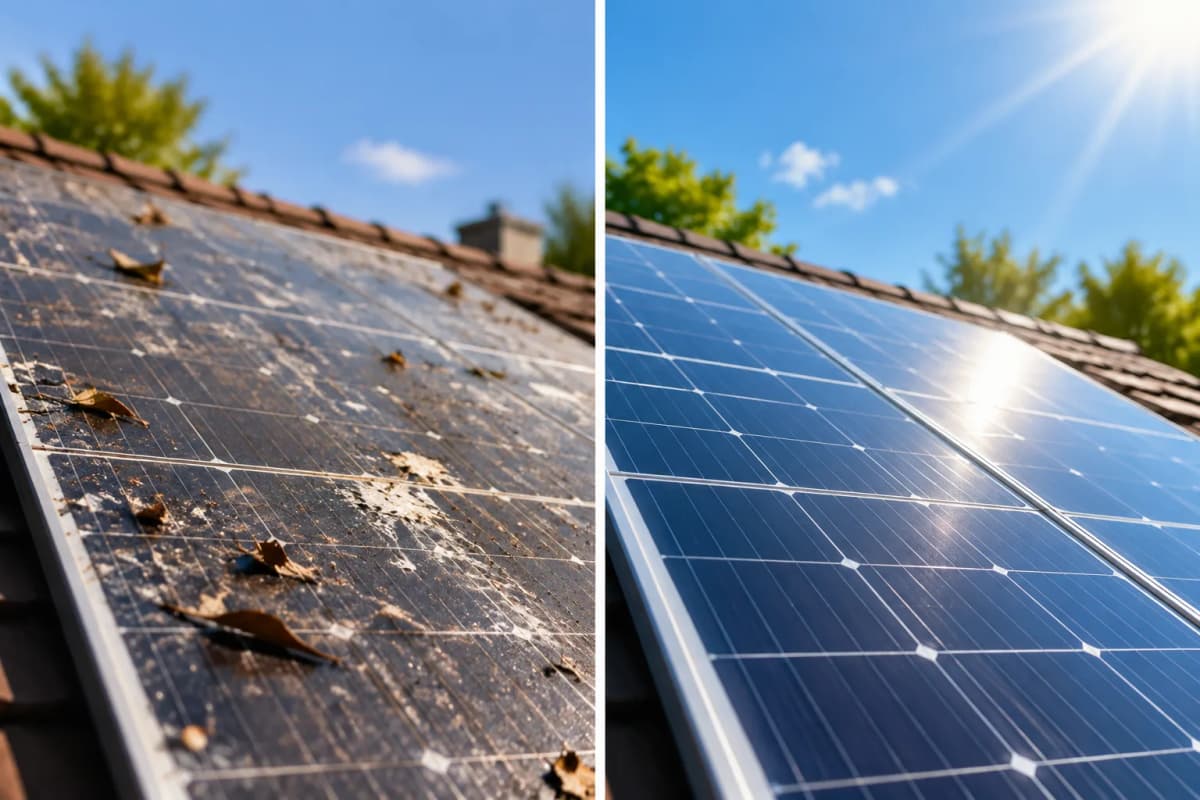
Most solar panels continue working without frequent cleaning. However, dirty solar panels can collect:
Bird droppings that block sunlight
Leaves and debris that create shaded areas
Dust and pollen that reduce light reaching the cells
Regular solar panel maintenance is mainly about checking your system is performing as expected, not cleaning it constantly.
How Often Should You Clean Solar Panels?
According to the Energy Saving Trust, a light clean every 12 to 24 months can help your system operate at its best.
Most UK homes only need occasional cleaning, depending on their location and the amount of debris buildup.
Consider cleaning when you notice:
Visible dirt or debris buildup
Bird droppings covering the panels
Leaves blocking sunlight
Lower-than-usual solar generation
How to Clean Solar Panels Safely: Step-by-Step Guide
Cleaning solar panels is usually a simple process if you use the right tools and avoid damaging the surface.
The recommended method for cleaning residential solar panels is to use clean water, a soft brush or sponge, and gentle movements to remove dirt and debris.
Avoid harsh chemicals, abrasive materials and high-pressure cleaning, as these can damage the panels.
Follow these steps to clean your solar panels safely:
Tools and Materials You'll Need to Clean Your Solar Panels
Before you start cleaning your solar panels, make sure you have the right tools. Using the wrong equipment can scratch the surface or damage the panels.
Here is what you need:
A hose or water-fed pole, for the initial and final rinse
A soft-bristle brush or non-abrasive sponge, for scrubbing
A dedicated solar panel cleaner or mild, non-abrasive soap
A bucket, for mixing your cleaning solution
A squeegee or microfibre cloth, for a streak-free, watermark-free finish
A stable ladder or extension pole, if you can't reach the panels from the ground
Basic safety gear, non-slip shoes and gloves, especially if you're working on or near a roof
Safety Precautions Before You Start
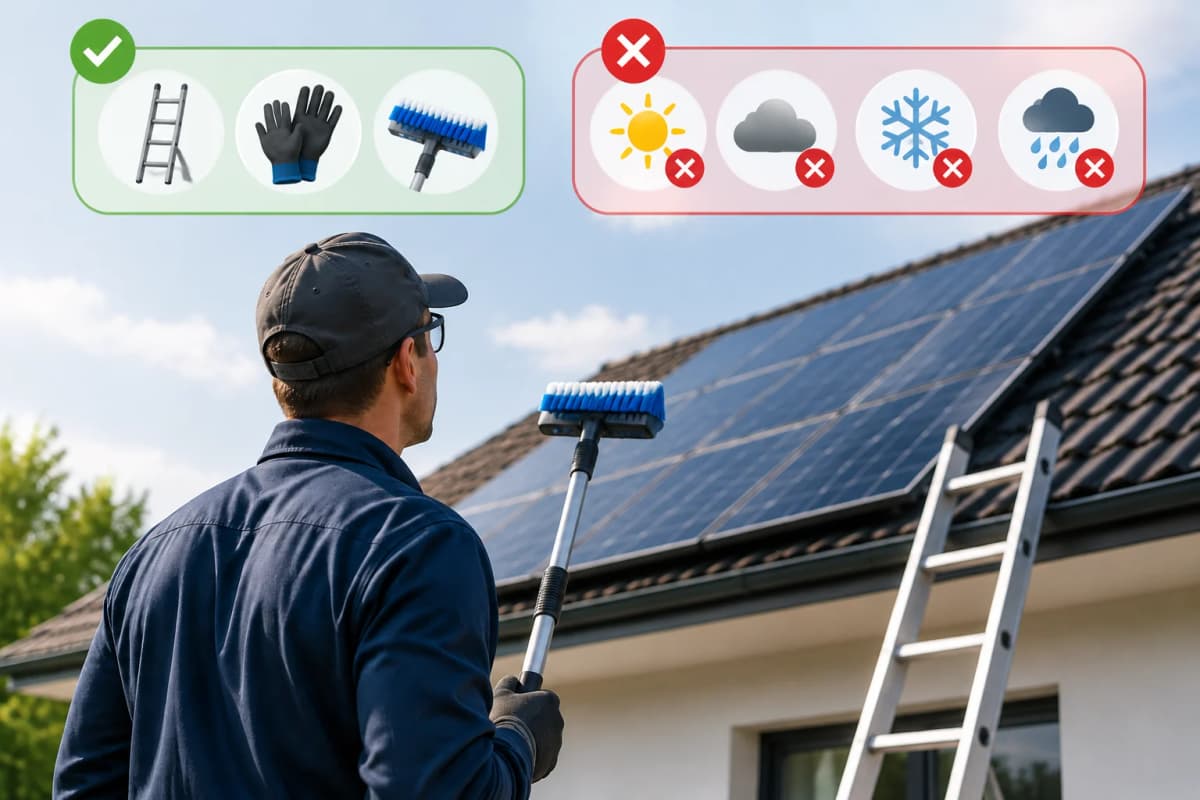
Before you touch a single panel, a few basics keep you and the system safe:
Switch off the inverter and isolate the system before you start, this follows the same principle behind the UK's Electricity at Work Regulations: water and live electrics don't mix.
Never walk on the panels, they're not built to take human weight and can crack
Clean on an overcast day or early morning, not in direct midday sun, panels heat up fast and water can evaporate before it's done any good, sometimes leaving streaks
Avoid cleaning in cold, frosty or rainy conditions, wet panels combined with a ladder is a fall risk
Use a stable ladder or a water-fed pole from the ground where possible, rather than climbing onto the roof. It's why the HSE's Working at Height guidance has professionals default to ground-level access whenever they can.
If your panels are hard to reach safely, that's the point where it's worth calling in a professional rather than pushing on yourself.
6 Steps to Clean Your Solar Panels
Make sure to manufacturer's warranty terms first, some void cover if you clean panels yourself with the wrong method. Most UK installations are certified under MCS, and warranty terms are usually tied to that certification.
Here is 6 simple steps to clean your solar panels:
Inspect the panels and isolate the system. Check for cracks, loose fittings or visible damage before you start, then switch off the inverter so the system is fully isolated.
Rinse with plain water first. A first pass with a hose or water-fed pole clears loose dust, pollen and grit before you touch the surface with anything else.
Apply a mild cleaning solution with a soft brush or sponge. Use lukewarm water with a dedicated solar panel cleaner, or a small amount of mild, non-abrasive soap if that's not on hand. Skip washing-up liquid and household detergents, they can leave a residue that attracts more dirt.
Scrub gently, working in one direction. Never use anything abrasive, a stiff brush, scourer or scraper can leave micro-scratches that trap more dirt over time.
Rinse again and squeegee dry. A final rinse removes any soap residue, then a squeegee or microfibre cloth prevents watermarks and limescale spots as it dries.
Leave the panels to fully dry before restoring power. Only switch the system back on once every surface is dry, this avoids any risk of shock or a short circuit.
Special Cases & Troubleshooting
The standard six steps handle most dirt, but a few problems need a different approach:
Problem | What to Do |
Bird droppings | Soak the area first, then wipe gently. Avoid scrubbing dry dirt, as it can scratch the surface. |
Moss or algae | Use a soft brush to remove buildup and check your manufacturer's guidance before using any cleaning solution. |
Hard water spots or limescale | Use filtered or deionised water for the final rinse to reduce water marks. |
Stubborn, caked-on grime | Let the cleaning solution loosen the dirt first. Avoid scraping or using force. |
Solar Panel Cleaning Dos and Don'ts
Most damage to solar panels doesn't come from dirt, it comes from how people try to remove it.
These rules line up with Solar Energy UK's own operations and maintenance guidance, the UK solar trade body :
Do | Don't |
Isolate the system before you start | Clean while the system is switched on |
Use a soft brush, sponge or water-fed pole | Use a pressure washer or jet wash |
Clean with plain water or a mild, panel-safe solution | Use harsh chemicals, abrasive pads or scourers |
Clean on an overcast day or early morning | Clean in direct midday sun or extreme heat |
Rinse and squeegee dry | Let hard water air-dry on the panels |
Work from the ground or a stable ladder | Walk on the panels |
How to Measure Solar Panel Performance After Cleaning
The simplest check: compare your kWh output before and after cleaning, on days with similar weather.
Output naturally shifts with weather, season, shading and how much power your home is using, so one sunny day isn't proof either way. Look at the trend over a week or two instead.
Check for:
Daily generation up, even slightly, since the clean
That improvement holding steady, not just a one-off day
Any sudden drop that doesn't match the weather, usually a sign of something else, not dirt
EnergieBee tracks your daily output in real time, so you can see the graphs yourself and spot whether cleaning actually moved the needle.
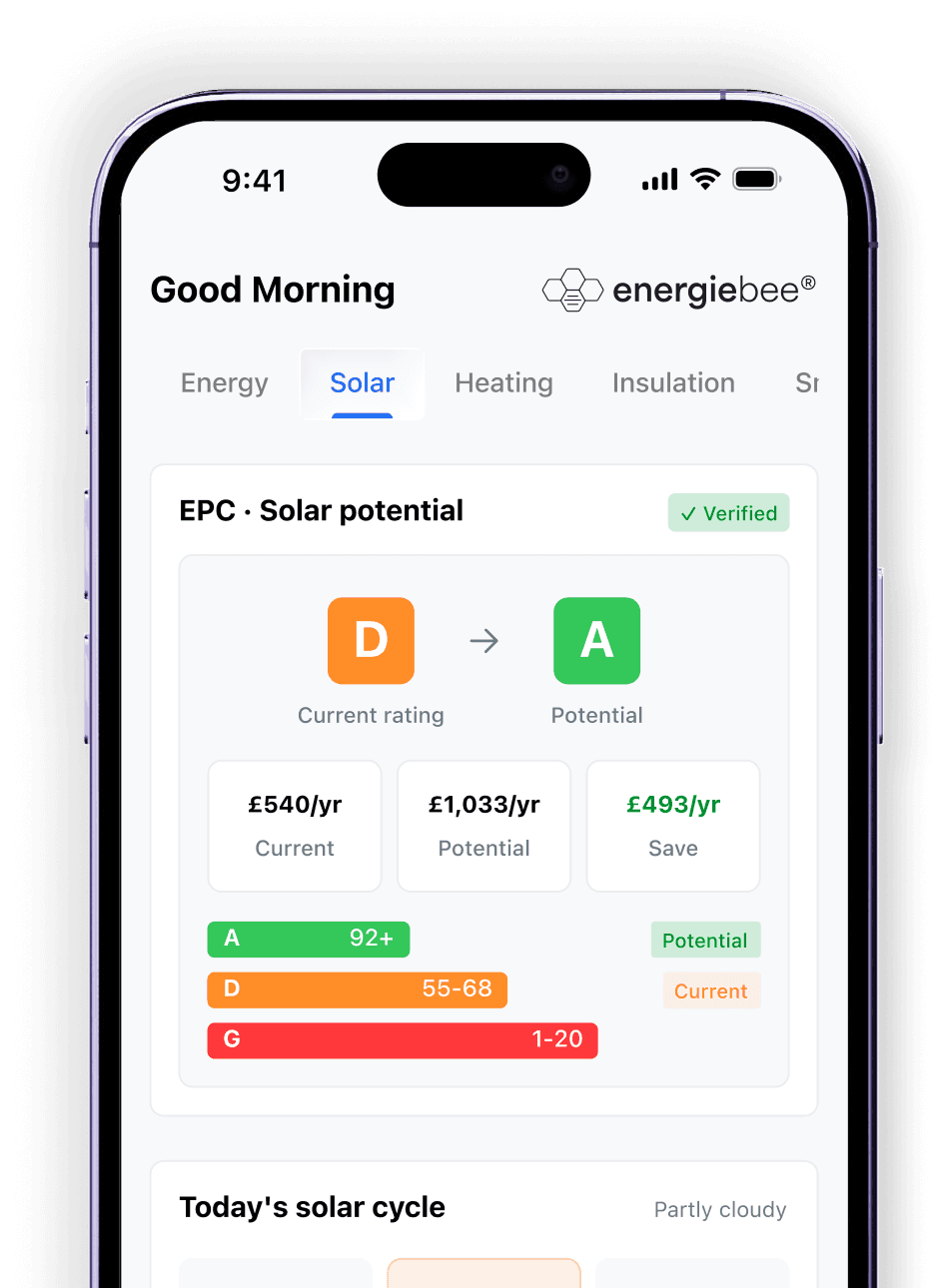
See how your solar panels are performing
Track your solar generation, energy use and home performance in one simple dashboard. Know when your system is working as expected and spot changes early.
Solar Panel Maintenance Checklist
Cleaning is only part of keeping your system running well.
Solar panels are designed to be low maintenance, but a few simple checks can help keep your system working properly.
Check your inverter light or display for any error signals, monthly is a good habit
Glance at your monitoring app every so often for unexpected dips in output
Look for visible damage, cracked glass, loose brackets, or exposed wiring
Keep an eye on nearby trees or growth that could start shading the panels
Book a professional inspection every few years, especially to check wiring and mounting
If anything looks off and a clean doesn't explain it, that's the point to call your installer rather than investigate further yourself.
Bottom line: Solar panels don't need constant attention, but a clean surface and a quick regular check go a long way. Keep them clear of dirt, watch your output, and get a professional to look at anything electrical. Do that, and your system will keep pulling its weight for years.