And how real-time energy insight changes the way homes are understood
EPC ratings are widely used to describe the energy efficiency of homes.
They provide a single score intended to represent how much energy a property is expected to use under standard conditions. For buyers, renters, and policymakers, they offer a reference point for comparing buildings at scale.
But homes do not operate under standard conditions.
They operate under weather, routines, occupancy changes, seasonal shifts, and increasingly dynamic energy systems.
This is where the gap between EPC ratings and real energy behavior becomes visible.
What EPC ratings actually measure
An Energy Performance Certificate (EPC) estimates how efficient a home is based on its physical characteristics.
It considers elements such as insulation, heating systems, building materials, and overall construction quality.
The result is a modeled estimate of energy use and efficiency under assumed conditions.
In practice, this means EPC ratings describe how a home could perform, rather than how it actually performs over time.
Why EPC ratings diverge from real energy use
The main limitation of EPC ratings is context, since homes are not static environments. Energy use changes continuously due to factors such as:
weather variations across seasons and days
occupancy patterns and remote work
heating behavior that adapts to comfort rather than fixed schedules
introduction of solar systems, heat pumps, and flexible tariffs
These elements are not captured in a static rating. As a result, two homes with the same EPC score can behave very differently in real energy use.
The missing layer: real-time energy behavior
To understand a home’s actual energy performance, it is necessary to look beyond estimated efficiency. Real energy behavior reflects how energy flows through a home over time. That includes:
heating demand that shifts with temperature
electricity use that follows daily routines
solar production that changes with weather conditions
seasonal variation in overall consumption
This dynamic view reveals patterns that a single rating cannot capture.
How weather changes energy performance
Weather is one of the strongest drivers of energy behavior in homes.
Temperature influences heating demand directly. Sunlight determines solar production. Seasonal shifts affect both at the same time.
Because EPC ratings are based on fixed assumptions, they do not reflect this environmental variability.
Real-world energy use is continuously shaped by it.
EPC ratings vs lived energy reality
EPC ratings remain useful as a structural benchmark.
They help define a baseline of expected efficiency.
However, they do not reflect how a home behaves in daily conditions.
This difference becomes especially important in homes with:
solar panels
heat pumps
smart heating systems
dynamic electricity pricing
In these cases, energy performance is no longer static. It evolves across time.
Why this matters for homeowners
Understanding energy use only through EPC ratings can limit visibility into actual consumption patterns.
Without real-time context, it becomes difficult to identify:
when energy use increases and why
how heating responds to weather changes
how solar production aligns with consumption
where small behavioral shifts create efficiency gains
This is where a more dynamic layer of insight becomes relevant.
The role of real-time energy intelligence
Real-time energy systems introduce a different perspective.
Instead of relying solely on estimates, they observe how energy behaves inside the home as conditions change.
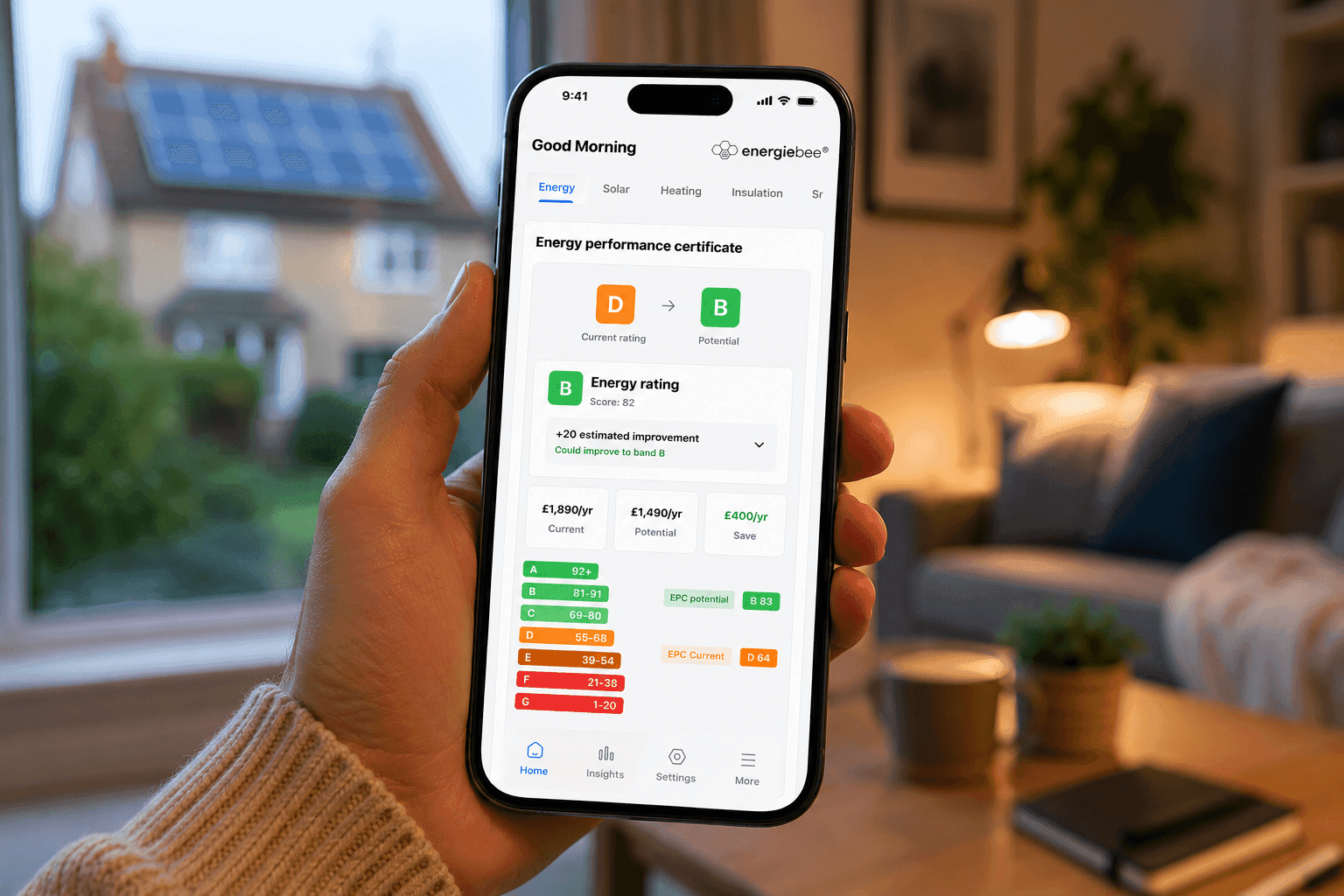
The EnergieBee app health check is designed around this principle. It combines:
EPC-based baseline information
real household energy patterns where available
solar potential based on local weather conditions
This creates a bridge between estimated efficiency and lived energy behavior.
From static ratings to living systems
The shift from EPC-only understanding to real-time insight reflects a broader change in how energy systems are evolving.
We can now think homes as active energy environments shaped by time, weather, and usage patterns. Energy performance becomes something that unfolds rather than something that is fixed.
What homeowners can understand with a combined view
When EPC data is combined with real energy behavior, it becomes possible to see how a home is expected to perform, how it actually performs, and how environmental conditions influence the difference between the two.
This layered understanding supports more informed energy decisions over time.
With EnergieBee app, you can have all the data in one place.
One app. Total energy clarity.
 David Price