Energy in the home moves through systems that are constantly adjusting to their environment. Heating responds to changes in temperature, and everyday consumption unfolds through patterns that repeat across time. Solar production follows the rhythm of light. These processes rarely appear connected at first glance, but they share a common structure: they are all shaped by weather.
When weather becomes part of how energy is understood, the home begins to reveal patterns that were always present, but not always visible.
Weather as a structuring force in home energy
Weather influences energy use in ways that are both direct and continuous. Temperature shapes the demand for heating. Sunlight determines how much energy solar systems can produce. Seasonal variation affects how homes behave across months, not just days.
Either we realise it or not, weather defines the conditions under which every energy decision takes place inside the home. Seen together, weather and energy describe a single system expressed through different signals.
Understanding energy through context
Most home energy data focuses on consumption. It shows what is used, when it is used, and what it costs. This information is useful, but it gains depth when placed alongside environmental context.
A rise in heating demand becomes more meaningful when it follows a drop in temperature. Variations in solar production become clearer when connected to changes in cloud cover. Daily fluctuations in usage start to reflect seasonal and environmental rhythm rather than isolated behaviour.
Energy becomes easier to read when context is present.
Temperature and the rhythm of heating
Heating systems follow external temperature closely. As conditions shift, energy use adjusts across the home in response. These adjustments often reflect the natural rhythm of the day, as indoor comfort responds to outdoor change.
When temperature data is part of the system, heating behaviour aligns more closely with real conditions, and comfort becomes easier to maintain through smoother transitions.
Solar energy and changing light
Solar production is shaped entirely by environmental conditions. Light intensity, cloud movement, and seasonal cycles determine how much energy is available at any moment. This creates a natural variability that defines how solar systems behave over time.
When this variability becomes visible in advance, households gain a clearer sense of when energy is abundant and when it is limited. Consumption can then follow production more naturally.
Forecasting as a way of understanding time
Weather forecasting adds a forward dimension to energy awareness. It introduces visibility into how conditions are likely to evolve, from temperature shifts to changes in solar availability.
This perspective helps households recognise how energy behaviour will unfold across the day, and how small environmental changes influence larger patterns over time.
Where weather information comes from
Weather data is built through multiple layers of observation and modelling. Satellite systems observe large atmospheric movements. Ground stations capture local conditions. Numerical models translate these signals into forecasts. Connected sensors add real-time detail at the level of place.
Together, these systems form a continuous reading of environmental change.
Energy systems in relation to environment
When weather data is connected to home energy systems, a more coherent picture begins to emerge. We now have the technology available for everyone to benefit from it. Once we can anticipate small and bigger changes in weather conditions accurately, we can also automate adjustments in our homes to save energy and reduce costs.
Heating responds to temperature with greater clarity. Solar production reflects light conditions more directly. Consumption patterns begin to align with environmental rhythm. Energy becomes something that can be understood as part of a wider system rather than a collection of separate actions.
The role of the EnergieBee app
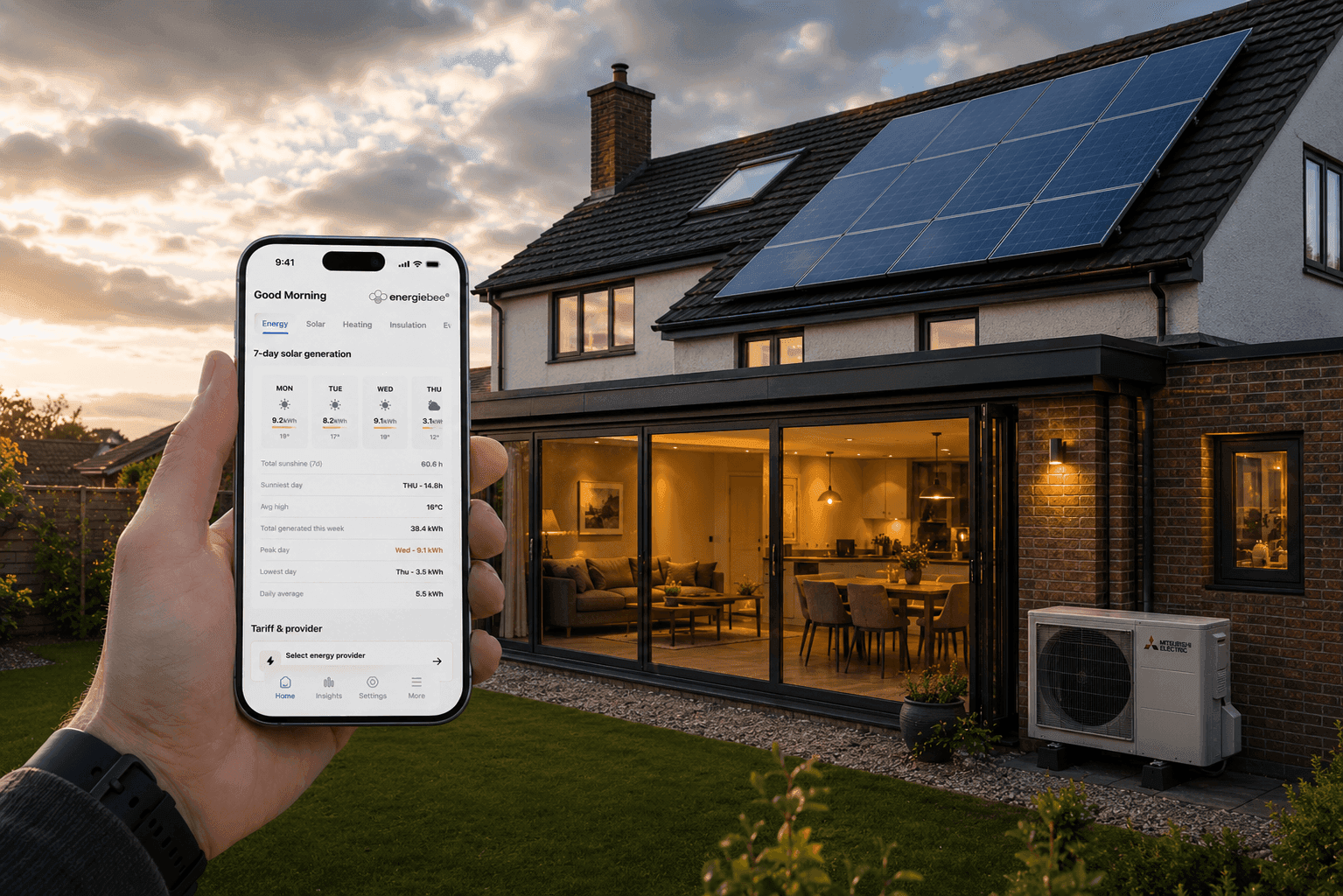
The EnergieBee app brings together weather and household energy data in a single environment. It connects heating behaviour, solar production, household consumption, and weather forecasting into one continuous view.
This allows households to understand how energy moves through the home in relation to changing environmental conditions, and how those conditions shape everyday patterns of use. The focus is clarity: seeing the system as it is, rather than as separate parts.
Why this matters now
Homes today are becoming more responsive. Solar installations, heat pumps, electric vehicles, and flexible tariffs introduce new layers of variability into daily energy life. Weather becomes a shared reference point across all of these systems. It influences them simultaneously, even when it is not directly observed.
Understanding this relationship brings coherence to a system that is becoming increasingly dynamic.
Weather is part of the structure of home energy
It shapes how energy is produced, how it is used, and how it is experienced over time. When this relationship becomes visible, energy begins to feel less fragmented and more connected to the environment in which it exists.
The EnergieBee app brings this perspective into the home, offering a way to read energy as part of a living system shaped by time, weather, and daily life.
 Danie Latorre